
Word association skills Normal Worksheets for Ages 3-5
3 filtered results
Difficulty Level
Grade
Age
-
From - To
Subject
Activity
Standards
Enhance your child's vocabulary with our Word Association Skills Normal Worksheets for ages 3-5! These engaging and age-appropriate printable activities are designed to boost early learning by helping young learners link words and their meanings effortlessly. Our worksheets focus on building crucial language skills, fostering creativity, and improving cognitive development. Each worksheet features vibrant illustrations and fun exercises to keep your child motivated and eager to learn. By associating words with pictures, children can better understand context and usage, leading to more confident communication. Set a strong foundation for reading and speaking with our expertly crafted worksheets today!
Favorites
With answer key
Interactive
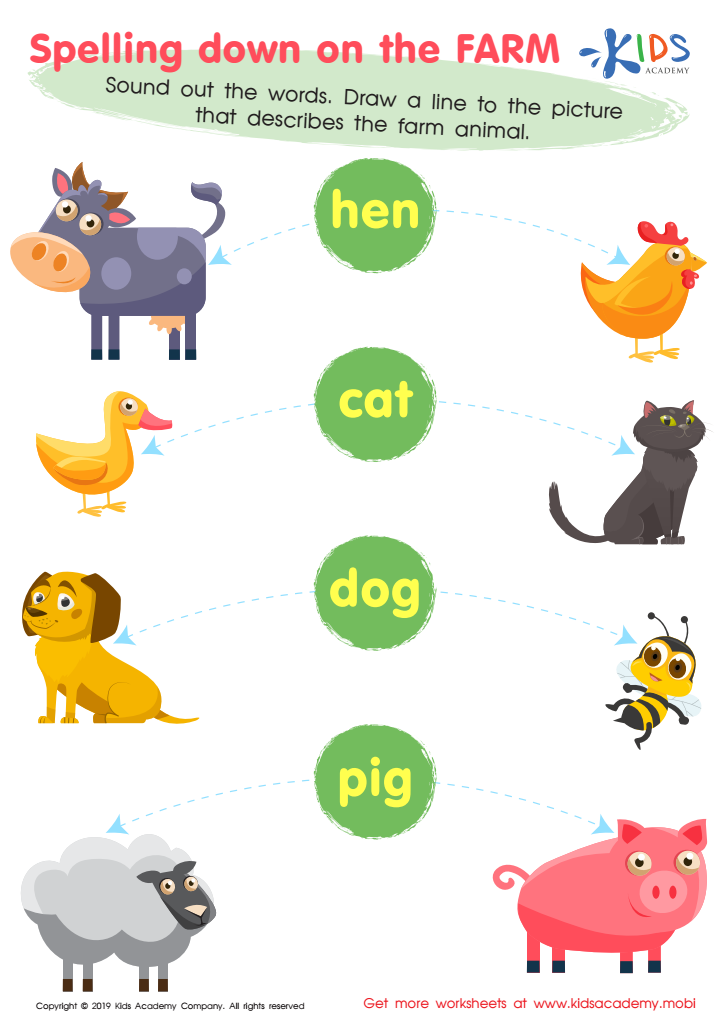
Spelling Down on the Farm Worksheet
Want to help your kids nail their spelling? Introduce them to this farm animal worksheet! Get them to look at the animals in the tracing sheet, name them and then sound out the words. Have them draw a line to the picture that describes it. You'll be surprised at how quickly their skills improve.
 Assign to My Students
Spelling Down on the Farm Worksheet
Worksheet
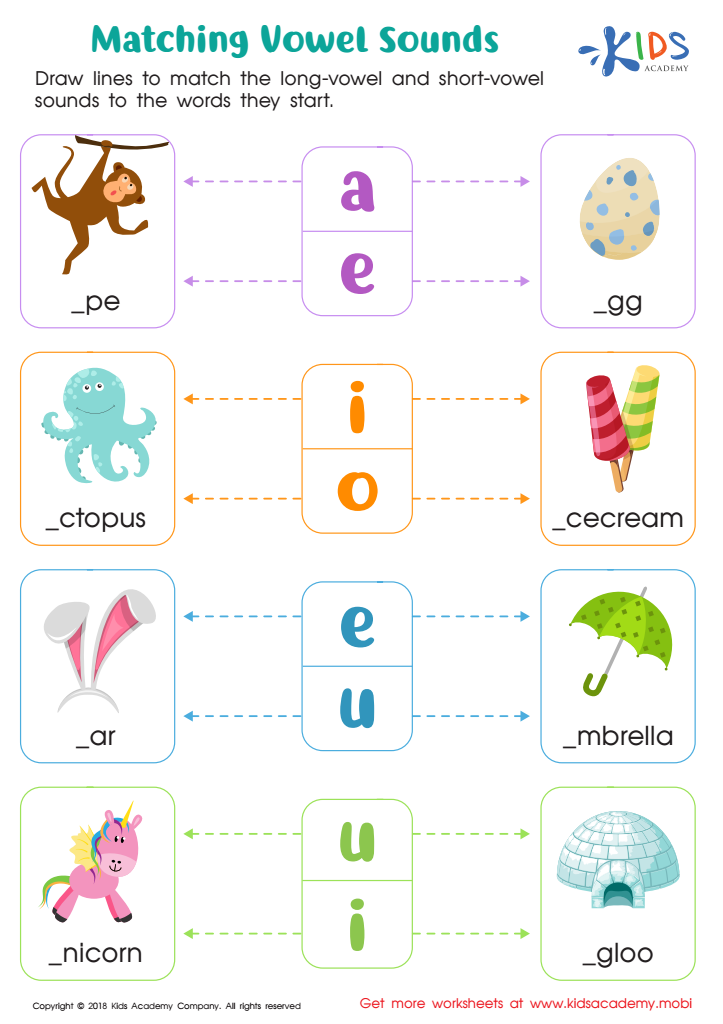
Matching Vowel Sounds Worksheet
Teach your child phonics with a fun worksheet! Ask your child to name a vowel sound and listen if it's long or short. Differentiating between long and short vowel sounds can be tricky, but this matching worksheet makes it easy for kids to understand. Have fun and master phonics - the worksheet will help them understand the difference between long and short vowel sounds!
Matching Vowel Sounds Worksheet
Worksheet
Join Kids Academy for Free
Who is primarily going to use this learning content?







Word association skills are crucial for children aged 3-5 as they lay the foundation for effective communication, cognitive development, and social interaction. These skills involve connecting words with related concepts, which enhances vocabulary, improves comprehension, and supports overall language development. For instance, understanding that "dog" is associated with "bark" or "bone" helps children build their linguistic framework.
Parents and teachers should care about word association skills because they play a vital role in early literacy. Early exposure to word associations supports reading readiness by helping children recognize patterns in language, understand syntax, and develop phonemic awareness. This, in turn, makes the transition to reading smoother and more natural.
Additionally, strong word association skills are linked to improved problem-solving and critical thinking abilities. When children think of related words, they are practicing categorization and making logical connections, which are essential cognitive skills. These skills also boost memory retention, aiding in the learning of new concepts and ideas.
Socially, having a robust vocabulary enables children to express their thoughts and emotions more clearly, fostering better relationships with peers and adults. This clear communication reduces frustration and behavioral issues and builds confidence in interacting with others. In summary, investing in developing word association skills in early childhood sets the stage for academic success and personal growth.








