Logical Reasoning Normal Addition and Subtraction Word Problems Worksheets for Ages 3-5
4 filtered results
-
From - To
Our "Logical Reasoning: Normal Addition and Subtraction Word Problems Worksheets for Ages 3-5" are designed to develop youngsters' basic math skills with an emphasis on addition and subtraction through engaging word problems. Targeted at early learners, these fun and colorful worksheets foster critical thinking, enhance problem-solving abilities, and bolster logical thinking. With age-appropriate language, illustrations, and scenarios, children relate easily to the exercises, making learning both effective and enjoyable. Perfect for Preschool and Kindergarten ages 3-5, these worksheets are excellent resources for both classroom settings and home practice, offering plenty of opportunities to build a strong math foundation.
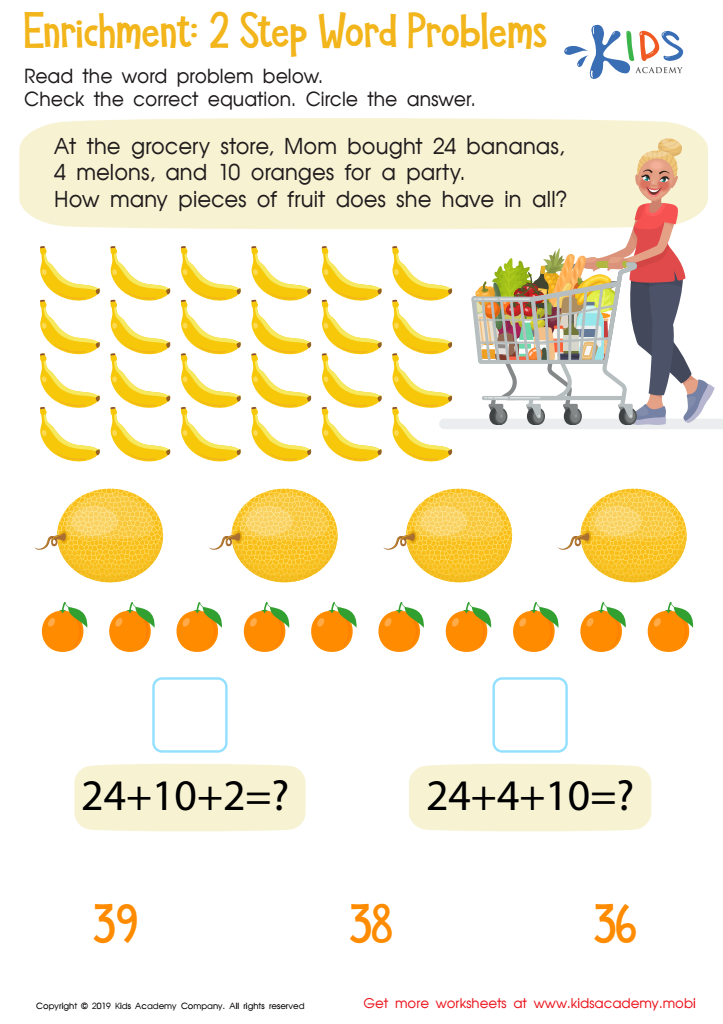
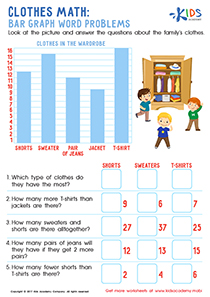
Enrichment -2 Step Word Problems Worksheet
 Assign to My Students
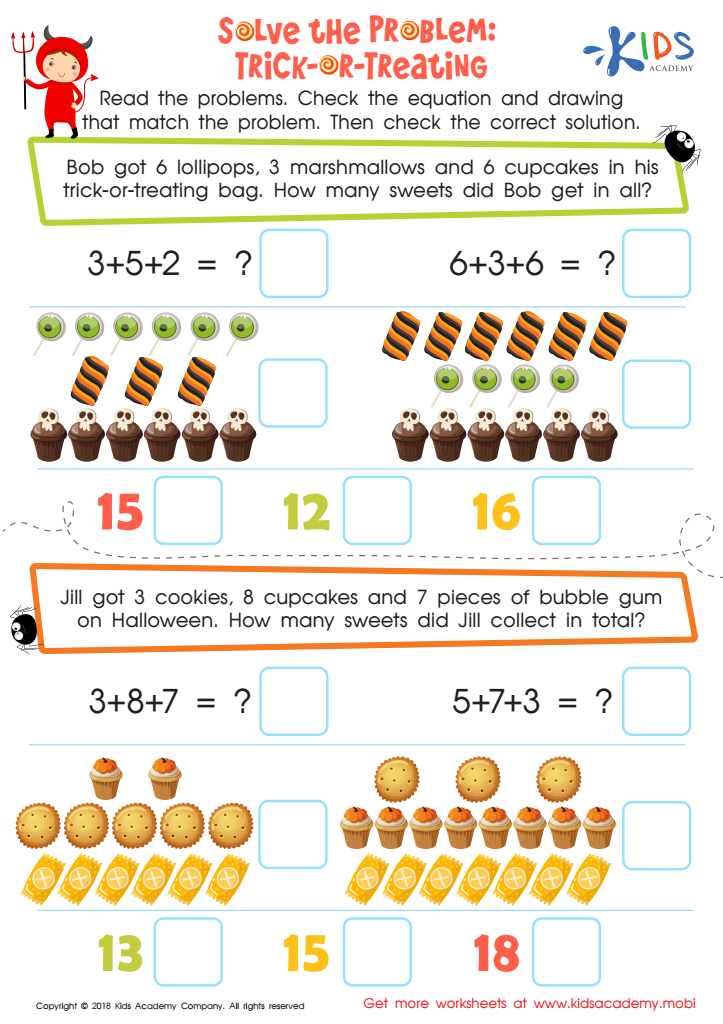
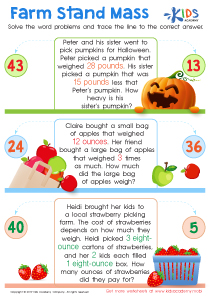
Solve the Problem: Trick–or–treating Worksheet
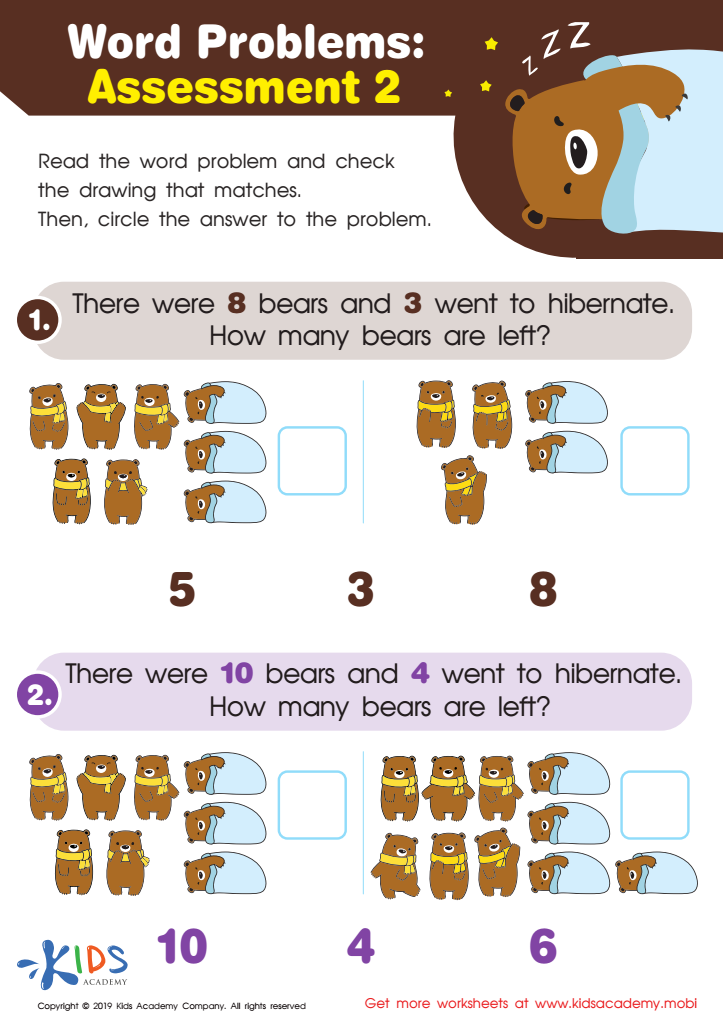
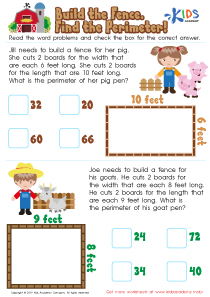
Word Problems: Assessment 2 Worksheet
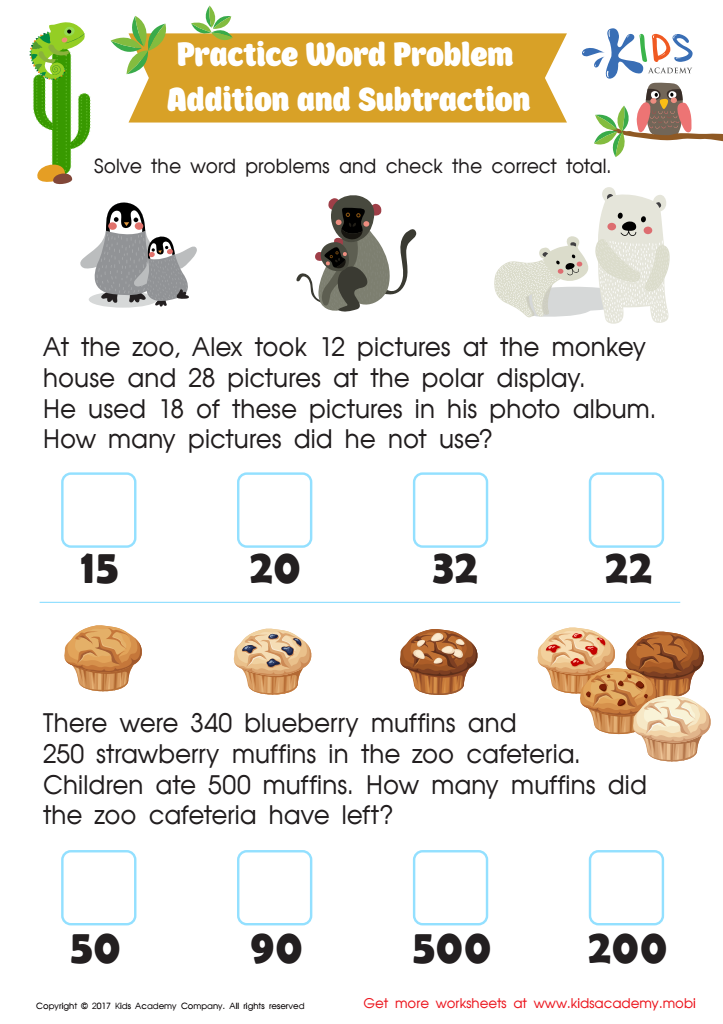
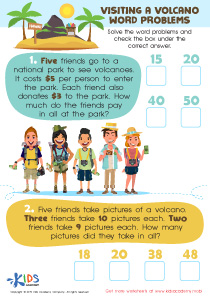
Addition and Subtraction: Word Problems Worksheet








Caring about logical reasoning and normal addition and subtraction word problems for children aged 3-5 is fundamental for several key reasons. Firstly, early exposure to these concepts helps develop critical thinking skills. Young children gain the ability to analyze situations, make decisions, and solve problems methodically. This early development in logical and reasoning capabilities lays a foundation for future complex mathematical and analytical tasks.
Secondly, introducing basic arithmetic through word problems fosters numerical literacy. Children learn to associate numbers with real-world situations, making math more tangible and less abstract. This practical understanding of numbers enhances their ability to comprehend more advanced mathematical concepts as they progress through their education.
Moreover, solving word problems enhances language comprehension and communication skills. Children need to understand the question, process the information, and translate it into a mathematical equation, which involves integrating their growing vocabulary and comprehension abilities.
Lastly, these activities support the development of perseverance and patience. As children work through problems, they learn the value of effort and persistence, crucial life skills that extend beyond academics.
Educators and parents should care about incorporating these elements into early education to promote holistic growth — nurturing cognitive, linguistic, and emotional aspects of a child’s development, ultimately equipping them with the tools for lifelong learning.