Addition skills Normal Addition & Subtraction Worksheets for Ages 3-5
6 filtered results
-
From - To
Explore our engaging Addition Skills worksheets designed specifically for children aged 3-5. These normal addition and subtraction worksheets provide a fun and interactive way for young learners to develop essential math skills. Carefully crafted to meet the developmental needs of preschoolers, these activities promote number recognition, counting, and basic math concepts. With colorful illustrations and playful themes, our worksheets keep little ones motivated while enhancing their understanding of addition and subtraction. Perfect for at-home learning or classroom use, these resources will nurture your child's mathematical confidence and pave the way for future academic success. Start building a strong math foundation today!
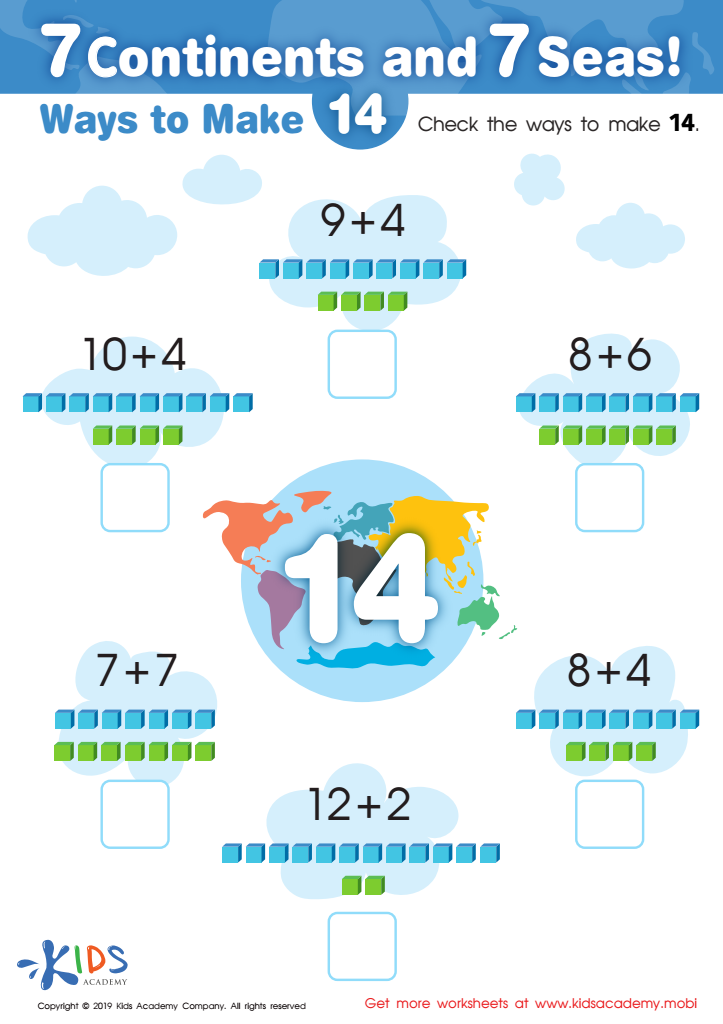
7 Continents and 7 Seas Worksheet
 Assign to My Students
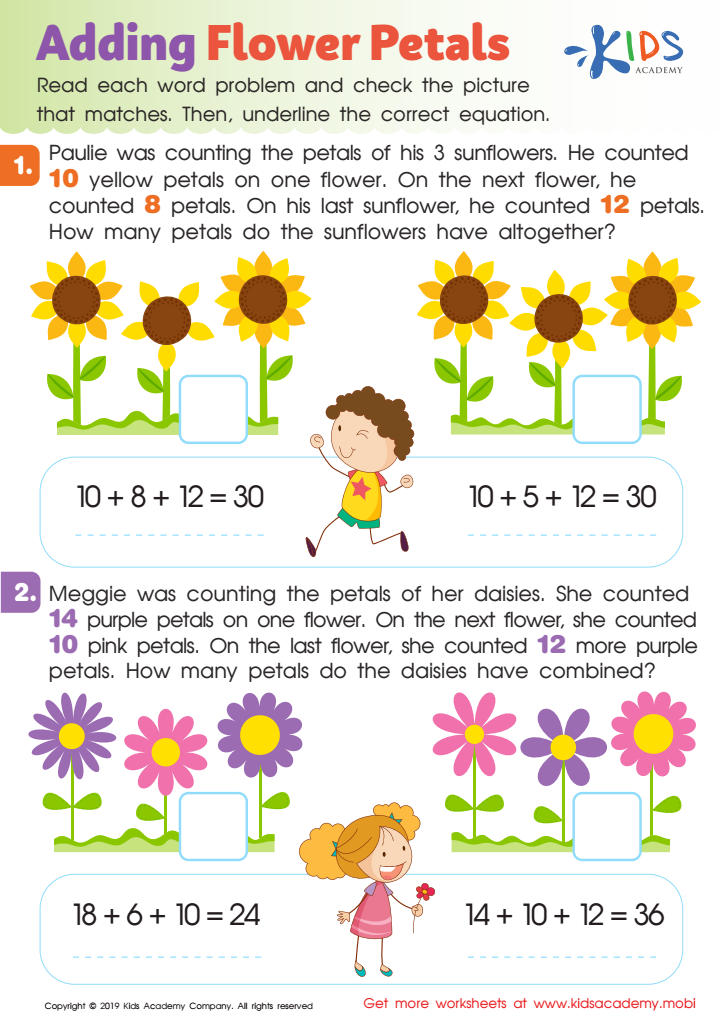
Adding Flower Petals Worksheet
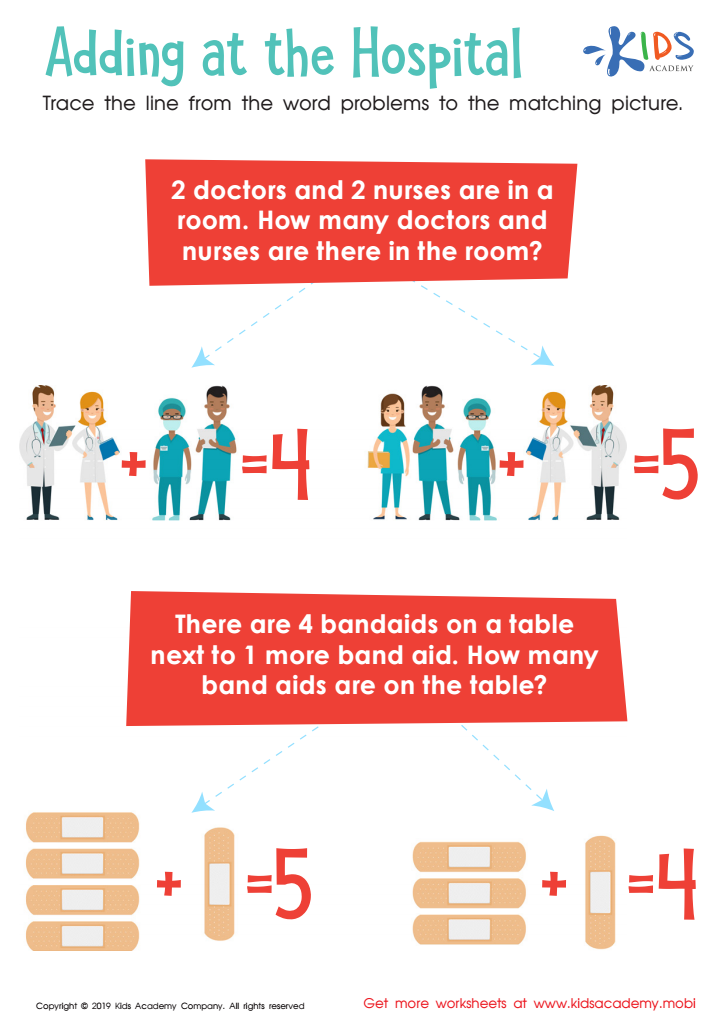
Adding at the Hospital Worksheet
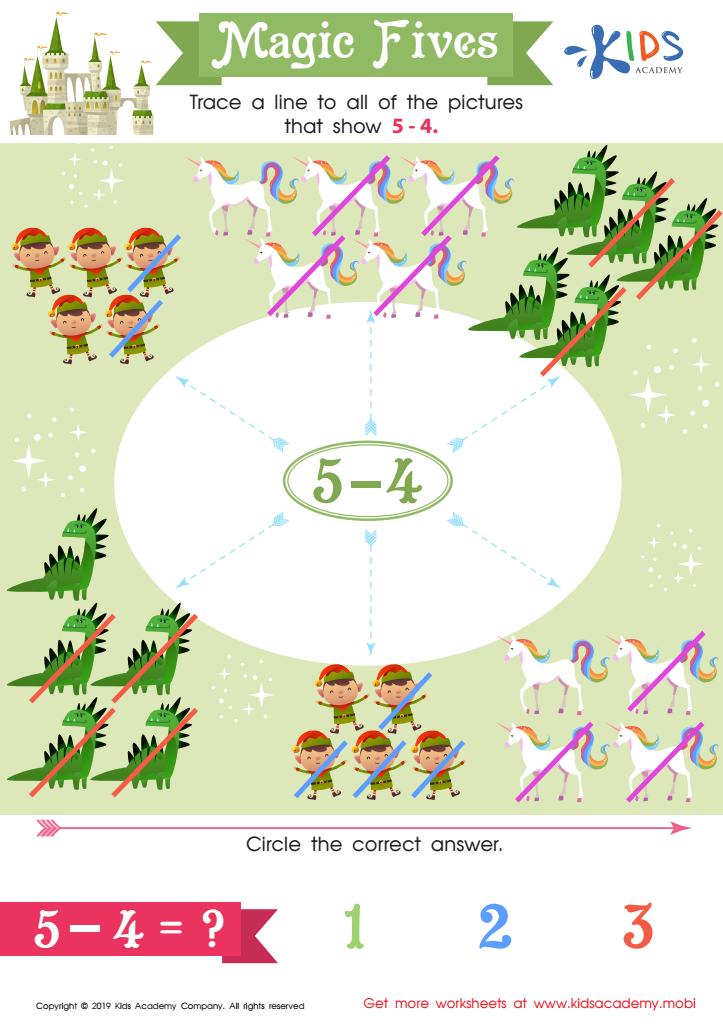
Magic Fives Worksheet
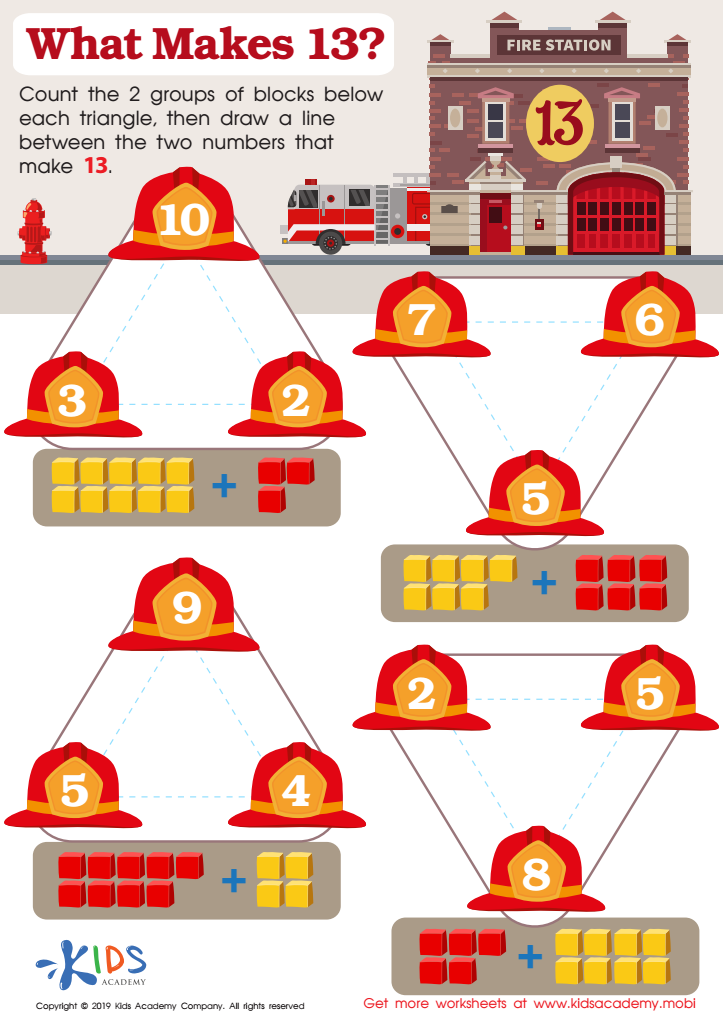
What Makes 13 Worksheet
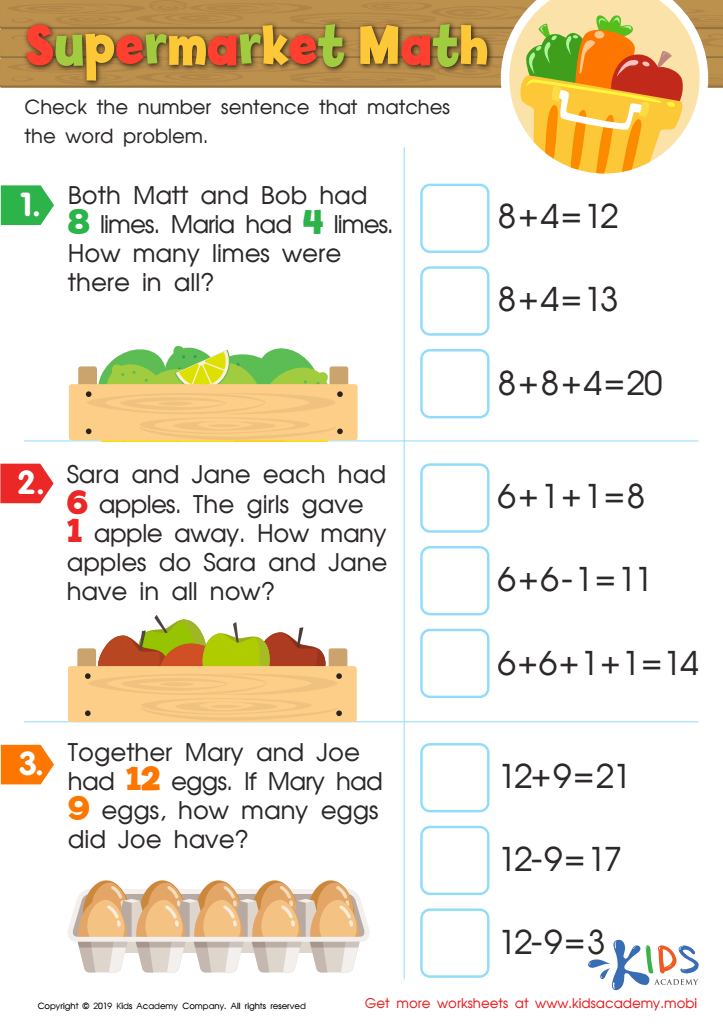
Supermarket Math Worksheet








Parents and teachers should prioritize addition and subtraction skills for children ages 3-5 because these foundational math concepts form the basis for future learning. Mastering normal addition and subtraction helps young learners develop critical cognitive skills, including problem-solving, logical reasoning, and numerical understanding. At this age, children are naturally curious and excited about exploring numbers, making it an ideal time to introduce mathematical concepts in a playful and engaging manner.
Good early math skills contribute to greater confidence in learning and can positively influence academic performance later in life. Engaging in activities that promote these skills fosters a child's ability to understand relationships between quantities, empowers them with basic arithmetic, and encourages a positive attitude towards math.
Moreover, integrating addition and subtraction into everyday experiences makes learning relevant and fun. Whether through games, counting objects, or simple puzzles, children can grasp these concepts intuitively. This both nurtures their enthusiasm for learning and equips them with practical skills that they will use in daily life.
In conclusion, by focusing on addition and subtraction at an early age, parents and teachers help build a strong mathematical foundation that supports children's overall cognitive development and future academic success.








