Basic Arithmetic Normal Addition & Subtraction Worksheets for Ages 3-5
6 filtered results
-
From - To
Welcome to our "Basic Arithmetic Normal Addition & Subtraction Worksheets" designed specifically for children aged 3-5! Our engaging worksheets introduce young learners to the fundamentals of addition and subtraction through fun and interactive activities. Each worksheet is crafted to nurture counting skills, number recognition, and critical thinking in a playful manner, making learning enjoyable. With colorful visuals and age-appropriate challenges, your little ones will develop a solid foundation in arithmetic while enhancing their confidence. Perfect for both home and classroom use, these worksheets provide invaluable practice for early math skills. Start your child's mathematical journey today!
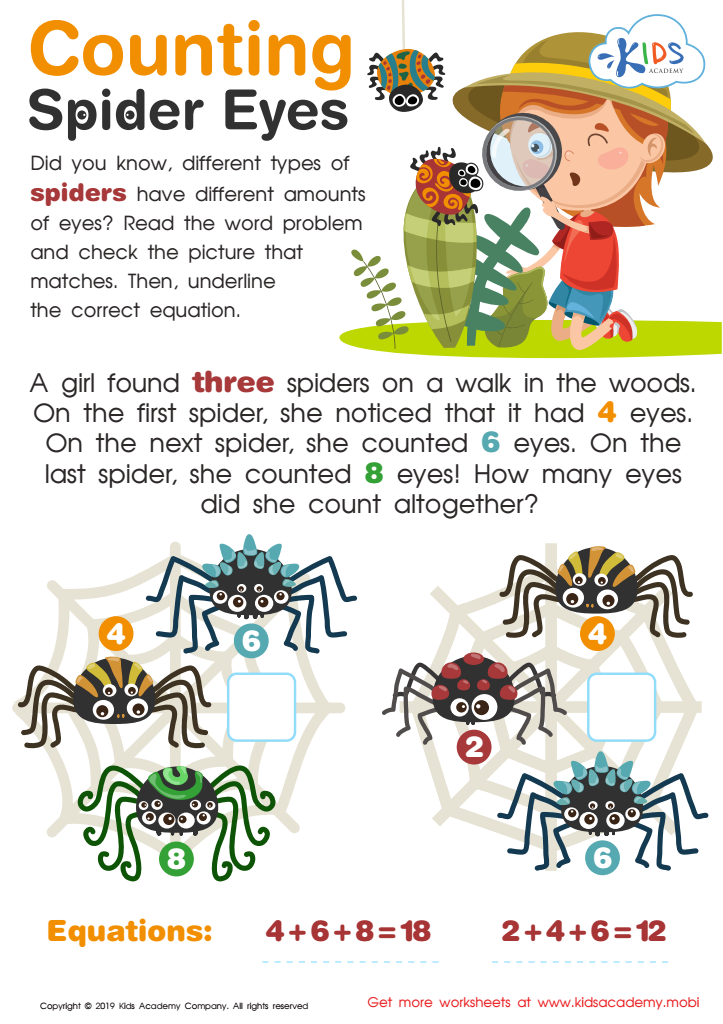
Counting Spider Eyes Worksheet
 Assign to My Students
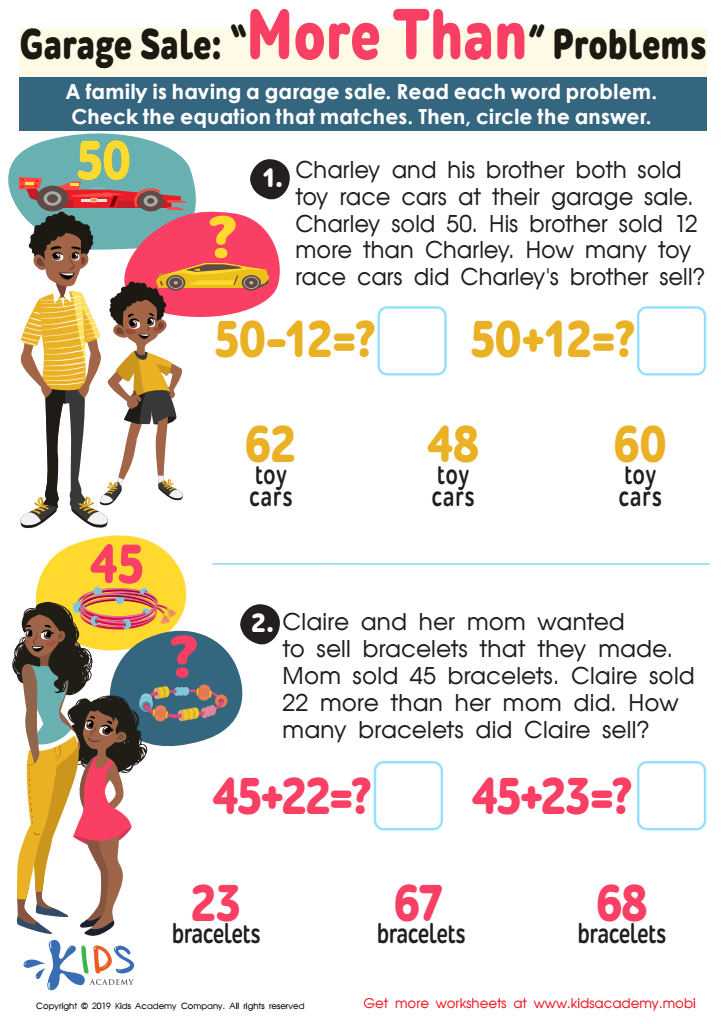
Garage Sale - More yhan Worksheet
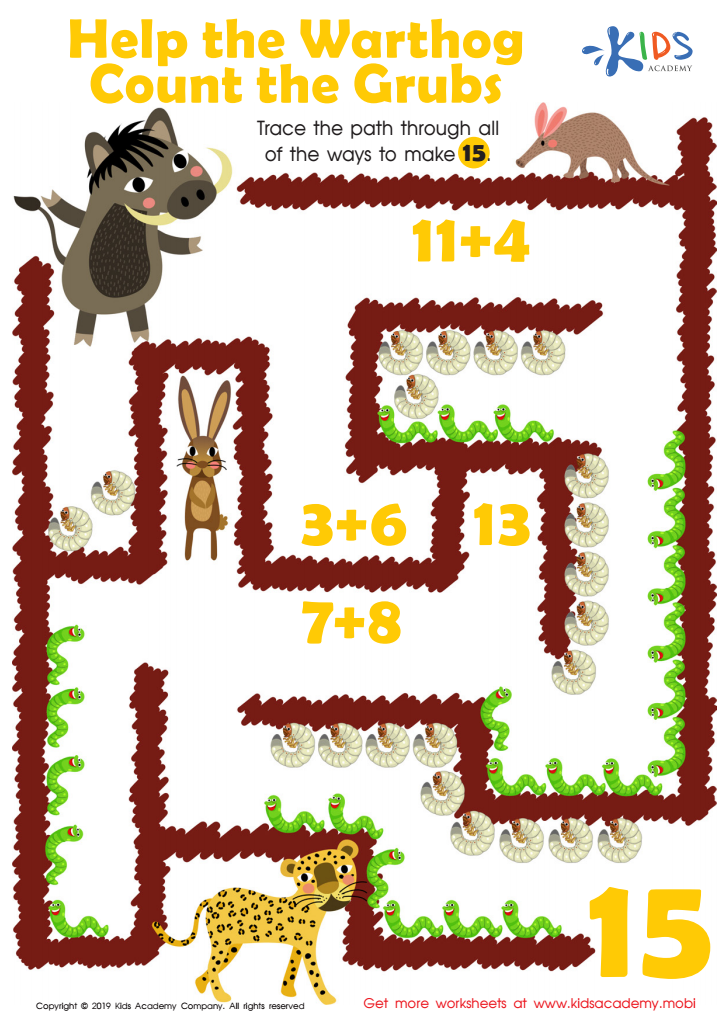
Help the Warthog Count the Grubs Worksheet
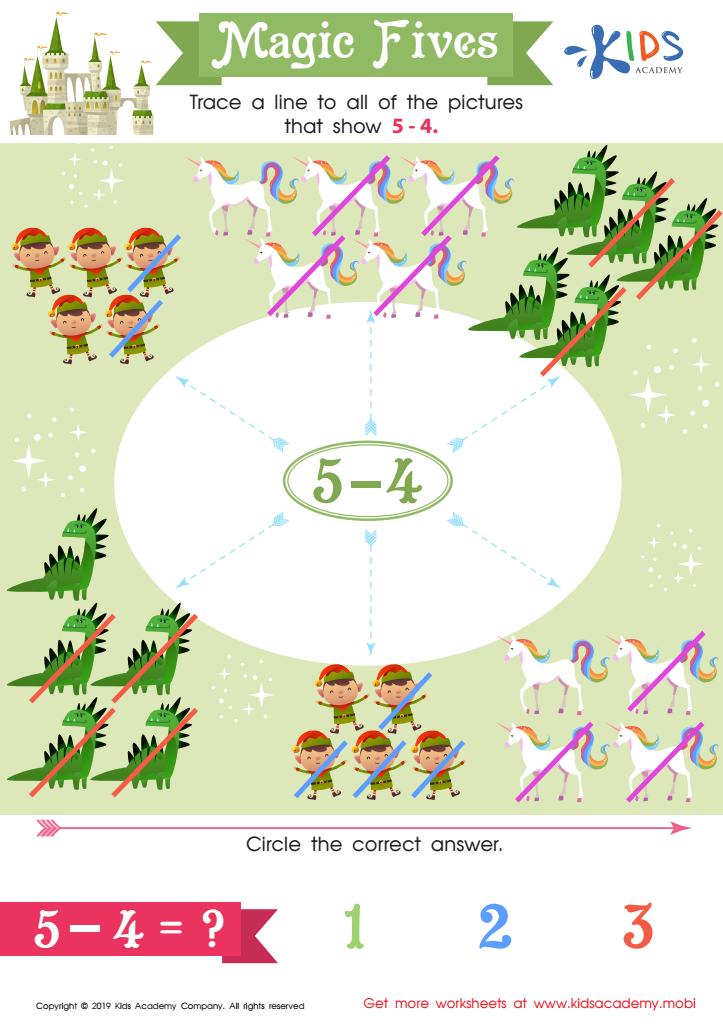
Magic Fives Worksheet
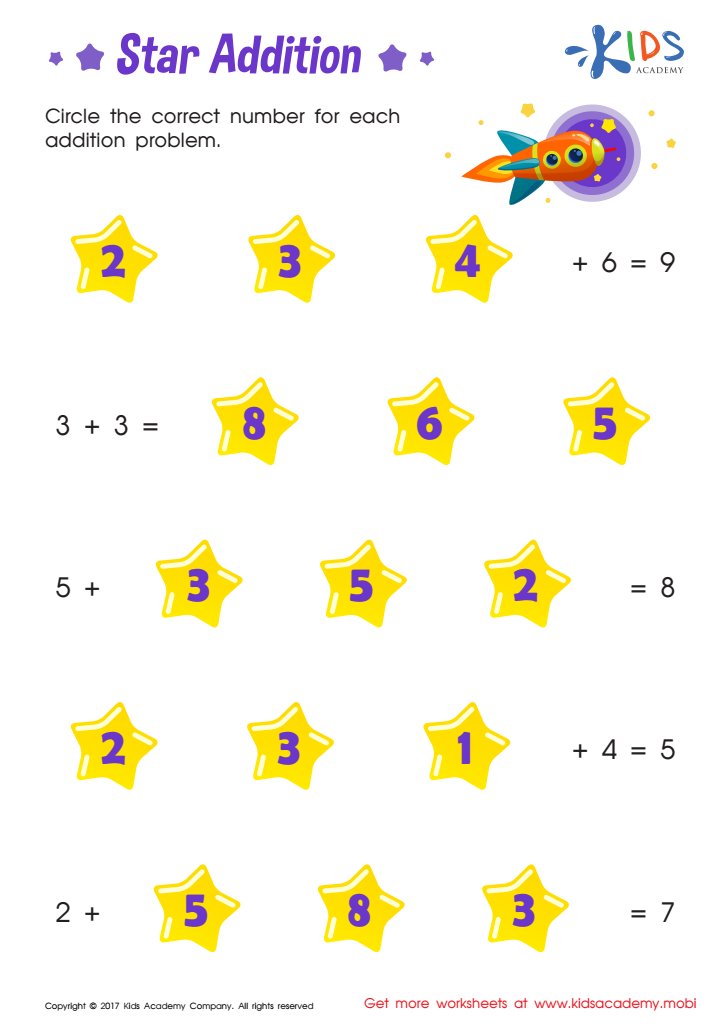
Star Addition Printable
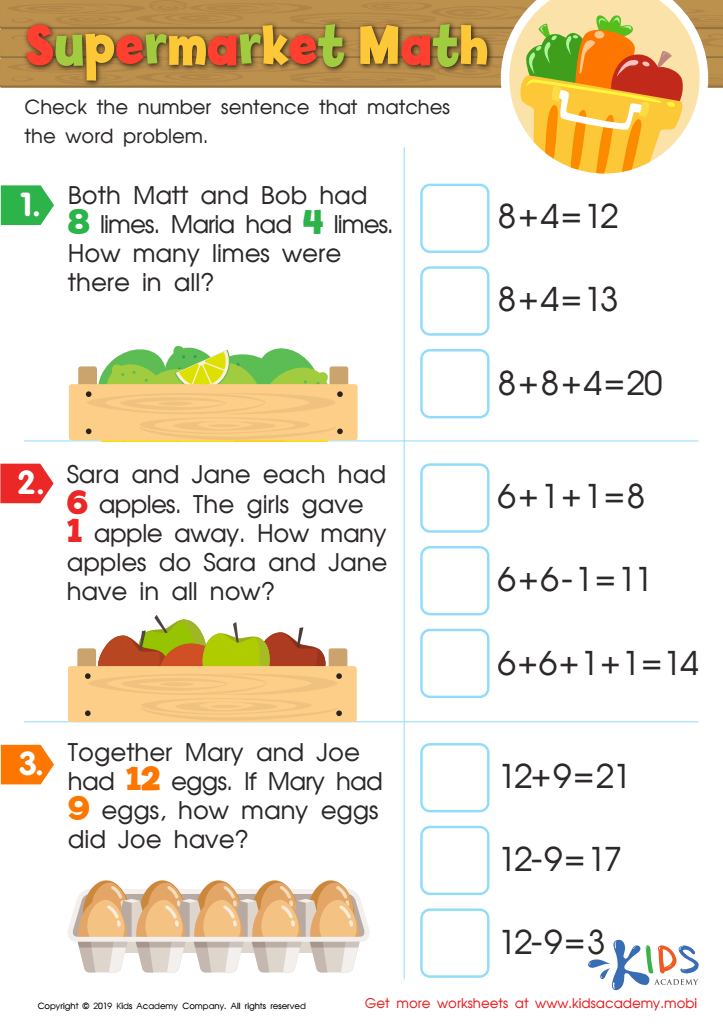
Supermarket Math Worksheet








Basic arithmetic, specifically normal addition and subtraction, serves as the cornerstone of early mathematical understanding for children aged 3-5. During these formative years, students develop crucial cognitive skills, and grasping these foundational concepts enhances their ability to think logically and solve problems. Mastery of basic addition and subtraction helps children establish number sense, which is essential for their future academic success.
Incorporating these skills into daily activities fosters an engaging learning environment and allows for hands-on experiences. For example, parents and teachers can use toys, snacks, or even simple drawings to visually demonstrate these concepts. This not only makes learning fun but also meaningful, as children can relate mathematics to real-life situations.
Moreover, early proficiency in these skills builds confidence and encourages a love for learning. Children often feel a sense of accomplishment when they can successfully manipulate numbers, setting a positive attitude toward future math-related tasks. By focusing on basic addition and subtraction, parents and educators lay a solid groundwork for more complex mathematical concepts, ensuring that children are well-prepared for the challenges they will face in school. Ultimately, fostering early math skills is an investment in a child’s academic journey and personal development.








