Differentiating shapes Normal Geometry Worksheets for Ages 3-5
3 filtered results
-
From - To
Introduce young learners to the fascinating world of shapes with our Differentiating Shapes Geometry Worksheets, designed specifically for ages 3-5. These engaging worksheets help children identify, differentiate, and understand basic geometric shapes through fun activities and exercises. Each sheet is thoughtfully crafted to cater to early learning levels, promoting critical thinking and problem-solving skills in a playful manner. Perfect for both classroom and at-home learning, these worksheets provide a solid foundation in geometry, setting preschoolers on a successful math journey. Discover the joy of learning shapes with our expertly designed resources on Kids Academy!
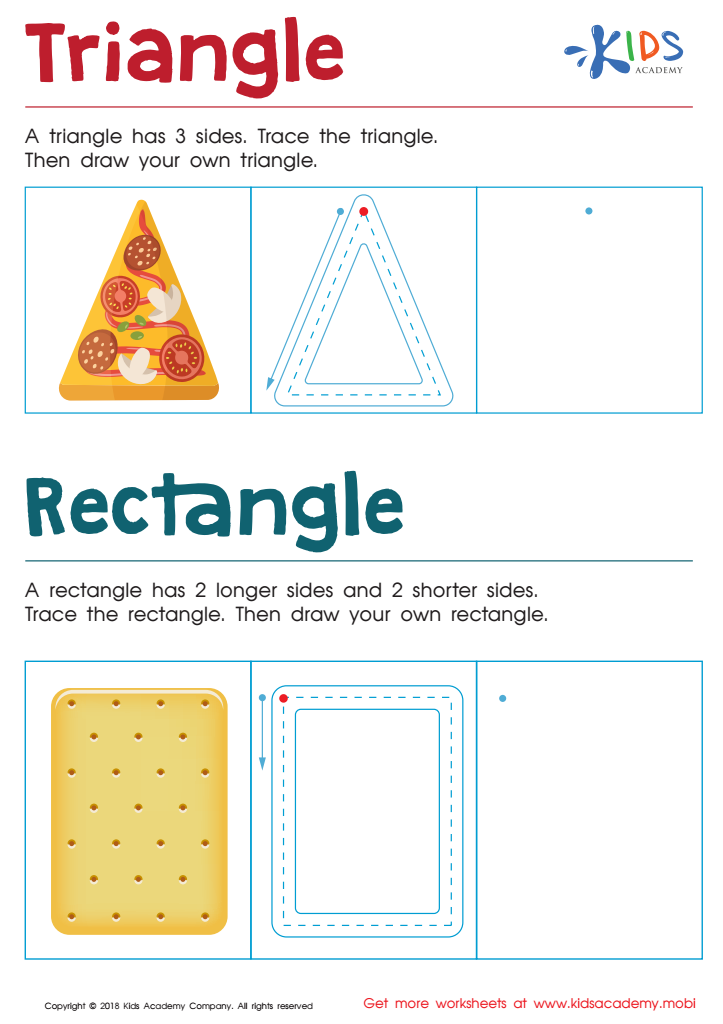
Triangle Rectangle Worksheet
 Assign to My Students











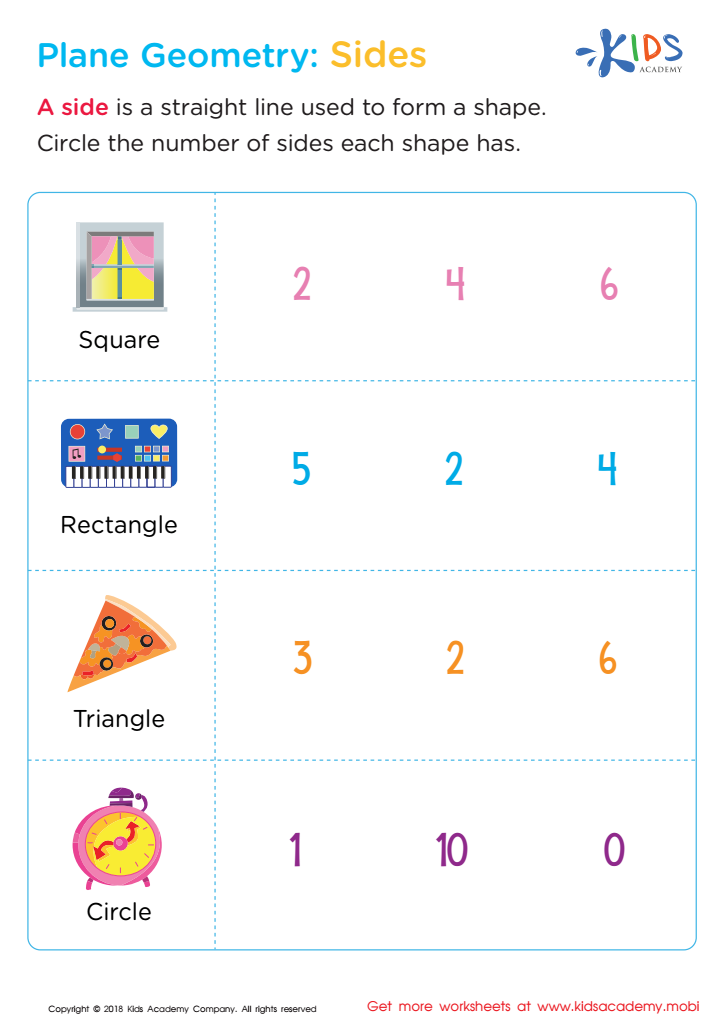
Plane Geometry: Sides Worksheet
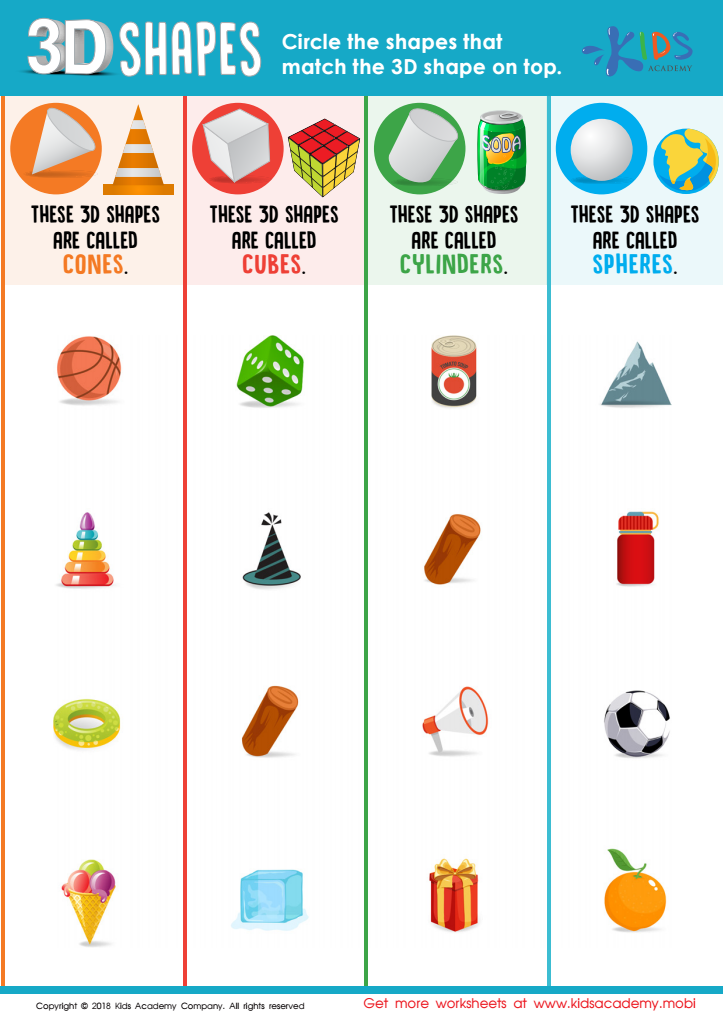
3D Shapes Worksheet








Differentiating shapes is a fundamental aspect of early childhood education, particularly in developing a child's cognitive, motor, and spatial skills. When teachers and parents focus on teaching children ages 3 to 5 about different shapes, they help build the foundation for future math and geometry concepts. Recognizing and categorizing shapes enhances visual perception and memory, allowing children to notice patterns and sequences in their surroundings.
At this developmental stage, children learn best through hands-on activities and engaging play. Activities like sorting objects by shape, drawing, and using shape toys encourage fine motor skills and hand-eye coordination. Moreover, understanding shapes is closely linked to developing language skills. As children learn to name and describe shapes, they expand their vocabulary and communication abilities.
Differentiating between shapes also helps in problem-solving and critical thinking. For instance, recognizing shapes is crucial in everyday tasks such as navigating spaces, assembling puzzles, and building structures with blocks. Fostering an early awareness of geometry creates a seamless transition to more complex mathematical concepts later.
In summary, parents and teachers should care about differentiating shapes at a young age because it promotes a comprehensive developmental foundation, encompassing cognitive, motor, and language skills, ensuring children are well-prepared as they progress in their education journey.








