
Animal recognition Normal Numbers Worksheets for Ages 3-5
4 filtered results
Difficulty Level
Grade
Age
-
From - To
Subject
Activity
Standards
Introduce your little ones to the magical world of numbers through our Animal Recognition Normal Numbers Worksheets, designed specially for ages 3-5. These engaging activities combine the excitement of learning numbers with fun animal themes to capture young minds. Each worksheet helps children recognize, count, and write numbers, enhancing their early math skills while fostering a love for animals. Ideal for preschool and kindergarten students, our worksheets provide a playful and educational way to develop numeracy and cognitive skills. Visit Kids Academy for free, high-quality, and age-appropriate resources tailored to boost your child's learning experience.
Favorites
With answer key
Interactive
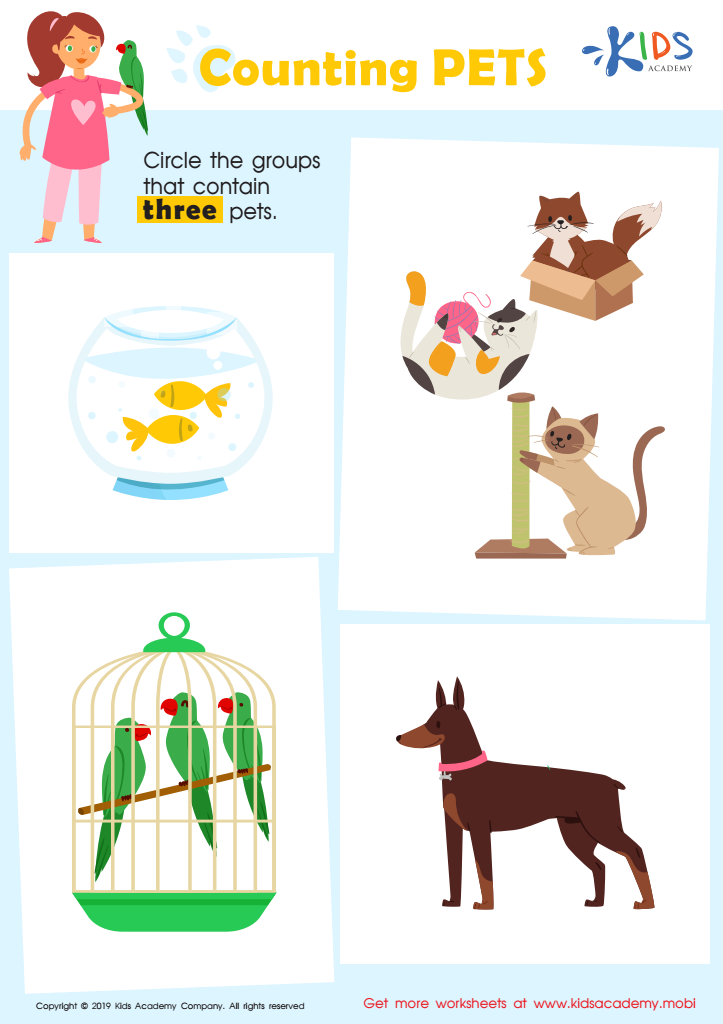
Counting Pets Worksheet
Kids adore their pets, making this free pet counting worksheet the perfect way to combine something they love with math skills. They'll count the number of pets, circle the pictures with three pets, and use one-to-one picture representation to help. This exercise will cultivate their learning and reinforce their love of animals!
 Assign to My Students
Counting Pets Worksheet
Worksheet
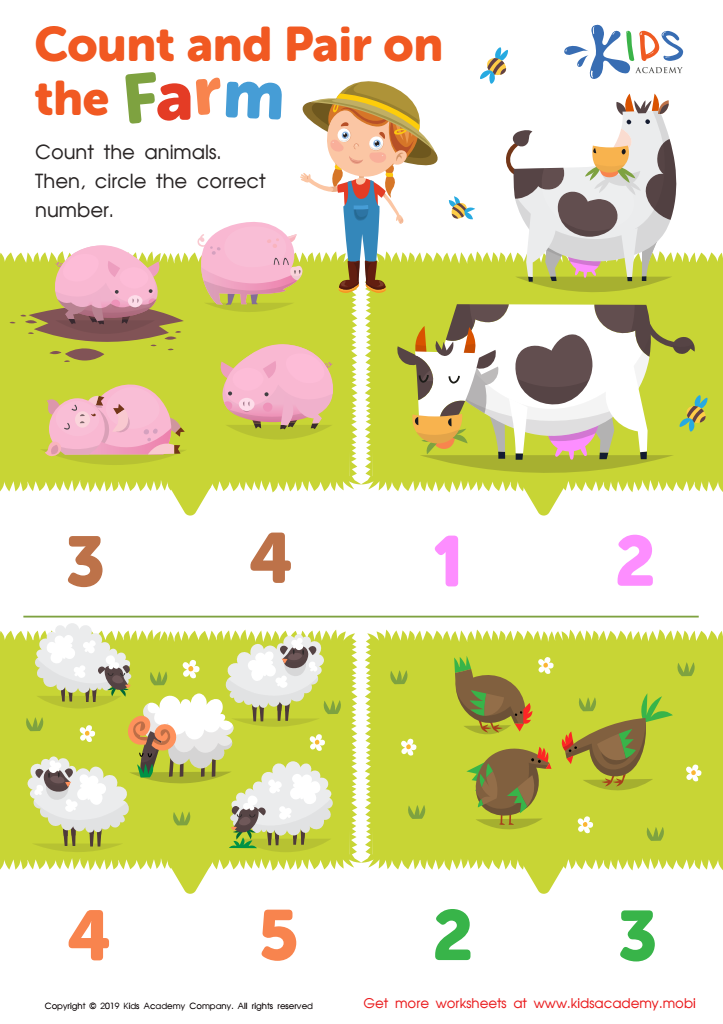
Count and Pair on the Farm Worksheet
Farms are essential to our society: they grow food and crops, and raise animals for us to use. Kids can have a great time at a farm, engaging in activities like identifying animals, counting them, and circling the correct number. On this worksheet, ask your kids to try all three!
Count and Pair on the Farm Worksheet
Worksheet
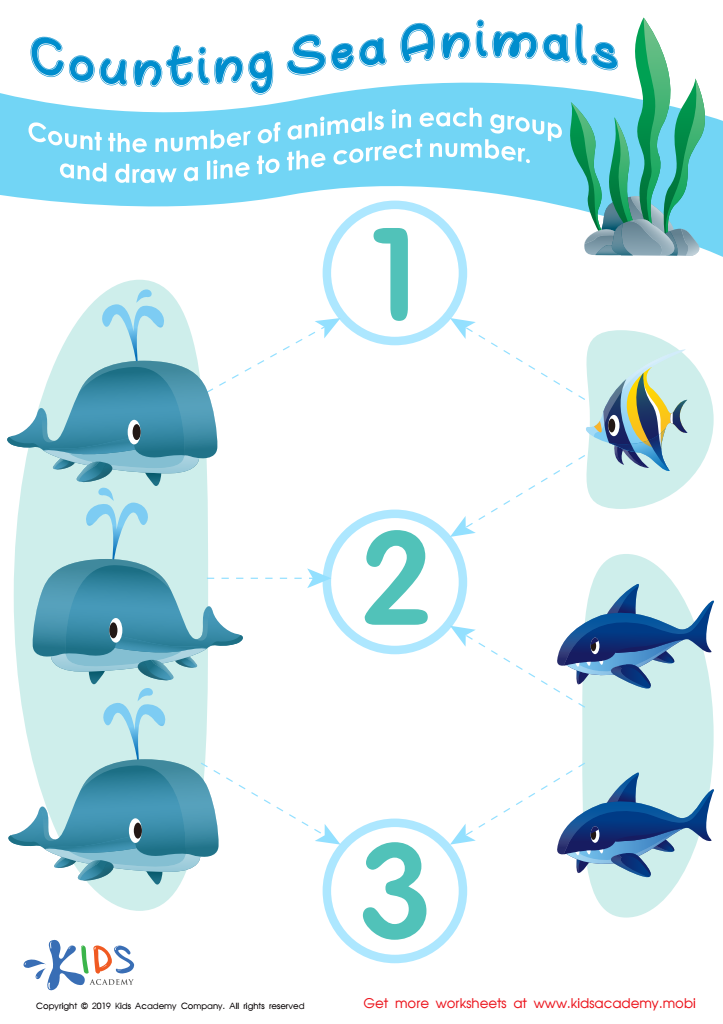
Counting Sea Animals Worksheet
Kids adore sea creatures for their captivating, unknown nature. Let them use this free worksheet to practice counting, where they match numbers to groups of animals. Through traceable lines, they'll easily connect numbers to sea creatures and learn math with vibrant, underwater fun!
Counting Sea Animals Worksheet
Worksheet
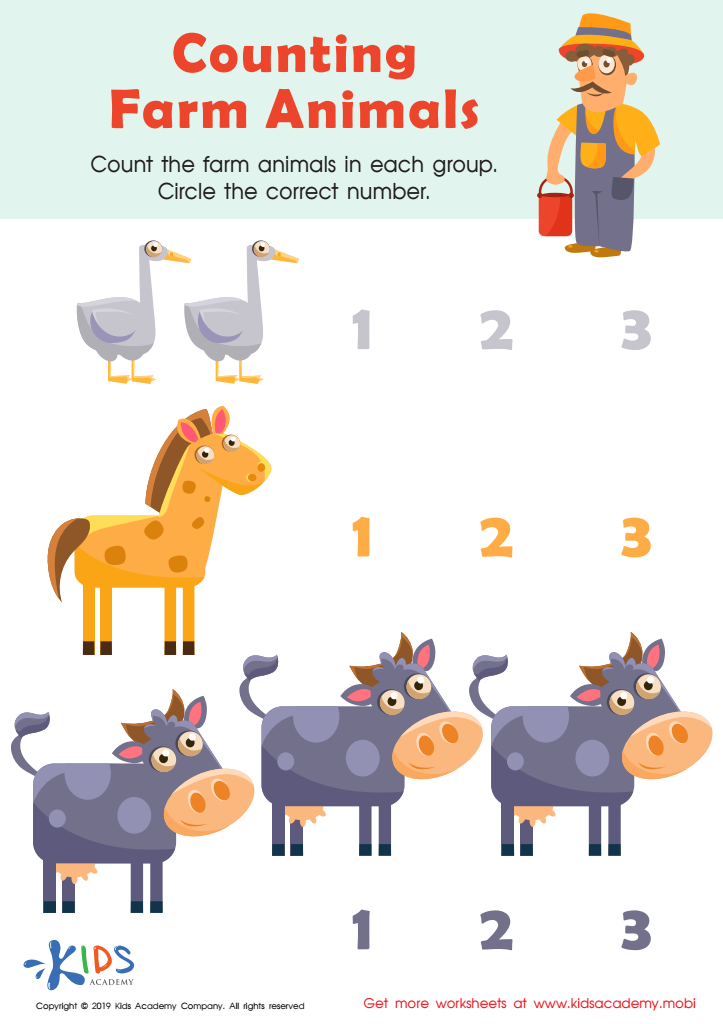
Counting Farm Animals Worksheet
Kids love farms! That's why this free farm animals counting worksheet is great for building number sense and counting skills. Have your young mathematician count the pictures, then circle the corresponding number. It's a fun and meaningful way to practice counting.
Counting Farm Animals Worksheet
Worksheet
Join Kids Academy for Free
Who is primarily going to use this learning content?








Parents and teachers should care about animal recognition and normal numbers for children aged 3-5 because these foundational skills contribute significantly to early cognitive development and future academic success. Recognizing animals helps kids categorize and recall information, promoting memory development and enhancing observation skills. This can cultivate a child's curiosity and emotional connection to the world, fostering an appreciation for nature and diversity.
Understanding normal numbers sets the stage for more advanced mathematical concepts. Engaging young children with numbers lays the groundwork for number sense—a critical component of early math skills. Mastery of counting, sorting, and basic number recognition improves problem-solving abilities, logical thinking, and enhances spatial awareness.
These skills are taught through interactive play, stories, songs, and hands-on activities, making learning enjoyable and effective. When parents and teachers focus on these essential areas, they're not just preparing children for school. They're nurturing a love for learning, boosting self-confidence, and setting the stage for successful academic and social experiences.
Combined, animal recognition and numerical skills provide a well-rounded approach to early childhood education, essential for developing well-adapted, curious, and intelligent young learners. Investing time in these areas now can yield long-term benefits for cognitive development and academic achievement.








