
Basic Arithmetic Normal Math Worksheets for Ages 3-5
9 filtered results
Difficulty Level
Grade
Age
-
From - To
Subject
Activity
Standards
Discover engaging Basic Arithmetic Normal Math Worksheets designed specifically for children aged 3-5. These worksheets promote foundational math skills through fun and interactive activities, tailored to nurture early mathematical understanding. From simple addition and subtraction to number recognition, our carefully crafted exercises encourage young learners to explore math in a playful environment. Each worksheet is designed to enhance problem-solving abilities while ensuring kids develop a strong grasp of basic arithmetic concepts. Perfect for home learning or classroom activities, our resources support early mathematical development and stimulate a lifelong love for learning. Start your child's math journey with our delightful worksheets today!
Favorites
With answer key
Interactive
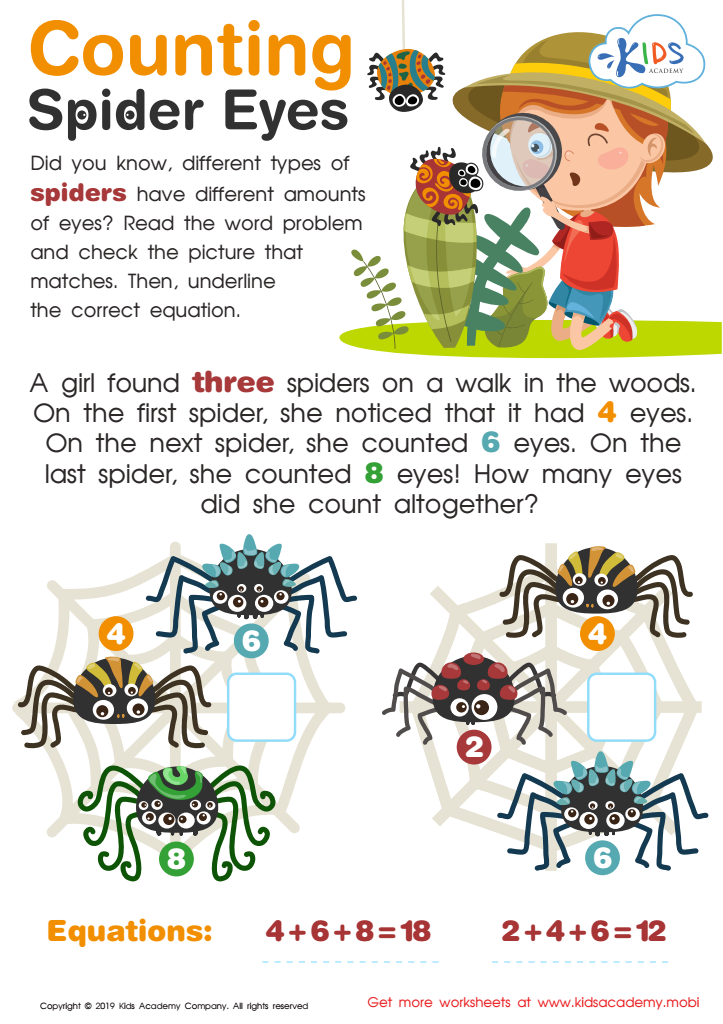
Counting Spider Eyes Worksheet
Did you know different spiders have different eye numbers? Kids will love learning this fact and solving the spider word problems on this free worksheet! Word problems promote a deeper understanding of the concept, plus they get to add up the spiders’ eyes while solving addition problems with more than one addend. Fun and math all in one!
 Assign to My Students
Counting Spider Eyes Worksheet
Worksheet
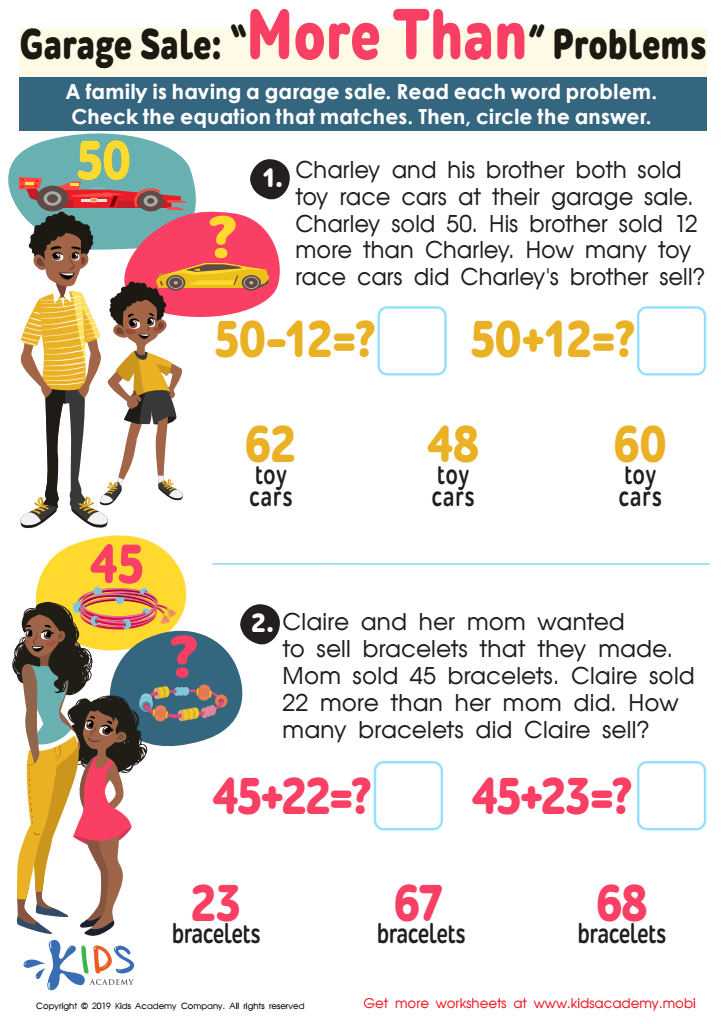
Garage Sale - More yhan Worksheet
The whole family can join in on the fun with this free worksheet! It helps kids practice math word problems while assisting their friends with a garage sale. Kids learn to identify "More Than" key words and pick the right equation, improving their order of operations skills. Download the PDF and get started!
Garage Sale - More yhan Worksheet
Worksheet
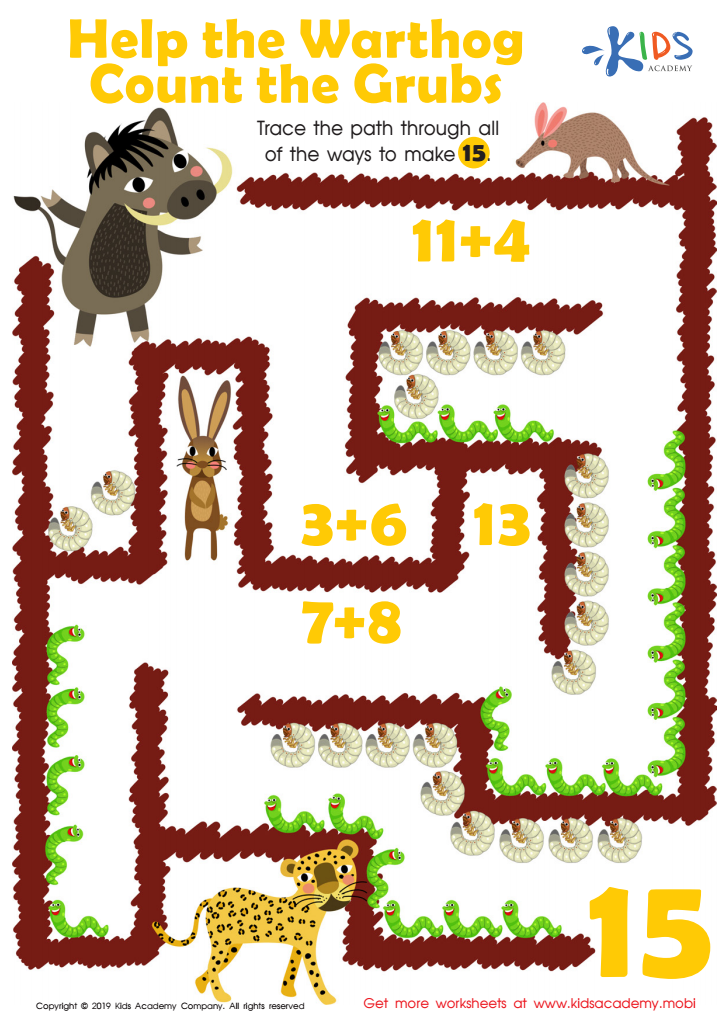
Help the Warthog Count the Grubs Worksheet
Test your kids' knowledge of wild animals. Ask them to name some they know, then have them identify the animals on this worksheet. If they can't, take the time to tell them the names. Finally, trace the warthog's path through the maze by solving the equations and going through paths that make 15.
Help the Warthog Count the Grubs Worksheet
Worksheet
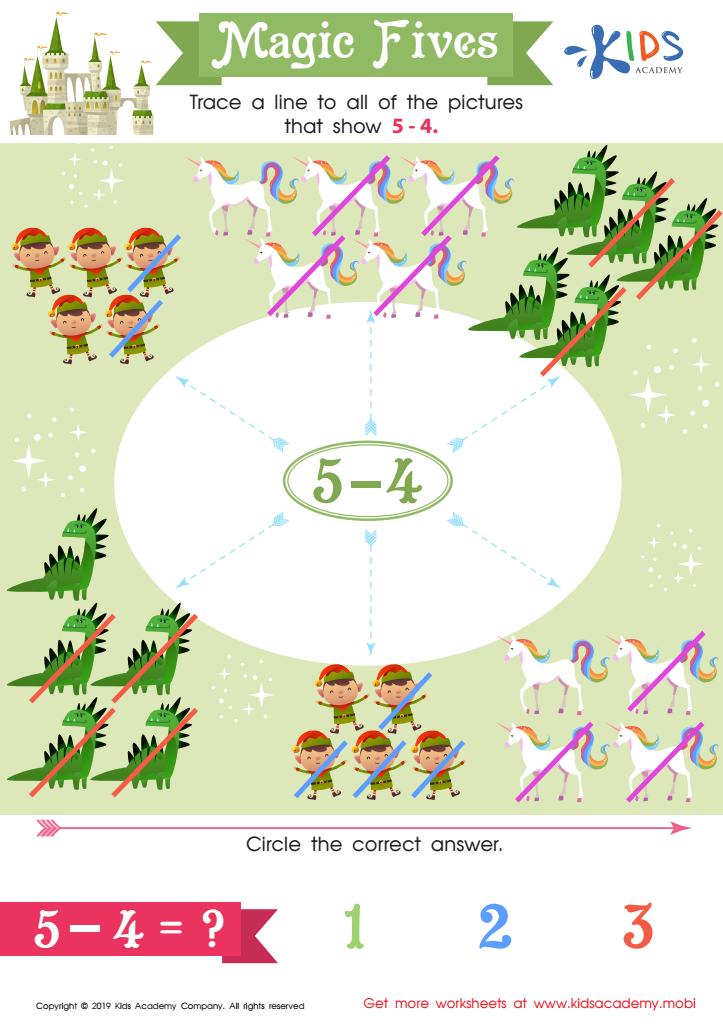
Magic Fives Worksheet
Help your students identify the objects & people in the worksheet. Point to the equation 5 -4 in the center, then get them to count the items and trace a line connecting those that add up to 5 - 4.
Magic Fives Worksheet
Worksheet
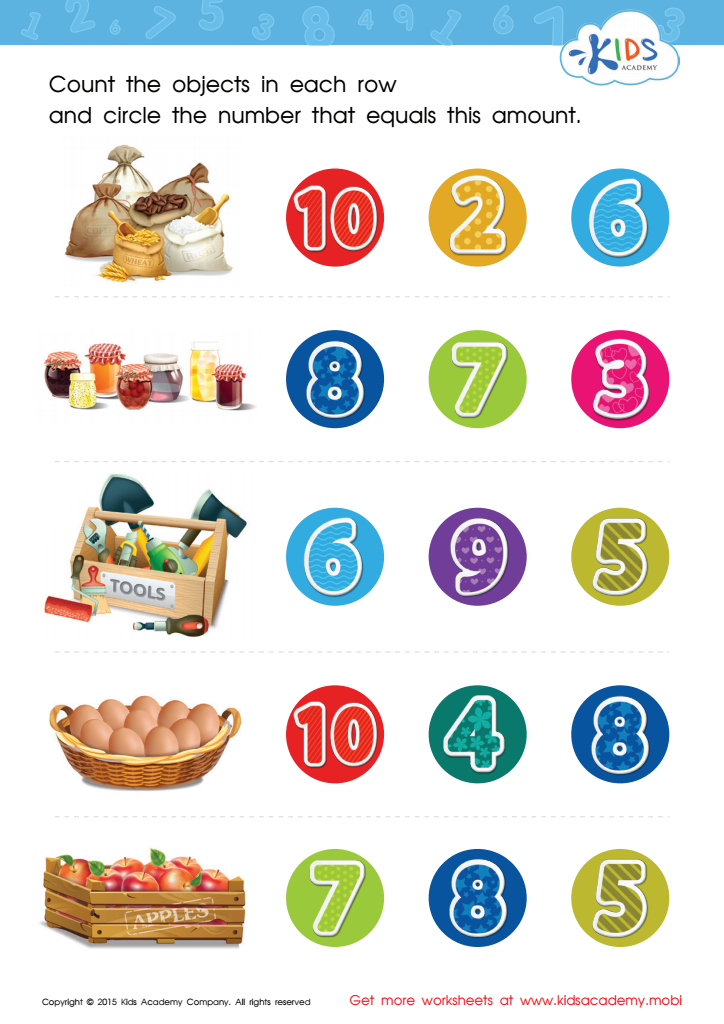
Count and Match 6 – 10 Math Worksheet
Print this fun math worksheet for your kindergartener and help them practice counting up to ten! They'll draw a line from the objects to the correct numbers, visualizing the problem and having fun at the same time. Kids Academy offers more free printable worksheets. Get them now!
Count and Match 6 – 10 Math Worksheet
Worksheet
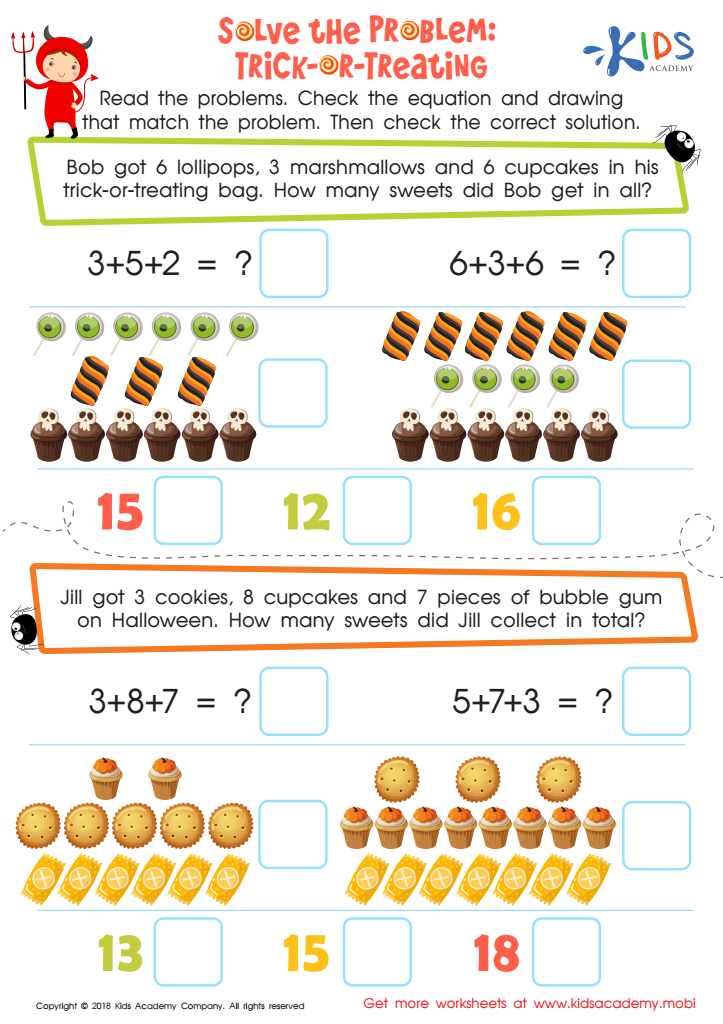
Solve the Problem: Trick–or–treating Worksheet
Kids will love this fun PDF worksheet for trick-or-treating! It's packed with yummy images and math practice. They can read the word problems, count and add numbers, check their answers, and match the addition equations with the pictures. Math made delicious!
Solve the Problem: Trick–or–treating Worksheet
Worksheet
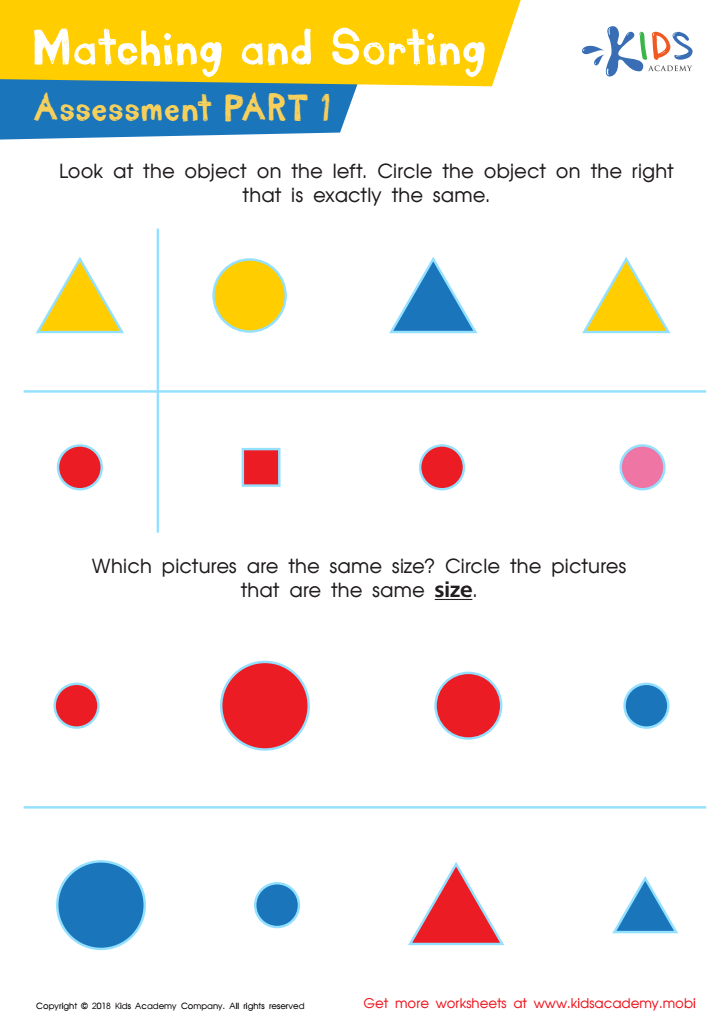
Matching and Sorting for Kindergarten: Assessment 1 Worksheet
Kids can sharpen their visual discrimination skills and analyze properties of shapes with this free downloadable worksheet. They'll identify color, size, shape, and symmetry, working with bright primary colors. This helps build a strong geometric foundation, learning to identify shape attributes.
Matching and Sorting for Kindergarten: Assessment 1 Worksheet
Worksheet
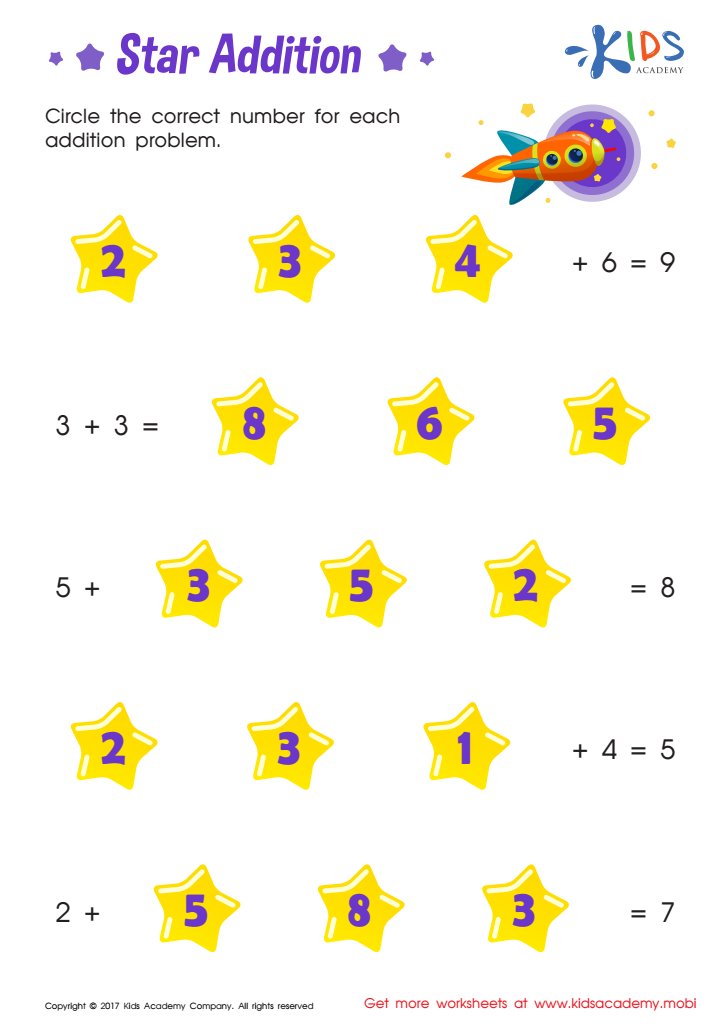
Star Addition Printable
Is your child bored with the school math assignments? For those who love a challenge, this addition worksheet is perfect. It'll help your child practice addition, understand equations and switch between methods. Have them try each answer choice to eliminate wrong ones and for advanced learners, teach them to use subtraction. Let your child have fun while learning more advanced math concepts!
Star Addition Printable
Worksheet
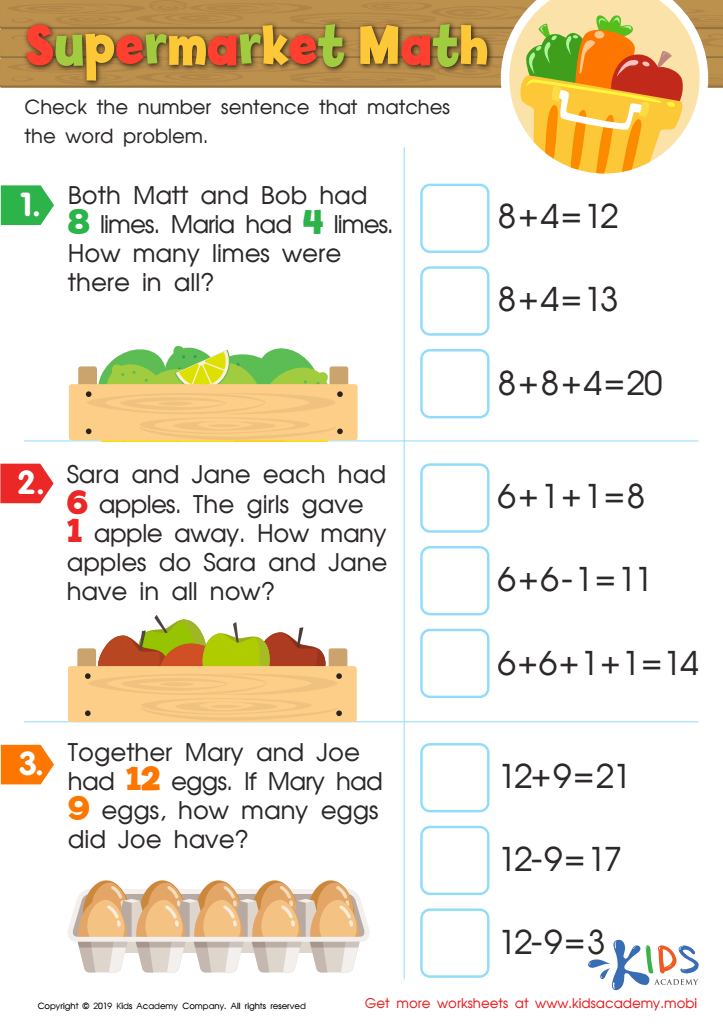
Supermarket Math Worksheet
Take your kids to the supermarket and ask what they're looking forward to buying. Help them solve the three questions in the worksheet by interpreting each one into an equation, then choose the right answer.
Supermarket Math Worksheet
Worksheet
Join Kids Academy for Free
Who is primarily going to use this learning content?




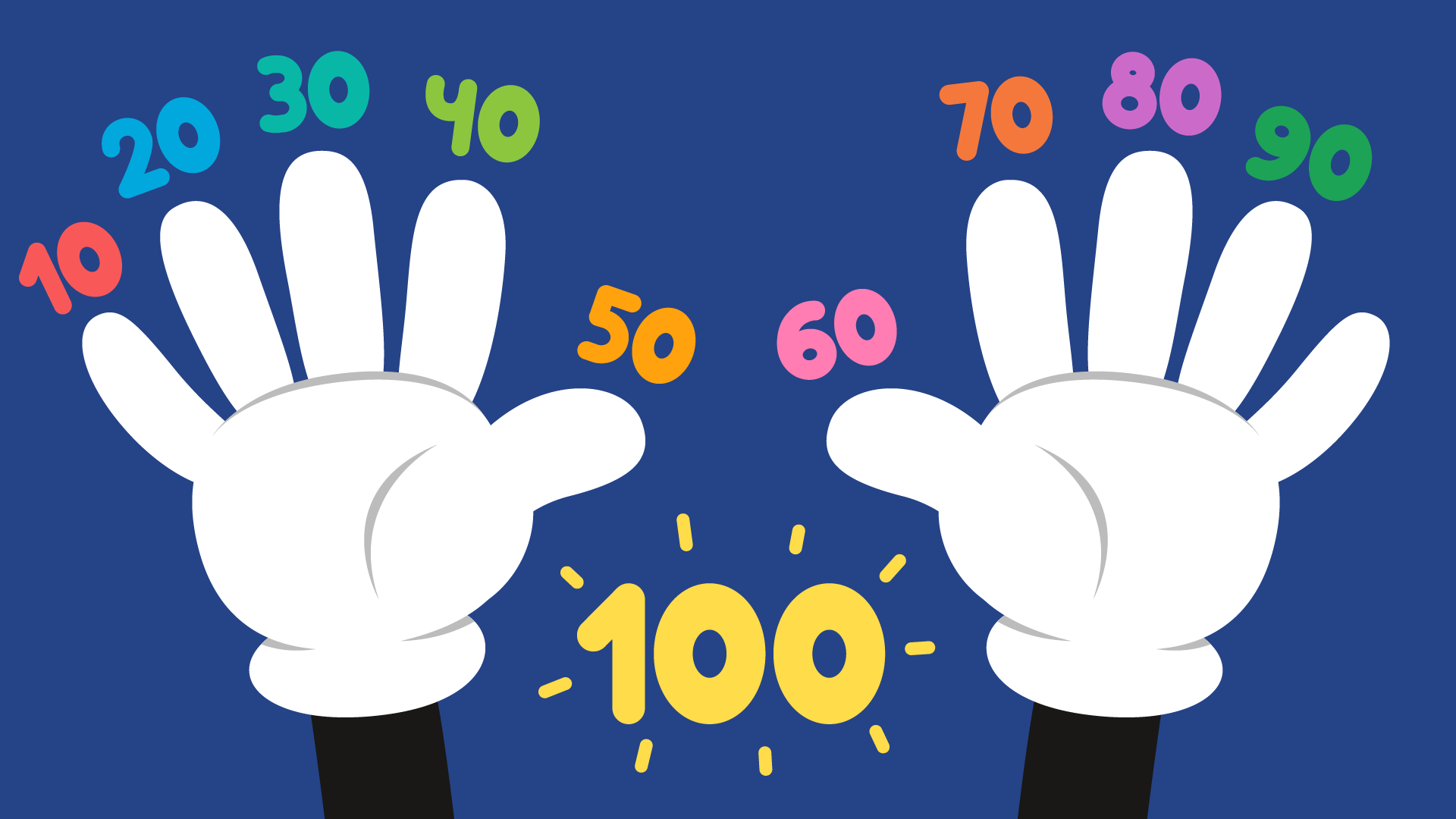



Basic Arithmetic and early math concepts are crucial for young children's cognitive development. During ages 3-5, children experience significant brain growth and learning; exposure to basic arithmetic during this time lays a strong foundation for future mathematical skills. Early engagement with numbers helps hone critical thinking, problem-solving abilities, and promotes logical reasoning.
Parents and teachers should care about this foundational math because it encourages children to explore their environment, develop curiosity, and build a positive attitude towards learning. Simple activities like counting objects, recognizing shapes, and understanding basic addition and subtraction through play foster essential skills. These experiences ensure that children grasp foundational math concepts, making advanced math easier to learn later.
Moreover, mathematics in early childhood expands vocabulary and language skills, as children learn to articulate numbers and concepts. This empowers confidence and nurtures a love for learning, setting the groundwork for lifelong educational success. Ultimately, prioritizing Basic Arithmetic at this young age can lead to enhanced academic performance, improved other skills such as literacy, and a more engaged, inquisitive approach to the world—qualities that benefit children in all aspects of their development.








