Comparison Skills Normal Math Worksheets for Ages 3-5
3 filtered results
-
From - To
Enhance your child's early math abilities with our Comparison Skills Normal Math Worksheets, designed specifically for ages 3-5. These engaging and age-appropriate worksheets focus on teaching young learners how to identify similarities and differences between objects, promoting critical thinking and observational skills. Each worksheet offers fun illustrations and activities that encourage foundational math concepts through interactive learning. Perfect for parents and educators aiming to build a strong mathematical foundation, these worksheets make comparison learning enjoyable while reinforcing essential cognitive skills. Download our printable resources today and watch your child's confidence and understanding in math grow!
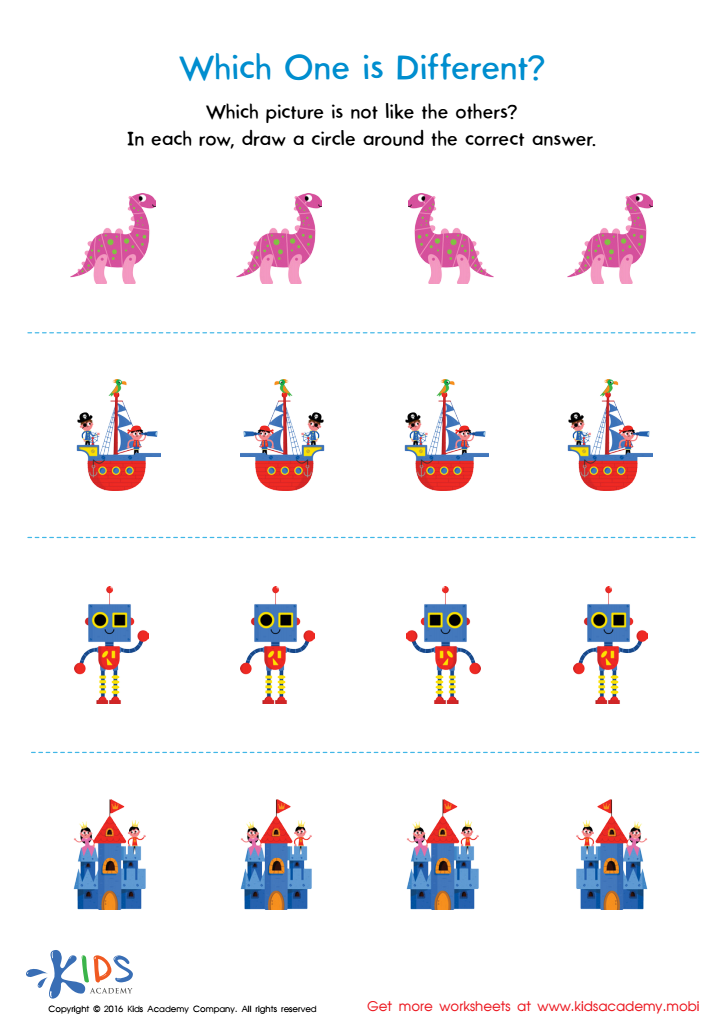
Which One Is Different Worksheet
 Assign to My Students
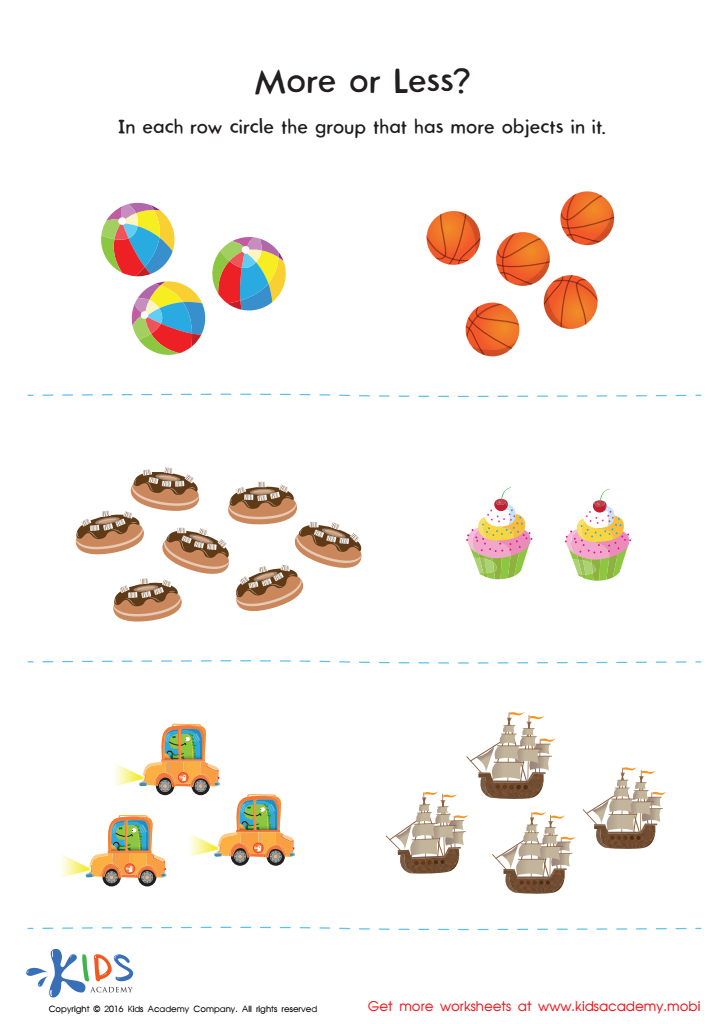
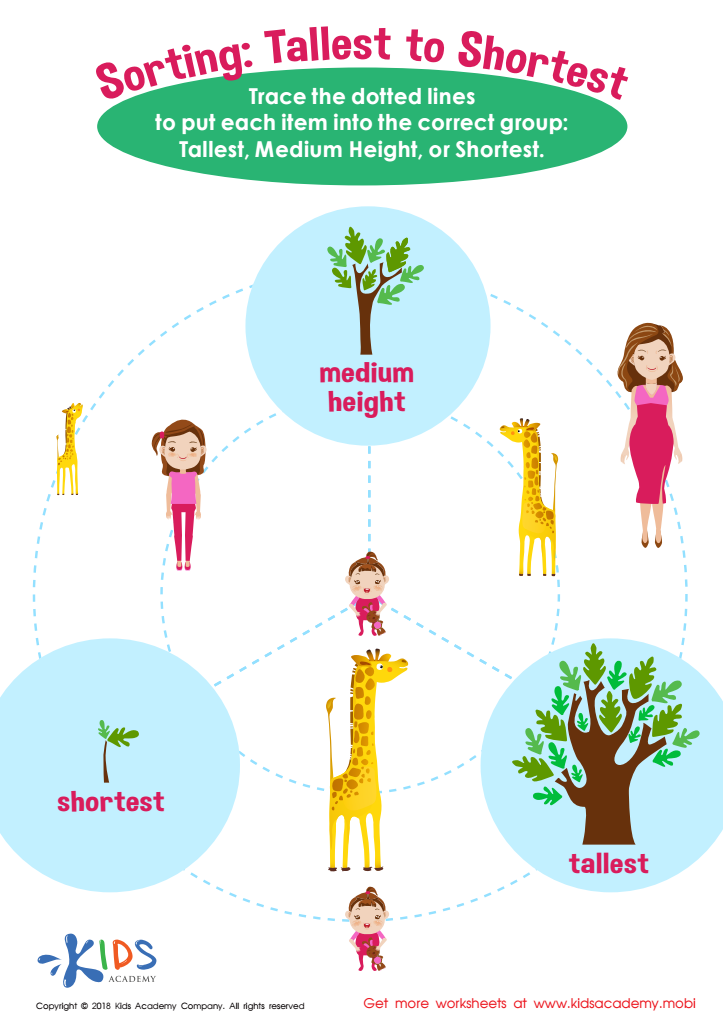
Sorting: Tallest to Shortest Worksheet







Parents and teachers should prioritize comparison skills in early math education for children ages 3-5 because these foundational skills are crucial for their cognitive development and future learning. Comparison skills involve recognizing differences and similarities, which help children classify objects, understand quantity, and establish relationships between numbers. By engaging young learners in activities that promote comparison—such as sorting objects, comparing heights, or differentiating colors—they enhance critical thinking and problem-solving abilities.
Comparing items fosters language development as children learn to articulate their observations with terms like "bigger," "smaller," "more," and "less." This vocabulary is essential for effective communication in mathematics and beyond. Additionally, mastering comparison skills sets the stage for more advanced concepts, including addition and subtraction, as children begin to manipulate quantities and understand numerical value.
Encouraging comparisons in playful and engaging ways also nurtures a child's natural curiosity and love for learning. Overall, incorporating comparison skills in daily activities equips children with the necessary tools not only for their mathematical growth but also for academic success in various subjects, preparing them for a competitive and analytical world.








