Shape Recognition Normal Math Worksheets for Ages 3-5 - Page 2
25 filtered results
-
From - To
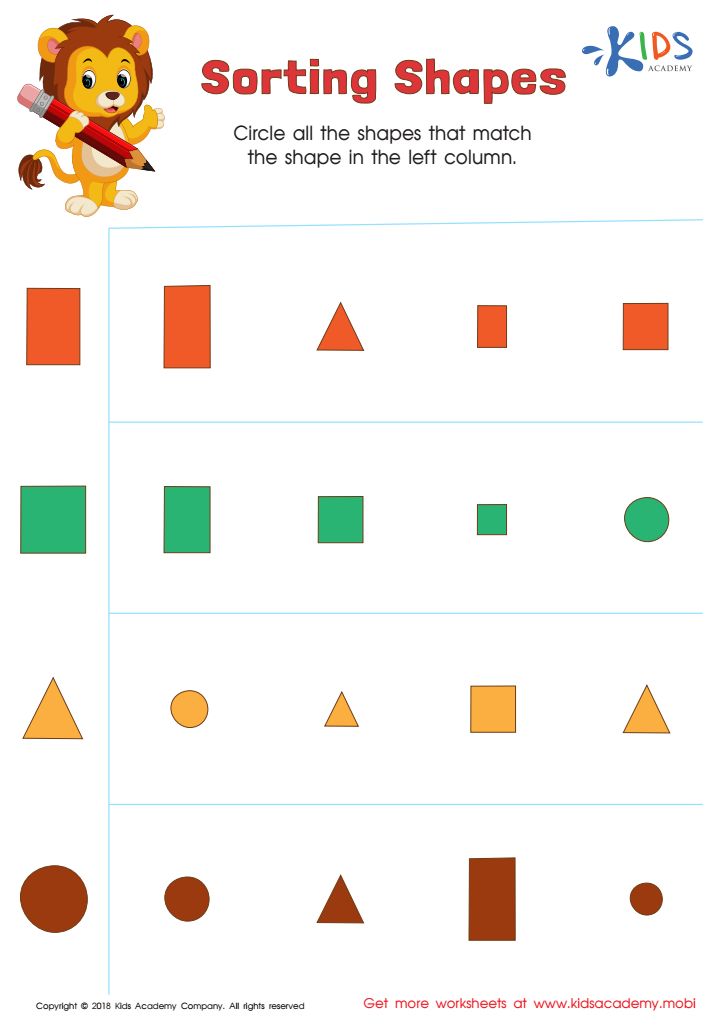
Sorting Shapes - Part 2 Worksheet
 Assign to My Students







Shape recognition is a vital foundational skill for children aged 3-5, serving as an essential building block for future mathematical understanding and problem-solving abilities. Parents and teachers should care about this aspect of early education because it contributes to cognitive development, enhances spatial awareness, and lays the groundwork for more complex mathematical concepts later on.
Learning to recognize shapes helps children classify objects, understand relationships between them, and develop critical thinking skills. Engaging with shapes also fosters creativity, as children often express themselves through art and play that incorporates shapes in various forms.
Moreover, shape recognition aids in developing language skills, as children learn to verbalize shapes and their characteristics. This skill not only promotes vocabulary growth but also enhances communication abilities.
Additionally, activities focused on shape recognition can be highly interactive and enjoyable, providing opportunities for socialization and collaborative learning among peers. When parents and teachers emphasize this skill, they create a rich learning environment, enriching children's educational experience and preparing them for future academic success. Ultimately, caring about shape recognition translates into nurturing well-rounded, confident, and capable learners.








