Understanding patterns Normal Math Worksheets for Ages 3-5
3 filtered results
-
From - To
Discover our "Understanding Patterns" math worksheets, designed for children ages 3-5! These engaging and educational worksheets introduce young learners to the concept of patterns through fun visuals and interactive activities. Kids will explore various types of patterns, enhancing their critical thinking and problem-solving skills. Our age-appropriate exercises focus on colorful shapes, numbers, and everyday objects, making learning a joyful experience. Perfect for parents and educators, these worksheets ensure that children build a strong foundation in early mathematics. Dive into the world of patterns and watch your child’s learning journey flourish with our specially crafted resources!
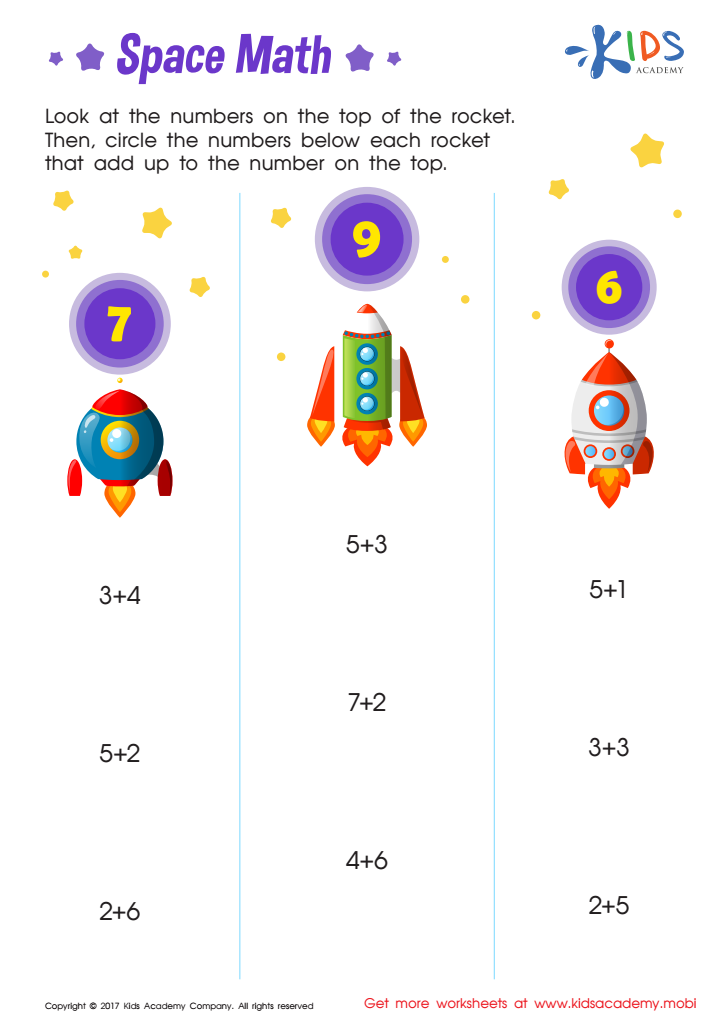
Addition: Space Math Worksheet
 Assign to My Students
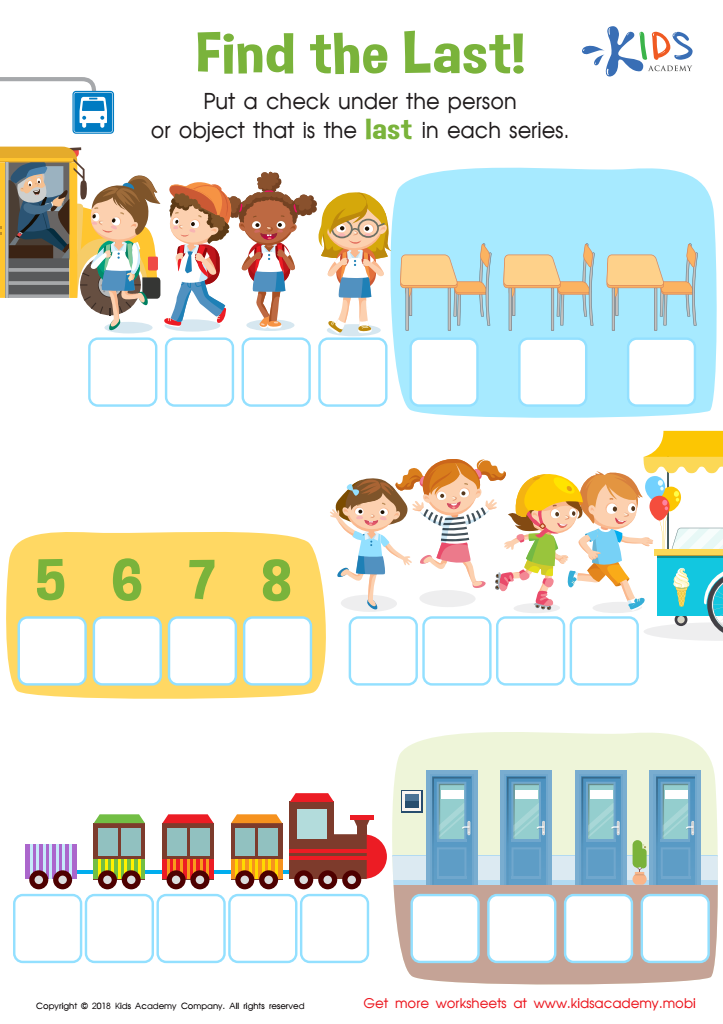
Find the Last! Worksheet
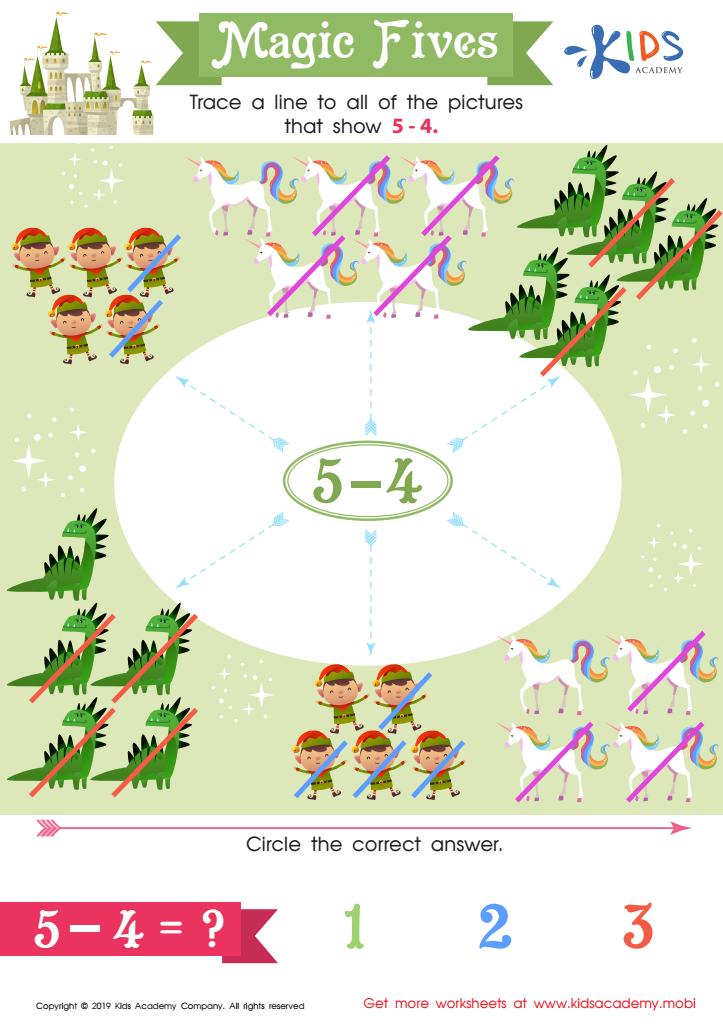
Magic Fives Worksheet








Understanding patterns is crucial for children aged 3-5 as it lays the foundation for early mathematical skills and problem-solving abilities. During this developmental phase, children's brains are highly receptive to recognizing and creating patterns, which cultivates critical thinking and analytical skills. When parents and teachers emphasize pattern recognition, children learn to anticipate what comes next, thus enhancing their logical reasoning and creating a sense of order in their environment.
Furthermore, learning about patterns in a playful and interactive manner makes math enjoyable for young learners. Engaging in activities such as sorting objects, recognizing sequences in nature, or using music and rhythm helps instill a love for learning. Patterns also bridge the gap to more complex mathematical concepts such as addition, subtraction, and categorization later in their educational journey.
Moreover, incorporating pattern understanding can improve children's overall cognitive development, including memory and attention skills. These early experiences contribute significantly to their academic success later on. When parents and teachers recognize and nurture these foundational skills, they play a vital role in helping children become confident, skilled learners, setting the stage for a lifelong appreciation of mathematics and logical reasoning.








