Matching skills Normal Matching Worksheets for Ages 3-5
4 filtered results
-
From - To
Boost your child's cognitive development and problem-solving abilities with our "Matching Skills Normal Matching Worksheets for Ages 3-5". Designed to nurture visual recognition, attention to detail, and hand-eye coordination, these engaging activities make learning fun and effective. Perfect for preschoolers, our colorful worksheets encourage children to match shapes, colors, objects, and more, promoting critical thinking and early math skills. Trusted by educators and parents alike, our age-appropriate matching exercises are an ideal foundation for academic success and lifelong learning. Download now to transform everyday learning into playful adventures for your little one!
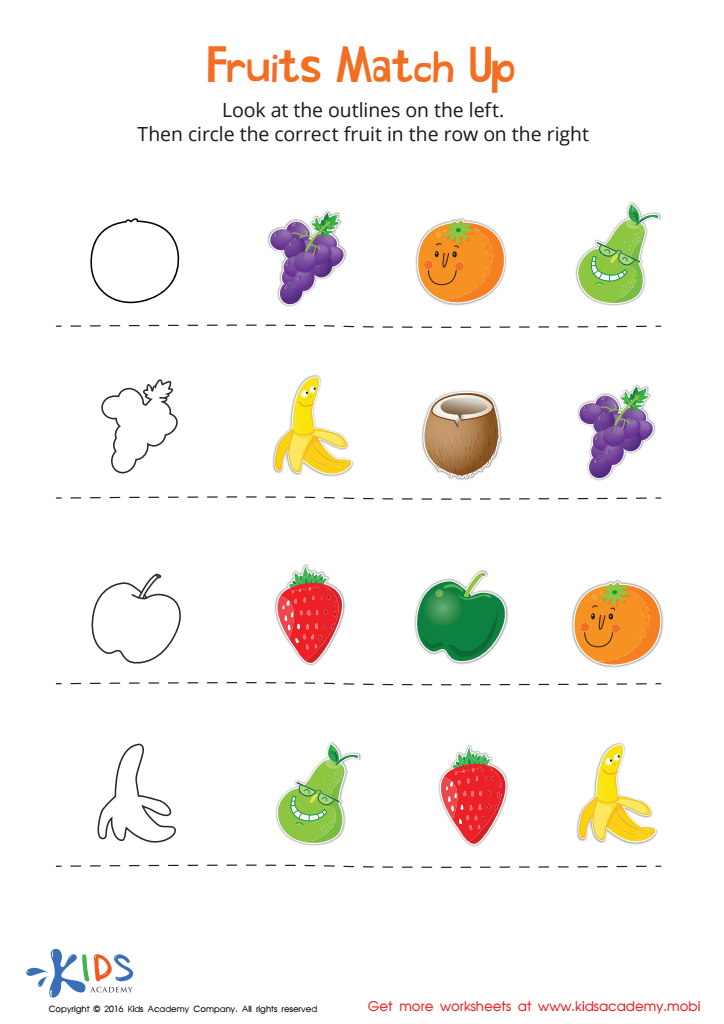
Fruits Match Up Worksheet
 Assign to My Students
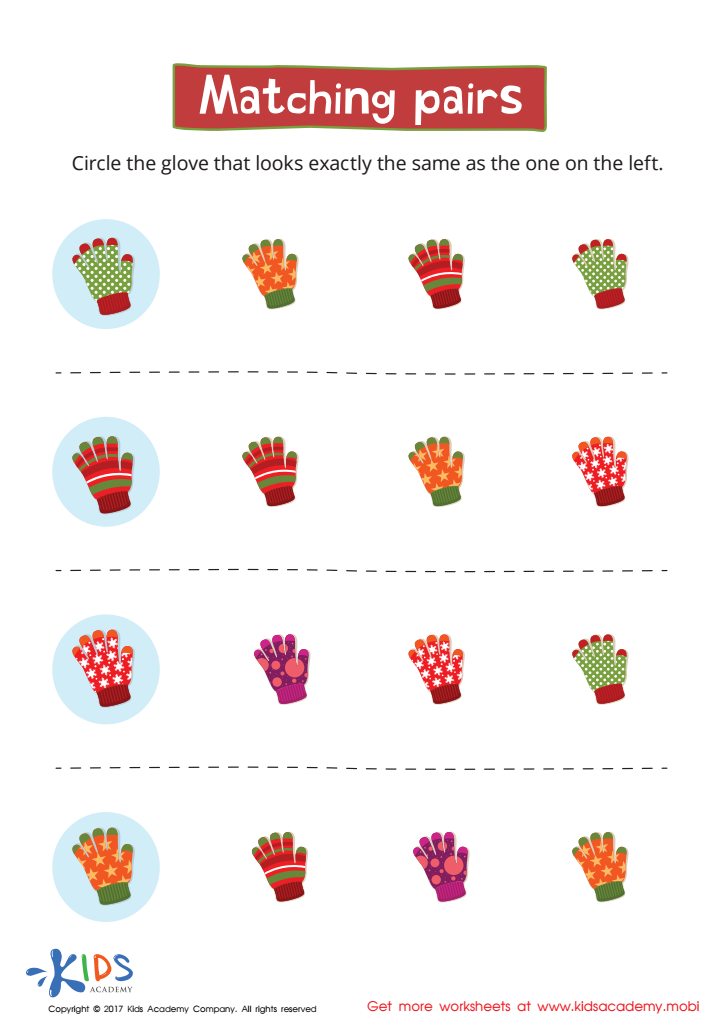
Matching: Matching Pairs Worksheet
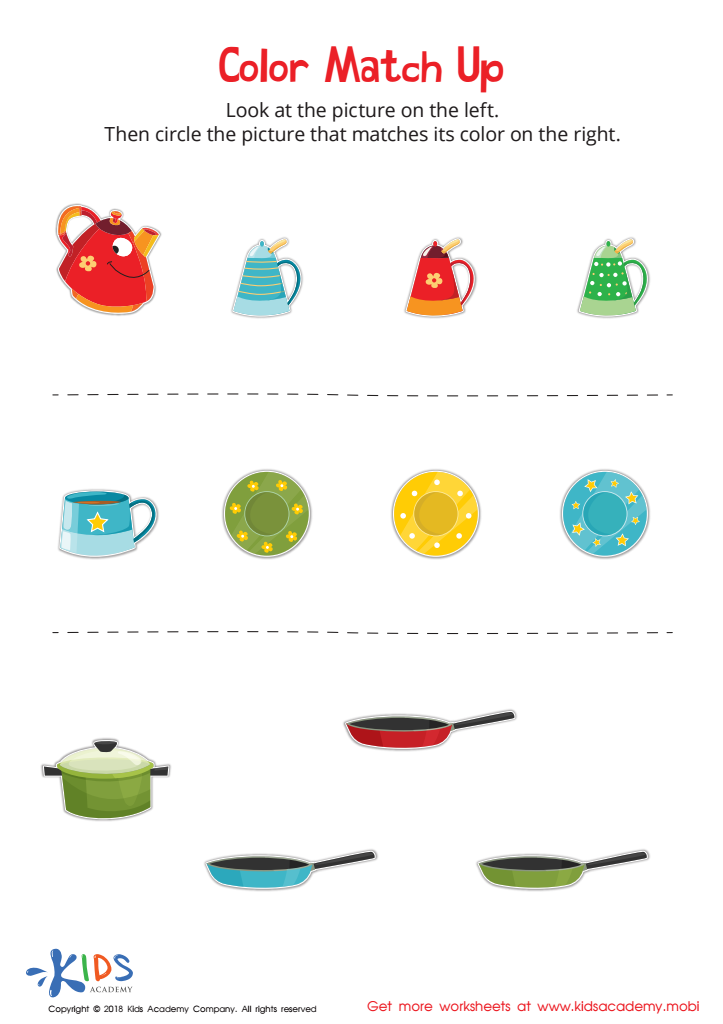
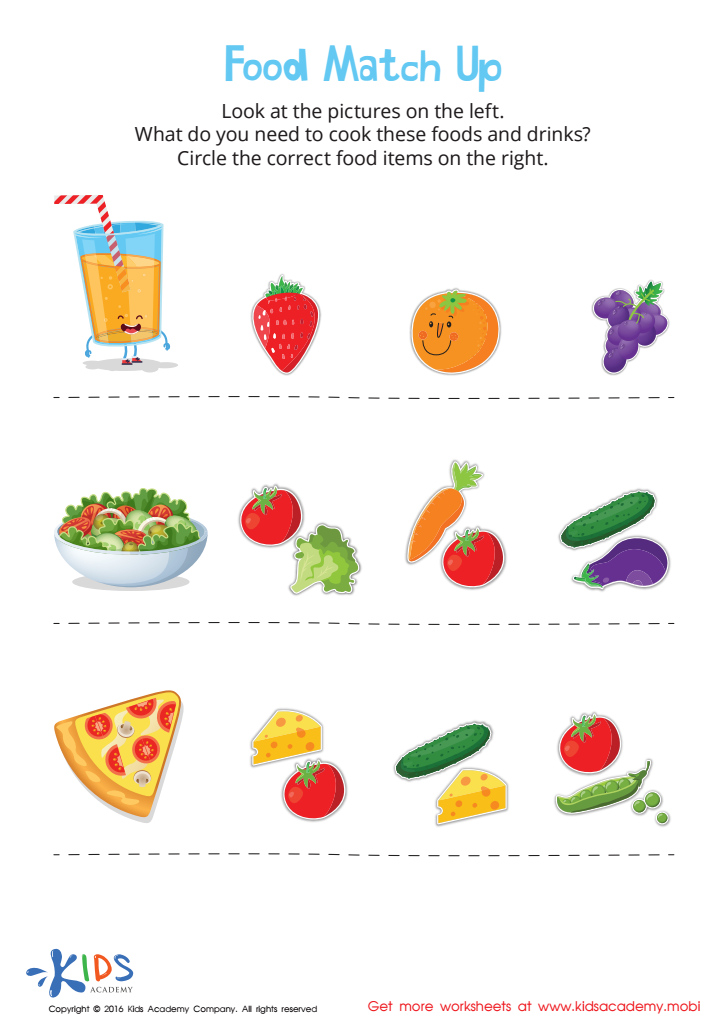
Food Match Up Worksheet








Matching skills are essential cognitive abilities that play a crucial role in the early development of children aged 3-5. When parents and teachers focus on nurturing these skills, they are laying the groundwork for future learning and problem-solving abilities.
Firstly, matching activities reinforce important concepts like similarities and differences, which are foundational for logical thinking and categorization. By recognizing patterns and relationships, young children enhance their observation skills and attention to detail. These abilities are fundamental when they transition to more complex tasks such as reading and math.
Matching also improves memory and concentration. Through matching games and exercises, children practice recalling information and maintaining focus on a given task, both of which are critical for academic success.
Additionally, engaging in matching activities helps develop fine motor skills and hand-eye coordination. Whether they are sorting objects or matching pictures, these physical actions hone dexterity, aiding in skills like writing or using utensils.
Equally important are the social and emotional benefits. Celebrating the completion of matching tasks bolsters a child’s confidence and fosters a sense of accomplishment. Encouraging collaborative matching games can also teach valuable social skills such as cooperation, patience, and turn-taking.
In summary, focusing on matching skills in early education sets the stage for holistic development, combining cognitive, physical, and social growth pathways critical to a child's overall success.








