Number Recognition Normal Matching Worksheets for Ages 3-5
6 filtered results
Difficulty Level
Grade
Age
-
From - To
Subject
Activity
Standards
Introduce your children to numbers in a fun and engaging way with our Number Recognition Normal Matching Worksheets, designed specifically for ages 3-5. These colorful and attractive worksheets help young learners identify and match numbers correctly, enhancing their counting skills and numerical understanding. Ideal for preschool and kindergarten, our activities combine entertainment with education, encouraging hands-on learning that builds a strong mathematical foundation. Perfect for parents and teachers, these printables support young minds in recognizing and matching numbers while promoting cognitive development and fine motor skills. Transform learning into an enjoyable experience with our carefully crafted worksheets!
Favorites
With answer key
Interactive
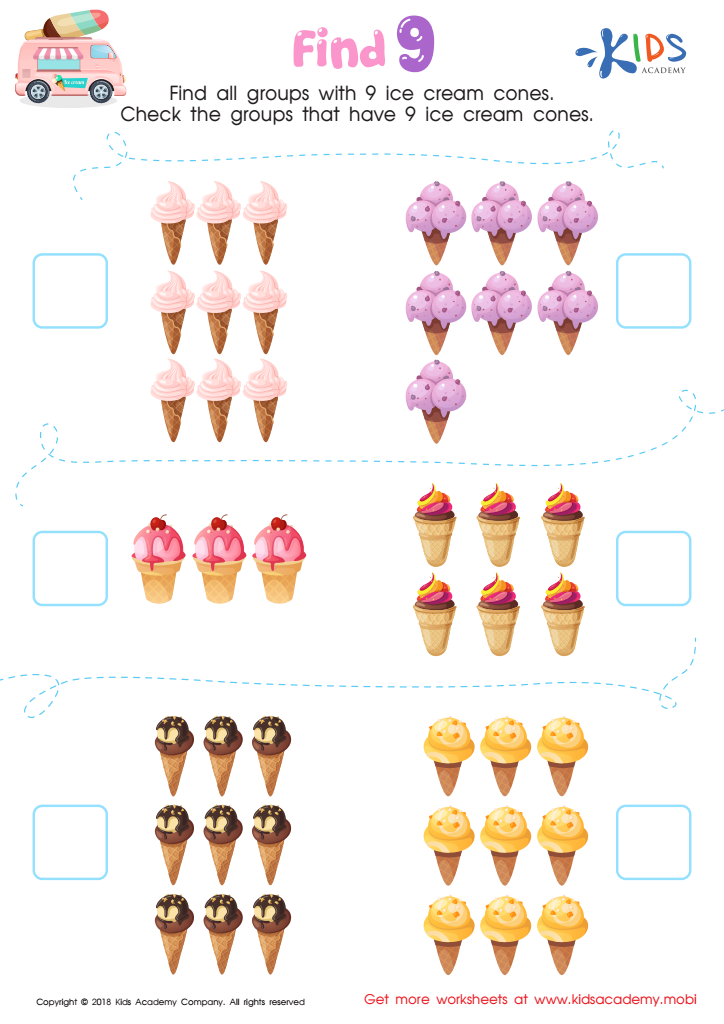
Find 9 Worksheet
Let your kids practice grouping numbers with this fun downloadable worksheet! It's full of ice cream colors and will help them improve their accuracy in addition and multiplication. Tracing the lines will also boost their fine motor skills.
 Assign to My Students
Find 9 Worksheet
Worksheet
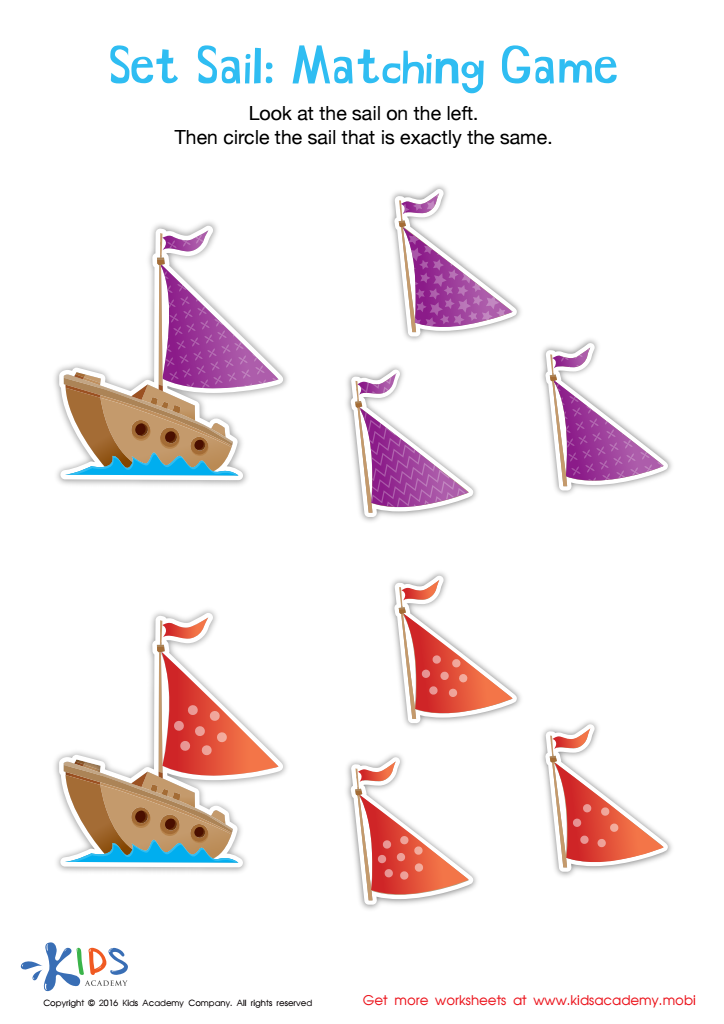
Set Sail Worksheet
Set sail with this fun matching game for toddlers! Kids will love finding the same pattern on the sails, improving their problem-solving and counting skills. Enjoy this bright and engaging worksheet!
Set Sail Worksheet
Worksheet
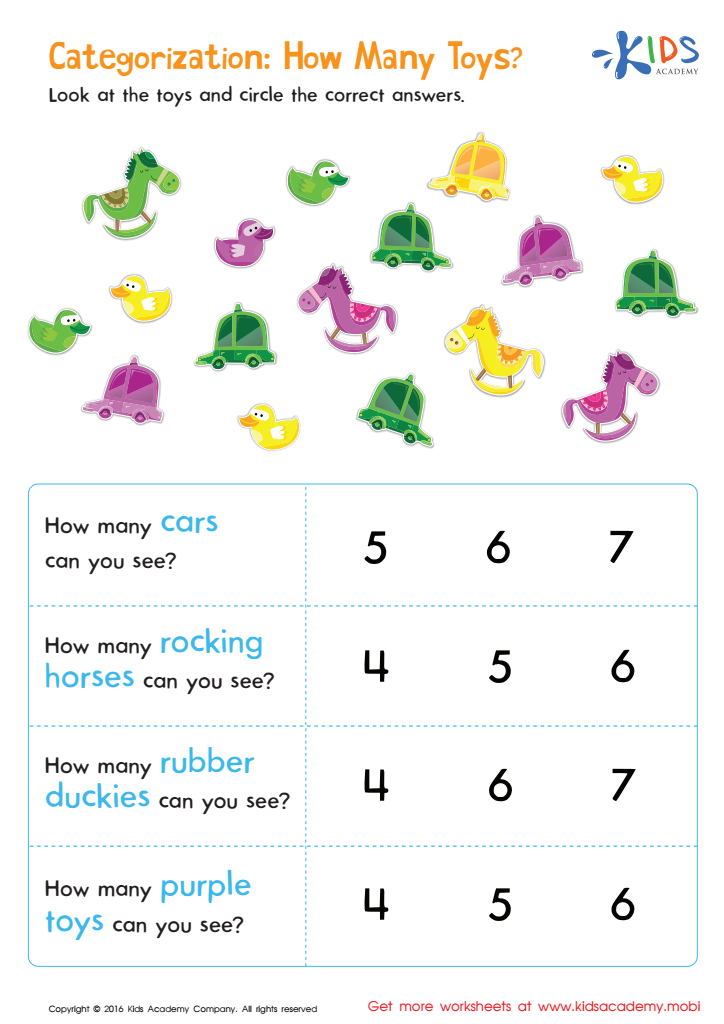
Classifying Toys by Type and Color Sorting Worksheet
Kids Academy offers free math worksheets to help practice counting, categorization & recognition skills. Kids will enjoy counting by color & type while strengthening problem-solving & literacy skills.
Classifying Toys by Type and Color Sorting Worksheet
Worksheet
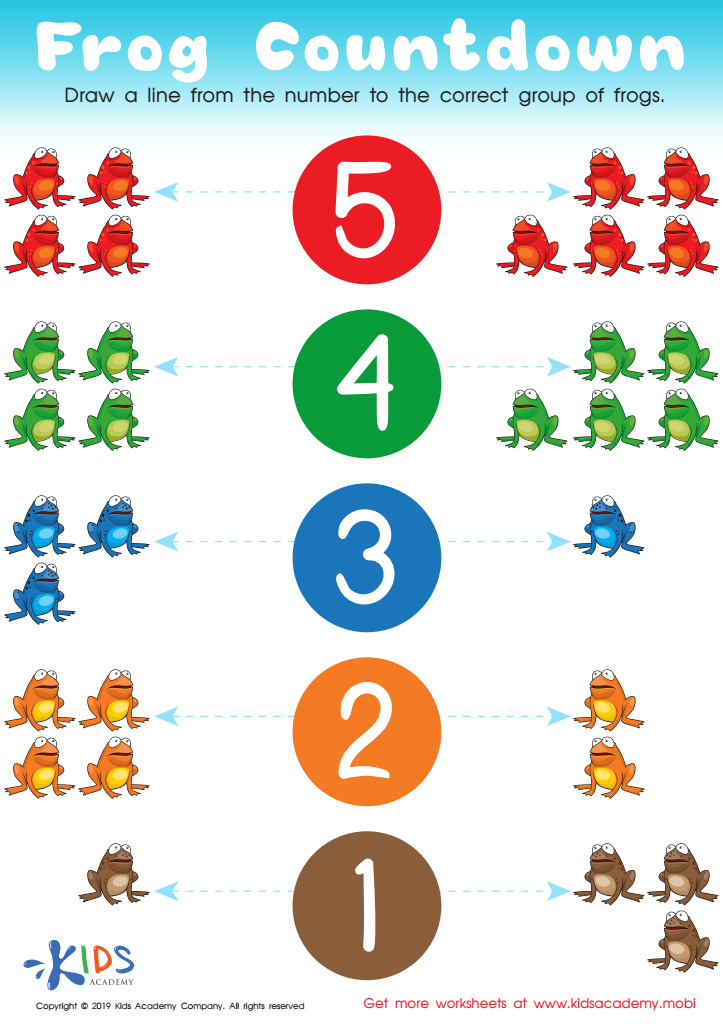
Frog Countdown Worksheet
Make learning fun for kids with traceable printouts! This exercise has kids counting frogs and drawing a line to match the number. Expand their knowledge with activities like this, beyond the basics they learn in school. Help them explore new ways of learning and make it enjoyable.
Frog Countdown Worksheet
Worksheet
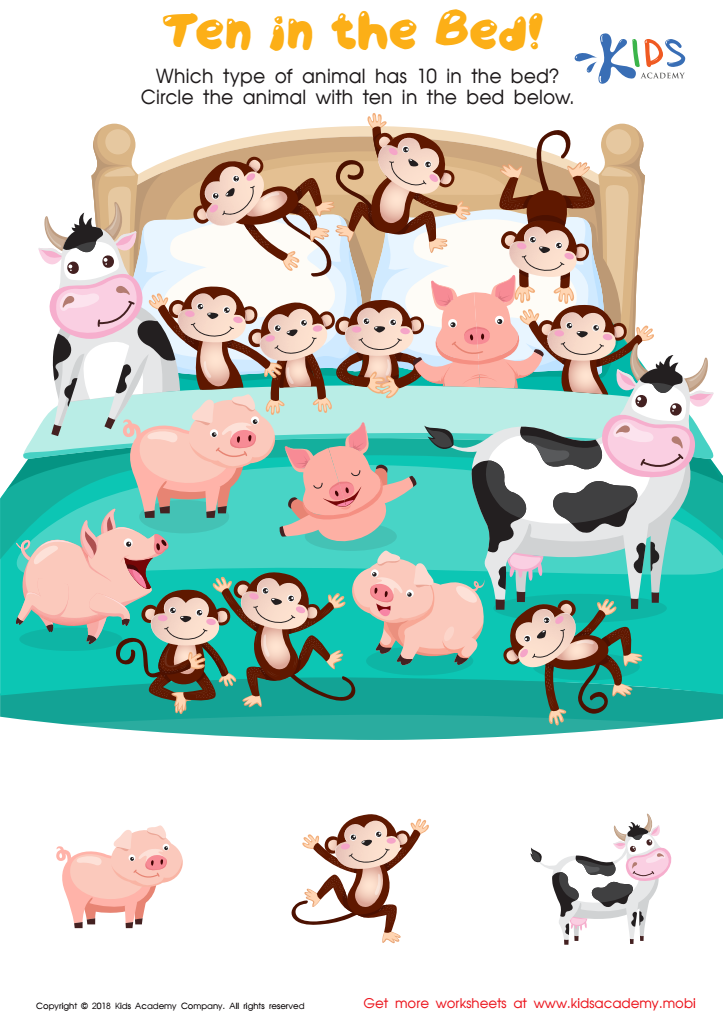
Ten in the Bed Worksheet
This fun worksheet has your kids counting and sorting friendly animal faces in a bed of ten! It's a great way for them to practice their mental math skills, like adding and multiplying more efficiently. Plus, it brings a new meaning to the classic song "Monkeys Jumping on the Bed"!
Ten in the Bed Worksheet
Worksheet
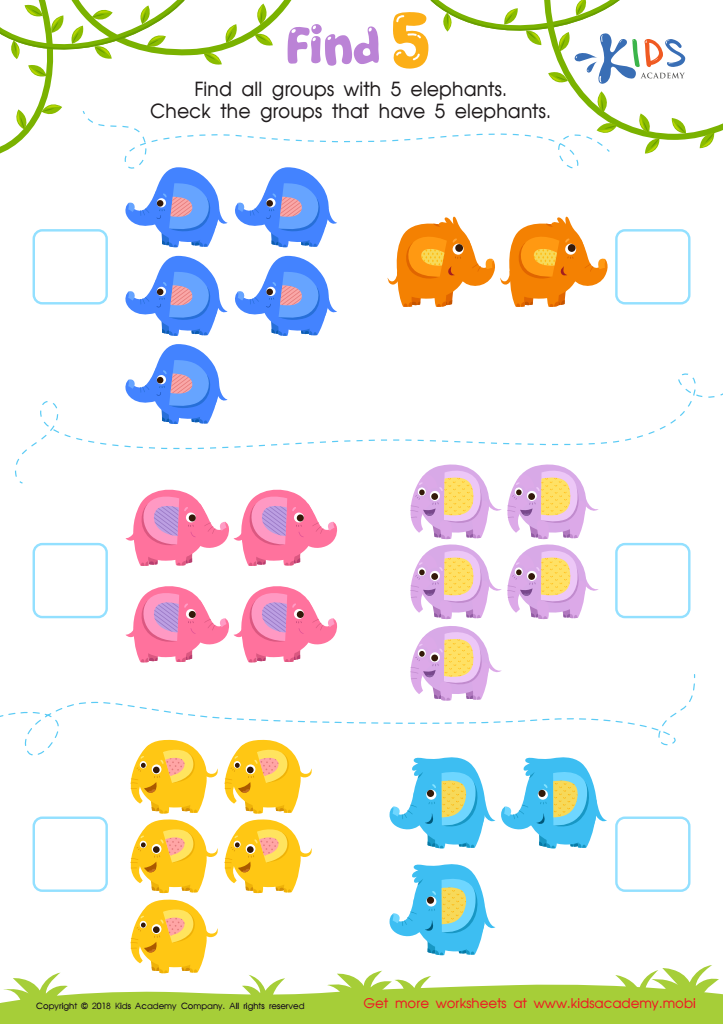
Find 5 Worksheet
Kids will love these cheery elephants that help them discover grouping and counting by fives. It's a great way to start learning addition and multiplication, while also developing fine motor skills. Download the free PDF and let the fun begin.
Find 5 Worksheet
Worksheet
Join Kids Academy for Free
Who is primarily going to use this learning content?


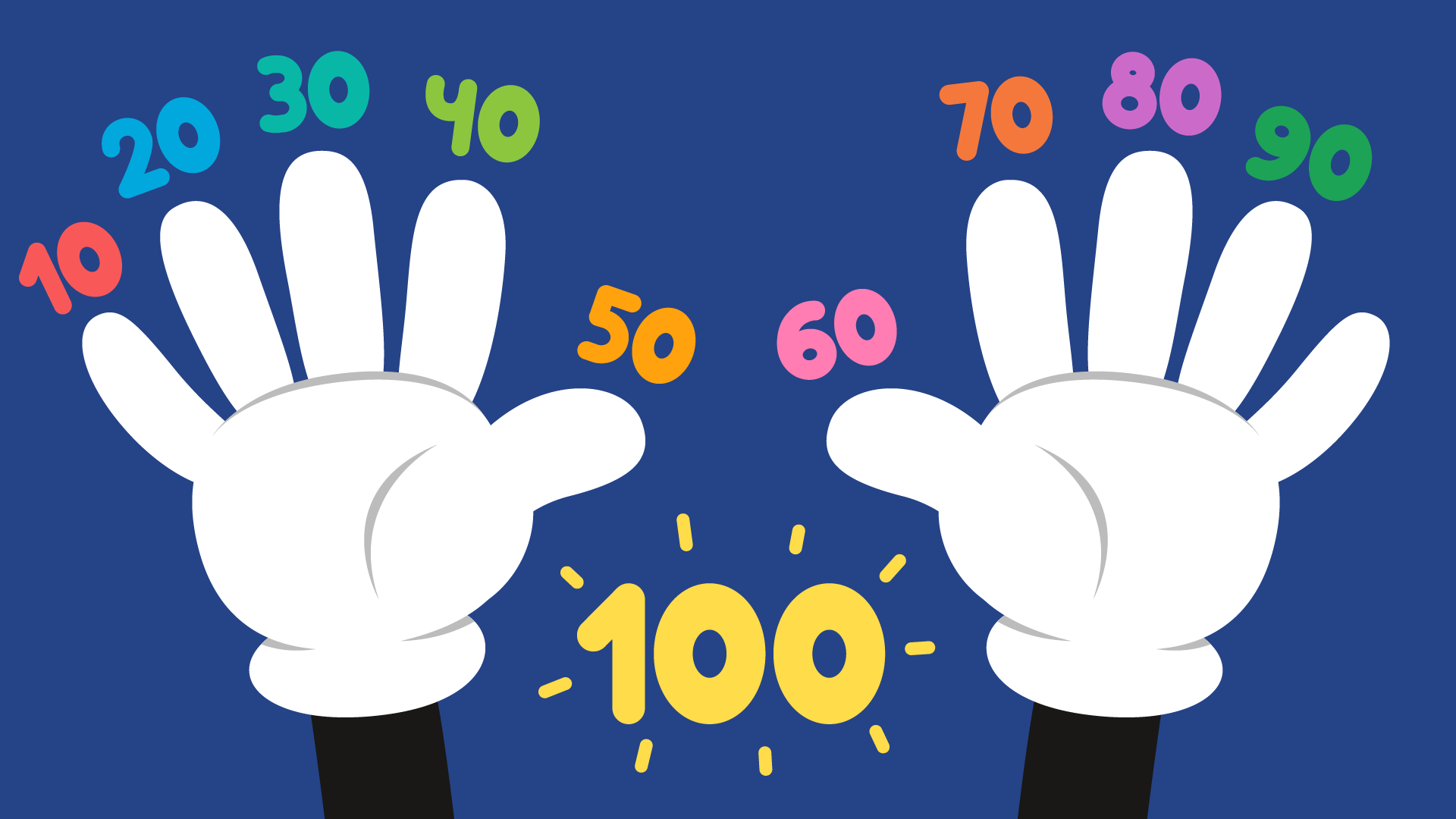
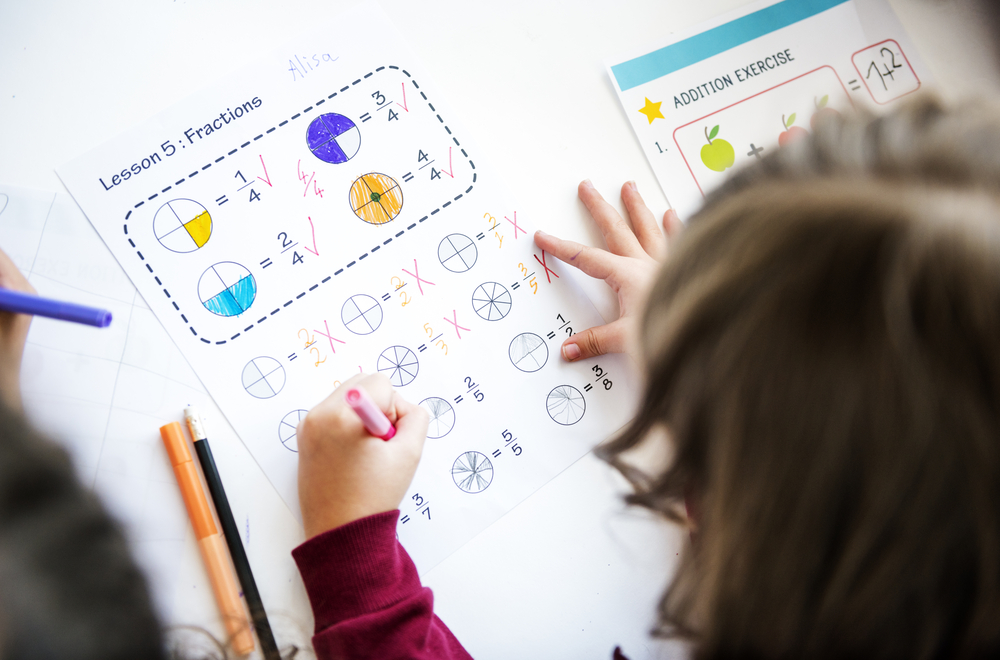



Number recognition and matching are critical foundational skills for young children aged 3-5. During these formative years, children develop cognitive abilities rapidly, and these early skills set the stage for future academic success. Number recognition involves identifying and understanding numbers and their corresponding symbols, while matching involves associating numbers with correct quantities or patterns.
When children learn to recognize and match numbers, they develop a deeper understanding of basic math concepts. This ability to recognize numbers and their meanings is not just about being able to count; it involves comprehension of value, quantity, sequence, and basic arithmetic—which are building blocks for more complex mathematical concepts they will encounter later on in school.
Moreover, engaging in activities that promote number recognition and matching helps improve cognitive skills like memory and attention to detail. These activities also enhance fine motor skills when children physically manipulate number cards or objects for matching exercises. They form early problem-solving abilities, logical thinking, and reasoning as kids figure out how to sort or pair numbers correctly.
For teachers and parents, focusing on these foundational skills prepares children for the educational journey ahead, ensuring they are confident and ready to tackle more advanced math learning. Supporting their early development helps cultivate a positive attitude toward learning and problem-solving overall.