Story sequencing Normal Reading Comprehension Worksheets for Ages 3-5
6 filtered results
-
From - To
Enhance your child's reading comprehension skills with our engaging Story Sequencing worksheets designed for ages 3-5. These worksheets provide fun and interactive activities that help young learners understand the structure of stories. By arranging events in the correct order, children develop critical thinking, improve narrative skills, and boost their vocabulary. Our colorful and visually appealing worksheets are perfect for early learners, making reading comprehension a joyful experience. Whether used at home or in the classroom, these resources foster a love for storytelling while strengthening essential cognitive skills. Start your child's reading adventure today with our Story Sequencing worksheets!
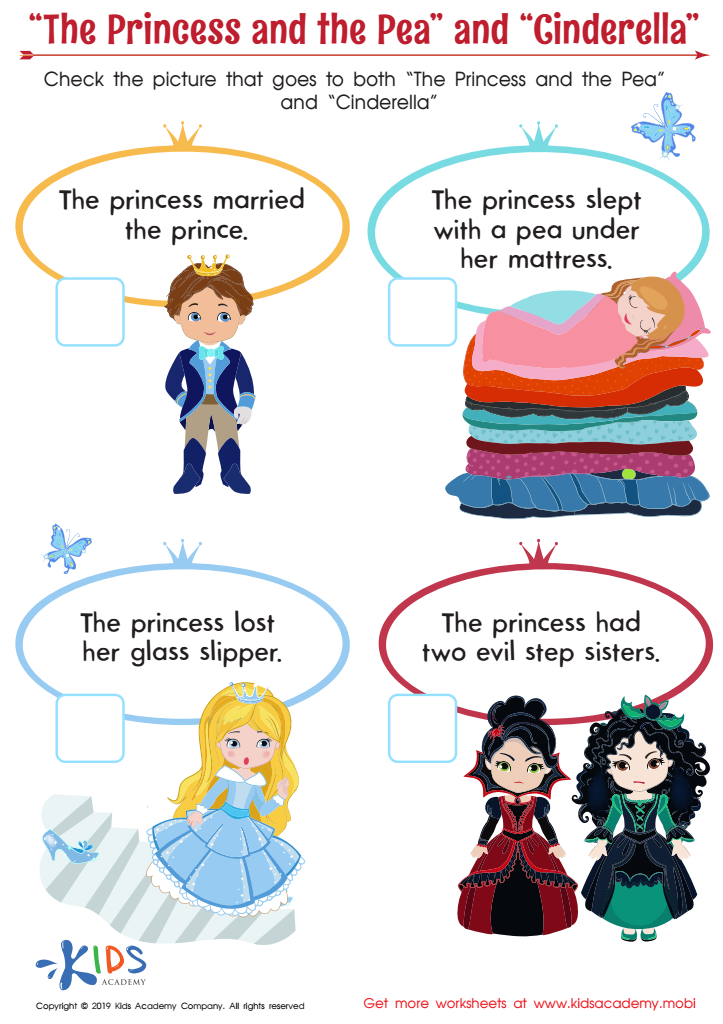
“The Princess and the Pea” and “Cinderella” Worksheet
 Assign to My Students
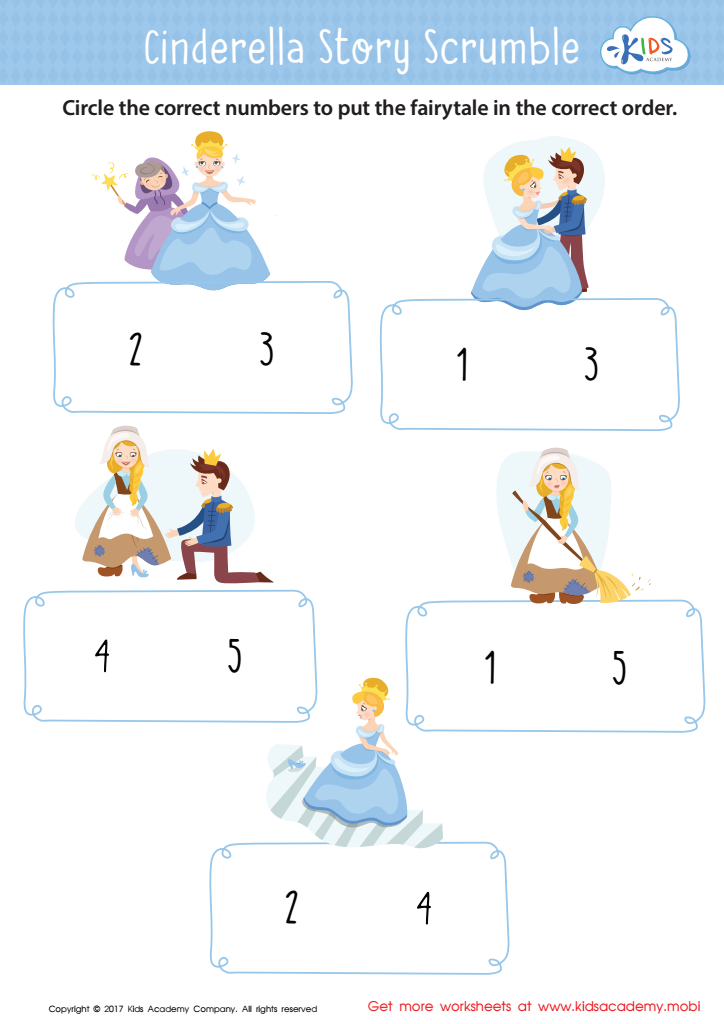
Cinderella Story Sequencing Worksheet
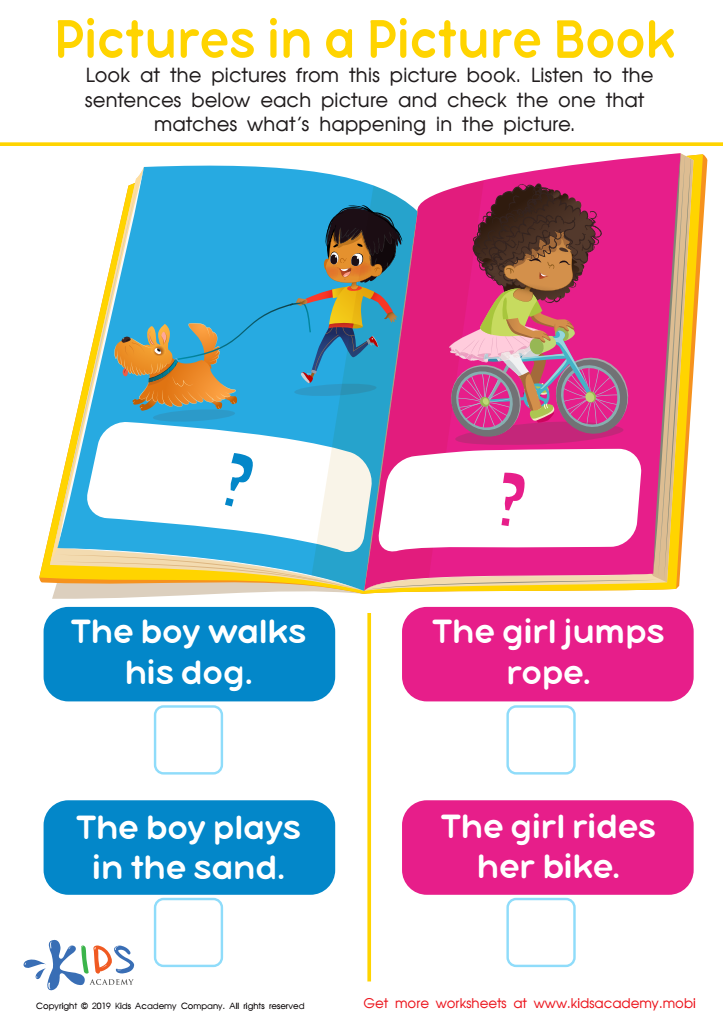
Picture in Books Worksheet
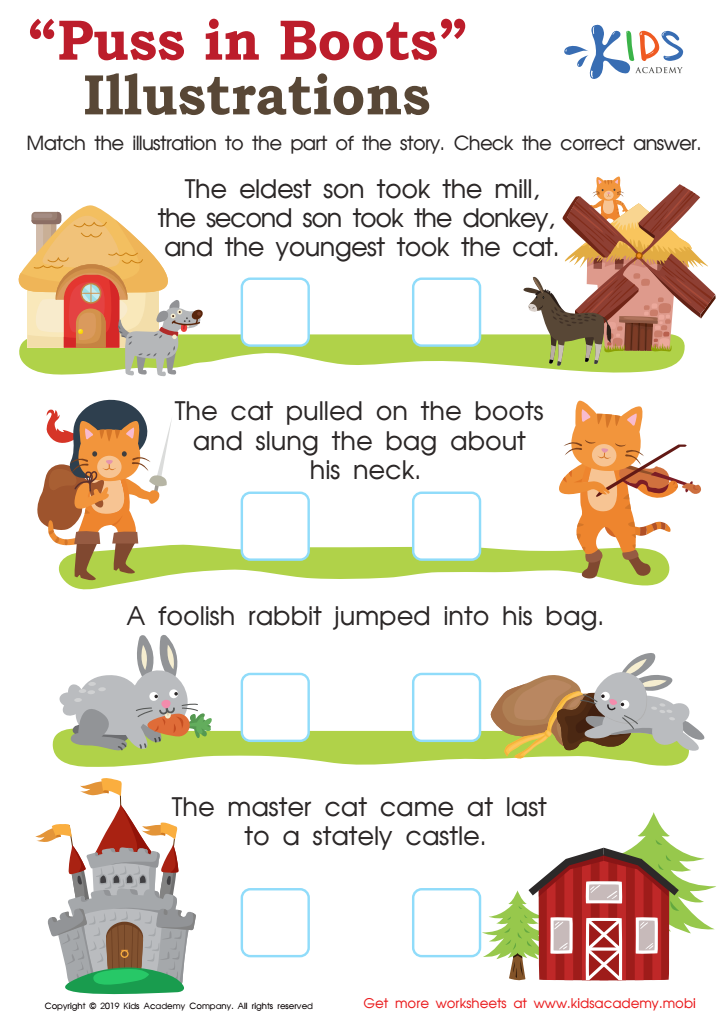
Puss in Boots Illustrations Worksheet
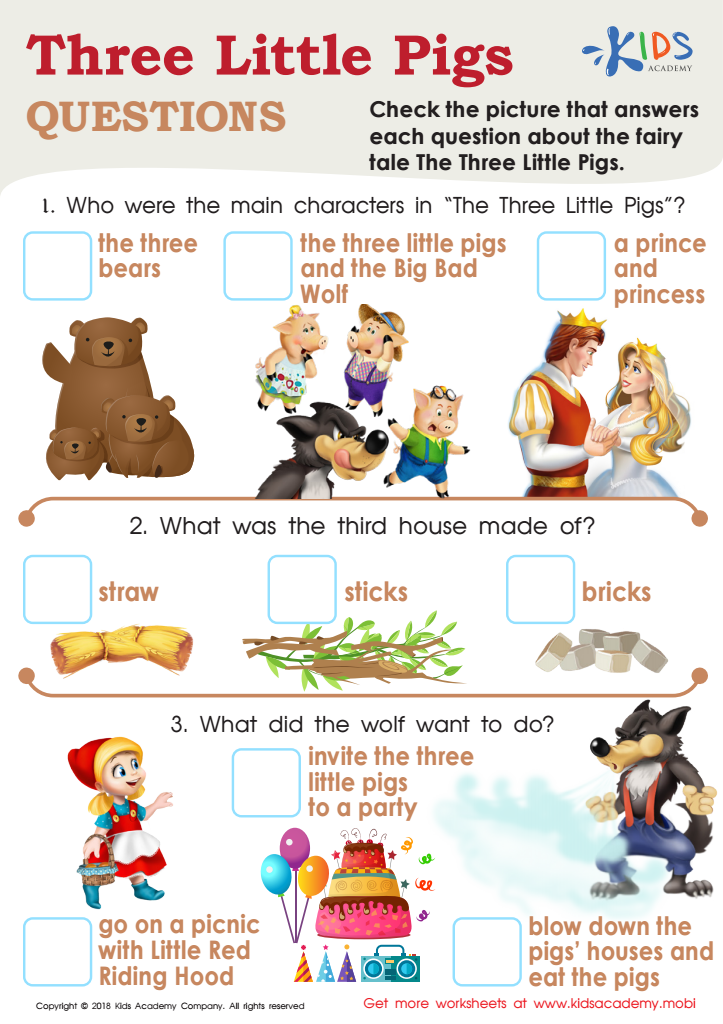
Three Little Pigs Questions Worksheet
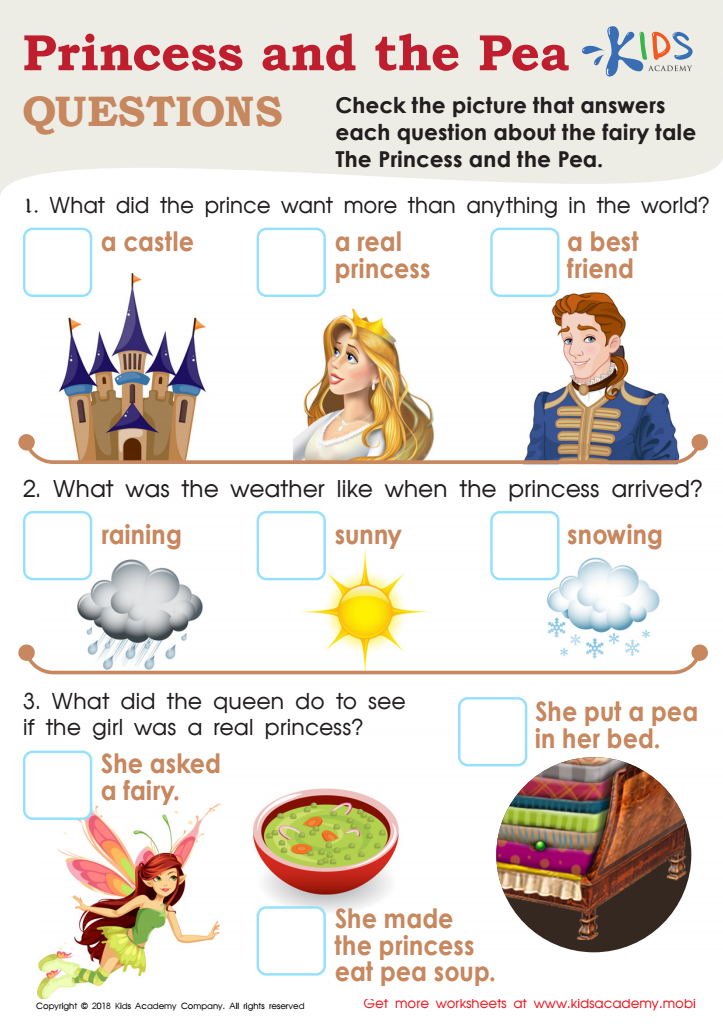
Princess and the Pea Questions Worksheet




.jpg)



Story sequencing is a critical aspect of reading comprehension, particularly for children aged 3-5. At this developmental stage, children's cognitive and linguistic skills are rapidly emerging, and understanding how narratives are structured lays the foundation for more complex reading in the future.
When parents and teachers emphasize story sequencing, they help children identify the beginning, middle, and end of stories. This understanding enables children to grasp the cause-and-effect relationships within narratives, enhancing their ability to predict outcomes and make inferences. Developing these skills fosters not only comprehension but also creativity, as children learn to retell stories or create their own.
Further, engaging children in story sequencing activities—such as arranging picture cards or acting out stories—promotes active participation in their learning. This interactive approach boosts vocabulary acquisition and encourages critical thinking, as children consider what logically follows in a narrative.
Ultimately, by prioritizing story sequencing during early literacy experiences, parents and teachers contribute significantly to children's overall cognitive development, nurturing a love for reading that will benefit them throughout their academic journey. Instilling strong comprehension skills at such a young age sets the stage for lifelong learning and academic success.








