Reading comprehension Normal Reading Fiction Worksheets for Ages 3-5 - Page 2
27 filtered results
-
From - To
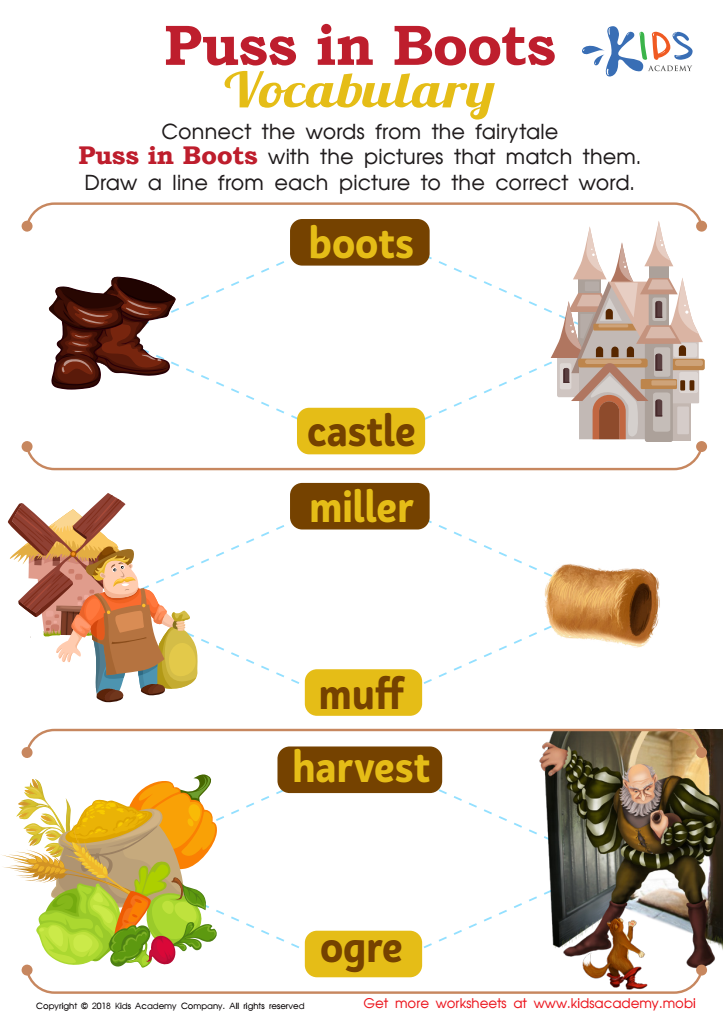
Puss in Boots Vocabulary Worksheet
 Assign to My Students
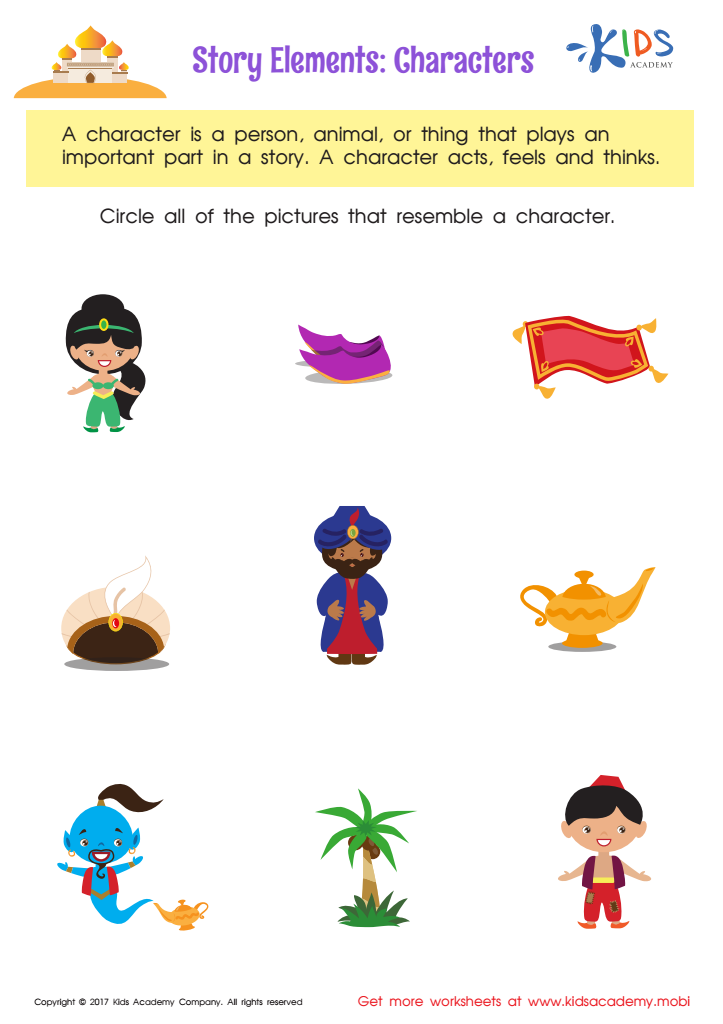
Story Elements Printable
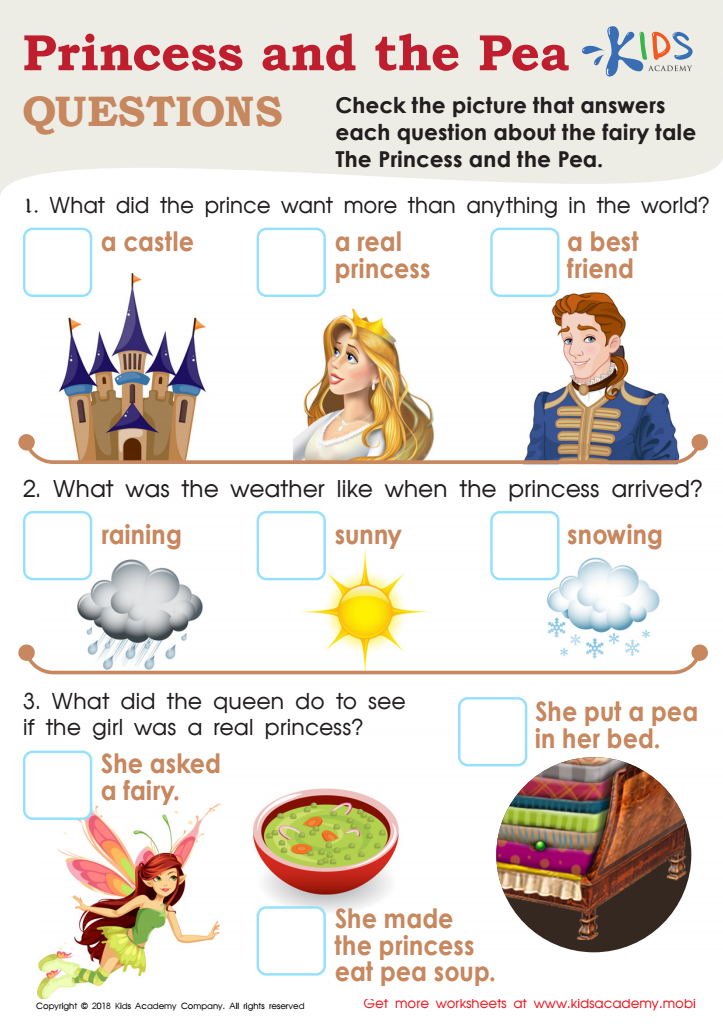
Princess and the Pea Questions Worksheet








Reading comprehension is crucial for children aged 3-5, as it lays the foundation for their language development and overall academic success. At this age, kids are naturally curious, and engaging with fiction can spark their imagination and creativity. Parents and teachers should care about reading comprehension because it goes beyond just recognizing words; it involves understanding the story, characters, and emotions, fostering critical thinking skills.
Through normal reading of fiction, children learn to make predictions, infer meanings, and connect ideas, which are essential skills for their future learning. When parents and teachers encourage discussions about stories—asking open-ended questions and prompting children to express their thoughts—they enhance children's analytical abilities and boost their confidence in communication.
Additionally, reading together builds an emotional bond, promoting a love for reading that can last a lifetime. This early exposure to literature enhances vocabulary, grammar, and narrative skills, which are all important for effective communication.
In summary, prioritizing reading comprehension during the early years instills a solid foundation for lifelong learning, cultivates essential skills, and encourages a deep connection to literature. For parents and teachers, fostering a child’s engagement with your story not only aids in their academic development but nurtures their imaginative and emotional growth.







