Vocabulary enhancement Normal Animals Worksheets for Ages 3-5
3 filtered results
-
From - To
Boost your child's vocabulary with our engaging Normal Animals Worksheets designed specifically for ages 3-5! These worksheets offer a fun and interactive way for young learners to explore the world of animals while enhancing their language skills. Featuring delightful images and simple exercises, children will learn to identify, name, and describe various animals. Our captivating activities encourage observation and imagination, fostering communication skills and a love for learning. Perfect for preschool, kindergarten, or at-home learning, these worksheets are a fantastic resource for any early grade teacher looking to inspire young minds. Start your child's journey in language development today!
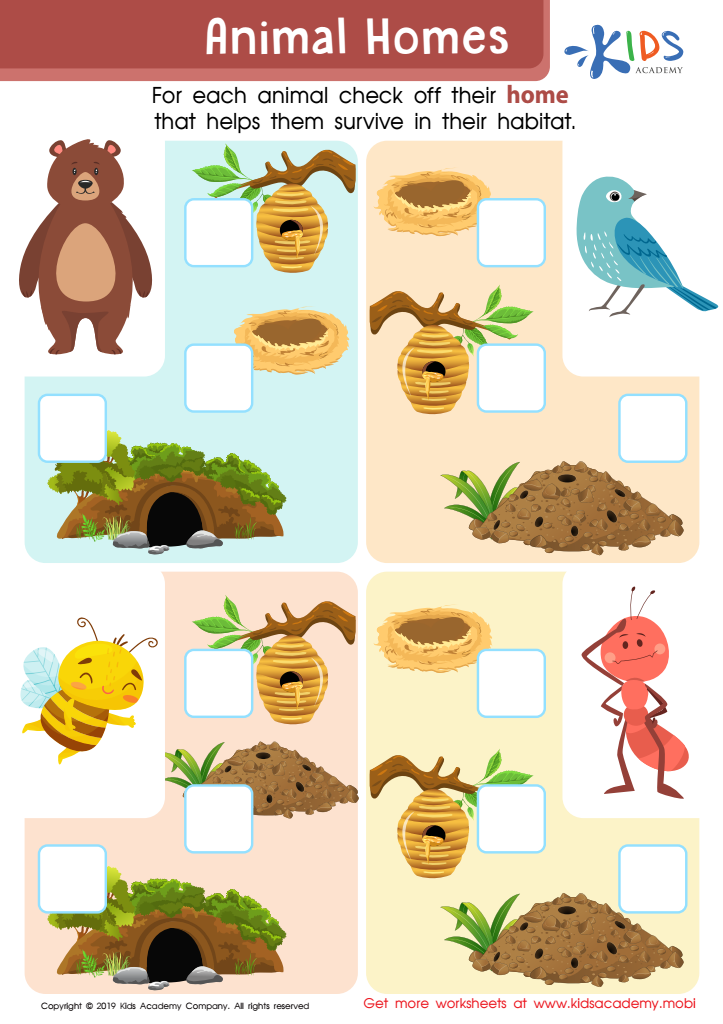
Animal Homes Worksheet
 Assign to My Students
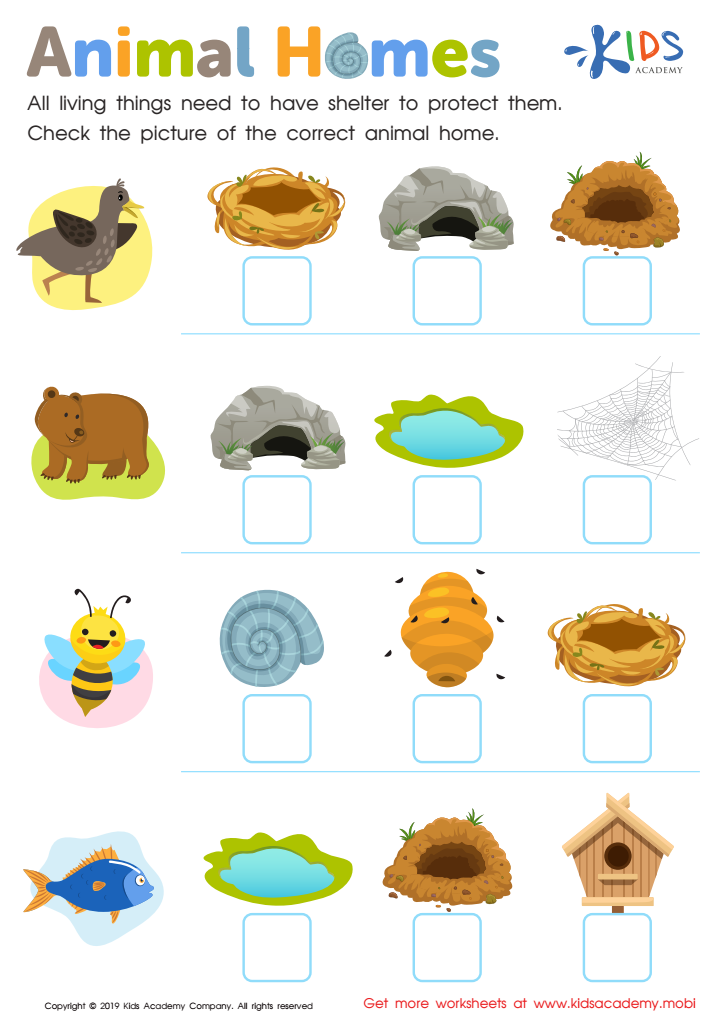
Animal Homes Worksheet
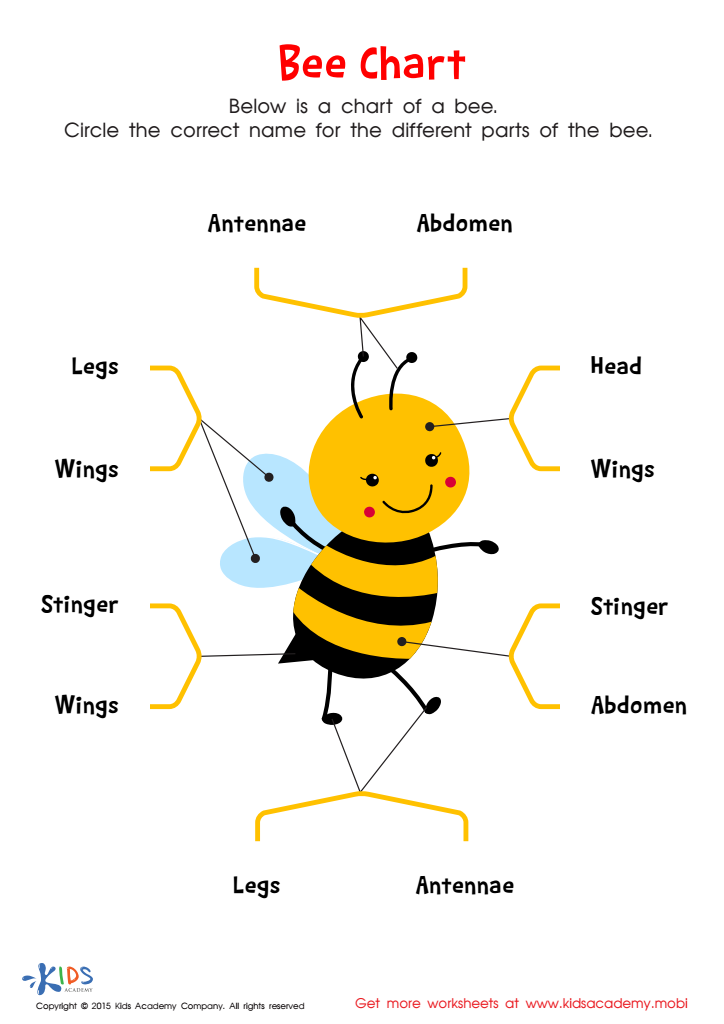








Vocabulary enhancement during the critical early years, especially for children aged 3-5, is vital for fostering cognitive and linguistic development. At this age, children are keenly observant and absorb new words quickly, serving as a foundation for their future communication skills. Introducing normal animals into vocabulary teaching is particularly beneficial. Familiar animals such as cats, dogs, and elephants not only engage children's curiosity but also provide relatable and concrete concepts that they can visualize and interact with.
Understanding animal names helps children cultivate communication skills, enhancing their ability to express thoughts and feelings. When parents and teachers incorporate animal-related vocabulary in playful, engaging ways—like story-time, songs, or interactive games—they create a conducive learning environment. This not only boosts vocabulary but also stimulates critical thinking as children learn about animal characteristics, habitats, and behaviors.
Moreover, enriching vocabulary supports literacy development and prepares children for successful reading skills as they progress through school. In an increasingly interconnected world, strong vocabulary skills allow children to better navigate social situations, express emotions, and explore diverse cultures. Ultimately, investing in vocabulary enhancement for young children fosters a lifelong love for learning, nurturing inquisitive minds drawn to discovery and knowledge.








