
Sound recognition Normal Consonants Worksheets for Ages 3-6
3 filtered results
Difficulty Level
Grade
Age
-
From - To
Subject
Activity
Standards
Our "Sound Recognition Normal Consonants Worksheets for Ages 3-6" are designed to help preschoolers and kindergartners master essential phonics skills. Through engaging activities and colorful visuals, children learn to identify and pronounce various consonant sounds, laying a strong foundation for reading and writing. These worksheets include tracing, matching, and picture-naming exercises that bolster sound recognition and phonemic awareness. Ideal for early learners, the worksheets ensure an interactive and enjoyable educational experience. Support your child's journey to literacy with our expertly crafted and age-appropriate sound recognition worksheets, tailored to make learning fun and effective!
Favorites
With answer key
Interactive
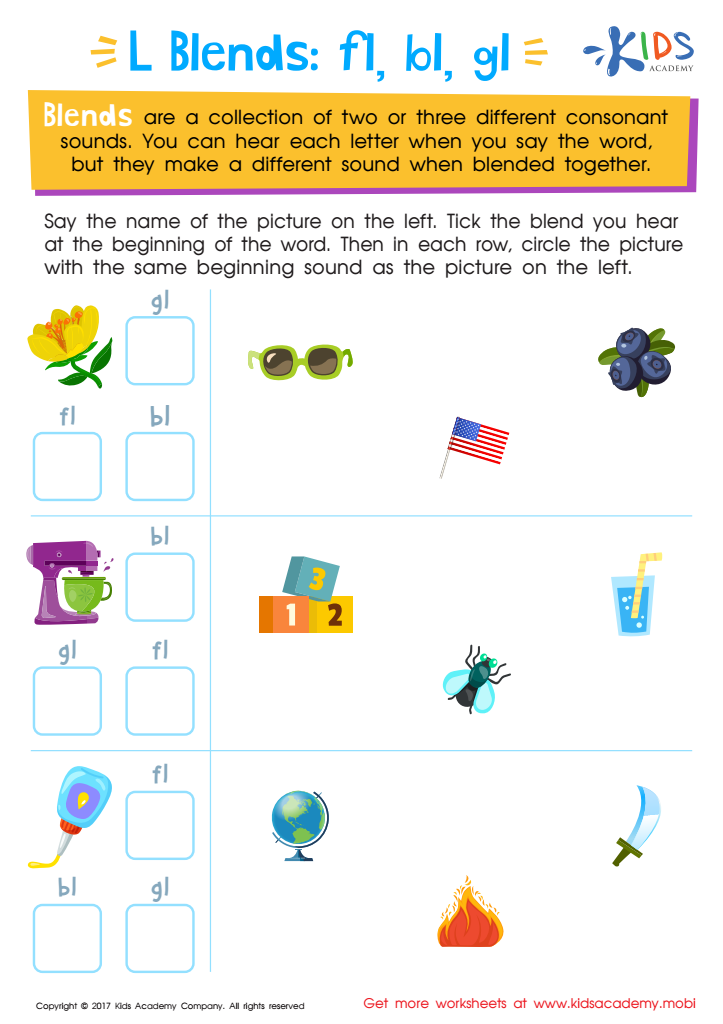
Blending Consonants: "Fl", "Bl" and "Gl" Printable
Help your child master consonant blends Fl, Bl, and Gl with this printable worksheet. Find words associated with the pictures and learn to better understand the difference between consonant blends. Vibrant images motivate and aid in learning. Download now for improved phonics success!
 Assign to My Students
Blending Consonants: "Fl", "Bl" and "Gl" Printable
Worksheet
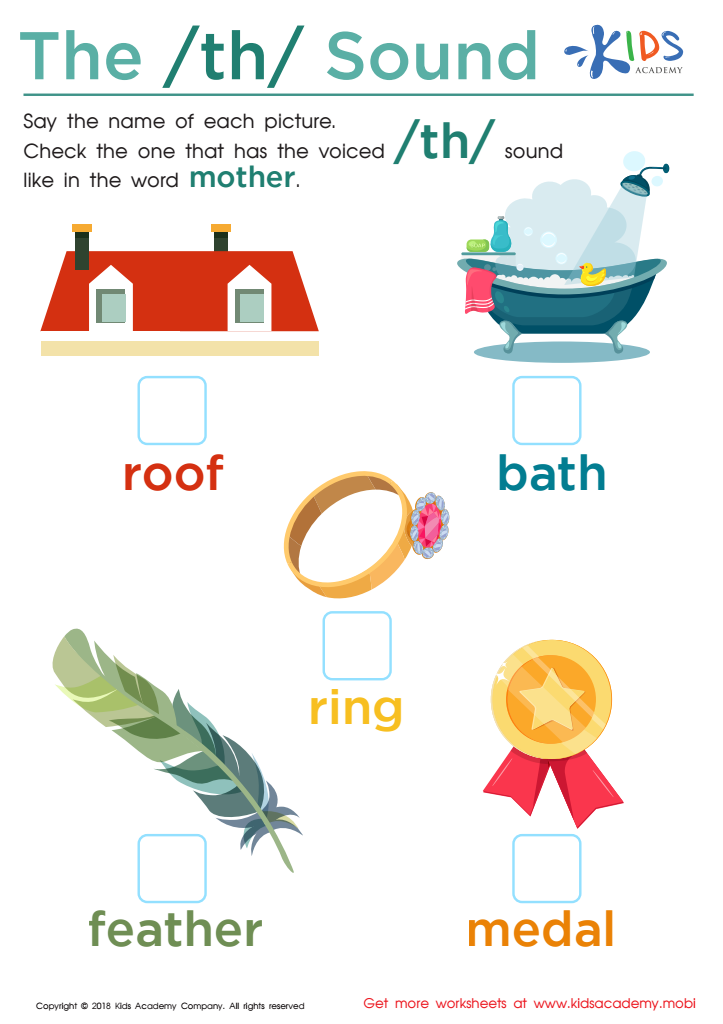
The /th/ Sound Worksheet
Confuse your students no more: have them use this worksheet to understand the /th/ sound and its two variants. With pictures, ask them to say the name of each one. Help them identify the voiced /th/ sound, like in 'mother', by having them say it aloud. Download the pdf to get started.
The /th/ Sound Worksheet
Worksheet
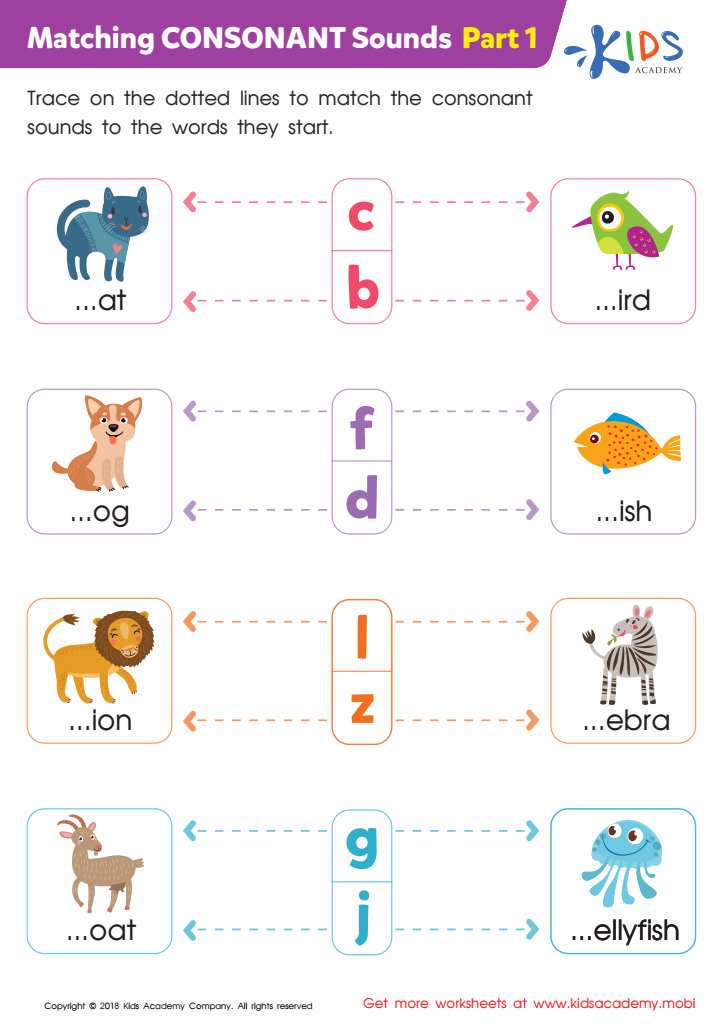
Matching Consonant Sounds: Part 1 Worksheet
Decide which letter matches each word and picture in this fun phonics worksheet. Slide your finger over each word, trying out each letter to check for matches. Once each pair is solved, trace the dotted lines with pencil to complete the printable. Who knew learning could be so enjoyable?
Matching Consonant Sounds: Part 1 Worksheet
Worksheet
Join Kids Academy for Free
Who is primarily going to use this learning content?



Sound recognition of normal consonants is critical for children ages 3-6 because it lays the foundation for effective communication and early literacy skills. During these formative years, young children are in a prime developmental stage for language acquisition. By effectively identifying and pronouncing consonant sounds, children develop key phonemic awareness, an essential pre-reading skill. This ability to differentiate and manipulate sounds aids in the development of reading and writing abilities.
Moreover, sound recognition enriches vocabulary and improves comprehension. When children can recognize consonant sounds accurately, they are better able to mimic patterns, participate in conversations, and understand stories. These skills contribute to greater confidence and competence in verbal interactions, setting a strong precedent for future academic success.
For parents and teachers, fostering sound recognition offers numerous long-term benefits. Through interactive activities, fun exercises, and supportive learning environments, children can practice sound differentiation in a stress-free way. In addition, sound recognition difficulties can be identified early, allowing timely interventions to address potential speech or learning issues. Prioritizing sound recognition in young children promotes a trajectory of strong oral communication skills, which underpin academic achievement and interpersonal relations through later stages of life. Engaged guidance from both parents and educators ensures that children make these critical, foundational strides.






