Counting skills Normal Alphabet Worksheets for Ages 3-6
3 filtered results
-
From - To
Discover our engaging "Counting Skills Normal Alphabet Worksheets" designed for children aged 3-6! These thoughtfully crafted worksheets enhance early numeracy and letter recognition through interactive activities that make learning fun. Each worksheet combines counting exercises with alphabet practice, helping young learners develop essential skills in a playful way. From counting objects to matching letters with numbers, these resources foster cognitive growth and reinforce fine motor skills. Perfect for parents and educators looking to support early childhood education, our printables are easy to use at home or in the classroom. Start your child's learning journey with our captivating counting and alphabet worksheets today!
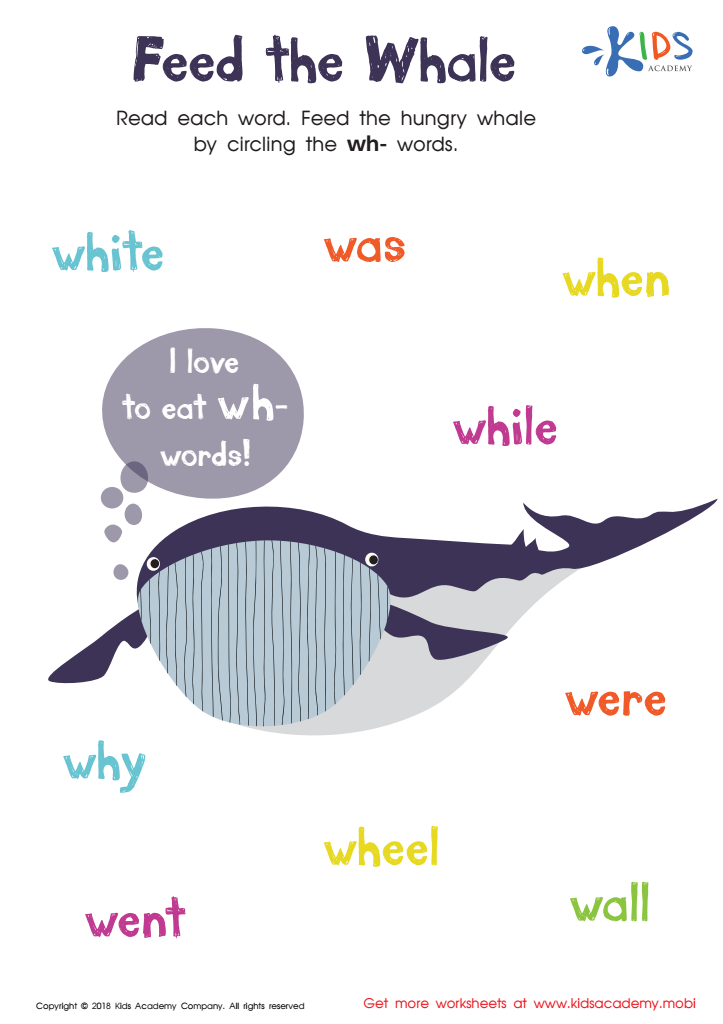
Feed the Whale Worksheet
 Assign to My Students
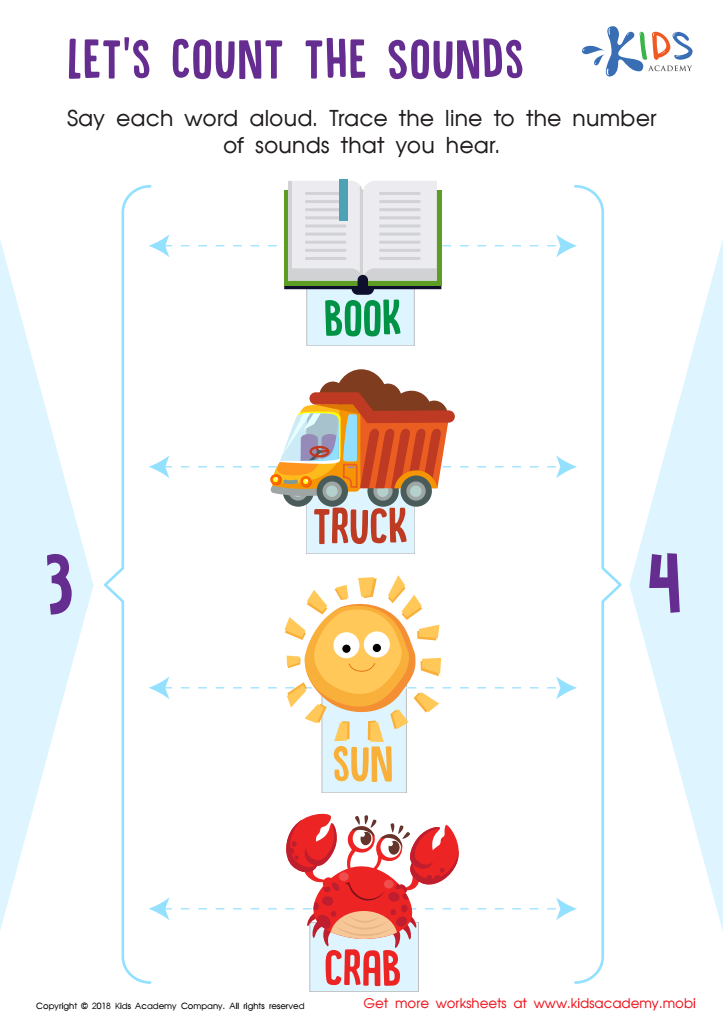
Let's Count the Sounds Worksheet
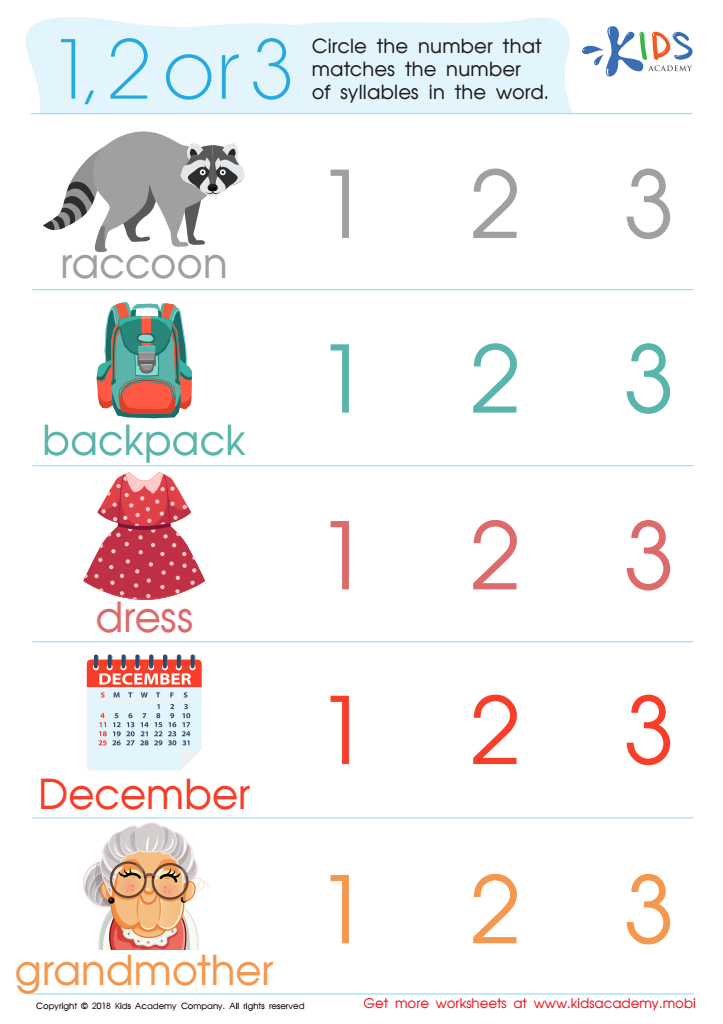
1, 2 or 3? Worksheet








Counting skills are foundational for young children's mathematical development and are essential for everyday life. For children ages 3-6, developing counting skills contributes to cognitive development, problem-solving abilities, and critical thinking. These skills not only help children understand numbers but also build their confidence as they begin to explore math concepts.
Parents and teachers should care about fostering counting skills because they serve as a stepping stone for more complex mathematical concepts, such as addition, subtraction, and, eventually, operations like multiplication and division. When children can confidently count objects or understand one-to-one correspondence, they are better equipped to tackle these advanced topics in school.
Moreover, counting skills can enhance language development and communication. As children count, they learn to verbalize numbers, improve their vocabulary, and explore patterns, fostering a greater understanding of concepts through play and interaction.
Encouraging counting through various engaging activities—like songs, games, and hands-on experiences—can make learning enjoyable and effective. Investing time in developing these skills in early childhood sets the stage for a lifelong appreciation of mathematics and strengthens a child's overall academic success and future opportunities. Ultimately, a strong foundation in counting positively impacts all areas of learning and development.







