Welcome to our Letter-Sound Association Normal Alphabet Worksheets for ages 3-6! These engaging worksheets are designed to help young learners connect letters with their corresponding sounds, an essential skill for early reading. Each worksheet features vibrant illustrations and interactive activities that make learning fun and effective. From tracing letters to matching sounds with pictures, children will build a strong foundation for literacy while honing their fine motor skills. Perfect for parents and educators, our worksheets are printable and easy to use at home or in the classroom. Start your child’s reading journey today with our alphabet resources!

Check out this FREE Trial Lesson on Alphabet for age 3-6!

L

Favorites
With answer key
Interactive
  • 3-6
  • Letter-sound association
  • Alphabet
  • Normal
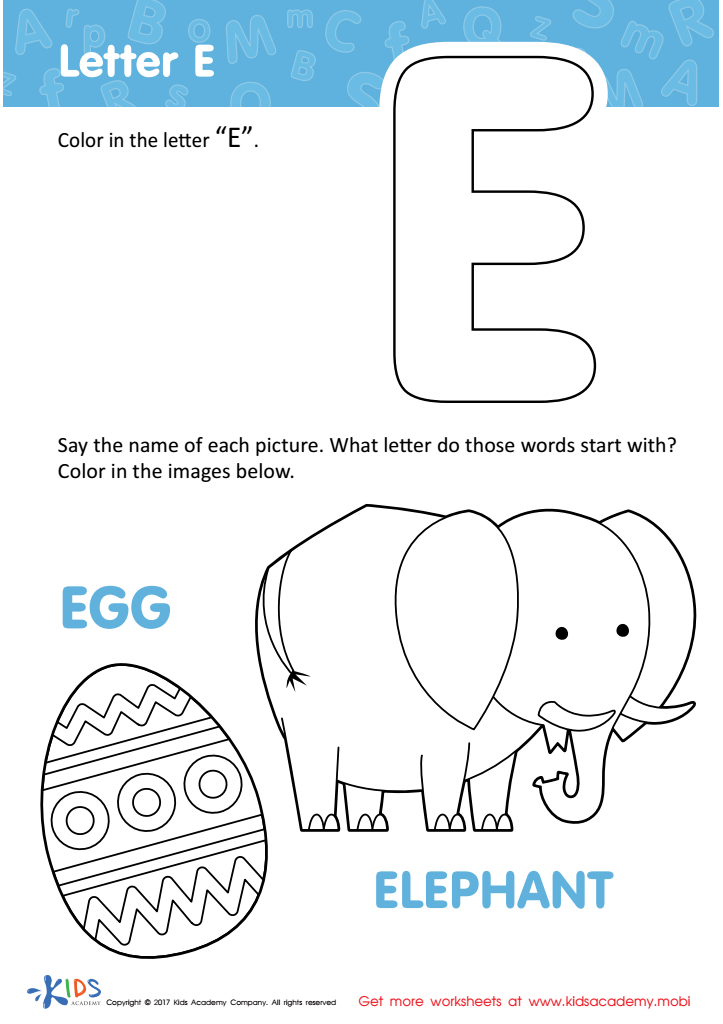
Letter E Coloring Page

Letter E Coloring Sheet

Coloring pages are great for teaching kids the alphabet and words! This "E" page features a cute elephant and Easter egg. Kids will love it and learn the letter "E" at the same time. 80 words
Download (PDF)
Assign to My Students
Letter E Coloring Sheet
Worksheet
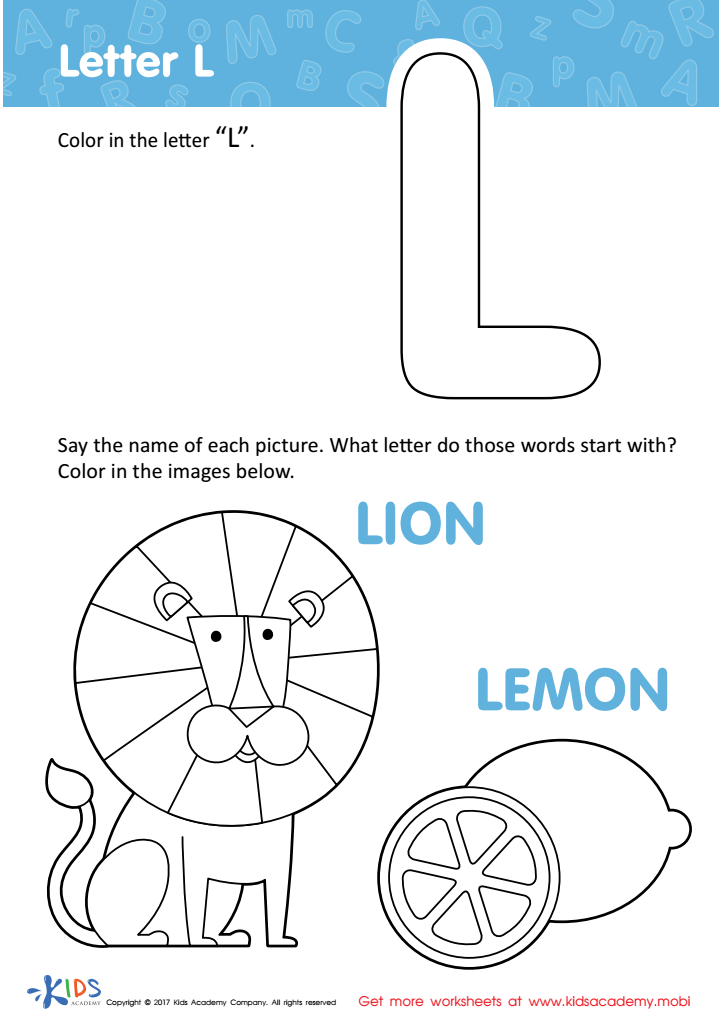
Letter L Coloring Page

Letter L Coloring Sheet

Kids often struggle to say "L" and love it because so many things they love start with it! This coloring page combines the letter and fun images like a lemon and lion to teach and entertain!
Download (PDF)
Assign to My Students
Letter L Coloring Sheet
Worksheet
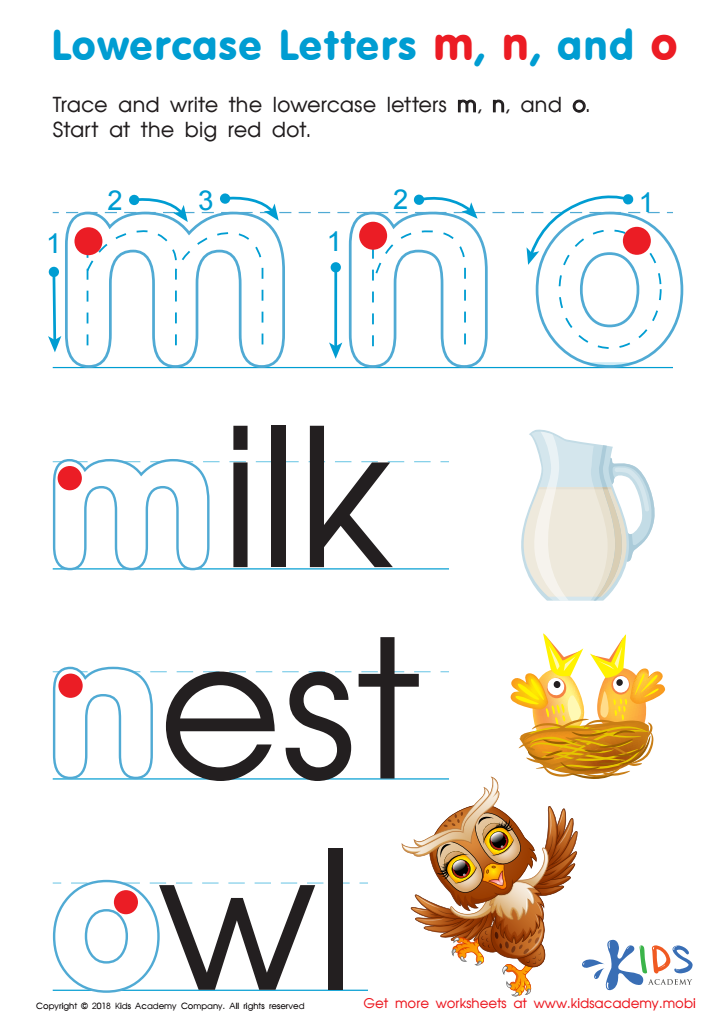
Lowercase Letters m n o Worksheet

Lowercase Letters m n o Worksheet

Help your child learn the alphabet with letter tracing. Show them the difference between uppercase and lowercase letters by working through this free worksheet, tracing and writing lowercase m, n and o.
Lowercase Letters m n o Worksheet
Worksheet
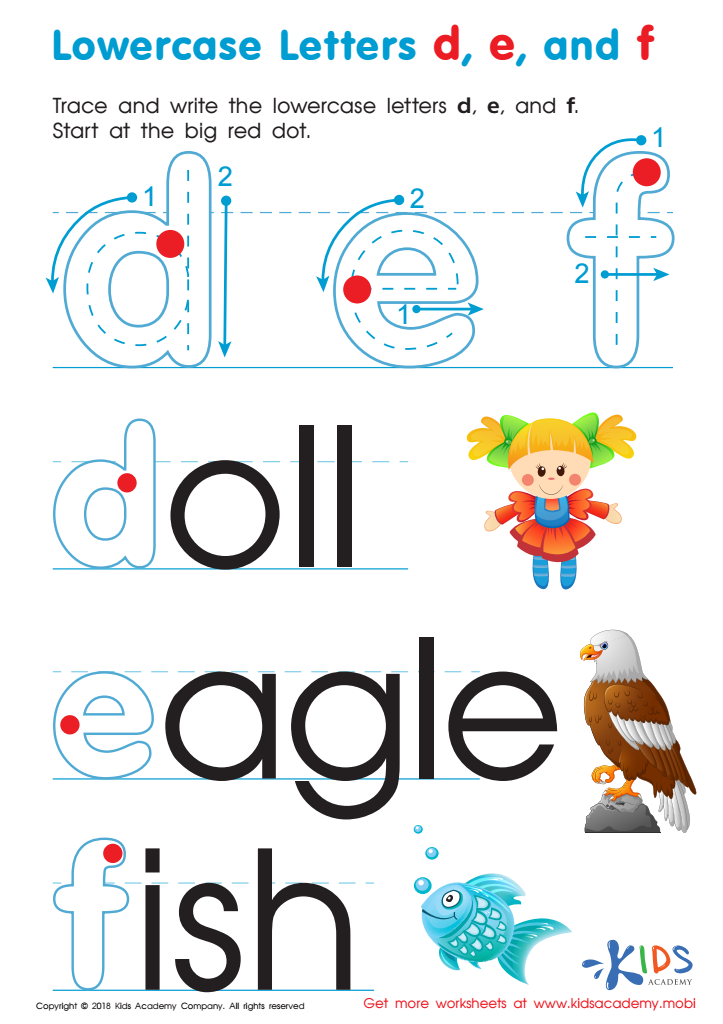
Lowercase Letters d e f Worksheet

Lowercase Letters d e f Worksheet

Help your child learn the alphabet letters by tracing and writing the lowercase letters d, e, and f. Begin at the big red dot and follow the dots. This worksheet will help your little one gain a better understanding of the letters.
Lowercase Letters d e f Worksheet
Worksheet
Matching Consonant Sounds - Part 3 Worksheet Preview

Matching Consonant Sounds: Part 3 Worksheet
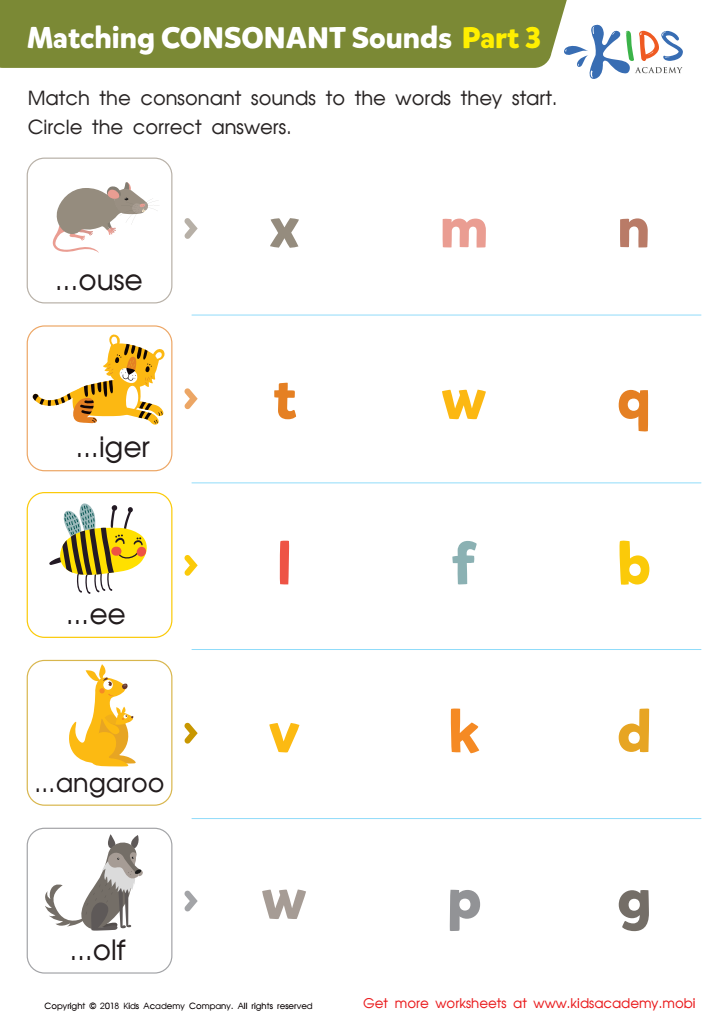
Help your early learner match consonant sounds to words with this fun worksheet! Have them name the pictures and try out each letter in the corresponding column. When they hear the sound that matches, circle it. Have them write the letter in the box to complete the word. Work their way down the page until the critters' names all match with consonants!
Matching Consonant Sounds: Part 3 Worksheet
Worksheet
Pick the Letter Worksheet

Pick the Letter Worksheet

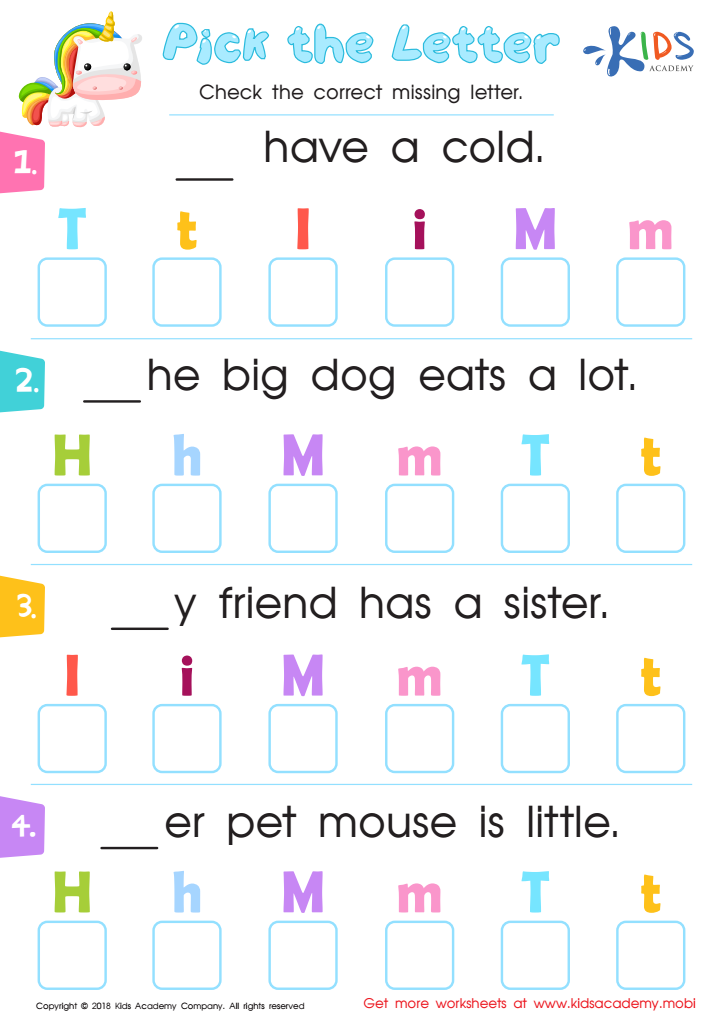
Put your child's capitalization and reading skills to the test with this missing letter worksheet! Have them look at each sentence, note the blank and review the letters below. Find the uppercase letter that should start each sentence and check the boxes to complete. Fun and colorful, this worksheet is sure to keep your child engaged!
Pick the Letter Worksheet
Worksheet
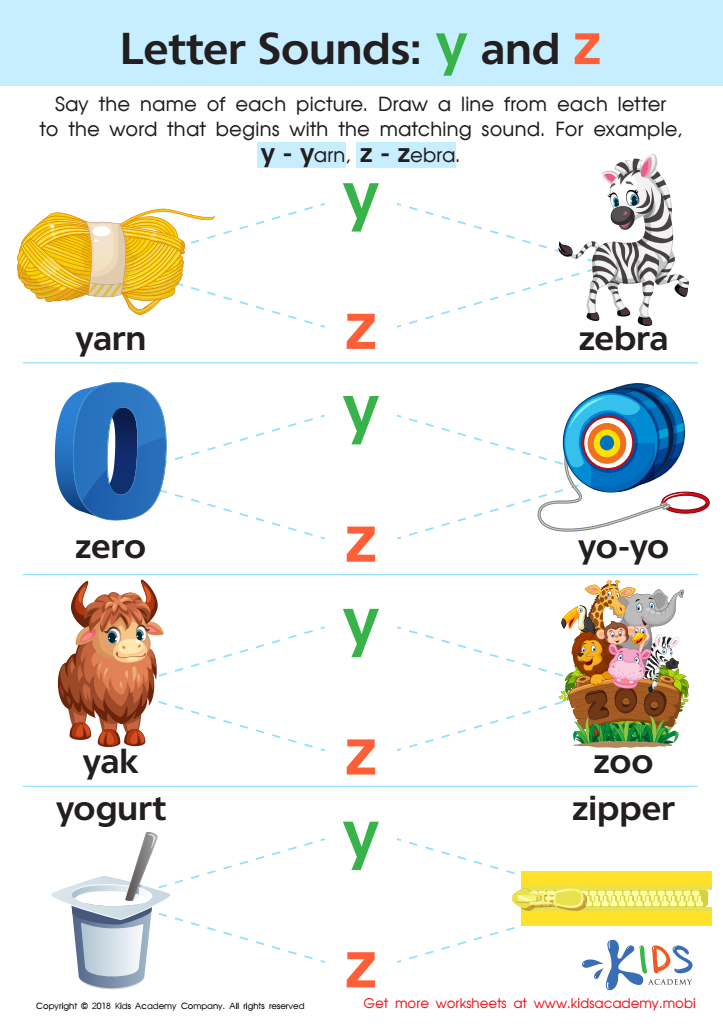
Letter Y and Z Sounds Worksheet


Letter Y and Z Sounds Worksheet

Y and Z can be tricky for kids to learn. Kids Academy has the answer with a great worksheet. "Yo-yo", "yak" and "zebra" help kids recognize, say and trace each letter. Plus, they can read the words and match them to images! Let your child try and help them master phonics at the end of the alphabet.
Letter Y and Z Sounds Worksheet
Worksheet


Letter-sound association, particularly in the normal alphabet, is a foundational skill for early literacy that parents and teachers should prioritize for children aged 3-6. This ability to connect letters with their corresponding sounds lays the groundwork for effective reading and writing. Early exposure to these associations not only enhances phonemic awareness but also boosts children’s ability to decode words as they progress in their learning journey.

Understanding letter sounds strengthens vocabulary development and comprehension skills. When children are able to recognize that the letter "B" corresponds to the /b/ sound, for example, they become better equipped to sound out words like "bat" and "ball." This fundamental skill enables children to read independently, increasing their confidence and motivation to engage with books.

Moreover, engaging in activities that promote letter-sound association can be fun and interactive, encouraging positive attitudes toward literacy from a young age. Parents and teachers can introduce playful elements like songs, games, and rhymes, transforming learning into an enjoyable process. Ultimately, fostering letter-sound association not only supports academic success but also cultivates a lifelong love of reading, making it crucial for parents and educators to prioritize this essential skill in early childhood education.