Filters

28 filtered results

Clear all filters
Favorites
With answer key
Interactive

28 filtered results

Difficulty Level

Grade


Check out this FREE Trial Lesson on Alphabet for age 3-6!

Distinguish between Long I and Short I

Favorites
With answer key
Interactive
  • 3-6
  • Spelling practice
  • Alphabet
  • Normal
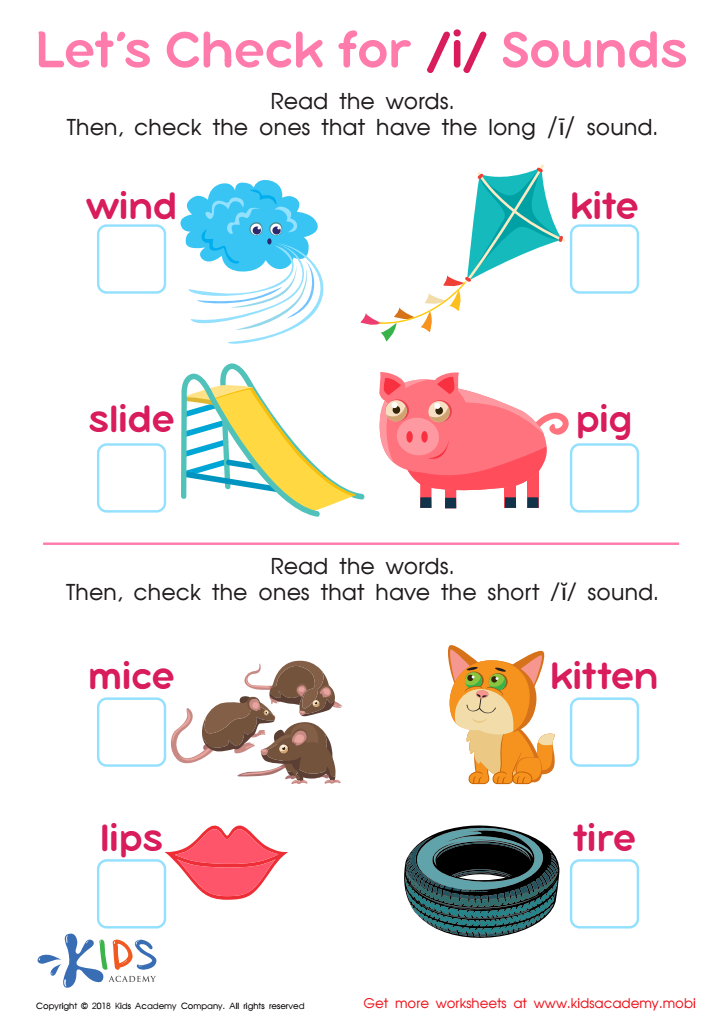
Let's Check for «i» Sounds Worksheet

Let's Check for «i» Sounds Worksheet

This fun worksheet with pictures boosts phonics skills - differentiating between long «ī» and short «i» sounds in 1- and 2-syllable words. Kids use picture clues to read words, then check off the correct ones. It's a great way for new readers to practice early reading skills and find success on their own.
Let's Check for «i» Sounds Worksheet
Worksheet
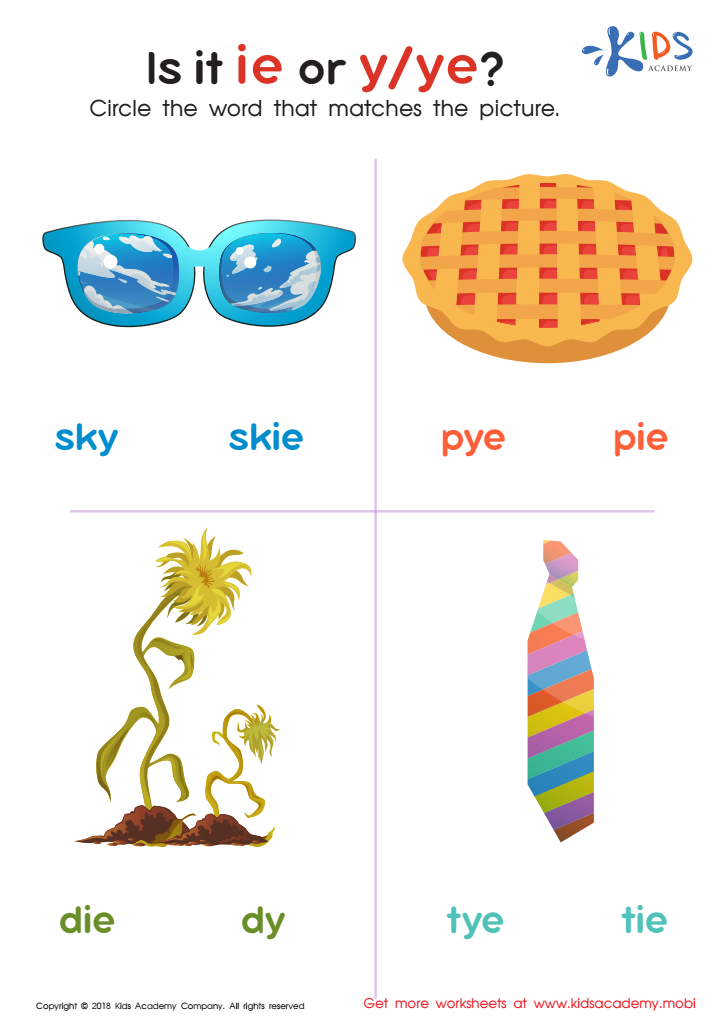
Is It IE or Y/Ye? Worksheet

Is It IE or Y/Ye? Worksheet

Test your child's picture identification skills by pointing at common items in your house and asking them to name them. Then, look at the objects in this worksheet with your little one. Point at each one, ask for the name, then ask which spelling is correct. Help them circle the correct word.
Is It IE or Y/Ye? Worksheet
Worksheet
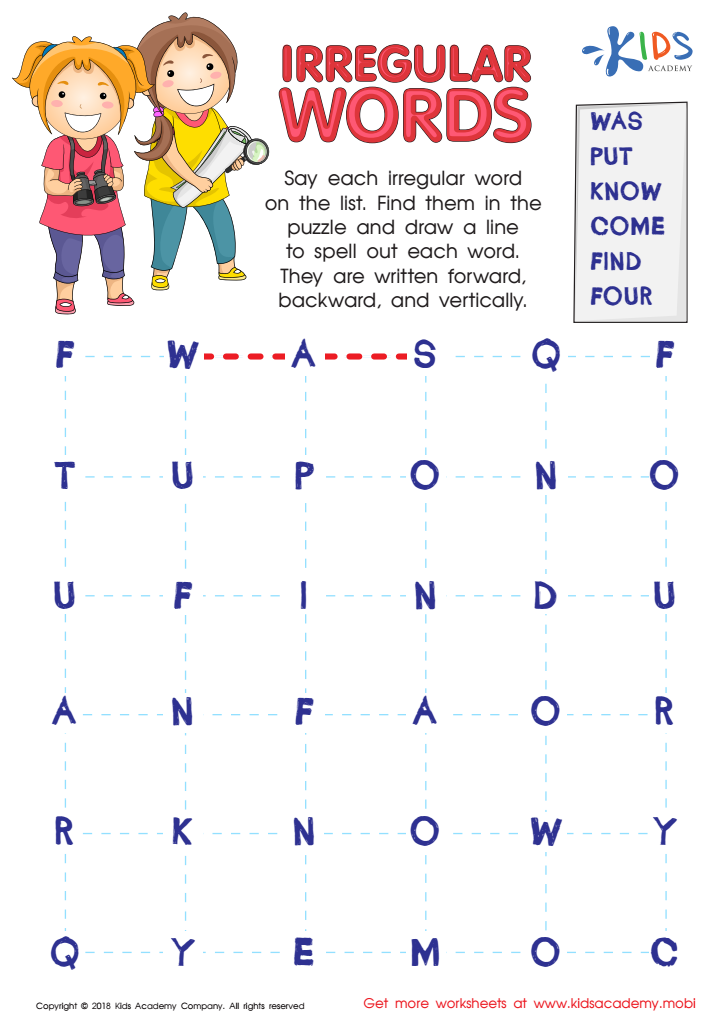
Irregular Words Worksheet

Irregular Words Worksheet

This fun word search worksheet helps kids practice reading irregular words and build their sight word banks. They'll also get practice with visual discrimination and fine motor skills as they hunt down the words.
Irregular Words Worksheet
Worksheet
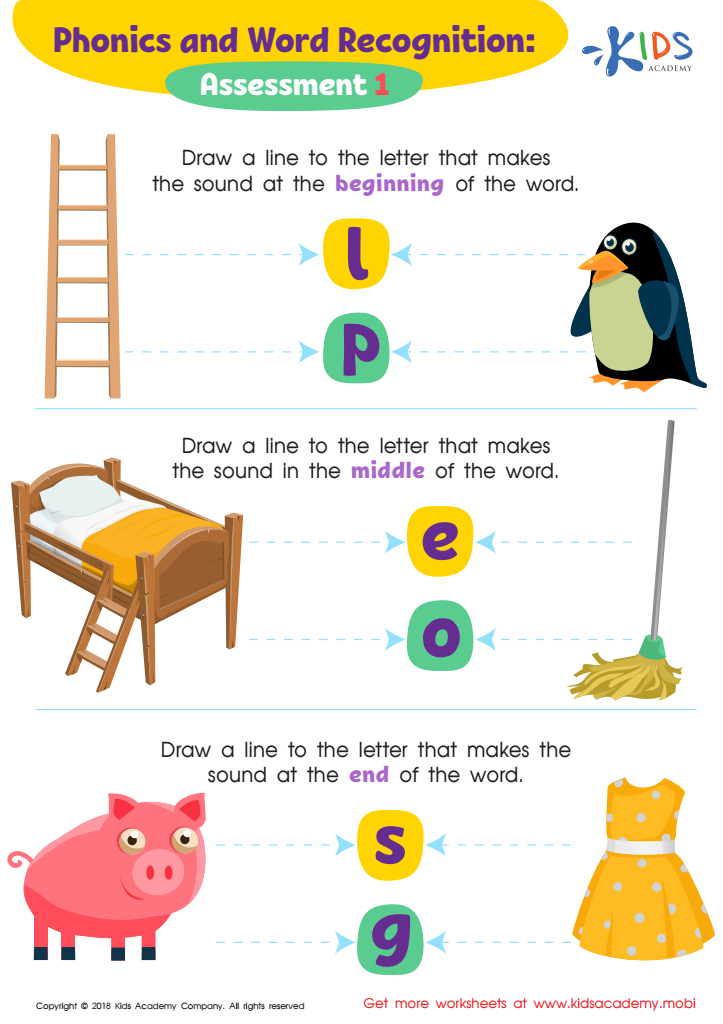
Phonics and Word Recognition: Assessment 1 ELA Worksheet


Phonics and Word Recognition: Assessment 1 ELA Worksheet

This fun worksheet tests your child's sound recognition skills for each part of a word. Ask your child to name each image and trace the line to match it with the corresponding letter. Listen for beginning sounds on 1st, middle sounds on 2nd, and ending sounds on 3rd. Encourage learning with this colorful and interactive activity!
Phonics and Word Recognition: Assessment 1 ELA Worksheet

Worksheet


Spelling practice for children aged 3-6 using the Normal Alphabet is vital for several reasons. First, early exposure to spelling reinforces foundational literacy skills, helping children to recognize letters, sounds, and their combinations, which are crucial for reading development. When children learn to spell, they also enhance their vocabulary, enabling them to express themselves more effectively as they grow.

These formative years are critical because children's brains are highly receptive to new information. Engaging in spelling activities fosters cognitive development by improving memory and attention span. Moreover, consistent practice can boost their confidence, encouraging a love for learning that can take them through their education journey.

Gathering with parents or teachers to establish a spelling routine creates a collaborative learning environment, fostering positive parent-child or teacher-student relationships. It promotes communication and shared goals in a supportive setting, making learning more enjoyable.

Finally, the skills children acquire during this stage lay the groundwork for more complex literacy tasks in the future. By valuing and prioritizing early spelling practice, caregivers can equip children with essential tools for academic success and lifelong learning.