Vocabulary development Normal Letter Sounds Worksheets for Ages 3-6
6 filtered results
-
From - To
Enhance your child's vocabulary development with our engaging Normal Letter Sounds Worksheets designed for ages 3-6! These interactive resources focus on building essential literacy skills through fun and age-appropriate activities. Children will explore letter recognition, sound matching, and vocabulary enhancement, laying a solid foundation for reading success. Our worksheets encourage playful learning, allowing young learners to connect words with pictures and sounds. Each activity is tailored to stimulate interest and promote confidence in early literacy. Perfect for both home and classroom use, these worksheets are a fantastic way to support your child’s journey in mastering the alphabet and expanding their vocabulary!
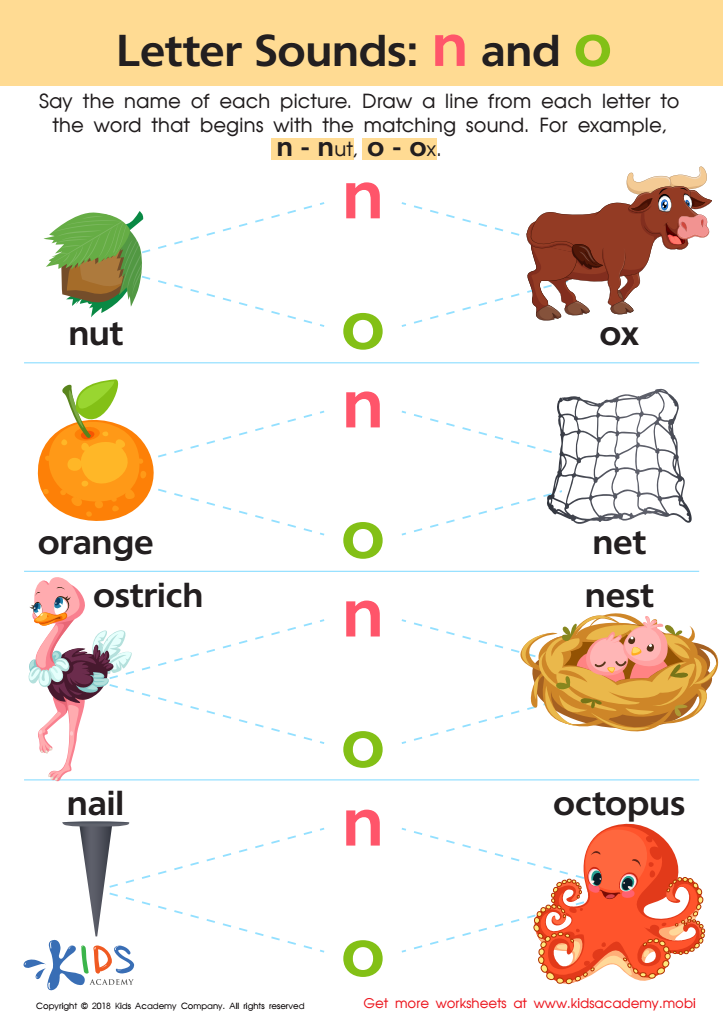
Letter N and O Sounds Worksheet
 Assign to My Students
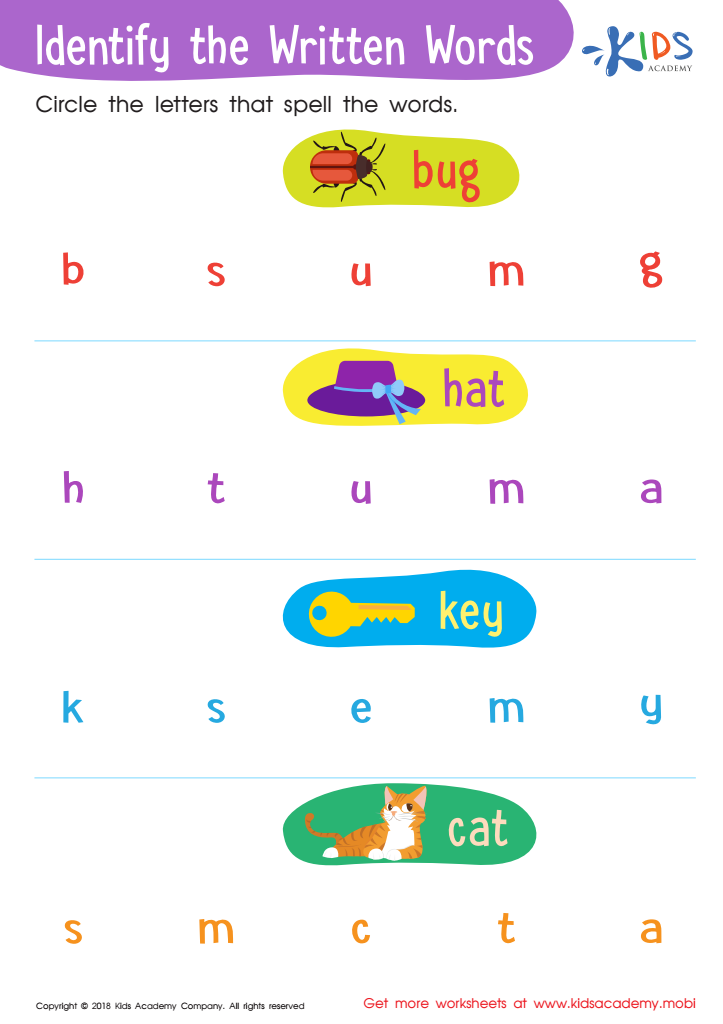
Identify the Written Words Worksheet
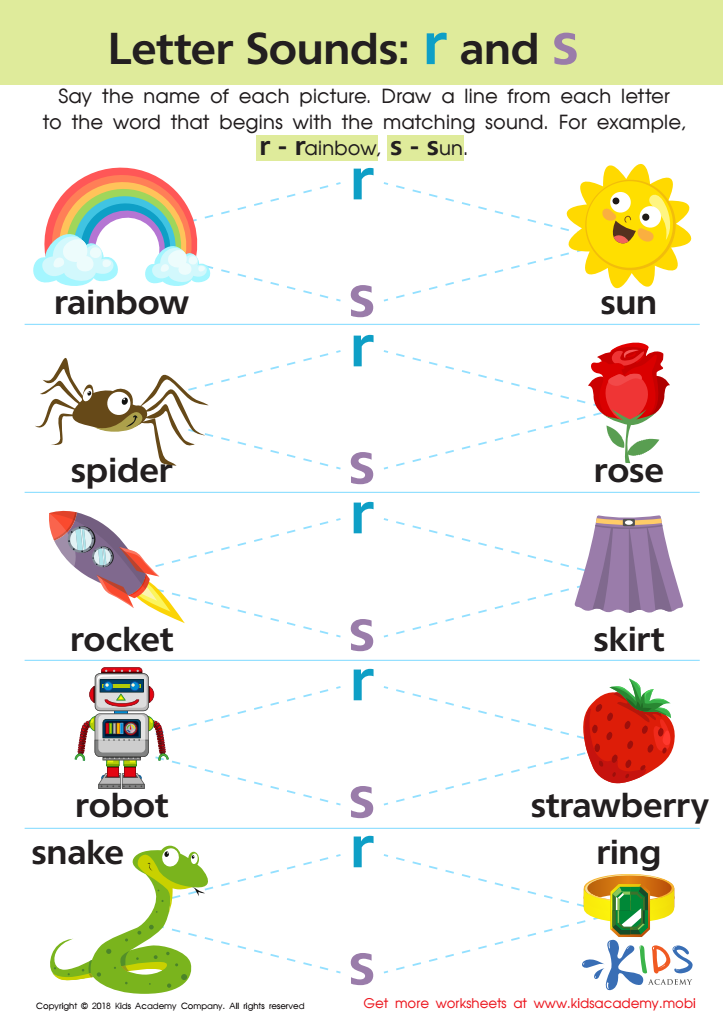
Letter R and S Sounds Worksheet
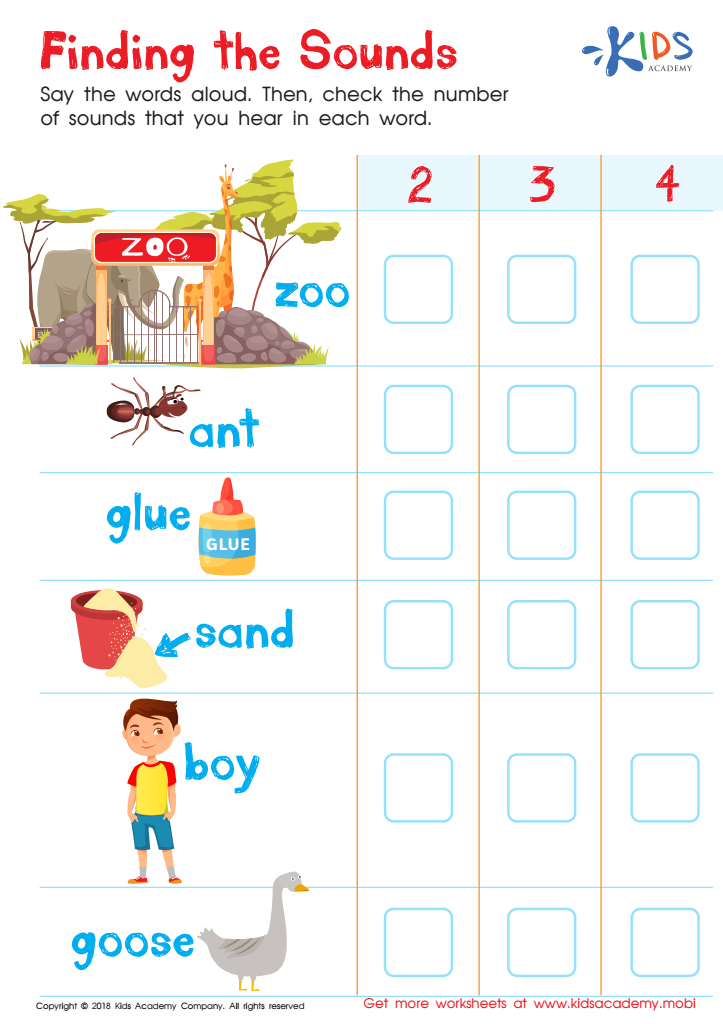
Finding the Sounds Worksheet
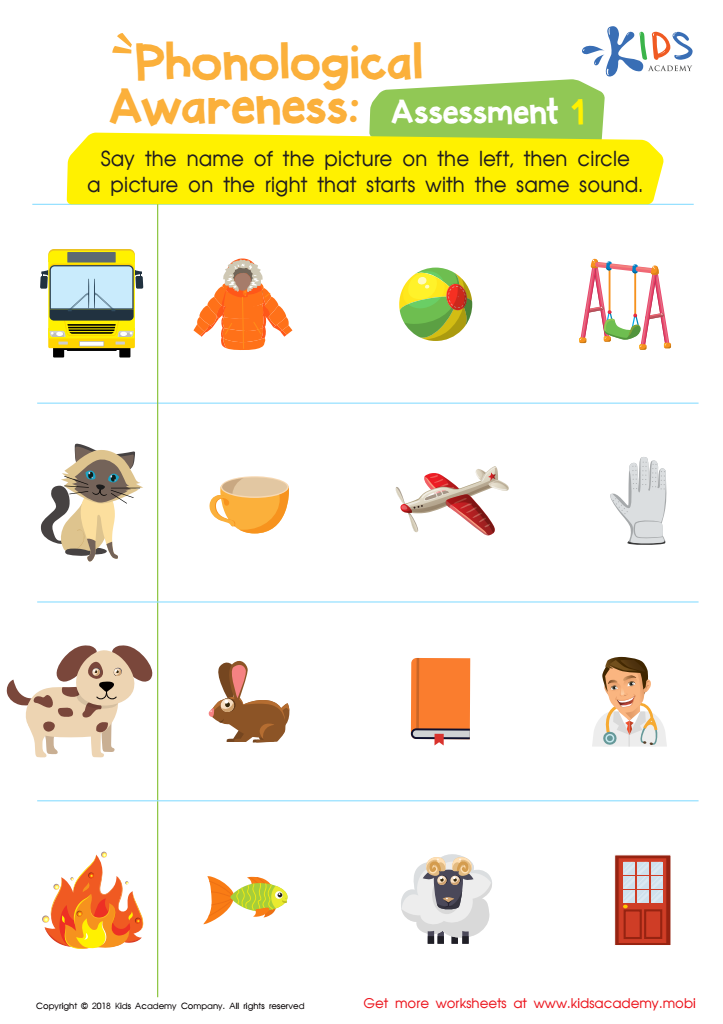
Phonological Awareness: Assessment 1 Worksheet
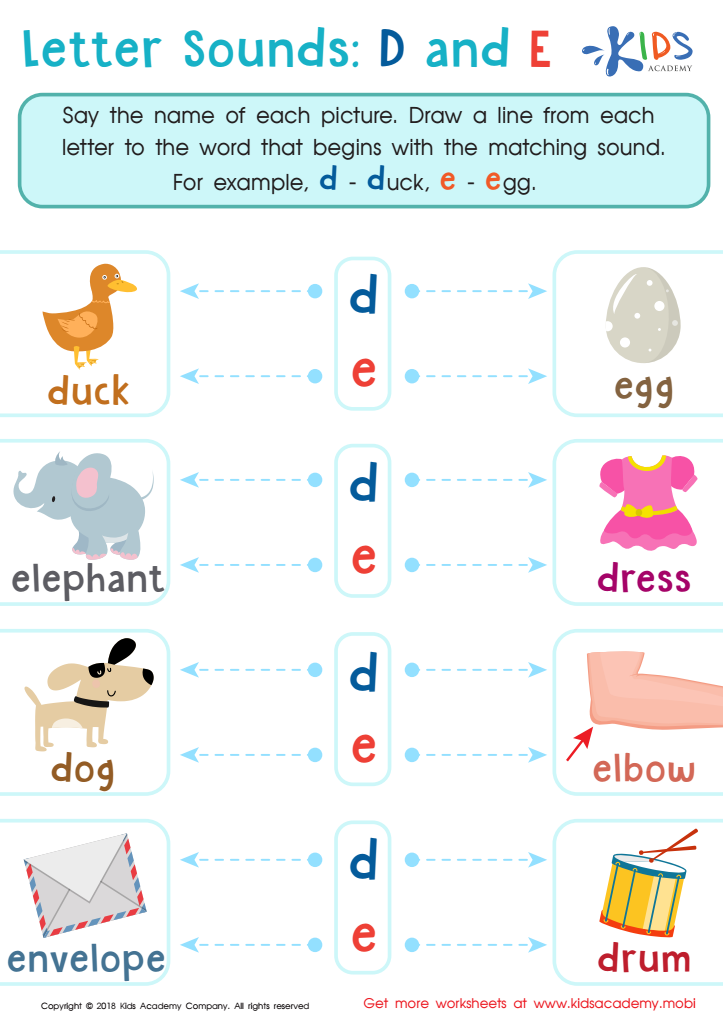
Letter D and E Sounds Worksheet








Vocabulary development is crucial for children aged 3-6, as it forms the foundation for their reading, writing, and overall communication skills. Early exposure to vocabulary helps children understand and articulate their thoughts, emotions, and experiences. At this age, children are particularly receptive to language, making it an ideal time for parents and teachers to engage them with rich vocabulary encounters.
Understanding normal letter sounds is directly linked to phonemic awareness, which is essential for literacy. When children learn how letters correspond to sounds, they begin to decode words, ultimately leading to reading success. This lays the groundwork for their ability to read and comprehend texts as they progress in school.
Moreover, a strong vocabulary promotes cognitive development. The more words children know, the better they can express their ideas, engage in discussions, and develop critical thinking skills. It also enhances their listening comprehension and social interactions, which are vital for their emotional growth.
For these reasons, parents and teachers should prioritize vocabulary development and normal letter sounds. By providing a rich language environment, they can help children build essential skills that enable success in school and beyond, fostering a lifelong love of learning.






