Rhyming skills development Normal Phonics Worksheets for Ages 3-6
4 filtered results
-
From - To
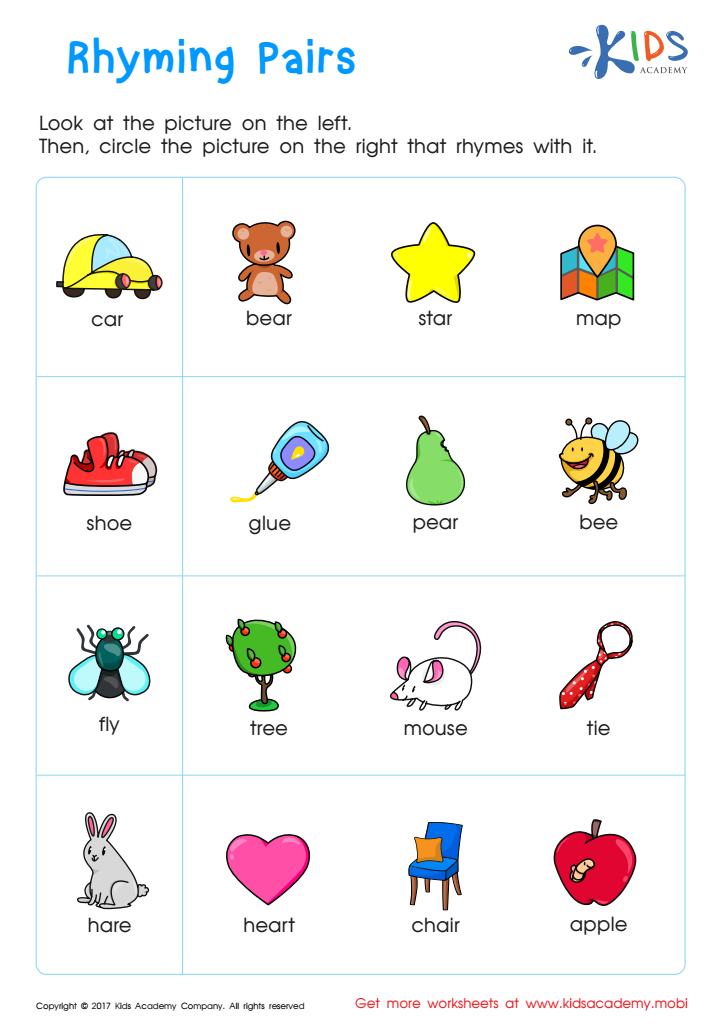
Discover engaging Rhyming Skills Development Normal Phonics Worksheets for children aged 3-6, designed to enhance their phonetic understanding and vocabulary. These worksheets incorporate colorful illustrations and playful exercises that encourage early learners to identify, create, and match rhyming words. Featuring interactive activities tailored to foster language skills, these resources are perfect for both home and classroom settings. Parents and educators can easily download and print them for hours of educational fun. As children play with sounds and words, they'll build essential literacy foundations while developing a love for reading. Unlock their potential with our dynamic and fun phonics worksheets today!
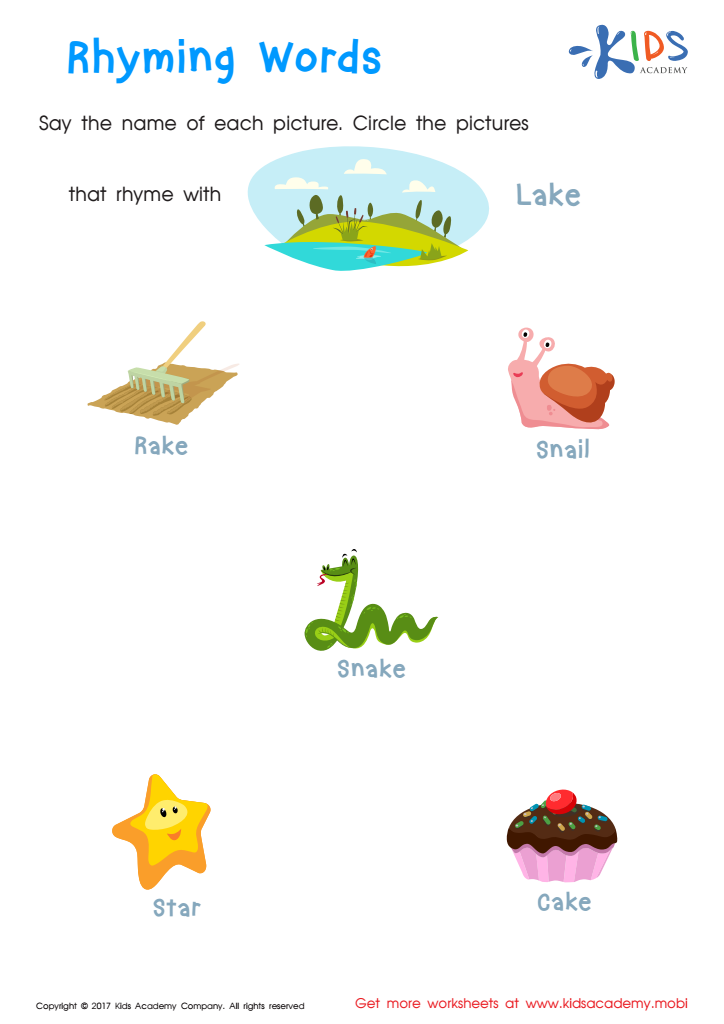
Rhyming Words Rhyming Worksheet
 Assign to My Students
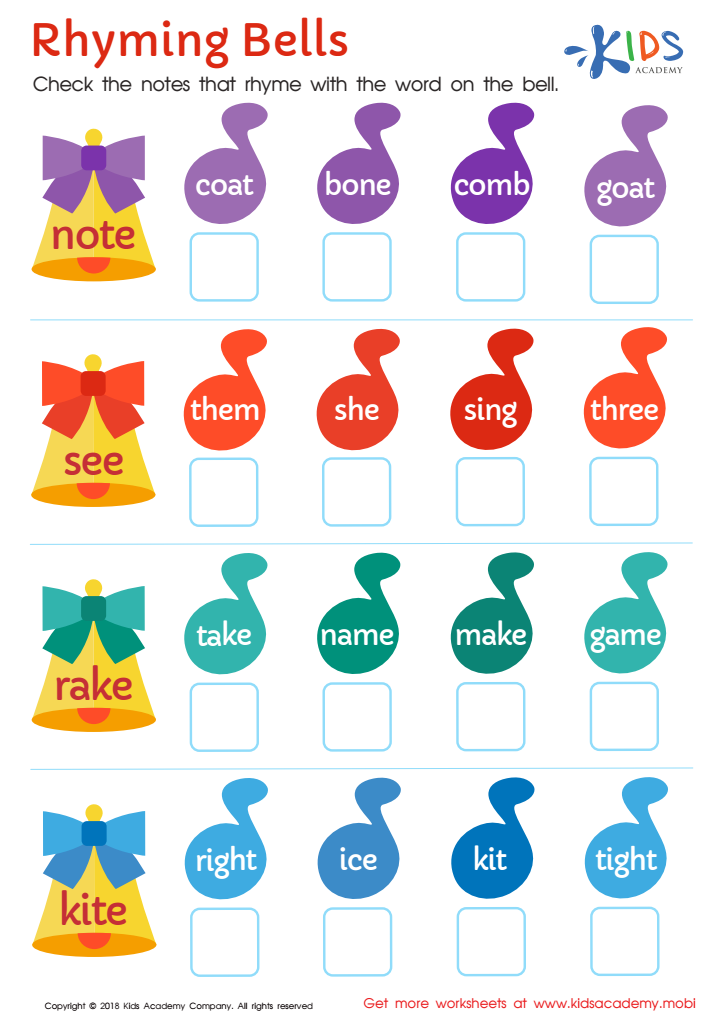
Rhyming Bells Worksheet
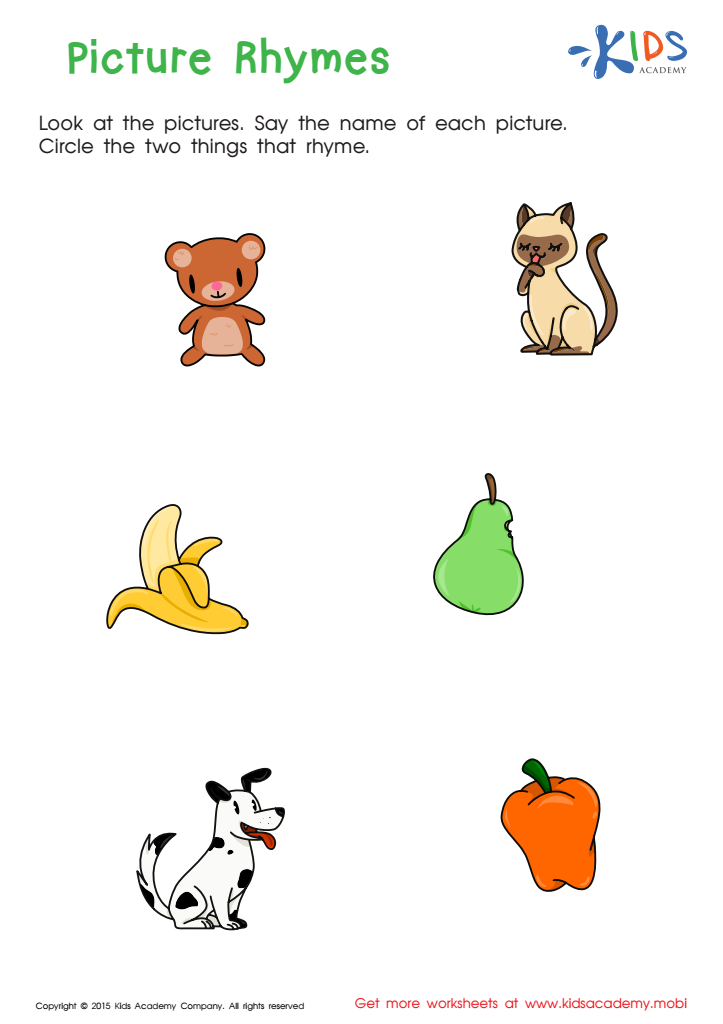
First Words: Picture Rhymes Worksheet








Rhyming skills are a foundational component of early literacy development for children aged 3-6, and both parents and teachers play a crucial role in fostering these skills. Rhyming helps children recognize and produce sounds within words, which is essential for learning phonics—the relationship between sounds and letters. By developing rhyming skills, children improve their phonological awareness, leading to better reading and writing abilities.
Engaging children in rhyming activities—such as reading rhyming books, singing songs, and playing word games—enhances language and vocabulary development. These activities stimulate their auditory discrimination, enabling them to listen for similarities and differences in sounds, which is valuable when they encounter new words.
Moreover, rhyming fosters creativity and social interaction. Collaborative games and activities involving rhymes promote teamwork and communication among peers, enriching their learning environment. Additionally, an early interest in language resulting from rhyming can instill a lifelong love for reading.
In summary, prioritizing rhyming skills and phonics is essential for building the necessary groundwork for literacy. By incorporating these elements into their daily routines, parents and teachers equip young learners with the skills they need to flourish in reading and educational pursuits.







