Spelling practice Normal Phonics Worksheets for Ages 3-6 - Page 2
27 filtered results
-
From - To
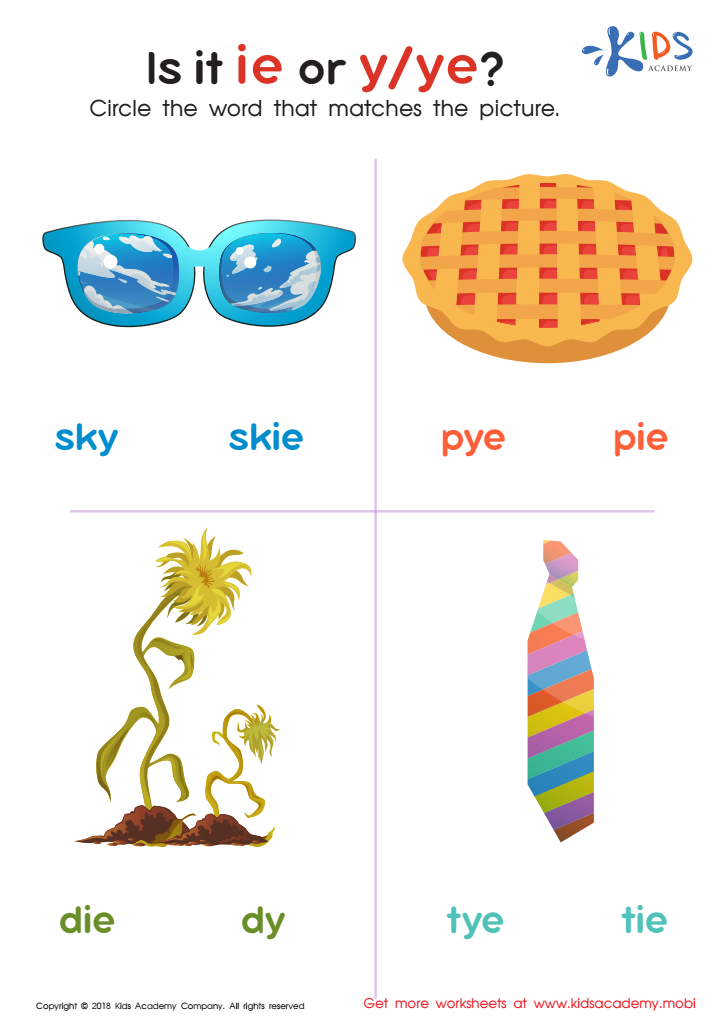
Is It IE or Y/Ye? Worksheet
 Assign to My Students
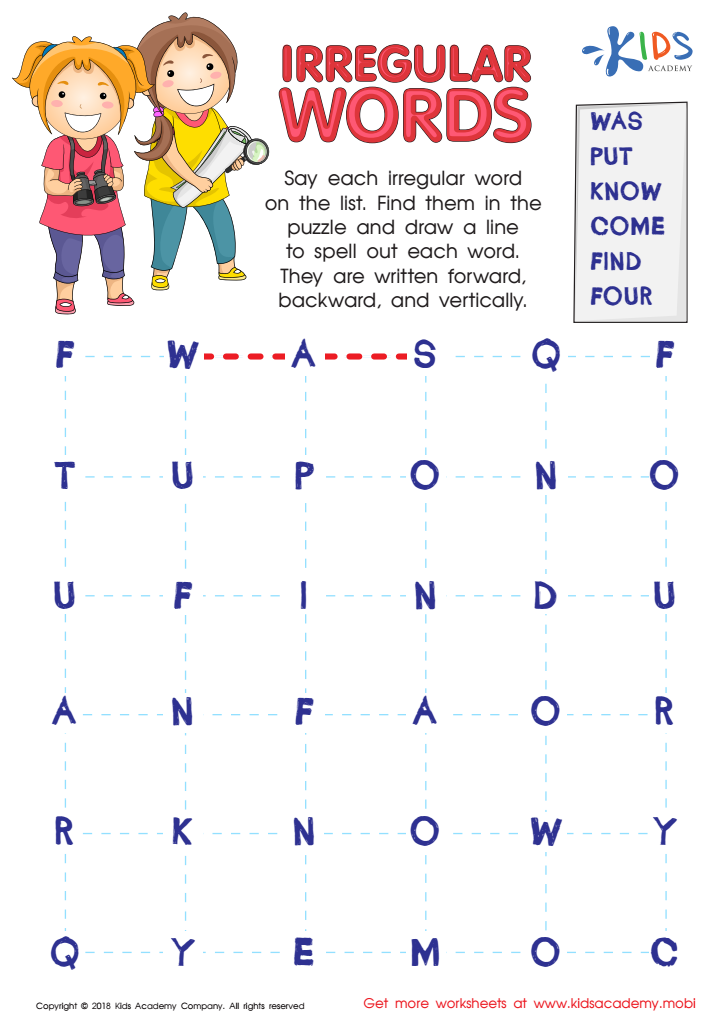
Irregular Words Worksheet
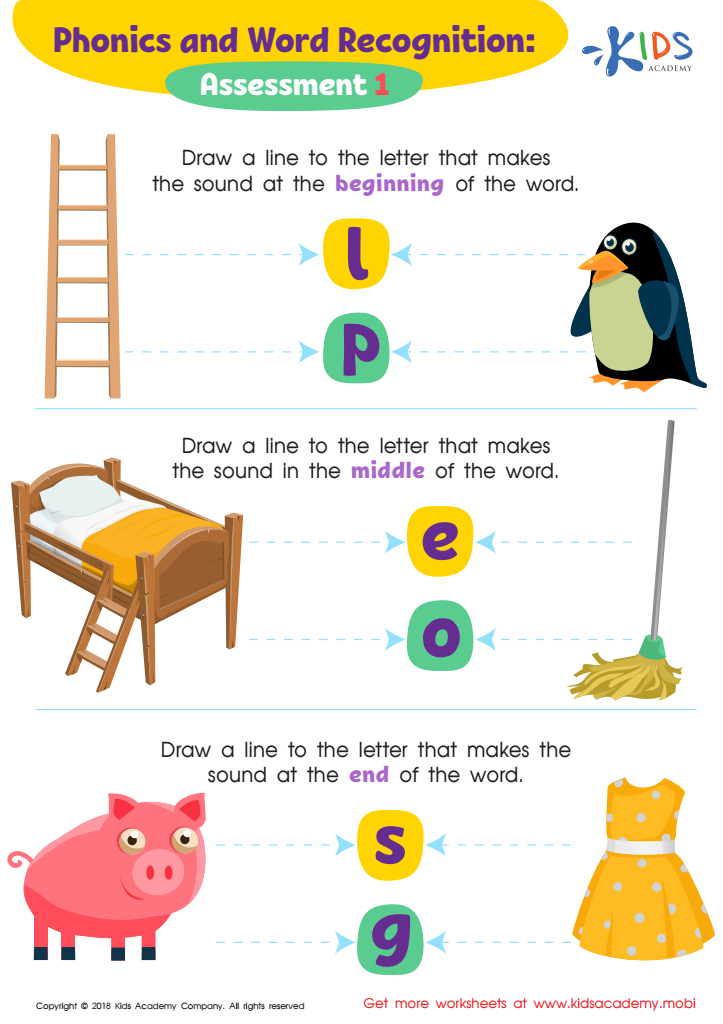
Phonics and Word Recognition: Assessment 1 ELA Worksheet








Spelling practice and normal phonics instruction for children ages 3-6 lay the foundation for essential literacy skills. During these formative years, children's brains are uniquely receptive to learning language and subskills like phonics, which is the relationship between sounds and their corresponding letters. First, spelling practice enhances phonemic awareness, helping children recognize and differentiate sounds within words. This skill is critical for decoding words during reading.
Comprehensive spelling and phonics routines foster vocabulary development and language comprehension. By learning word patterns and letter sounds, children build confidence in their reading and writing abilities, paving the way for future academic success. Children who acquire strong phonics skills early on are more likely to become fluent readers, capable of understanding and interpreting text efficiently.
Moreover, consistent practice in these areas can help prevent common literacy struggles, such as dyslexia. It also supports the development of fine motor skills through writing exercises, which is crucial for overall academic performance.
Parental and educator involvement is vital in providing a supportive and responsive learning environment. Encouraging kids through games, reading aloud, and engaging phonics activities can make spelling practice enjoyable and effective. Therefore, committing time and resources to proper spelling and phonics techniques significantly impacts young children's educational and cognitive development.







