Filters

5 filtered results

Clear all filters
Favorites
With answer key
Interactive

5 filtered results

Difficulty Level

Grade


Boost your child's spelling abilities with our Normal Phonics Worksheets designed for ages 3-6! These engaging and interactive worksheets make learning fun while laying a strong foundation in phonics and spelling. Each activity includes colorful visuals and easy-to-follow instructions to keep young learners interested. As they practice, children will develop their phonemic awareness, improve vocabulary, and build confidence in their reading and writing skills. Perfect for both home and classroom use, our worksheets cater to early learners and help prepare them for future academic success. Explore our collection today and watch your child shine in their spelling journey!

Check out this FREE Trial Lesson on Phonics for age 3-6!

The Letter F Sound

Favorites
With answer key
Interactive
  • 3-6
  • Spelling Skills
  • Phonics
  • Normal
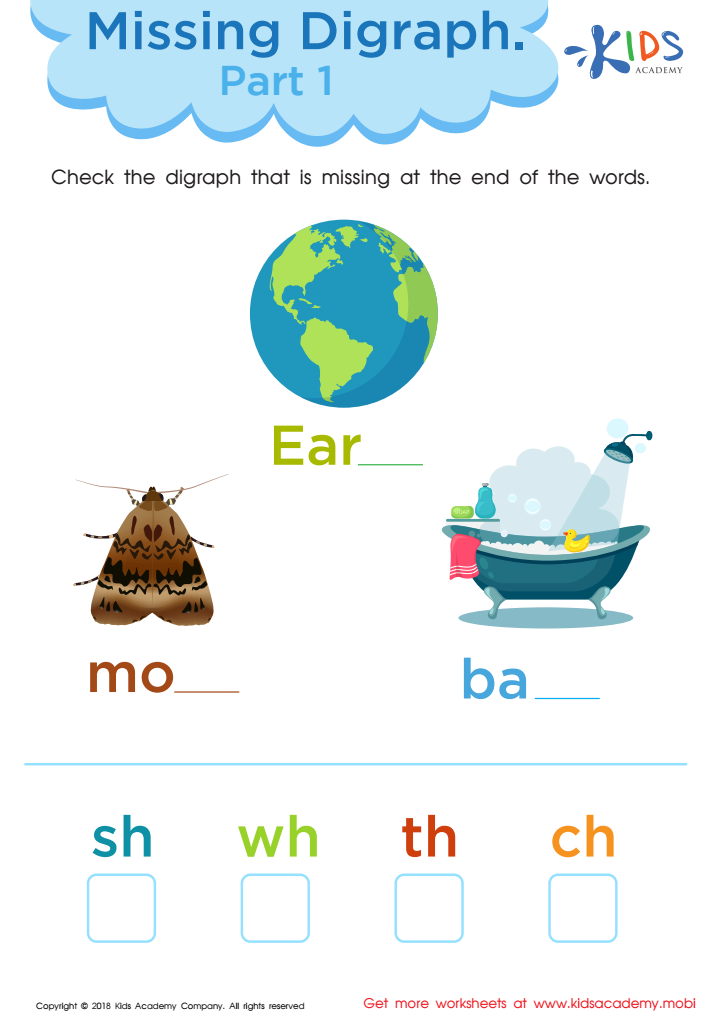
Missing Digraph: Part 1 Worksheet

Missing Digraph: Part 1 Worksheet

Practice the 'th' digraph with this worksheet! Ask kids to say the words shown and sound out the letters below each image. Check the box with the correct digraph to complete. Examples include 'earth', 'bath' and 'moth', all ending with the same two letters. Phonics teaches that digraphs are two letters that make one sound.
Missing Digraph: Part 1 Worksheet
Worksheet
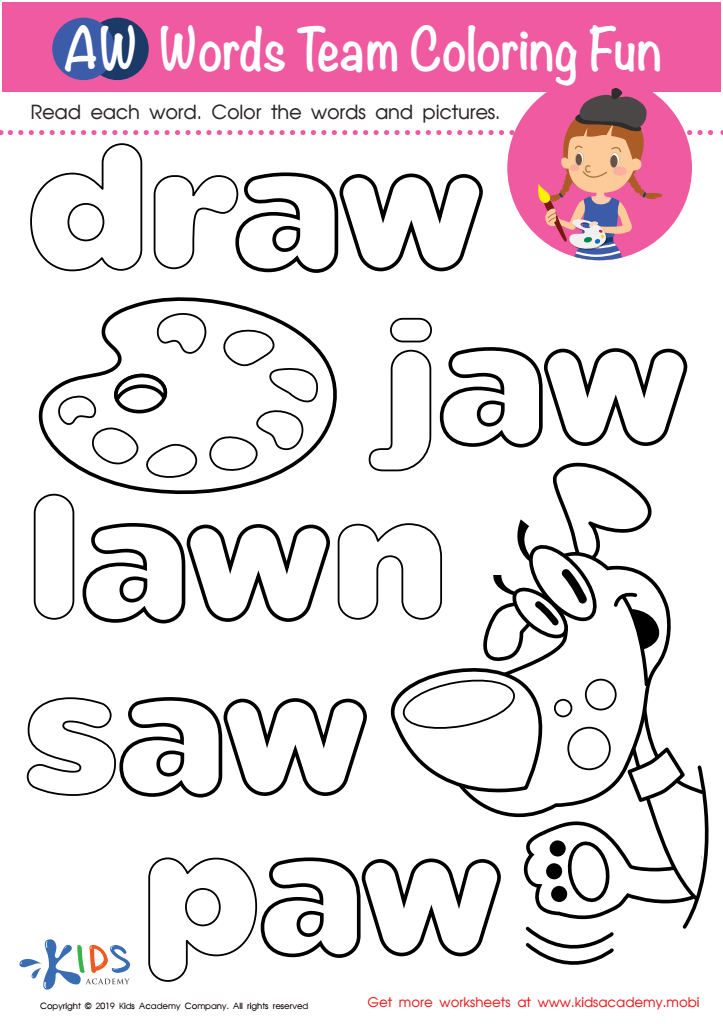
AW Words Team Coloring Fun Worksheet

AW Words Team Coloring Fun Worksheet

Coloring words they can read is a blast for little learners! This worksheet offers emerging readers the chance to practice and gain confidence in reading words from the -aw family, while also improving fine-motor and creativity skills. Without knowing it, they'll learn about phonetic teams along the way!
Download (PDF)
Assign to My Students
AW Words Team Coloring Fun Worksheet
Worksheet
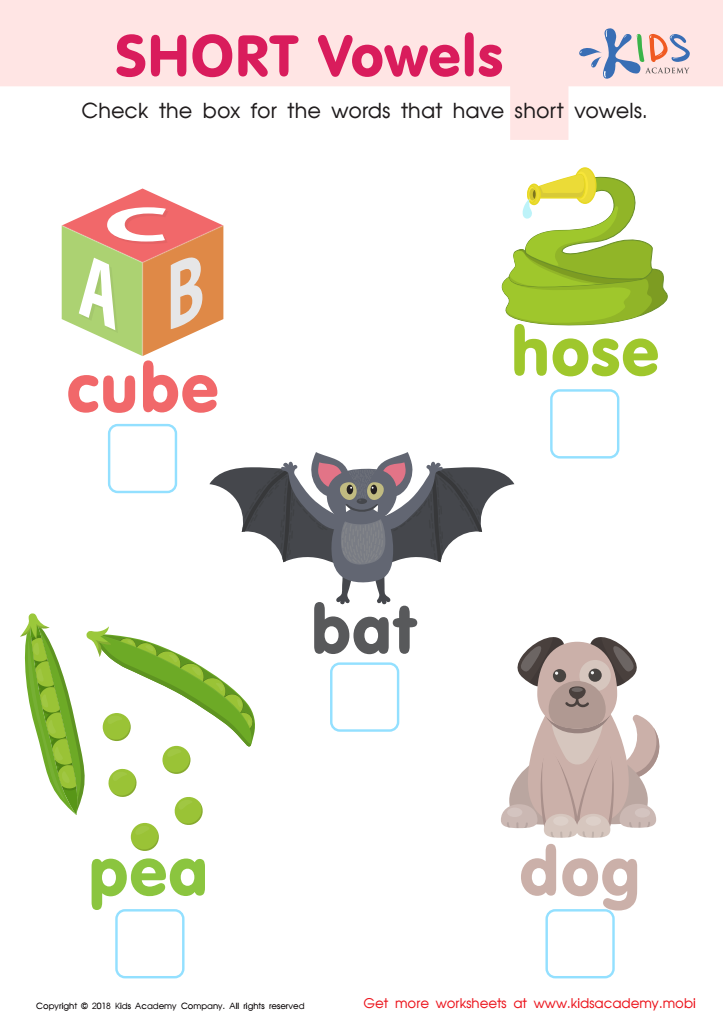
short vowels Worksheet

short vowels Worksheet

Say "dog" and notice how long it takes to pronounce the vowel. Is it short or long? Compare it to "pea" and use this worksheet to quickly assess your child's mastery. Have them name each picture and listen for the vowel sounds. Only check the boxes for words with short vowel sounds.
short vowels Worksheet
Worksheet
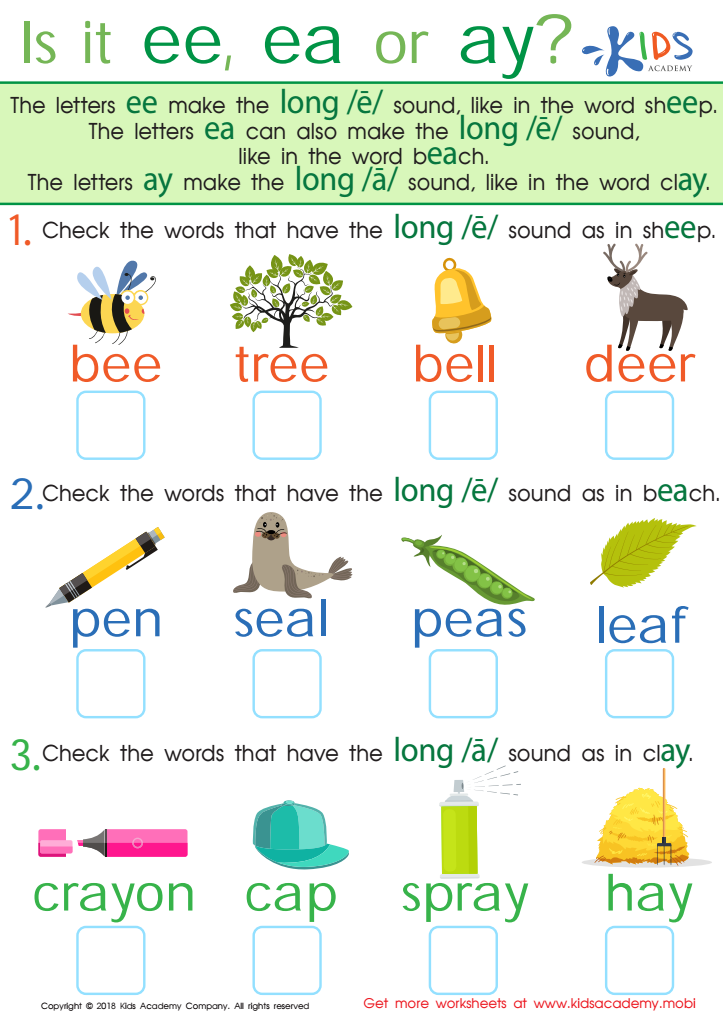
Is It EE, EA, or AY? Worksheet

Is It EE, EA, or AY? Worksheet

When 'ee', 'ea' and 'ay' are in words, they usually make the long /e/ and /a/ sounds. Examples of words with 'ee' are "sheep", 'beach' and 'seat' with 'ea', and 'clay' and 'play' with 'ay'. Check this colourful worksheet with your kids; help them find the words that make the long /e/ sound like 'sheep'.
Is It EE, EA, or AY? Worksheet
Worksheet
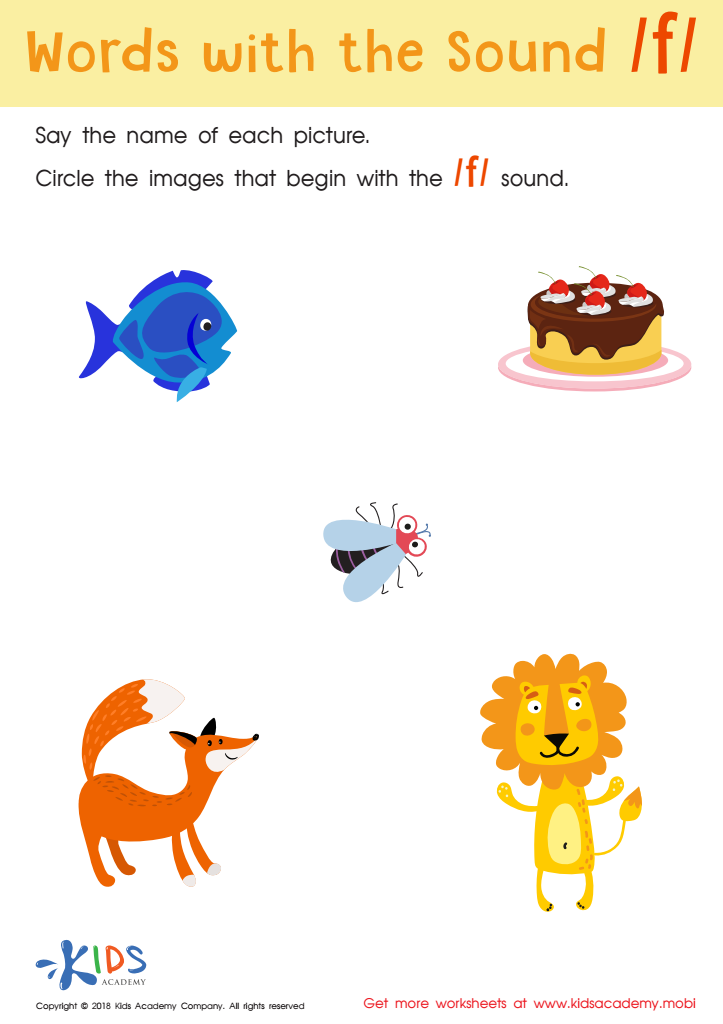
Words with sound f Reading Worksheet


Words with sound f Reading Worksheet

This illustrated phonics worksheet is ideal for preschool or kindergarten. It helps boost learners' literacy skills with a focus on the letter "f". Ask your child to name all the pictures, listening for that sound. Examples are fish, fox, lion, bug. When they can identify which words start with "f", have them circle the images. Congratulate them on a job well done!
Words with sound f Reading Worksheet

Worksheet


Parents and teachers should care about Spelling Skills Normal Phonics for ages 3-6 because it plays a crucial role in early literacy development. At this formative stage, children's brains are highly adaptable, making it an optimal time to introduce phonetic principles. Understanding phonics empowers young learners to recognize and decode words, setting a solid foundation for reading and writing.

By promoting spelling skills through phonics, educators and parents can enhance vocabulary acquisition and comprehension. When children grasp the relationship between sounds and letters, they gain confidence in their ability to tackle new and unfamiliar words. Moreover, early phonics instruction can reduce frustration and negativity surrounding reading and writing, fostering a love for language.

The skills developed through phonics are also linked to improved academic performance across subjects—reading proficiency is not just vital for literacy but also impacts overall learning outcomes. Lastly, early intervention in spelling and phonics helps address learning difficulties proactively, which can prevent future academic challenges. By emphasizing Spelling Skills Normal Phonics, parents and teachers can equip children with essential tools for lifelong learning, ensuring they thrive both in school and beyond.