Letter formation Normal Tracing Letters Worksheets for Ages 3-6
3 filtered results
-
From - To
Introduce young learners to the joyful world of writing with our "Letter Formation Normal Tracing Letters Worksheets for Ages 3-6." Crafted with care, these worksheets help children master the basics of letter formation in a fun and engaging manner. Perfectly designed for tiny hands, each sheet provides ample practice with tracing letters, aiding in the development of fine motor skills and foundational literacy. It's a seamless blend of learning and play that ensures young minds stay captivated while honing their writing proficiency. Equip your child with the tools they need to excel in early literacy with our expertly designed tracing worksheets.

Letter P Tracing Page
 Assign to My Students
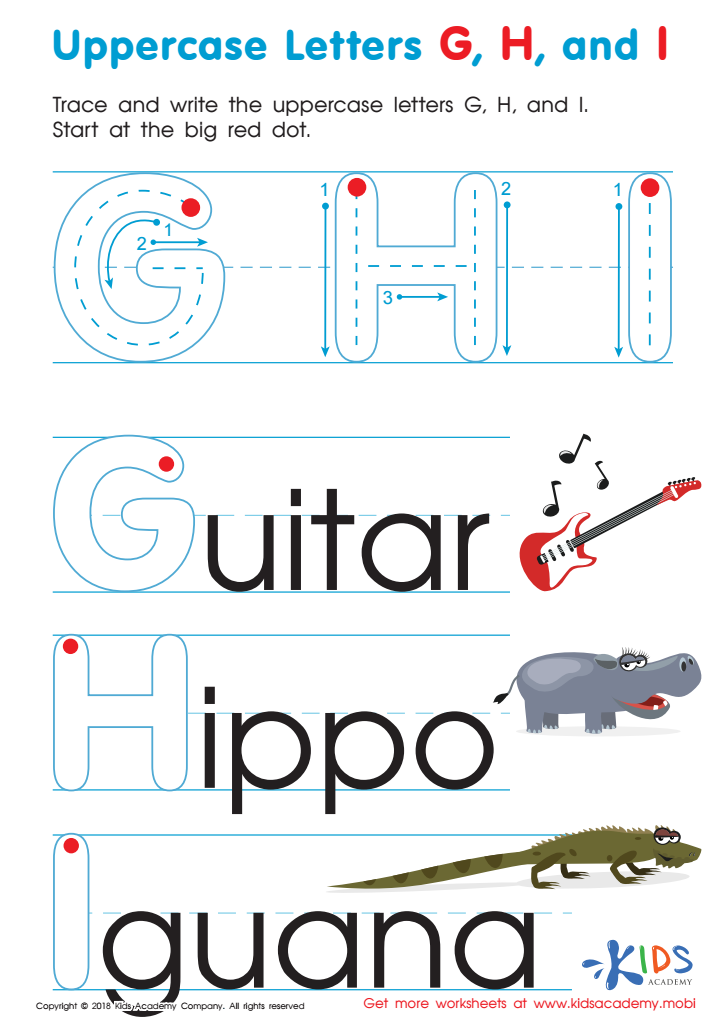
Uppercase Letters G, H, and I Worksheet
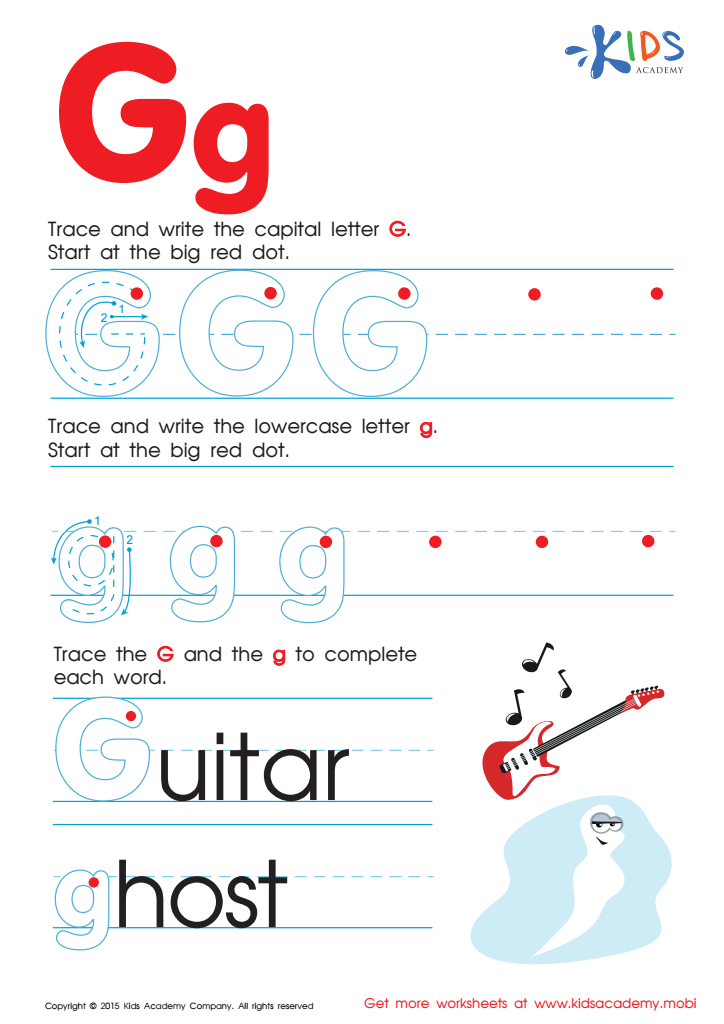
Letter G Tracing Page







Parents and teachers play a crucial role in the early development of children, and focusing on letter formation for ages 3-6 is fundamental. At this age, children are in the initial stages of developing crucial motor skills, cognitive abilities, and literacy. Normal tracing letters provides a structured way for young learners to practice control and coordination, laying the groundwork for proficient handwriting.
Proper letter formation is more than just creating visually pleasing letters; it facilitates the development of fine motor skills. These skills are vital not just for writing but for other daily activities like tying shoelaces, buttoning clothes, and using utensils. When children trace letters, they enhance their hand-eye coordination and muscle memory, which are essential for writing later on.
Moreover, early engagement with letters builds familiarity and confidence with the alphabet, promoting literacy. Recognizing and reproducing letters accurately aids in reading readiness, spelling, and comprehension as children progress in their education. Teachers and parents should care about letter tracing because it fosters a positive learning experience, instills good writing habits, and supports overall academic development. By investing time and effort into letter formation during these foundational years, we set children up for future educational success.








