Lowercase identification Normal Upper & Lowercase Letters Worksheets for Ages 3-6
4 filtered results
-
From - To
Introduce young learners to the world of letters with our engaging Lowercase Identification Worksheets, designed specifically for children ages 3-6. These carefully crafted worksheets help kids effortlessly identify and differentiate between uppercase and lowercase letters. Through fun and interactive activities, children will enhance their alphabet recognition skills, laying a solid foundation for reading and writing. Perfect for both classroom and home use, our worksheets make learning enjoyable and effective. Spark your child's curiosity and boost their confidence with our essential resources. Ideal for early education, these worksheets are a great addition to any learning journey.
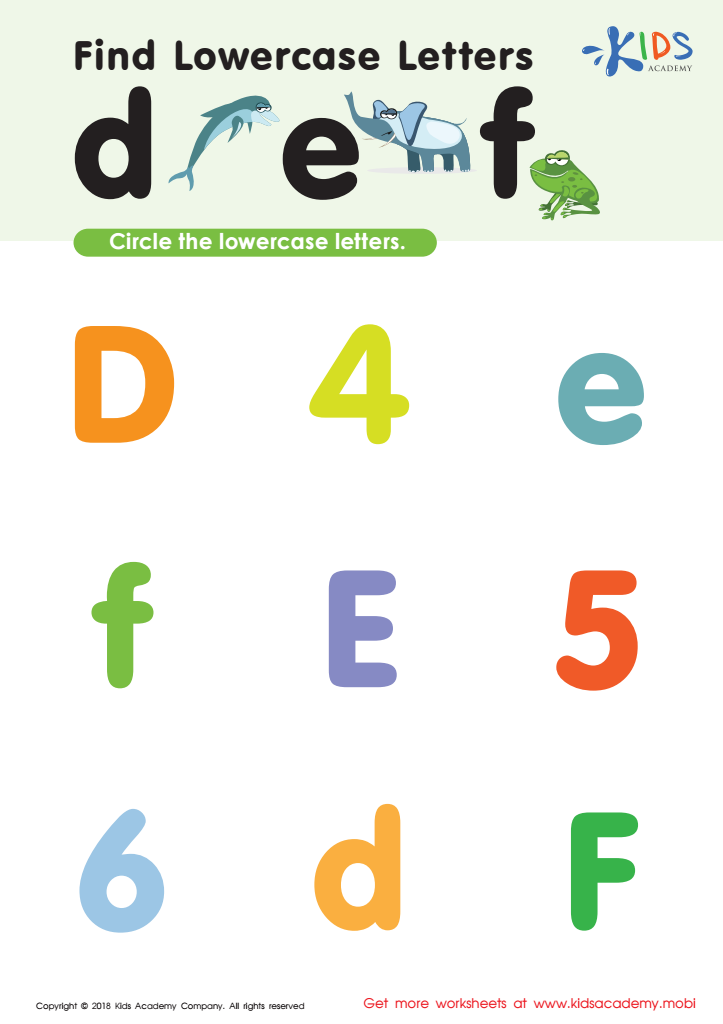
Find Lowercase Letters d e f Worksheet
 Assign to My Students


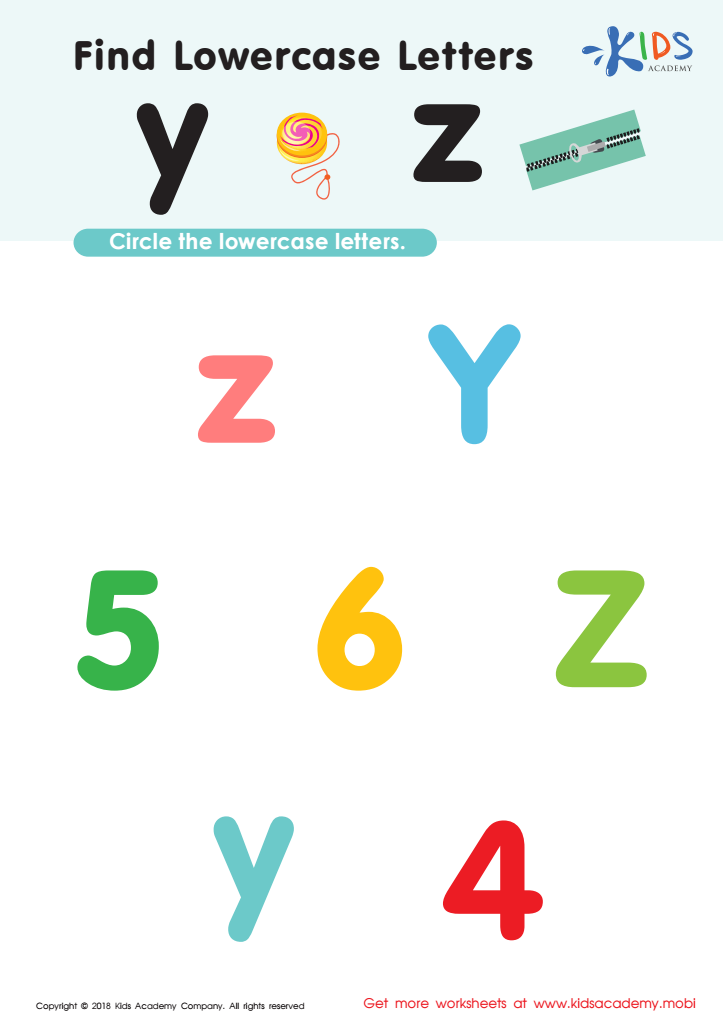
Find Lowercase Letters y z Worksheet
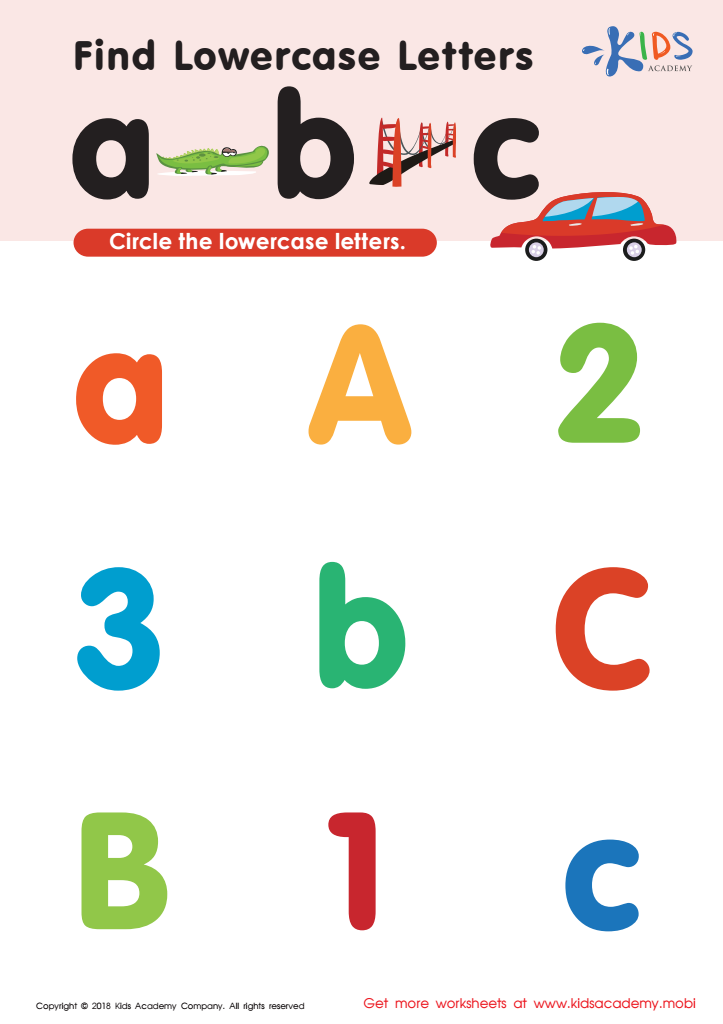
Find lowercase letters a b c Worksheet
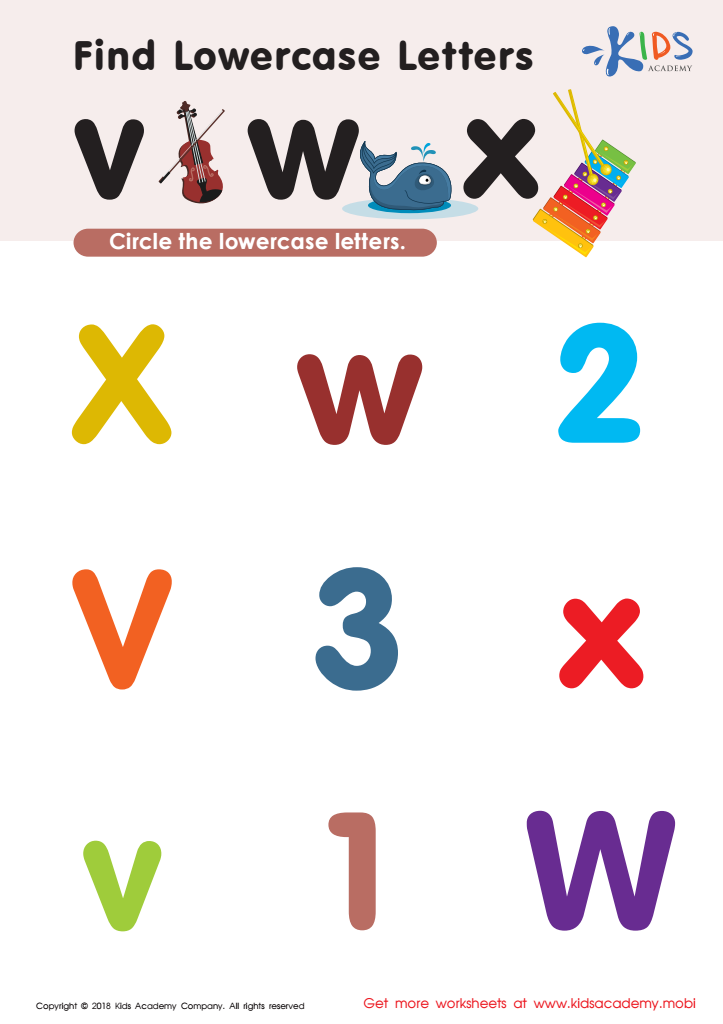
Find Lowercase Letters v w x Worksheet






Parents and teachers should care profoundly about lowercase letter identification in children aged 3-6 because it forms the cornerstone of literacy development. During these formative years, children are in a critical phase of cognitive and motor skills development, and their ability to recognize and differentiate between uppercase and lowercase letters is essential for fluent reading and writing.
First, identifying lowercase letters helps children make connections between spoken sounds and written words, fostering phonemic awareness and decoding skills. For instance, being able to recognize that "a" and "A" represent the same sound, prepares them for more advanced reading tasks.
Second, most written language children will encounter is in lowercase; books, signs, and everyday print primarily use lowercase letters. Hence, a strong grasp of these letters aids in more confident and independent reading.
Finally, handwriting benefits from mastering lowercase letters. Understanding the differences in form and usage between uppercase and lowercase aids in learning to write properly, following lines, and spacing words correctly. Proper letter identification sets a foundation for writing clearly and effectively.
Therefore, caring about proper letter identification during these developmental years directly supports a child's future academic success. It builds the necessary skills for reading fluency, comprehension, and effective written communication, forming the stepping stones for lifelong learning.







