Vowel Recognition Normal Vowels and Consonants Worksheets for Ages 3-6
6 filtered results
-
From - To
Explore our engaging "Vowel Recognition Worksheets" designed specifically for children ages 3-6! These interactive activities help young learners identify and distinguish between normal vowels and consonants. With colorful illustrations and fun exercises, your child will develop essential literacy skills while having a great time. Our worksheets are tailored to promote recognition of the five essential vowels: A, E, I, O, and U, as well as the surrounding consonants, making early learning enjoyable and effective. Perfect for parents and educators, these resources encourage phonemic awareness and boost confidence in young readers, laying a solid foundation for future learning. Start the vowel adventure today!
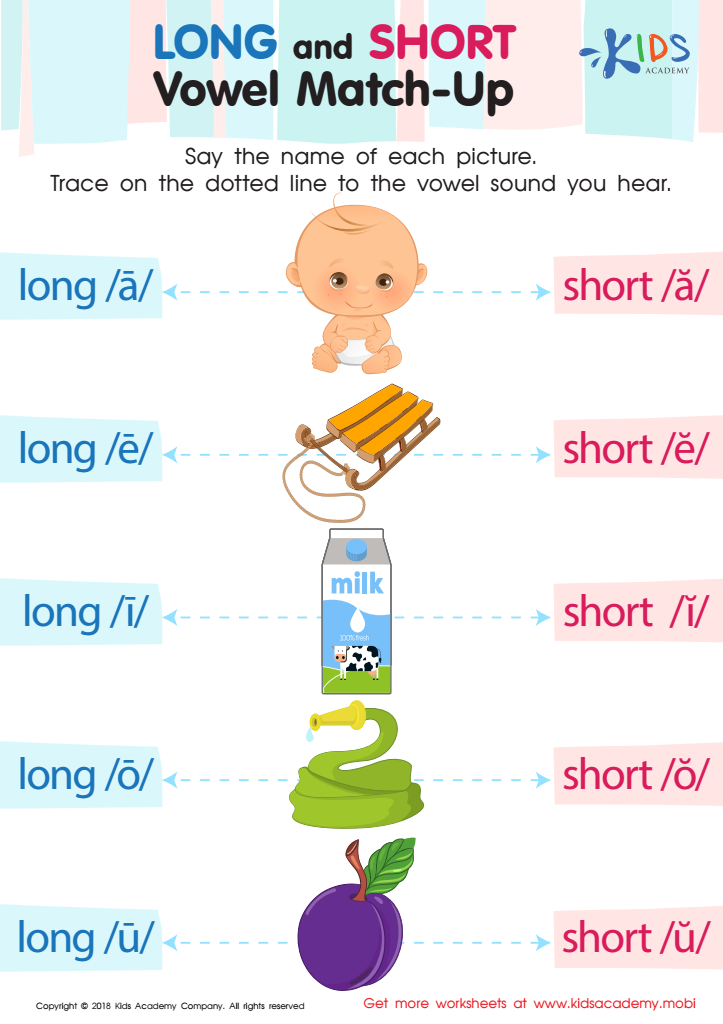
Long and Short Vowel Match up Reading Worksheet
 Assign to My Students
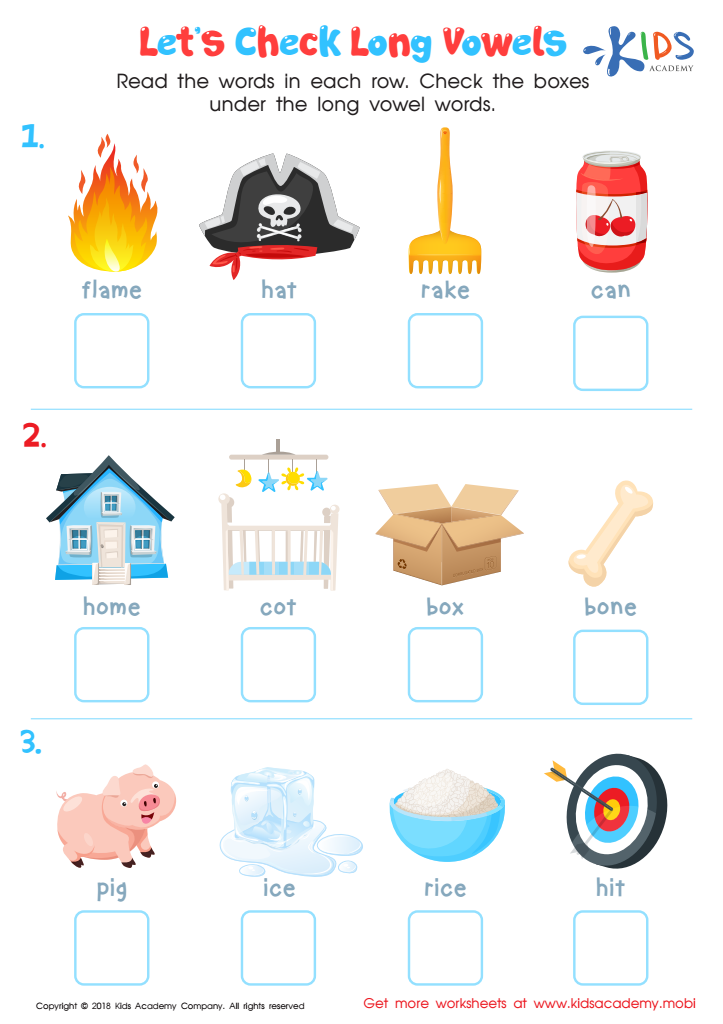
Let's Check Long Vowels: Assessment Worksheet
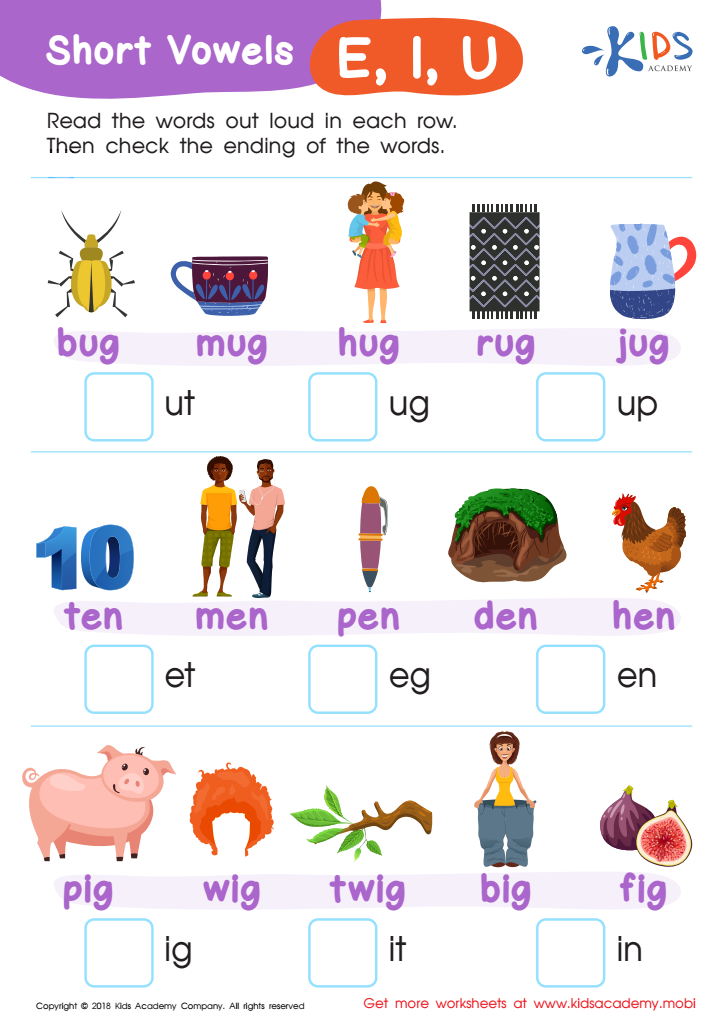
Short Vowels /e/, /i/, and /u/ Worksheet
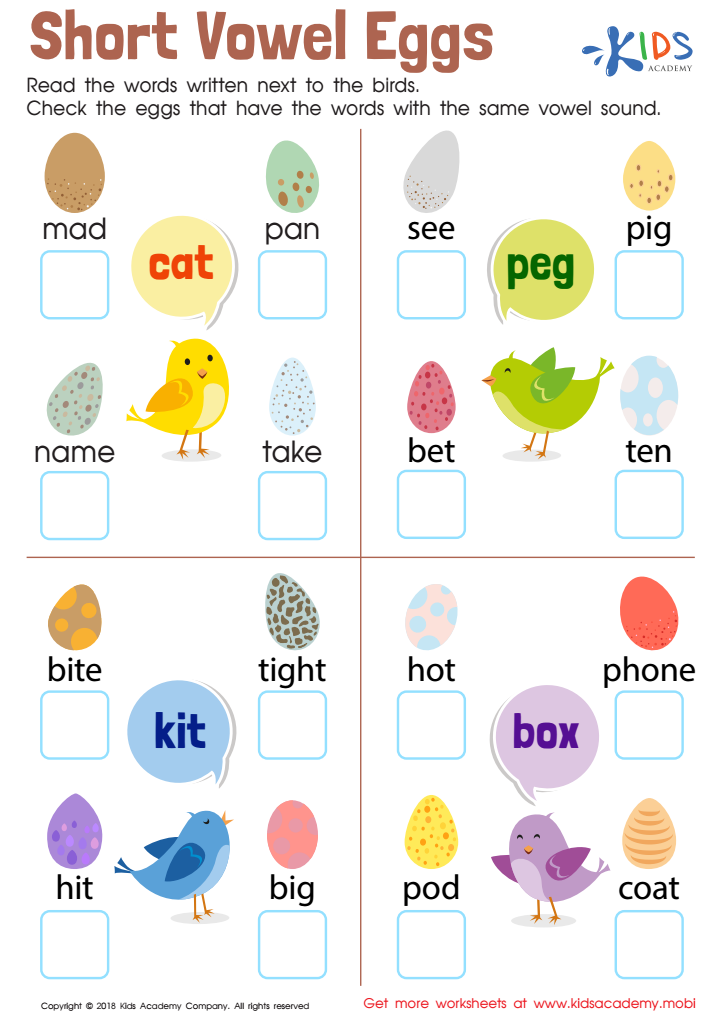
Short Vowel Eggs Worksheet
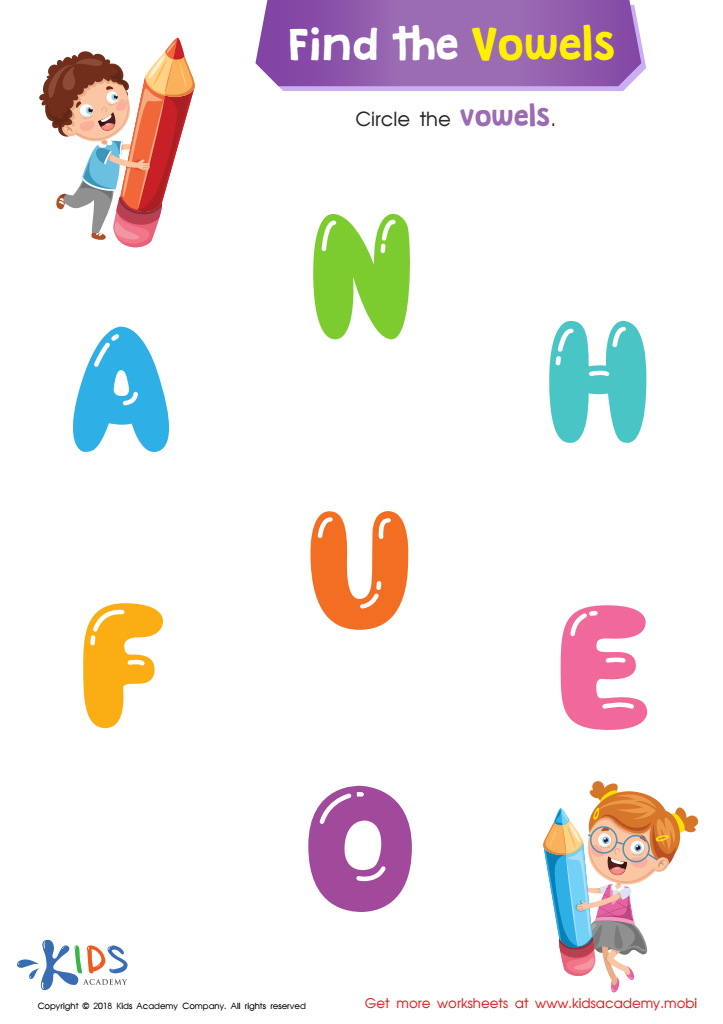
Find the Vowels Reading Worksheet
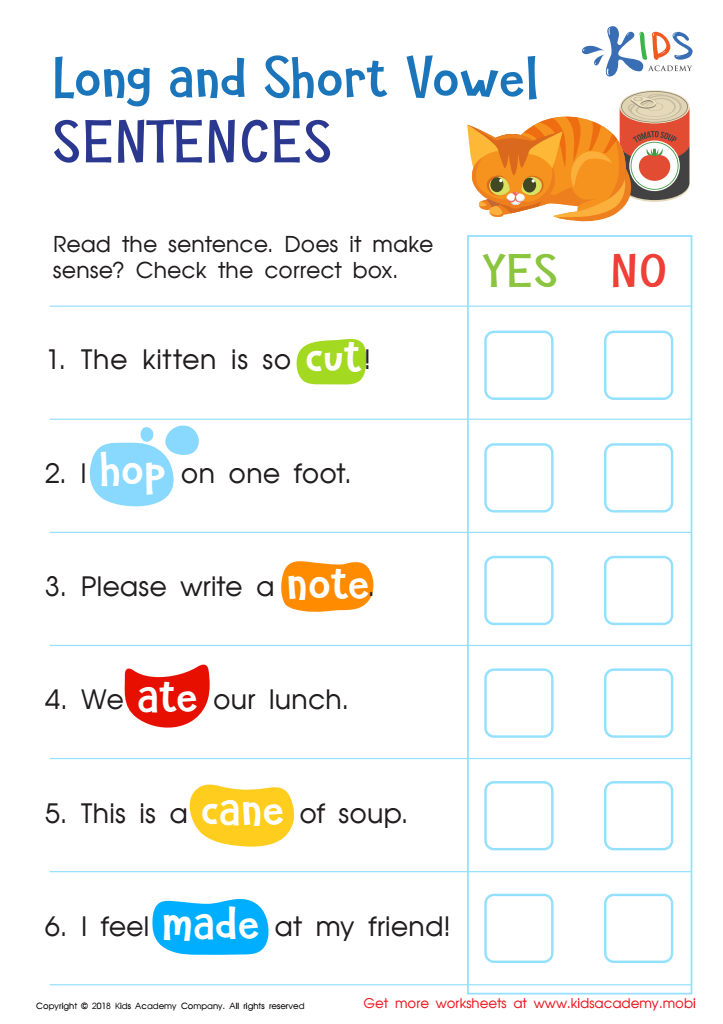
Long and Short Vowel Sentences: Assessment Worksheet



Vowel recognition, along with understanding normal vowels and consonants, is crucial for children aged 3-6 as it forms the foundation of literacy skills. At this age, children are beginning to develop phonemic awareness—the ability to hear, identify, and manipulate the individual sounds in words. Recognizing vowels is particularly essential because vowels are key components of every syllable and, in many cases, the backbone of word formation. By helping children distinguish between vowels and consonants, teachers and parents can boost their reading and writing capabilities.
Moreover, early mastery of vowels aids in phonics, empowering children to sound out words independently, which fosters confidence and enthusiasm towards learning. Vowel recognition supports language development, allowing for a richer vocabulary and improved communication skills. Fostering these skills at such an early age helps lay the groundwork for more complex literacy tasks, such as reading comprehension.
Additionally, engaging with vowel recognition activities can enhance children’s auditory skills and cognitive abilities. Ultimately, prioritizing vowel and consonant recognition helps children navigate the world of language more effectively, making it indispensable for both teachers and parents aiming to cultivate a strong educational foundation for future learning.






