Reading proficiency Normal Vowels Worksheets for Ages 3-6
4 filtered results
-
From - To
Enhance your child's reading skills with our Reading Proficiency Normal Vowels Worksheets, specially designed for ages 3-6! These interactive and engaging worksheets focus on the six normal vowels: A, E, I, O, U. With fun activities that cultivate phonetic awareness, children will learn to recognize and pronounce vowel sounds in various words. Our worksheets incorporate colorful visuals and enjoyable exercises to keep young learners motivated and excited. Ideal for home or classroom use, these resources support early literacy development, helping children build a strong foundation for reading. Download your printable worksheets today and watch your child's reading skills flourish!
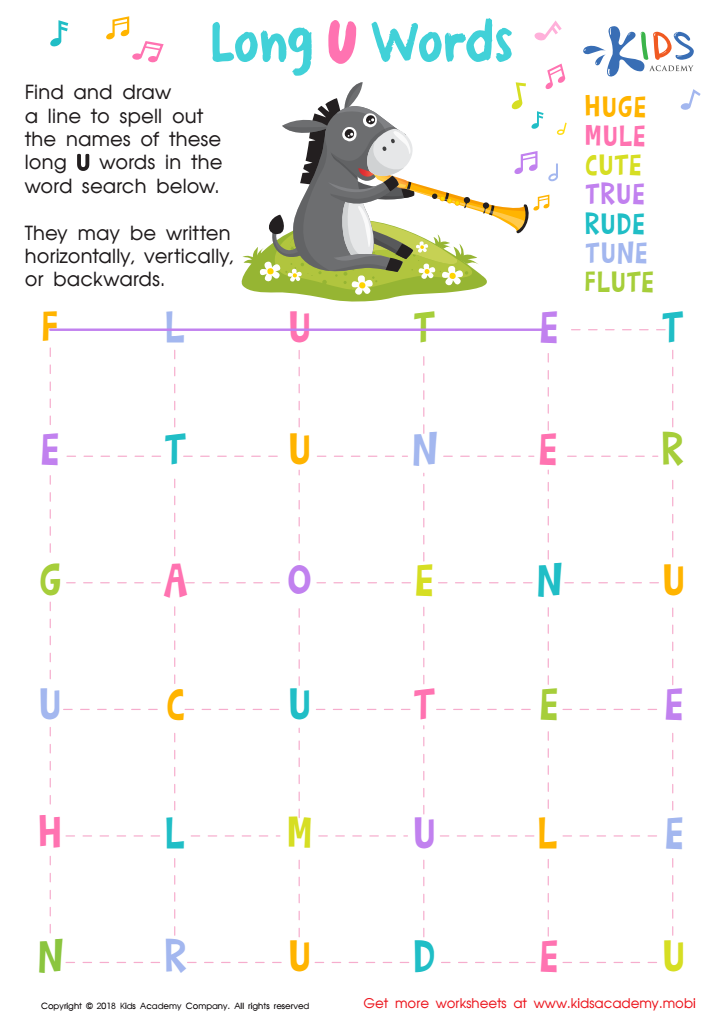
Long /u/ Words Worksheet
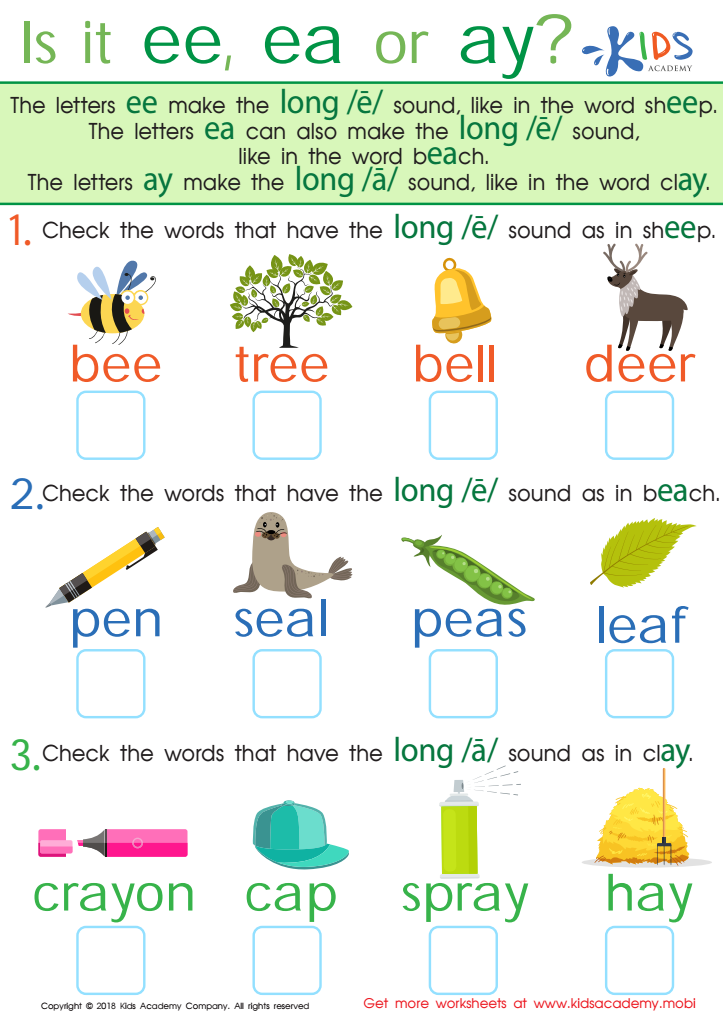
Is It EE, EA, or AY? Worksheet
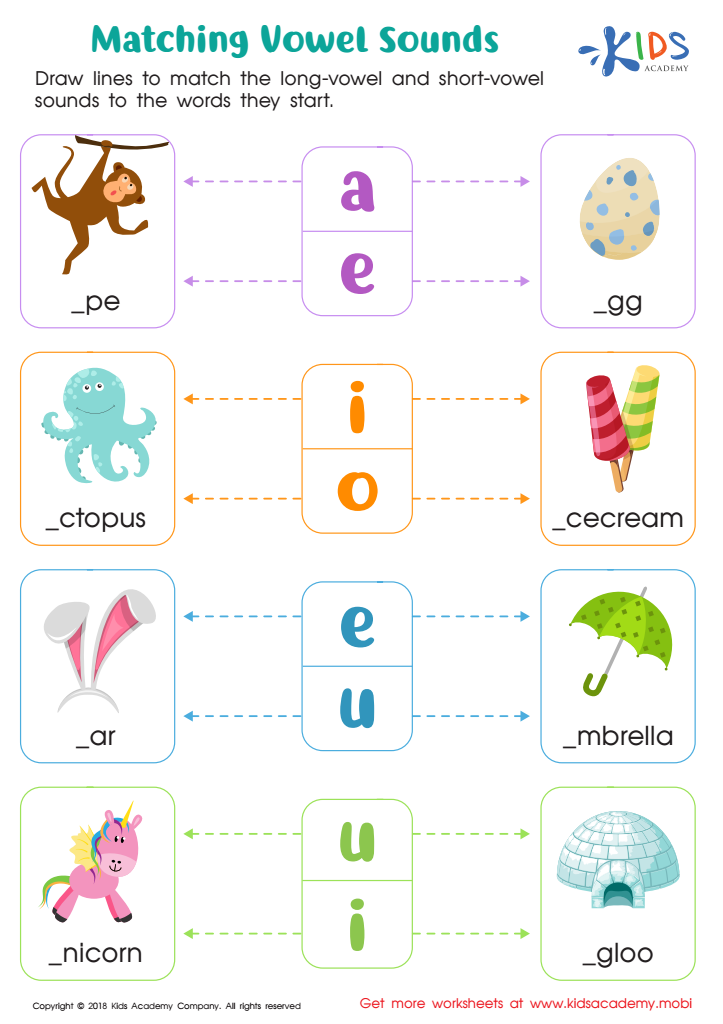
Matching Vowel Sounds Worksheet
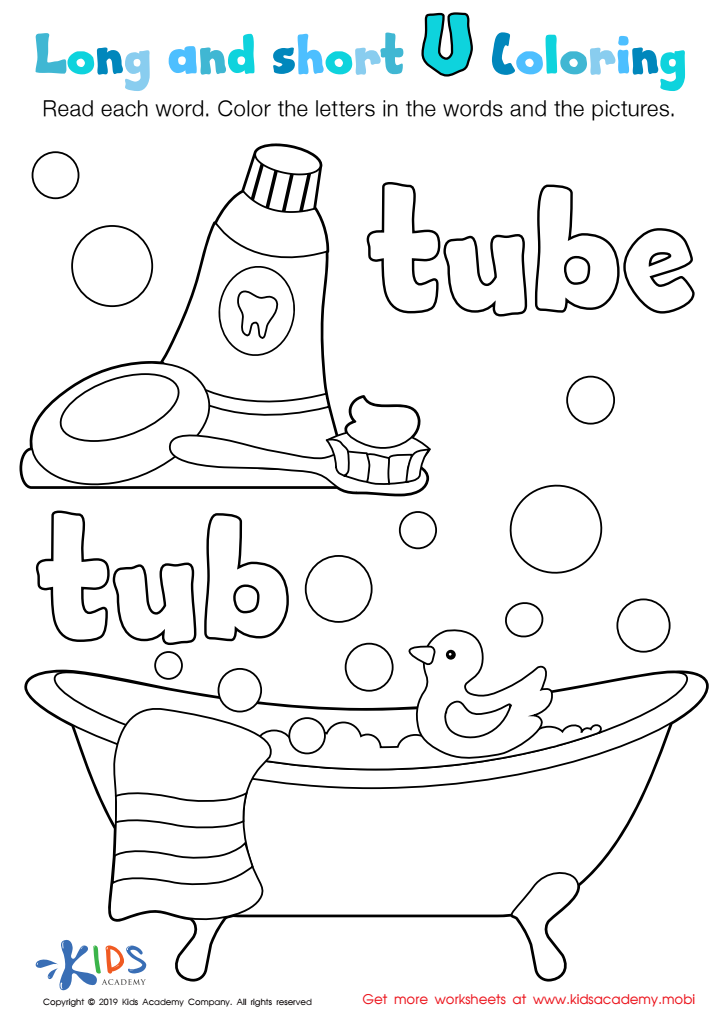
Long and Short U Worksheet
 Assign to My Students





Reading proficiency in normal vowels for children aged 3-6 is crucial for their overall language development and future literacy skills. During these formative years, children are like sponges, absorbing language patterns and sounds that set the foundation for reading and writing. Vowel recognition is particularly important as vowels are core components of words, and understanding them helps children decode words as they begin to read.
By engaging in activities that emphasize vowel sounds, parents and teachers can significantly enhance children's phonemic awareness, which is essential for reading fluency. When children can identify and manipulate vowels, they become more confident readers, reducing frustration when encountering new texts.
Additionally, proficiency with normal vowels contributes to effective communication skills. Children who are adept at using vowels are more likely to express themselves clearly and participate in discussions, fostering their social skills and self-esteem.
Moreover, strong early reading skills are correlated with academic success in later years. By prioritizing reading proficiency in vowels, parents and teachers set children on a path to lifelong learning, ensuring they have the necessary tools to thrive in school and beyond. Investing time in these foundational skills is crucial for building a strong literacy base that benefits children throughout their educational journey.






