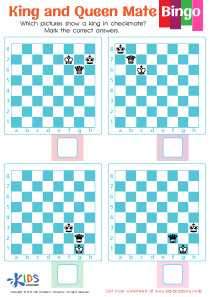
Memory enhancement Normal Chess Worksheets for Ages 3-6
3 filtered results
Difficulty Level
Grade
Age
-
From - To
Subject
Activity
Standards
Introducing our "Memory Enhancement Normal Chess Worksheets for Ages 3-6," designed to engage young minds while they learn the fundamentals of chess. These printable worksheets blend fun and education, focusing on memory skills essential for early childhood development. Through colorful activities and easy-to-follow instructions, children will recognize chess pieces, improve their memory recall, and enjoy playing games that stimulate critical thinking. Ideal for parents and educators, these worksheets support cognitive growth in a playful manner. Help your child sharpen their memory and prepare them for future learning with our engaging chess-themed worksheets tailored specifically for little learners!
Favorites
With answer key
Interactive
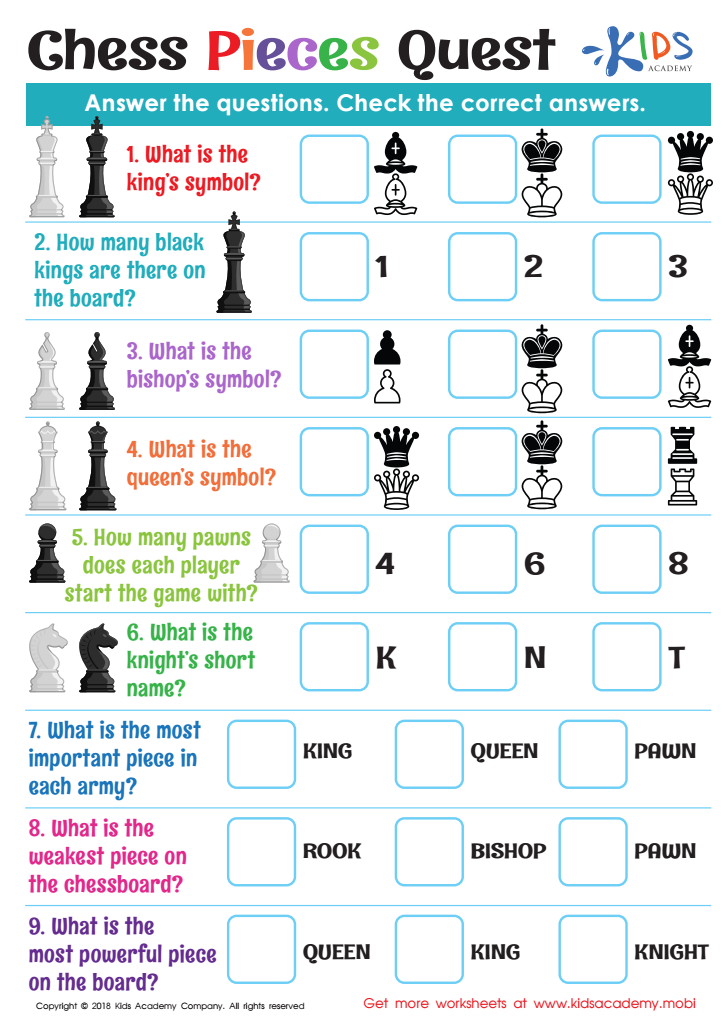
Chess Pieces Quest Worksheet
Help your child prepare for the chess quest by refreshing their knowledge of the symbols and characteristics of each chess piece. Then, have them try the 9 questions on this worksheet. These questions will assess their understanding of the symbols and how many pieces each player starts with.
 Assign to My Students
Chess Pieces Quest Worksheet
Worksheet
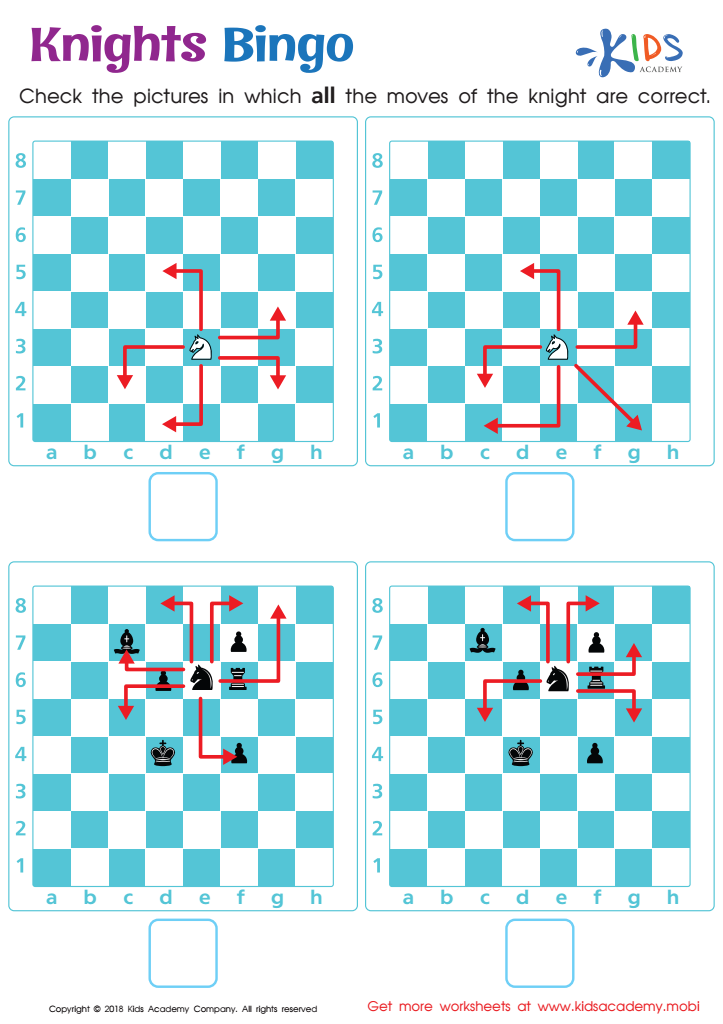
Knights Bingo Worksheet
Help your child identify legal knight moves in this easy worksheet. Review each picture with them, questioning if the knight moves are correct. Then have them verify pictures with correct moves.
Knights Bingo Worksheet
Worksheet
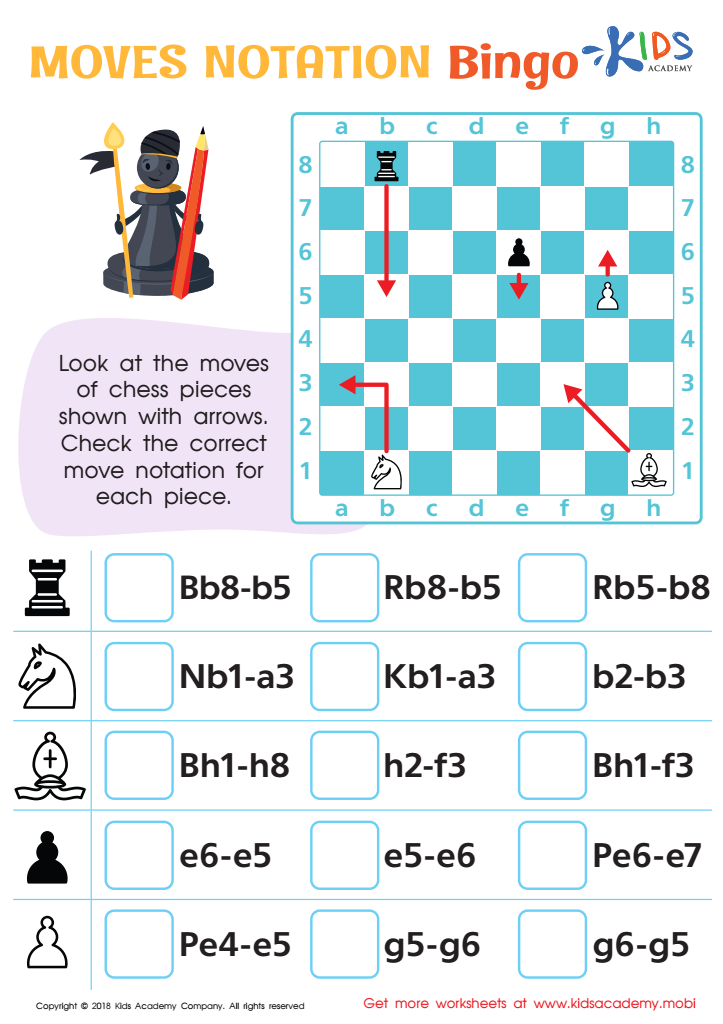
Moves Notation Bingo Worksheet
Test your child's chess notation skills with this simple worksheet. Download the PDF which shows a chess board and arrows pointing to pieces. Ask your child to identify the moves and note them down correctly. The notations needed are for bishop, pawn, rook and knight. Up to 80 words.
Moves Notation Bingo Worksheet
Worksheet
Join Kids Academy for Free
Who is primarily going to use this learning content?





Memory enhancement through activities like chess can play a pivotal role in the cognitive development of children aged 3-6. At this formative stage, the brain is highly receptible to learning and establishing neurological pathways. Engaging in a simplified version of chess helps enhance memory, as children must recall the positions of pieces, remember rules, and anticipate opponents' moves.
Parents and teachers should care about this because improved memory skills can lead to better academic performance and problem-solving abilities. Chess encourages critical thinking and enhances focus, traits that are beneficial when children start formal education. Additionally, playing chess fosters social interaction and communication skills, as children learn to articulate their thoughts and strategies while also practicing good sportsmanship.
Moreover, chess not only cultivates strategic thinking but also boosts self-esteem as children press on through challenges and experience the joy of outsmarting their peers or parents. With the rise of digital distractions, fostering engaging, structured activities like chess can keep children mentally stimulated. By investing their time in memory enhancement exercises, parents and teachers can be instrumental in developing the foundational skills necessary for lifelong learning and intellectual curiosity.