Basic astronomy knowledge Normal Worksheets for Ages 3-6
3 filtered results
-
From - To
Discover thrilling ways to introduce young learners to the wonders of astronomy with our "Basic Astronomy Knowledge Normal Worksheets" designed specifically for ages 3-6. These engaging and interactive worksheets feature colorful illustrations and simple activities that make learning about the stars, planets, and cosmos fun and accessible. Teaching young children about the universe helps spark their imagination and curiosity while developing essential skills in comprehension and fine motor coordination. Whether at home or in the classroom, these worksheets provide an exciting foundation for early science education. Explore the cosmos with your child and ignite a lifelong passion for learning about space!
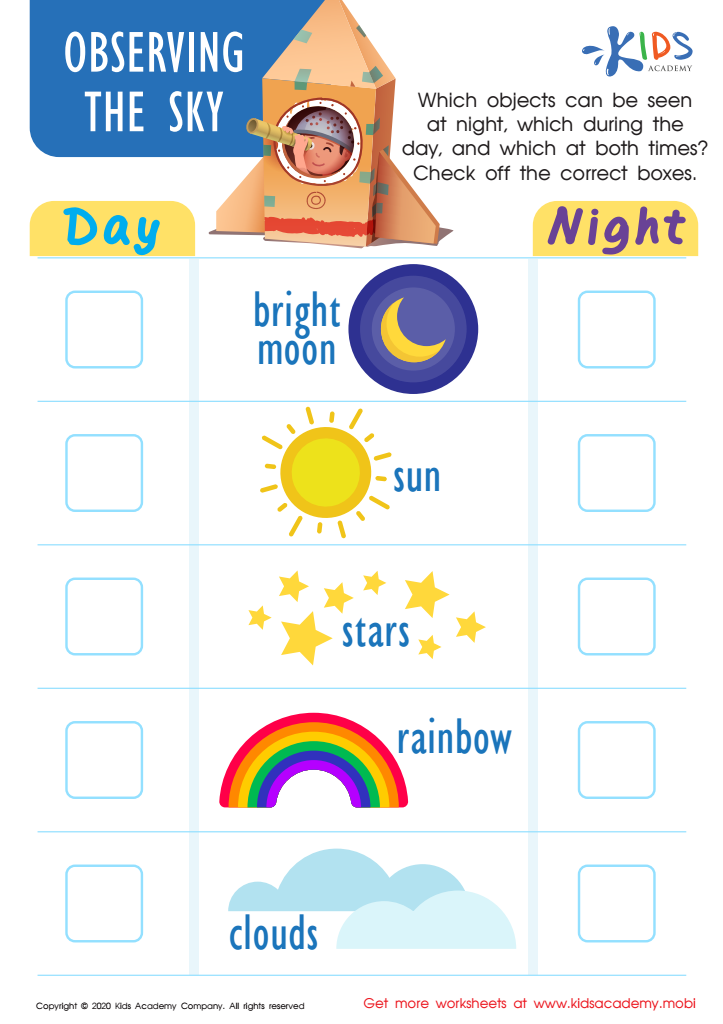
Observing the Sky Worksheet
 Assign to My Students
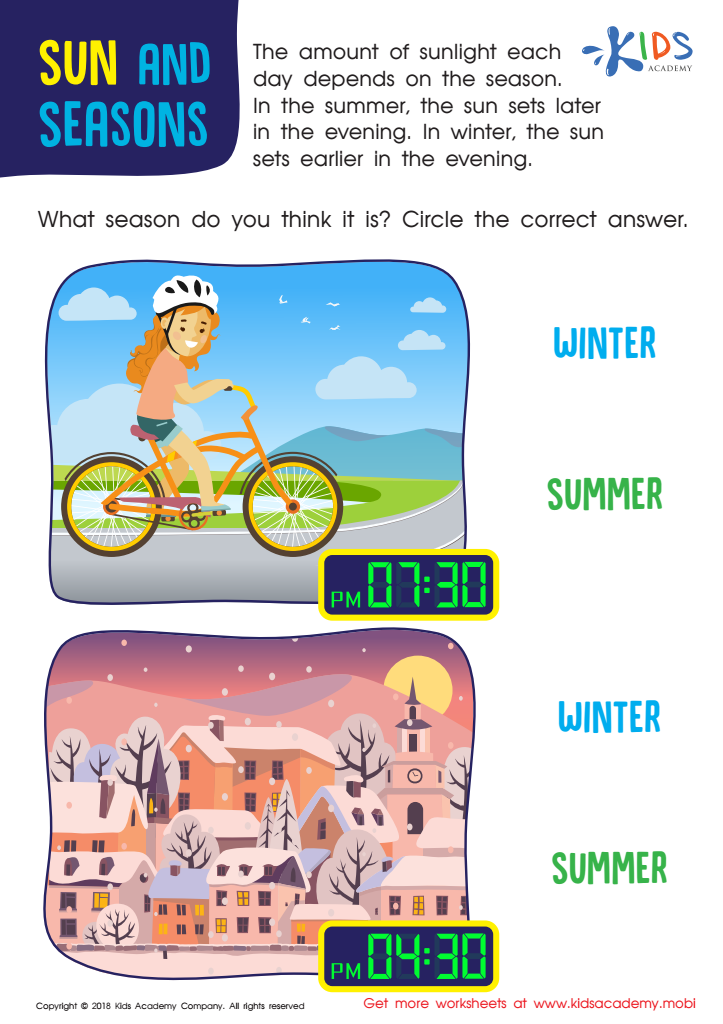
Sun and Seasons Worksheet
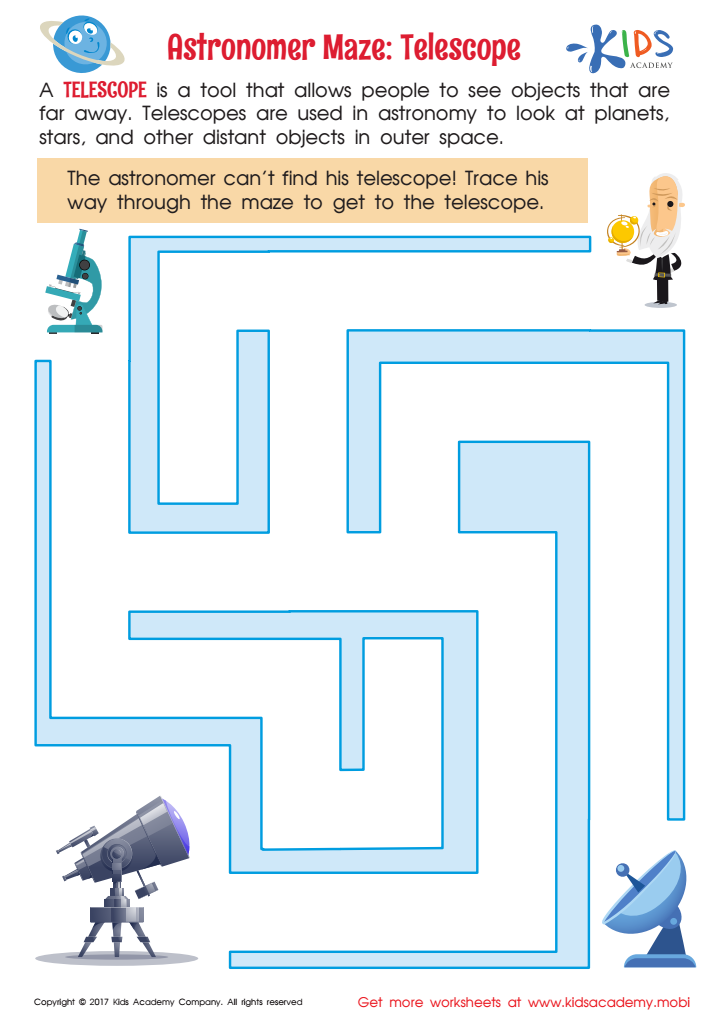
Astronomer Maze: Telescope Worksheet








Understanding basic astronomy is essential for children aged 3-6 as it enriches their early educational experience, sparks curiosity, and fosters a love for science. At this age, children are naturally inquisitive, frequently asking questions about the world around them. Introducing simple concepts such as the sun, moon, and stars can inspire them to explore and understand the universe.
Learning basic astronomy promotes cognitive development by encouraging observation and critical thinking. For instance, when children learn about day and night or the changes in the moon phases, they begin to grasp fundamental scientific concepts, including cause and effect. This foundation lays the groundwork for future learning in science, mathematics, and other subjects.
Additionally, astronomy encourages imaginative play and storytelling. Children can create narratives around celestial bodies, which supports language development and creativity.
Finally, understanding our place in the universe fosters a sense of wonder and respect for the natural world, important values for nurturing responsible and environmentally conscious individuals. Parents and teachers play a crucial role in nurturing this curiosity about space, guiding children to appreciate the beauty and complexity of the cosmos through simple, engaging activities and discussions.








