Capitalization rules Normal Worksheets for Ages 3-6
3 filtered results
-
From - To
Enhance your child's writing skills with our "Capitalization Rules Normal Worksheets" designed for ages 3-6. These engaging worksheets introduce young learners to the fundamental concepts of capitalization in an easy-to-understand format. With colorful visuals and interactive activities, children will explore when to capitalize letters in names, places, and the beginning of sentences. Our fun, age-appropriate resources foster creativity while reinforcing essential literacy skills. Perfect for home or classroom use, these worksheets encourage independent learning and help build a solid foundation for future writing. Download your worksheets today and make learning about capitalization enjoyable and effective!
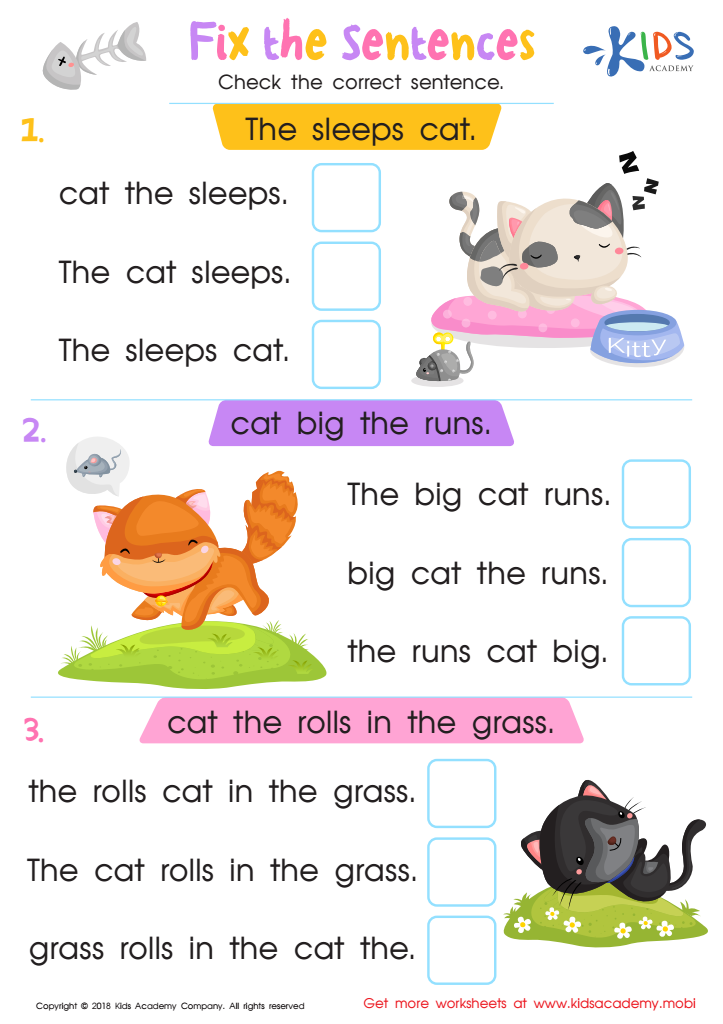
Fix the Sentences Worksheet
 Assign to My Students
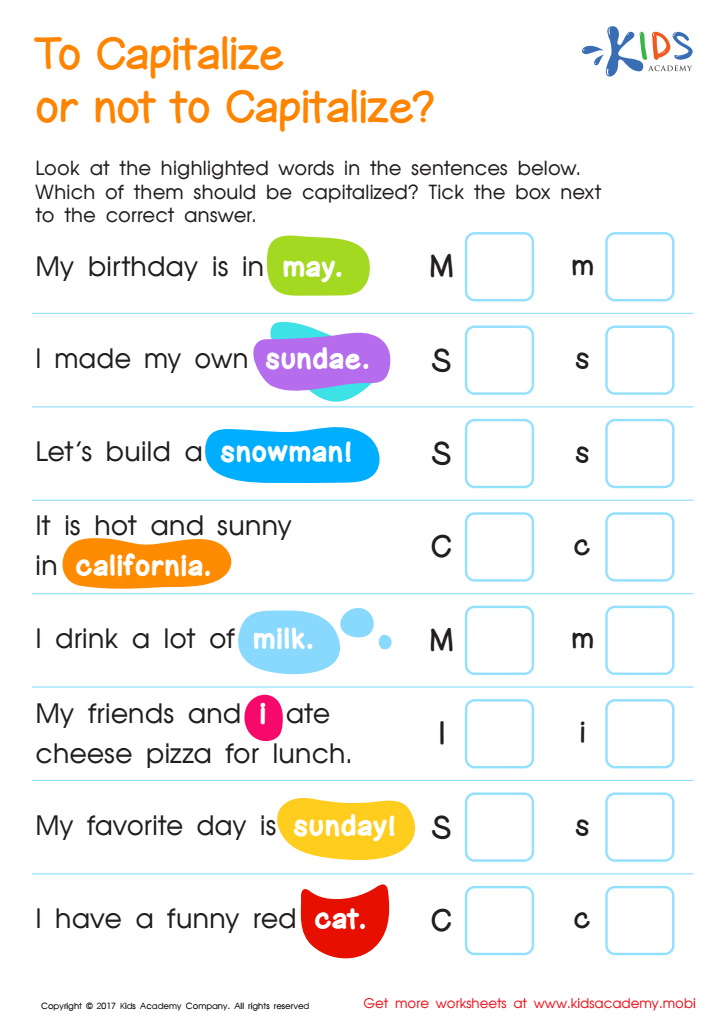
Capitalization: To Capitalize or Not? Printable
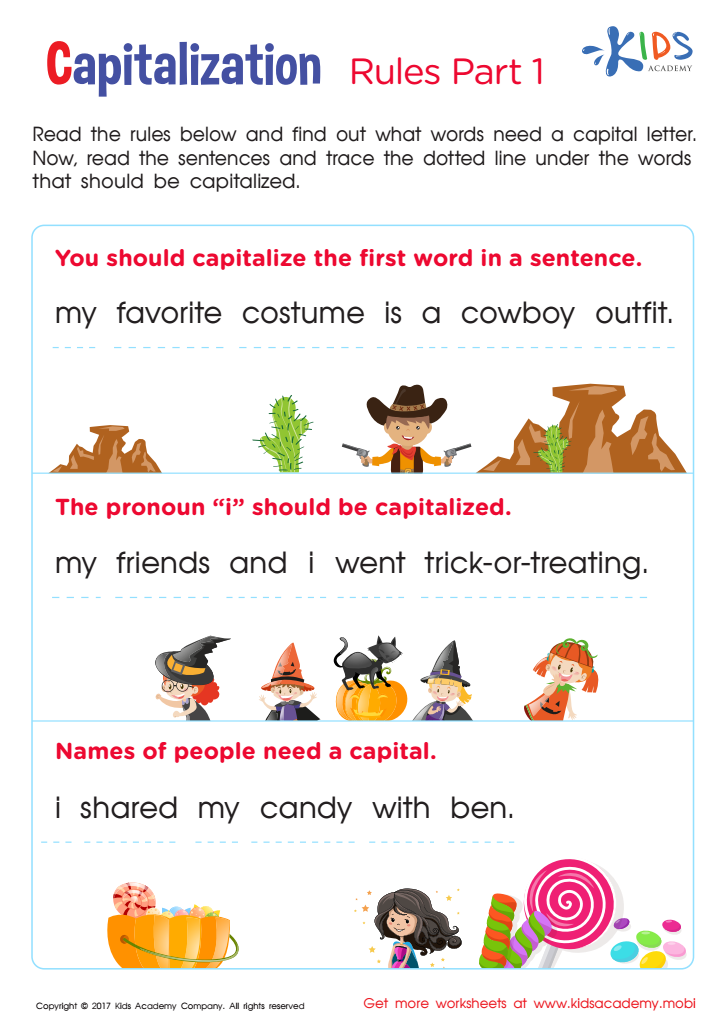
Capitalization Rules: Part 1 Worksheet








Capitalization rules may seem small, but they play a crucial role in early literacy development for children aged 3-6. Understanding when to capitalize words helps young learners differentiate between proper nouns and common nouns, enhancing their language skills. When children begin to read and write, recognizing capital letters signals the beginning of sentences or the names of specific people, places, or events. This awareness lays the groundwork for clear communication.
Moreover, mastering capitalization fosters children's confidence in their writing abilities. As they learn the conventions of writing, they become more adept at expressing their thoughts and ideas. Practicing capitalization can also improve their reading fluency, making texts easier to understand and interpret.
Engaging children in activities that emphasize capitalization—such as story time or interactive writing exercises—provides opportunities for parents and teachers to make learning fun and meaningful. By showing what proper capitalization looks like in books and encouraging kids to apply these rules in their writing, adults help cultivate a love for language and literacy.
In summary, teaching capitalization rules is vital for literacy development and forms an essential foundation for effective communication as children progress in their educational journey.








