Knowledge application Normal Worksheets for Ages 3-6
3 filtered results
-
From - To
Discover the perfect blend of fun and foundational learning with our Knowledge Application Worksheets designed for children ages 3-6. These carefully crafted printables help young learners develop essential skills, bridging the gap between play and education. Each worksheet engages kids with colorful, age-appropriate activities that enhance critical thinking, problem-solving, and creativity. Tailored to foster early cognitive development, these worksheets offer a range of challenges, promoting confident, independent learning in a supportive format. Equip your child with the tools to thrive as they explore and apply newfound knowledge across various subjects. Start their learning journey today!
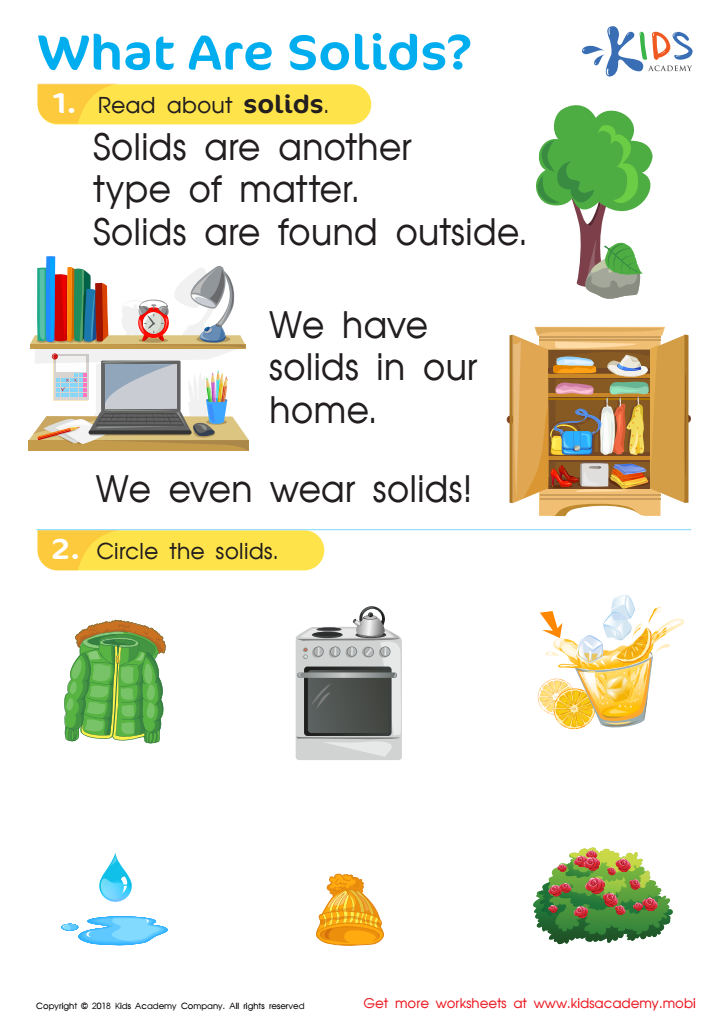
What Are Solids? Worksheet
 Assign to My Students
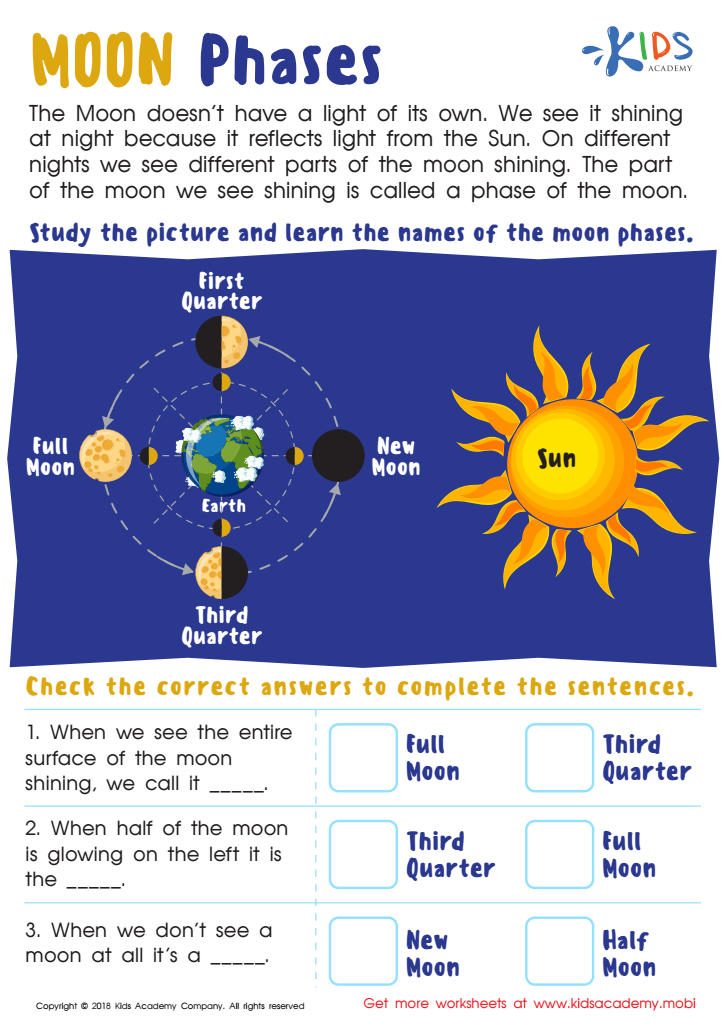
Moon Phases Worksheet
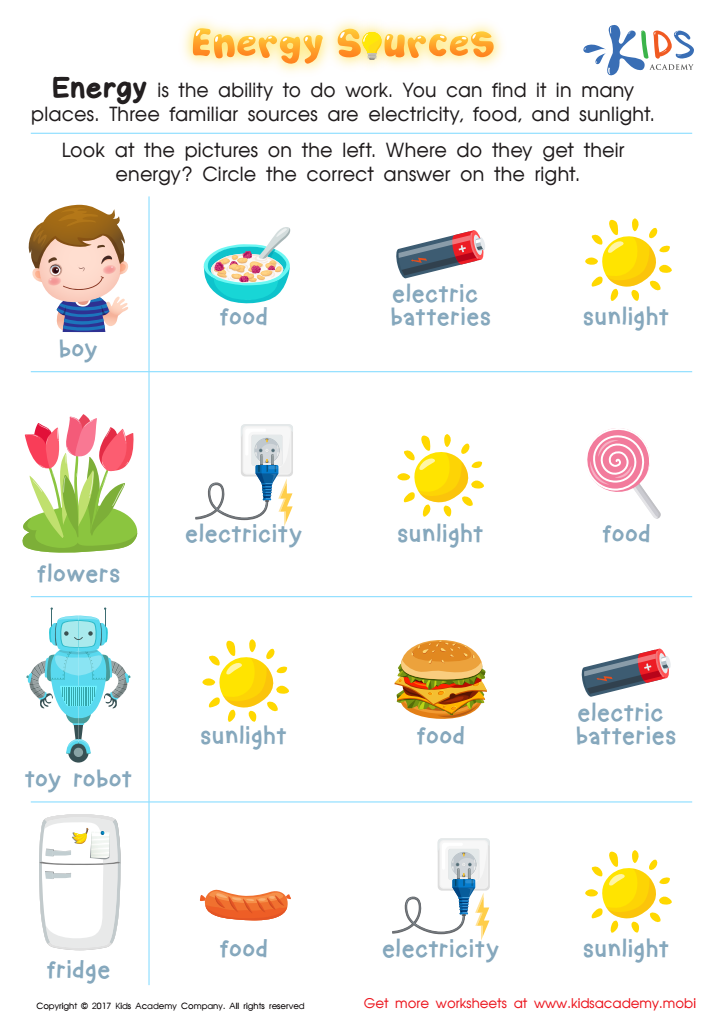
Energy Sources Printable







Understanding and fostering knowledge application in children aged 3-6 is critically important for both parents and teachers. At this developmental stage, young children are not just absorbing information but are beginning to apply it to different contexts, aiding their cognitive development and foundational learning skills.
Knowledge application is the process of taking learned concepts and utilizing them in practical or varied situations. For children in this age range, this can mean using counting skills during playtime, understanding the concept of sharing through social interactions, or applying language skills in different conversations. Encouraging the application of knowledge helps in cementing those concepts more firmly in a child's mind.
From a developmental perspective, it nurtures critical thinking, problem-solving abilities, and creativity. For example, when children use building blocks to construct different structures, they apply principles of balance and architectural understanding they have observed or learned. This hands-on approach makes learning more relevant and memorable.
Furthermore, enabling knowledge application can boost a child's confidence and independence. They'll start to see how their learning has real-world implications, which can be incredibly motivating.
Therefore, parents and teachers should create environments rich with opportunities for children to apply their knowledge. Activities should be varied, interactive, and contextually meaningful, incorporating play-based learning, storytelling, arts, and outdoor exploration to foster a well-rounded cognitive development.








