
Letter identification Normal Worksheets for Ages 3-6
4 filtered results
Difficulty Level
Grade
Age
-
From - To
Subject
Activity
Standards
Discover our expertly crafted Letter Identification Normal Worksheets, designed for children aged 3-6. These engaging and educational worksheets help young learners master the alphabet, boosting their reading readiness skills. Each worksheet offers fun activities and playful illustrations that make learning the alphabet enjoyable. Tailored to foster letter recognition and writing practice, our worksheets pave the way for your child's early literacy development. Perfect for use at home or in preschool settings, these resources from Kids Academy are ideal for nurturing a lifetime love of learning. Start guiding your child towards fluency and confidence in reading today!
Favorites
With answer key
Interactive
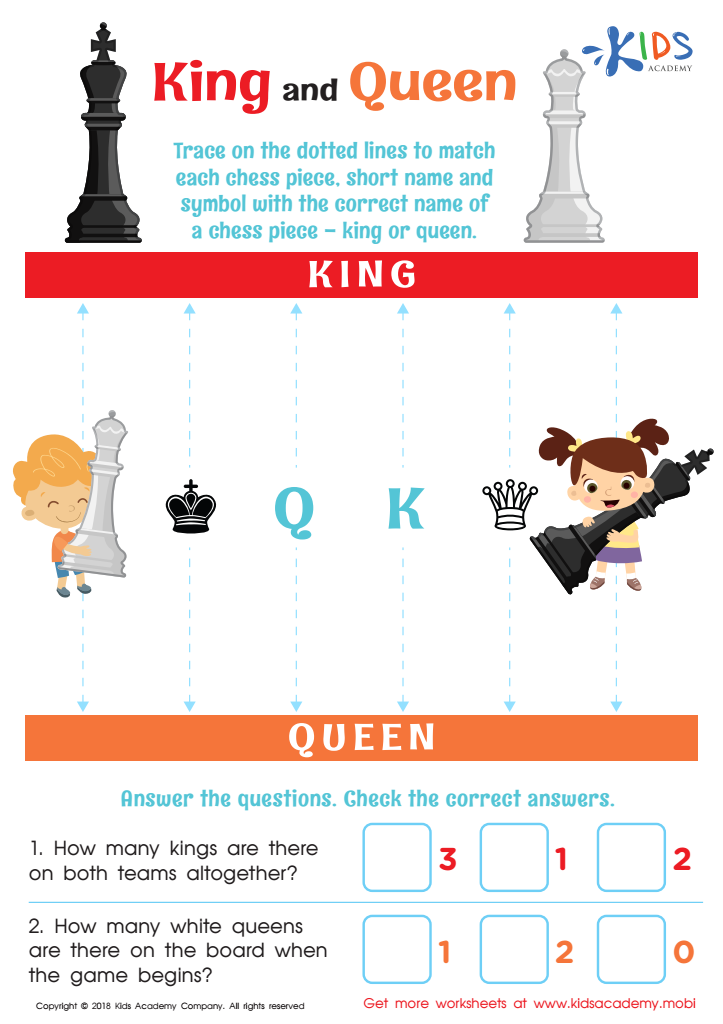
King and Queen Worksheet
Instruct your kids to trace the dotted lines to match each chess piece, short name, and symbol with either king or queen.Answer the questions at the bottom and check the answers. This exercise will help your children to differentiate between a king and queen chess piece and know their symbols.
 Assign to My Students
King and Queen Worksheet
Worksheet
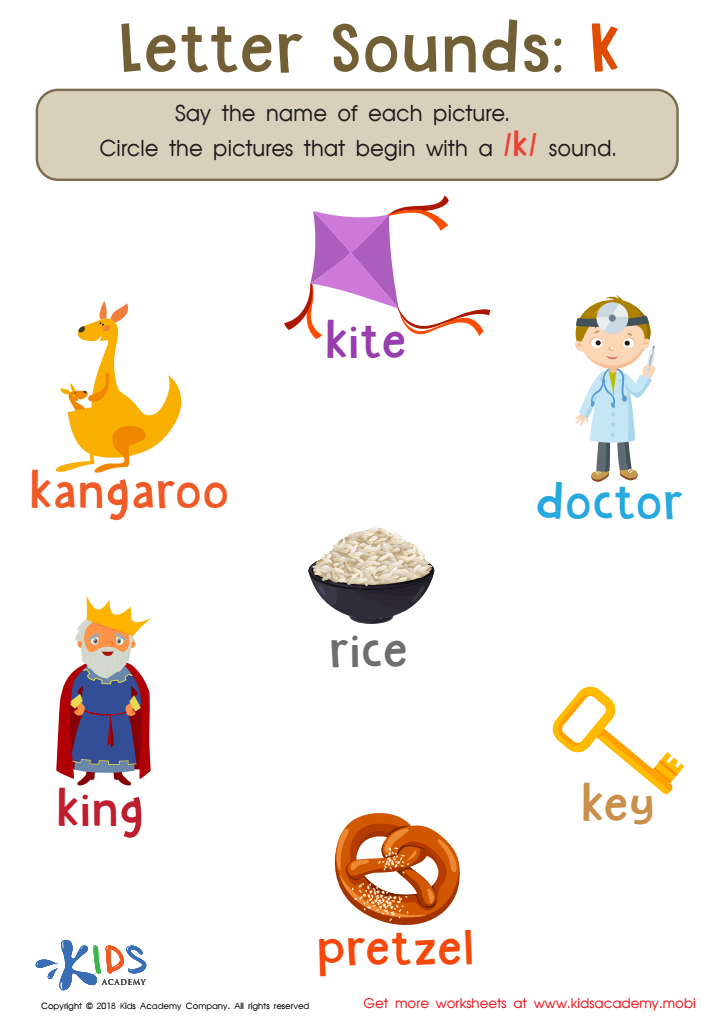
Letter K Sounds Worksheet
Help your child practice phonics with Kids Academy's illustrated worksheet! Have them look at the pictures, read the words and say them aloud. Only circle those that start with a hard 'K' sound. Perfect for preschoolers and kindergarteners! Plus, they'll learn the silent K used in a few words.
Letter K Sounds Worksheet
Worksheet
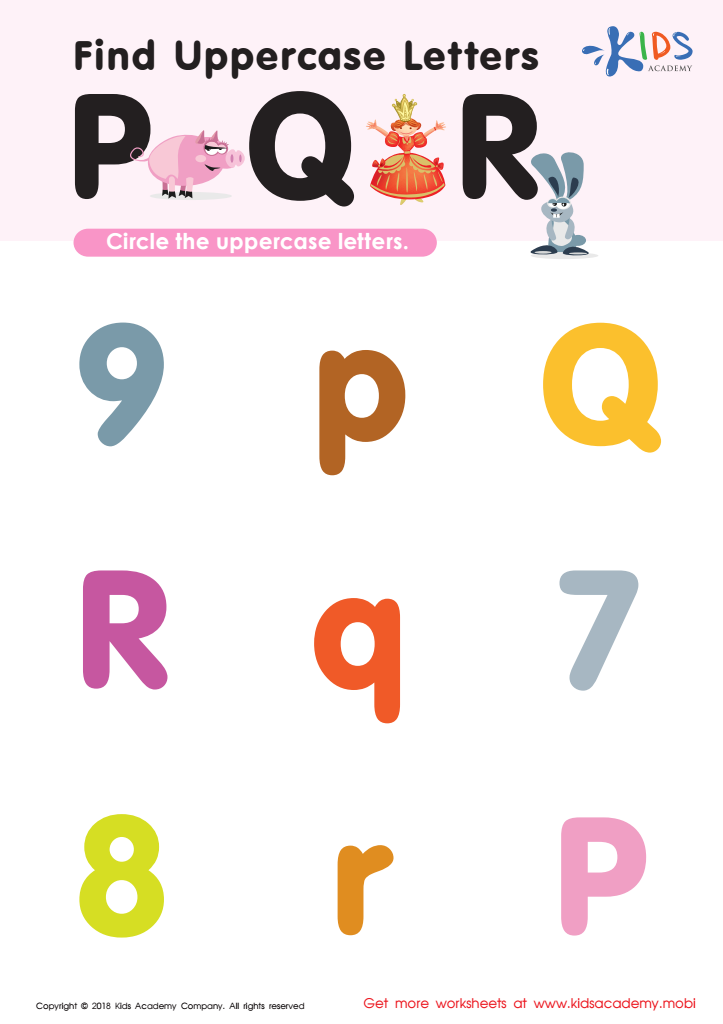
Find Uppercase Letters P, Q, and R Worksheet
Kids learn best when they can make connections. This free printable worksheet guides kids to solve the puzzle using the example letters P, Q, and R, supported by graphics and colors. Point out the page is pink, like the pig (which starts with P!) and solve by finding and circling the uppercase letters – be careful of the numbers!
Find Uppercase Letters P, Q, and R Worksheet
Worksheet
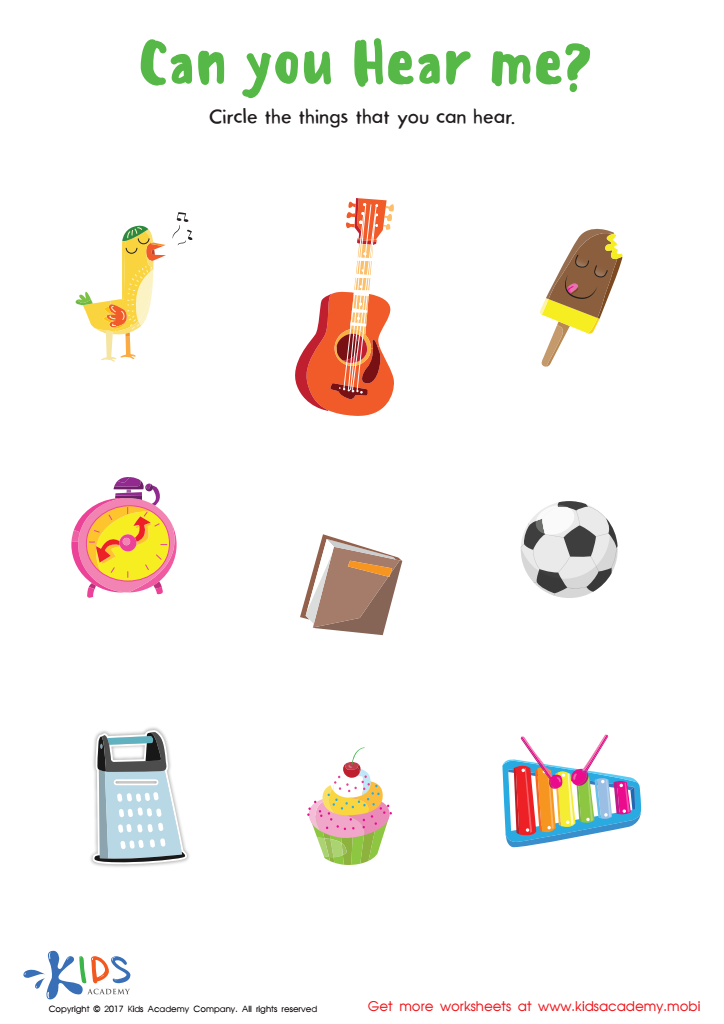
Can You Hear Me Worksheet
Challenge your child's thinking and help them learn by using this cute "Can You Hear Me?" worksheet. It encourages use of prior knowledge to identify objects that make sounds, developing critical thinking skills. As they imagine balls and cupcakes making sounds, your child will have plenty of laughs. Extend learning by talking about the sounds and why certain objects make them.
Can You Hear Me Worksheet
Worksheet
Join Kids Academy for Free
Who is primarily going to use this learning content?




.jpg)


Letter identification is a fundamental building block for early literacy, making it essential for both parents and teachers of children aged 3-6 to prioritize this skill. During these early years, children’s brains are exceptionally adaptable and capable of absorbing new information rapidly. Recognizing letters and understanding their associated sounds pave the way for decoding words later on, a crucial step towards reading competency.
When children can identify letters, they are more likely to build vocabulary, improve comprehension, and develop critical thinking skills. Early proficiency in letter recognition also fosters a love for reading, which is associated with lifelong learning and academic success. Moreover, children who struggle with letter identification may face challenges in other developmental areas such as attention, memory, and motor skills.
From a social-emotional perspective, mastering this skill provides children with a sense of accomplishment and boosts their confidence. Being able to recognize letters helps children navigate their environment, aiding them in reading signs, labeling personal items, and understanding written instructions, thereby promoting independence.
Therefore, investing time in teaching letter identification through age-appropriate games, activities, and consistent practice sets the stage for a strong educational foundation, beneficial not only for academic achievement but also for fostering a positive attitude toward learning.








