Map reading skills Normal Worksheets for Ages 3-6
6 filtered results
-
From - To
Unlock your child’s potential in geography with our Map Reading Skills Normal Worksheets designed for ages 3-6. These engaging activities introduce youngsters to essential map reading concepts through fun and interactive exercises. Children will learn to identify landmarks, understand directions, and follow simple maps, enhancing their spatial awareness and problem-solving abilities. These worksheets are tailored to suit early developmental stages, making learning both effective and enjoyable. Perfect for parents and teachers aiming to provide a strong foundation in geography, our worksheets help young learners navigate the world with confidence. Download today and start exploring!
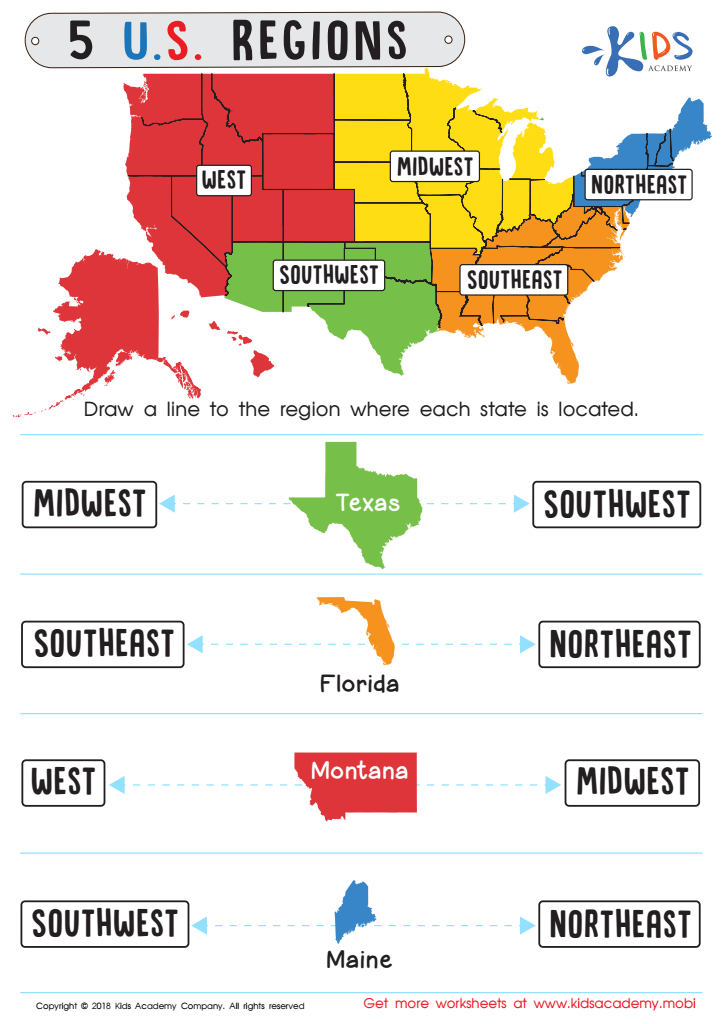
5 U.S. Regions Worksheet
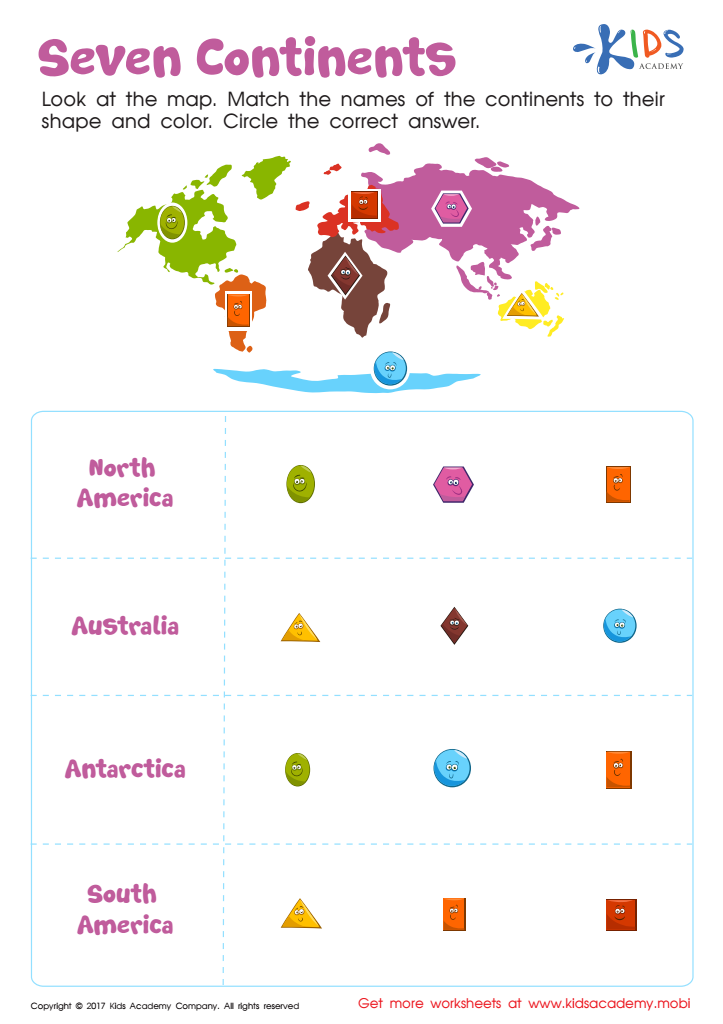
Seven Continents Worksheet
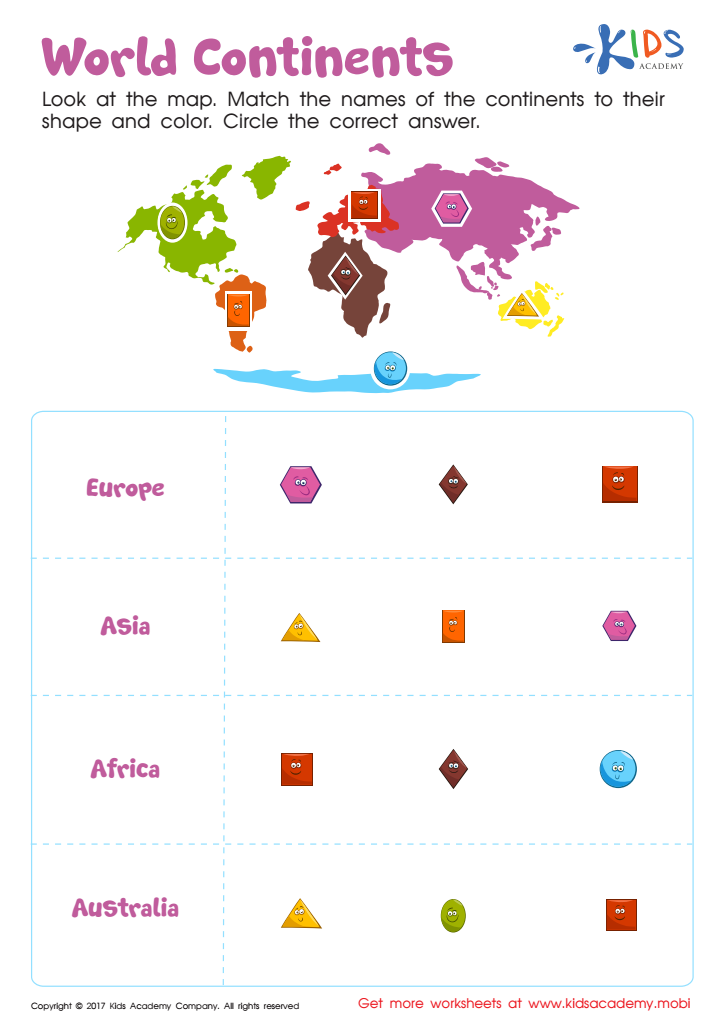
World Continents Worksheet
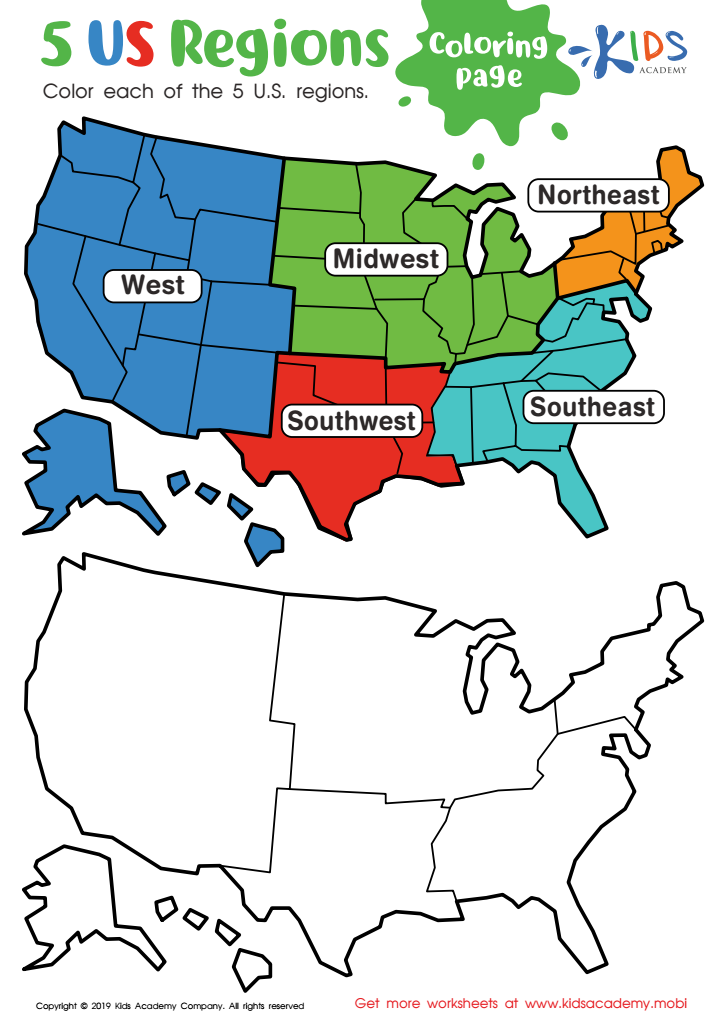
US Regions Coloring Page Worksheet
 Assign to My Students
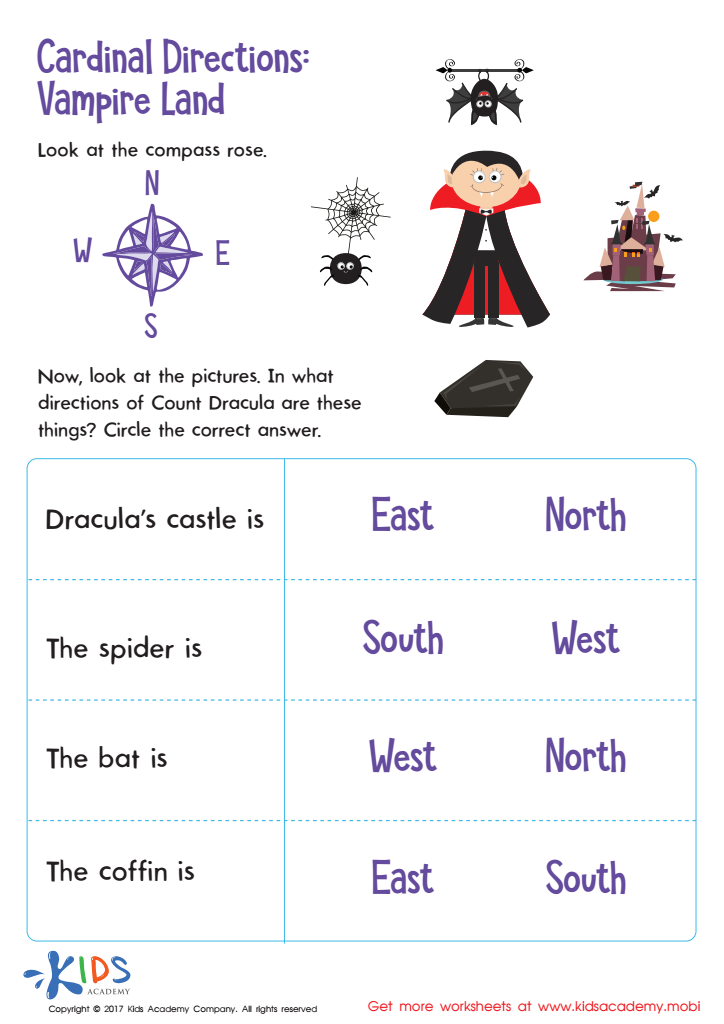
Cardinal Directions Printable

Towns Worksheet





Map reading skills are critical for young children, ages 3-6, because they foster important developmental milestones and lay the foundation for essential future competencies. First and foremost, engaging with maps enhances spatial awareness, helping children understand how objects and locations relate to each other in space. This skill is not only crucial for everyday navigation but also vital for more abstract mathematical reasoning later.
Early map reading activities help develop language skills. When children learn terms such as "next to," "between," "near," and "far," they are acquiring vocabulary that aids in communicating about their environment and experiences more precisely. Additionally, deciphering symbols and understanding legends on a map boosts cognitive skills, developing kids' abilities to decode and understand information—a precursor to reading and literacy.
Moreover, maps stimulate curiosity about the world, encouraging kids to think about different spaces, cultures, and environments. This nurtures an early interest in geography and fosters global awareness. When parents and teachers incorporate map reading into playtime or educational activities, it makes learning interactive and fun, which not only holds the child's attention but also reinforces these critical skills through repeated and engaged practice.
Finally, mastering map reading fosters independence and problem-solving skills. Children who can interpret maps gain a sense of confidence and competence, empowering them to navigate new situations. In sum, parents and teachers who prioritize early map reading skills help set children on a path toward academic success and life-long curiosity.








