Memory enhancement Normal Worksheets for Ages 3-6
5 filtered results
-
From - To
Unlock your child's potential with our Memory Enhancement Normal Worksheets for ages 3-6. Designed to stimulate cognitive development, these interactive worksheets engage young learners through fun exercises that strengthen their memory and concentration skills. Our age-appropriate activities, including matching games, pattern recognition, and sequencing tasks, promote critical thinking while making learning enjoyable. Parents and educators can easily access and print these worksheets to support at-home learning or classroom activities. Help your child build a strong memory foundation, boost their confidence, and lay the groundwork for future academic success. Explore our collection today and watch your little one thrive!
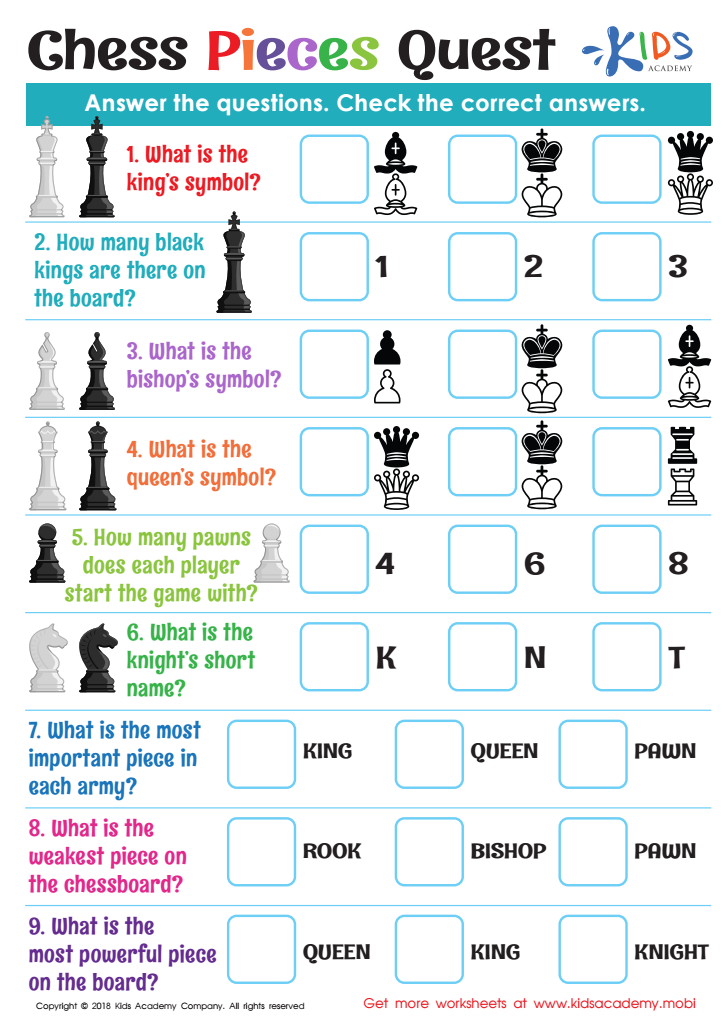
Chess Pieces Quest Worksheet
 Assign to My Students

Knights Bingo Worksheet

Food Match Up Worksheet
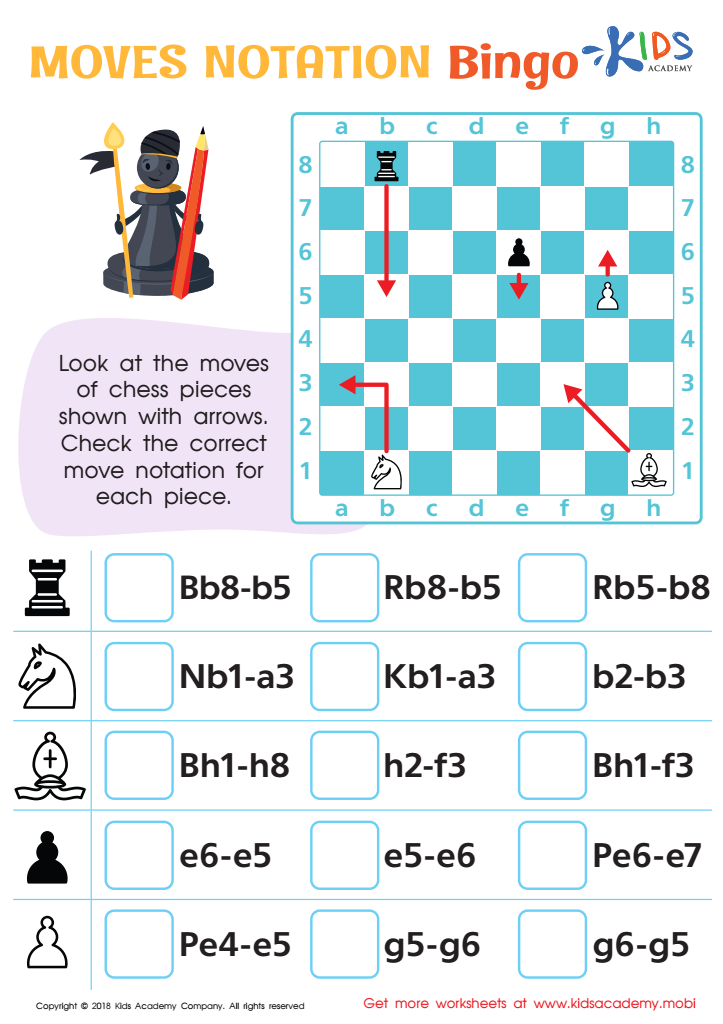
Moves Notation Bingo Worksheet

Arctic Animals Worksheet








Memory enhancement for children aged 3-6 is crucial for several reasons. This developmental stage is marked by rapid cognitive growth, and enhancing memory can significantly impact a child's learning and overall development. At this age, children are forming foundational skills that underpin future academic success. Strong memory frameworks enable them to better absorb language, understand concepts, and build social skills.
Parents and teachers should be concerned about memory enhancement as it directly correlates with a child's ability to recall information, follow directions, and engage in storytelling, which are vital for literacy development. By fostering memory through games, songs, and interactive activities, adults can create an enriching learning environment that nurtures curiosity and a love for learning.
Additionally, memory skills play a role in emotional and social development. Children who can remember names, routines, and experiences develop better relationships and self-regulation skills. Furthermore, supporting memory can help mitigate challenges related to attention span, which can otherwise hinder learning experiences.
In conclusion, promoting memory enhancement in early childhood sets the groundwork for academic achievement, emotional development, and lifelong learning, making it a vital focus for both parents and teachers.








