
Reading skills development Normal Worksheets for Ages 3-6
3 filtered results
Difficulty Level
Grade
Age
-
From - To
Subject
Activity
Standards
Boost your child's reading skills with our expertly designed worksheets for ages 3-6. At Kids Academy, we focus on building foundational reading abilities, including letter recognition, phonics, vocabulary, and comprehension. Our engaging and colorful worksheets make learning fun and effective, tailored to each child’s developing skills. From tracing letters to identifying words and simple sentence constructions, our resources nurture a love for reading while enhancing early literacy. Perfect for preschoolers and kindergarteners, our worksheets support step-by-step progress, ensuring your child develops confidence and competence in reading. Visit Kids Academy to start your child's reading journey today!
Favorites
With answer key
Interactive
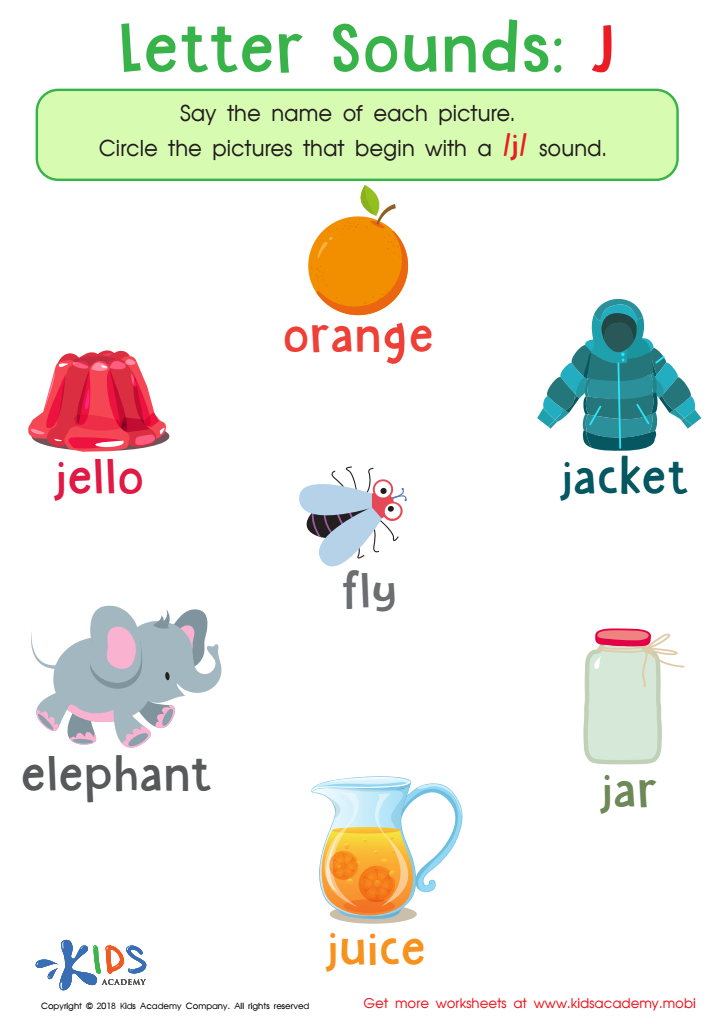
Letter Sounds: J Printable Worksheet
Preschoolers can learn to identify letter sounds by focusing on beginning sounds. This cute and colorful worksheet reviews the hard “j” sound. Kids can point it out by naming the words and circling only those starting with the “j” sound. Read the text out loud and listen closely!
 Assign to My Students
Letter Sounds: J Printable Worksheet
Worksheet
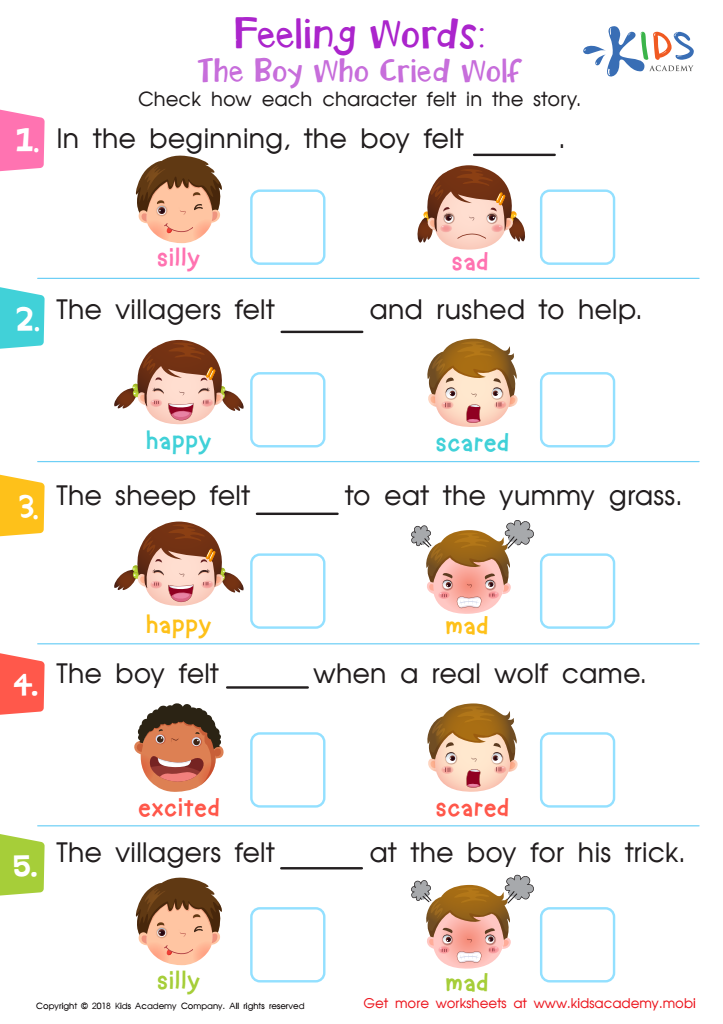
Feeling Words: The Boy Who Cried Wolf Worksheet
This worksheet helps students infer characters' traits and feelings by reading The Boy Who Cried Wolf. They choose the correct emotion for each character to improve their story comprehension. A great resource for the reading classroom, it teaches an essential comprehension skill.
Feeling Words: The Boy Who Cried Wolf Worksheet
Worksheet
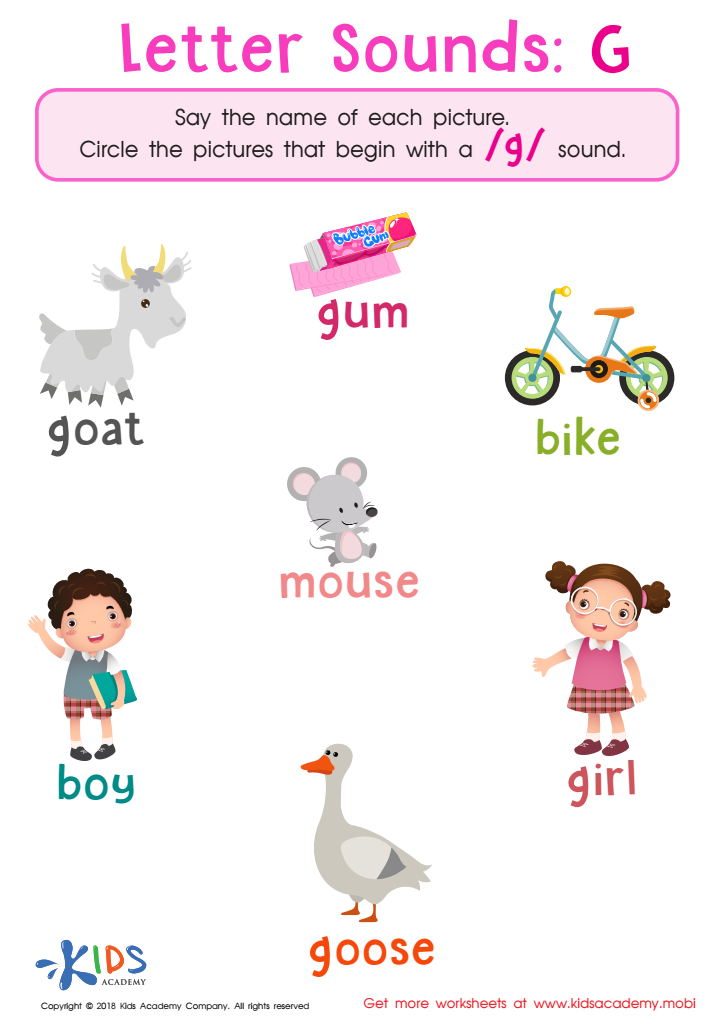
Letter G Sounds Worksheet
Help emerging readers build confidence by giving them practice identifying hard "G" with this free PDF worksheet. They'll use picture clues to name the words, and practice fine-motor skills tracing circles around the corresponding pics. It's a great way to introduce or reinforce hard "G" words.
Letter G Sounds Worksheet
Worksheet
Join Kids Academy for Free
Who is primarily going to use this learning content?



.jpg)



Reading skills development in children aged 3-6 is incredibly important for several reasons. First and foremost, early reading skills are foundational for all later learning. When children start to recognize letters, understand sounds, and eventually form words, they are building essential skills that will support their literacy throughout their education.
Strong early reading skills also foster a love for learning. When parents and teachers make reading a positive, engaging activity, children are more likely to associate reading with joy and curiosity, setting them up for a lifelong interest in books and knowledge. Additionally, early reading stimulates cognitive development. As kids engage with stories, they practice critical thinking, problem-solving, and comprehension skills.
On another level, literacy at an early age provides social and emotional benefits. Reading books about different characters and scenarios helps children develop empathy and improve their ability to relate to others. Language-rich interactions, often spurred by reading activities, also enhance communication abilities.
Finally, developing reading skills early provides a distinct advantage once formal schooling begins. Children who enter elementary school with a keen understanding of reading are more prepared and confident, enabling them to tackle new academic challenges more effectively. For all these reasons, parents and teachers should prioritize reading skills development for young children.








