
Rhyming skills Normal Worksheets for Ages 3-6
3 filtered results
Difficulty Level
Grade
Age
-
From - To
Subject
Activity
Standards
Unlock your child's creativity and foundational literacy with our Rhyming Skills Normal Worksheets for ages 3-6. Perfectly designed to engage young minds, these worksheets provide an entertaining way to enhance phonemic awareness and language development. Through delightful illustrations and fun activities, children practice recognizing rhyming words, boosting their auditory skills and vocabulary. Ideal for preschool and kindergarten students, our worksheets can be used both in classrooms and at home to ensure progress at an individual pace. Start your child's learning adventure now with captivating exercises that make mastering rhymes enjoyable and educational. Explore and download today!
Favorites
With answer key
Interactive
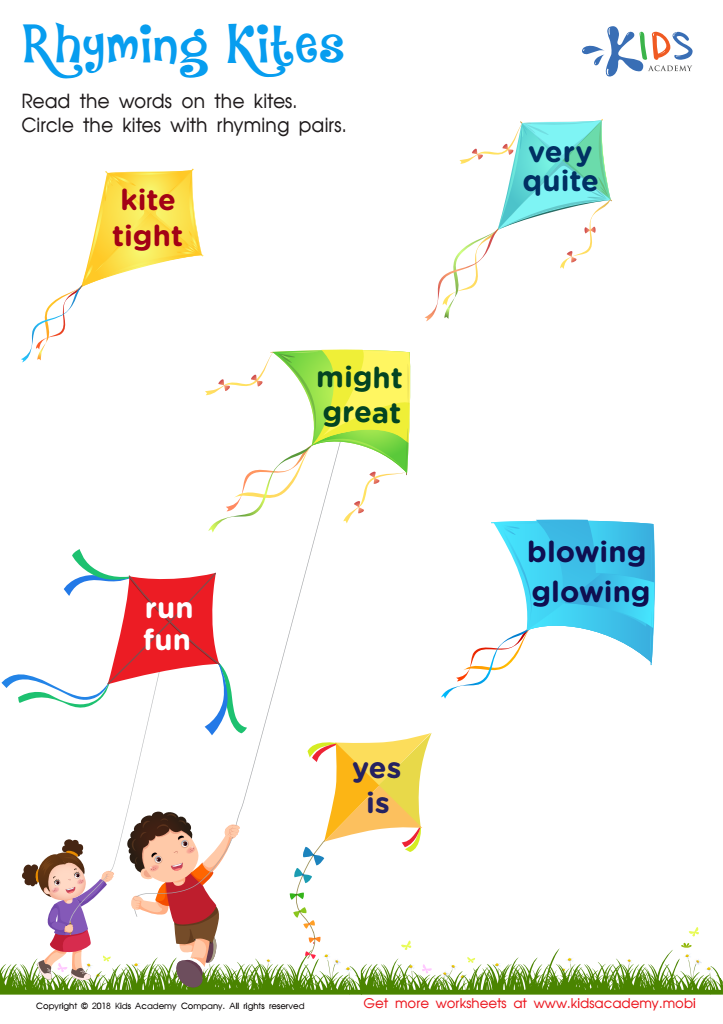
Rhyming Kites Worksheet
On a spring day, fly a kite! Kids Academy has a rhyming worksheet to boost your child's skills. Read the pairs of words aloud. Circle the kites if they rhyme, leave them blank if they don't. Listen carefully and find all the rhyming word pairs to complete this sheet!
 Assign to My Students
Rhyming Kites Worksheet
Worksheet
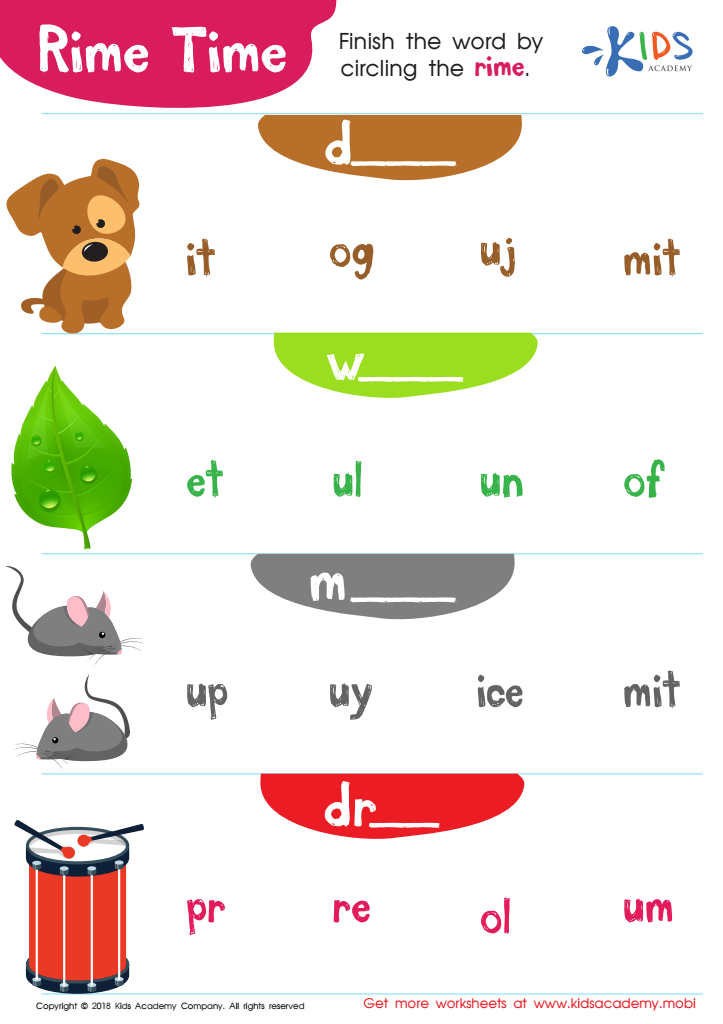
Rime Time Worksheet
This free PDF worksheet helps new and emerging readers identify rimes (the letters after initial consonants) and practice fine motor skills. Kids trace the correct rimes for each picture and increase their fluency and decoding skills with each one!
Rime Time Worksheet
Worksheet
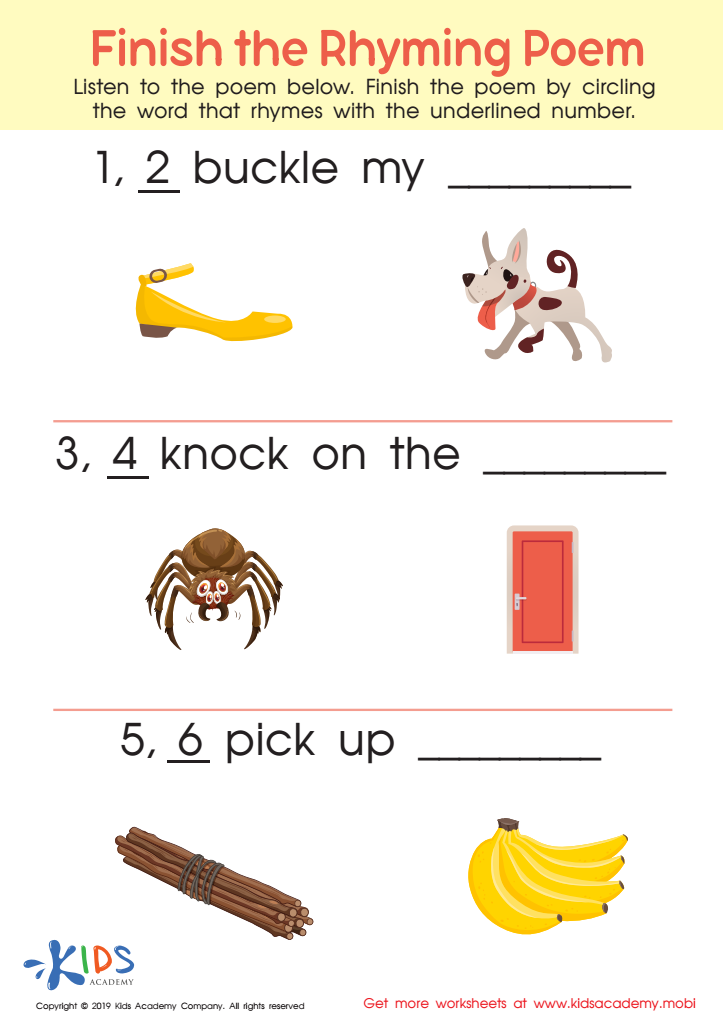
Finish Rhyming Poem Worksheet
Poems are a great way to express emotions and spark imagination. Does your child enjoy poetry and even have their own creations? If so, they'll love this worksheet. It's a great way to develop their rhyming skills. Challenge them to find and circle the words that rhyme with the ones underlined.
Finish Rhyming Poem Worksheet
Worksheet
Join Kids Academy for Free
Who is primarily going to use this learning content?








Rhyming skills are crucial in early childhood development for several reasons. First, they enhance phonological awareness, which is the ability to recognize and manipulate sounds in words. Phonological awareness is foundational for learning to read, as it helps children understand the relationship between sounds and letters. When kids can identify that "cat" rhymes with "bat," they're developing the skills they'll need for decoding words while reading.
Second, rhyming contributes to memory and recall. Rhymes and rhythmic patterns help children remember new vocabulary and concepts. This boost in memory retention is not limited to language learning but extends to other subjects and daily life skills.
Third, engaging with rhymes fosters creativity and language play. Children learn to see and create patterns, improving their cognitive flexibility and problem-solving abilities. Exposure to rhyming through songs, poems, and stories makes learning enjoyable and interactive, promoting a positive attitude towards education.
Finally, rhyming is a social activity that enhances bonding. Whether it’s through singing lullabies or reciting nursery rhymes, these activities create moments of connection between parents, children, and teachers. Thus, fostering rhyming skills in children aged 3-6 supports their academic foundations, memory, creativity, and social bonds, making it essential for their well-rounded development.








