Differentiating shapes Normal Geometry Worksheets for Ages 3-6
3 filtered results
-
From - To
Unlock your child's potential with our Differentiating Shapes Normal Geometry Worksheets, perfect for ages 3-6. Designed to foster early math skills, these engaging worksheets help young learners identify, distinguish, and compare various shapes. Each activity is tailored to enhance visual perception, critical thinking, and fine motor skills through fun, interactive exercises. Ideal for both classroom and home settings, our worksheets provide a solid foundation in geometry, ensuring a smooth transition to more complex concepts. Support your child's educational journey by making shape recognition and differentiation an exciting and rewarding experience. Explore today for free printable resources!
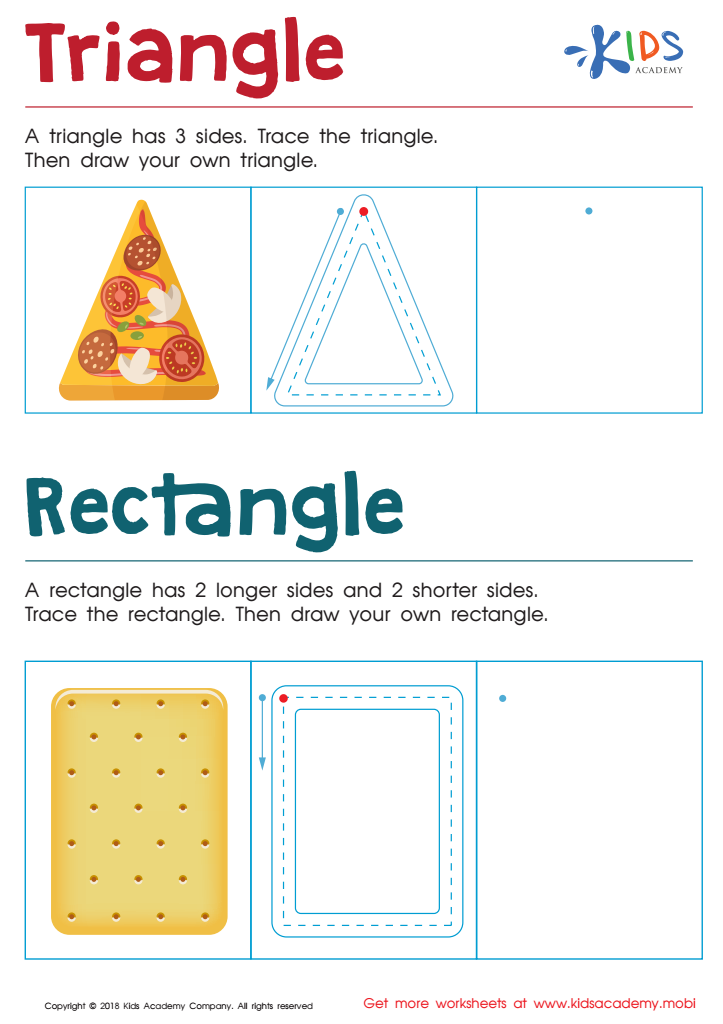
Triangle Rectangle Worksheet
 Assign to My Students











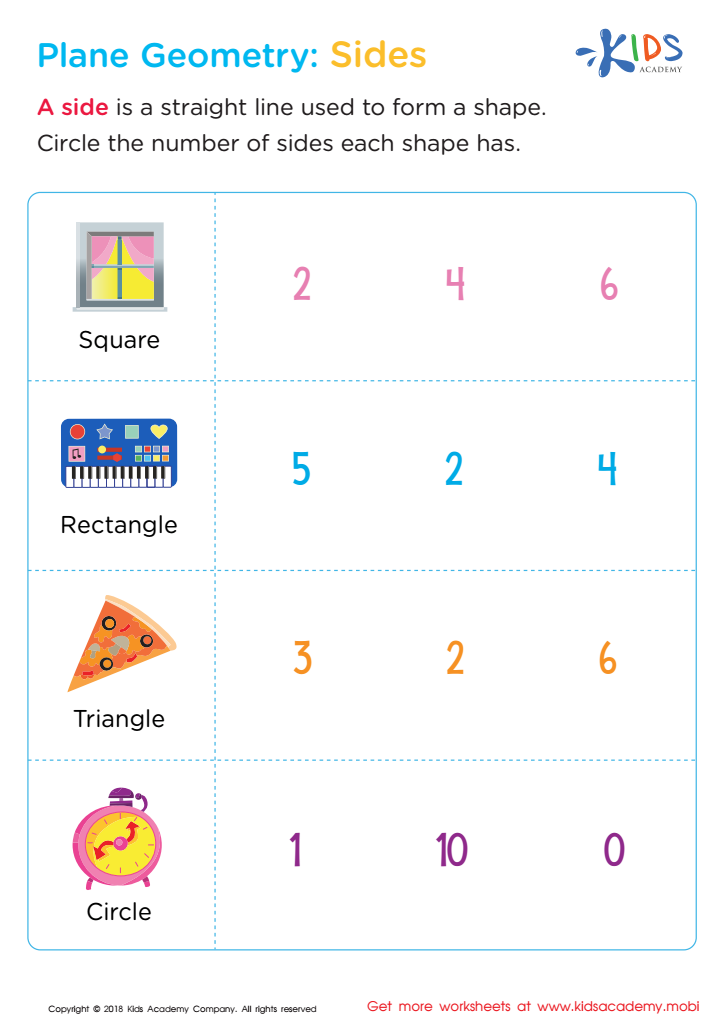
Plane Geometry: Sides Worksheet
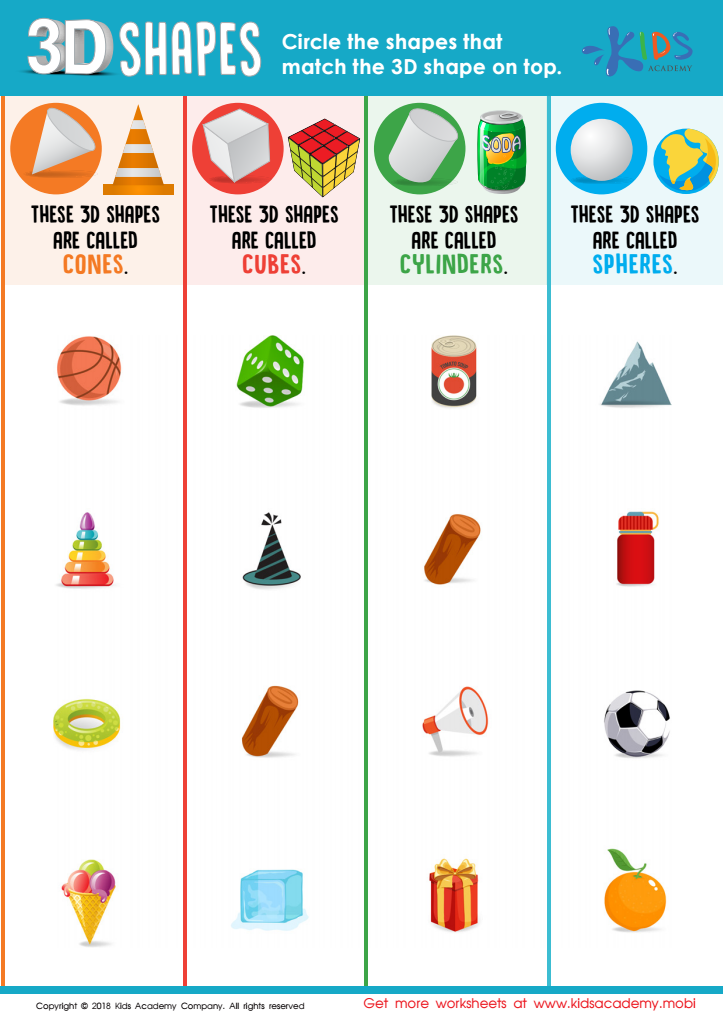
3D Shapes Worksheet








Differentiating shapes is a fundamental aspect of early childhood education and holds particular importance for children aged 3-6. At this developmental stage, children's cognitive, sensory, and motor skills are rapidly evolving. Learning to recognize and distinguish between different shapes lays the groundwork for more advanced mathematical and spatial reasoning skills that are crucial for future academic success.
Firstly, understanding shapes enhances children's visual-spatial awareness. This skill is essential not only in geometry but in everyday experiences, such as understanding maps or assembling puzzles. Recognizing shapes also aids in language development, as children learn to describe and categorize what they see around them.
Secondly, shape differentiation supports fine motor skills. Activities like tracing, drawing, or constructing shapes involve coordination between the eyes and hands, which is pivotal for writing skills. Additionally, it introduces children to problem-solving techniques. For instance, determining how shapes fit together to form an object translates to better problem-solving and engineering skills later on.
Finally, early competency in geometric concepts fosters a positive attitude towards learning. Through playful, hands-on activities, children experience success and build confidence, laying a foundation for a lifelong love of learning and curiosity in the world around them.
Hence, parents and teachers should prioritize shape differentiation to build strong educational foundations, preparing young children for a wide range of academic and real-world challenges.








