Shape identification Normal Geometry Worksheets for Ages 3-6
5 filtered results
-
From - To
Welcome to our Shape Identification Normal Geometry Worksheets for Ages 3-6! These engaging worksheets are designed to introduce young learners to the exciting world of shapes. Through interactive activities, children will identify, name, and differentiate between various geometric shapes such as circles, squares, triangles, and rectangles. Our materials promote essential skills like visual recognition and fine motor development, all while making learning fun! Each worksheet is tailored to suit preschool and kindergarten children, ensuring they grasp foundational geometry concepts. Perfect for home or classroom use, our worksheets foster curiosity and creativity in early learners as they explore shapes in a playful way!
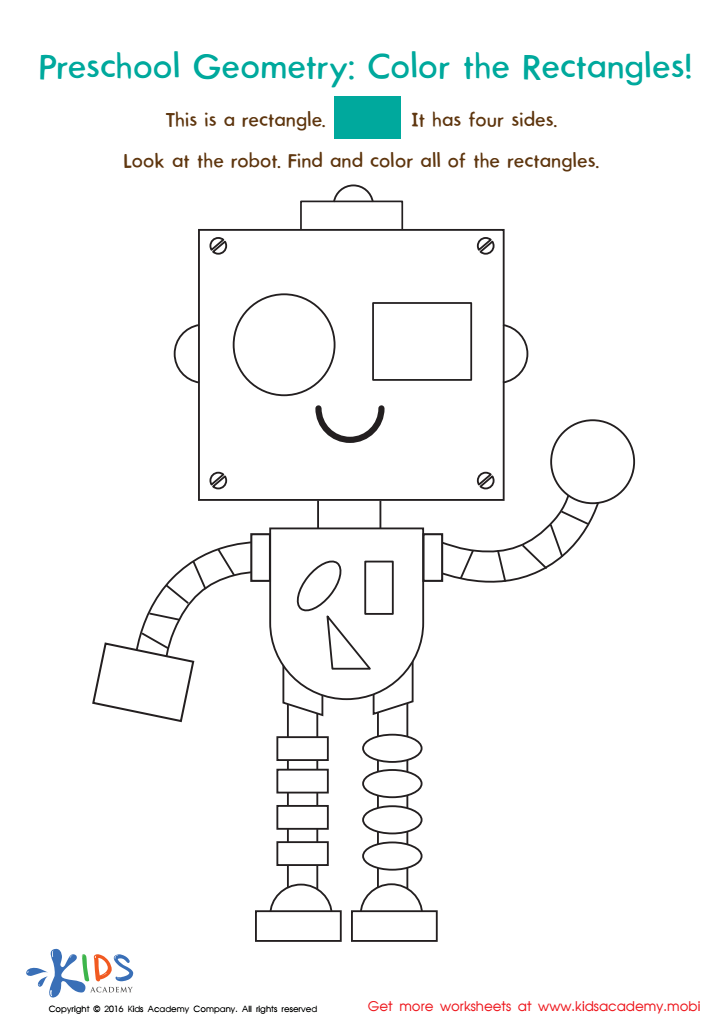
Geometry Worksheet
 Assign to My Students











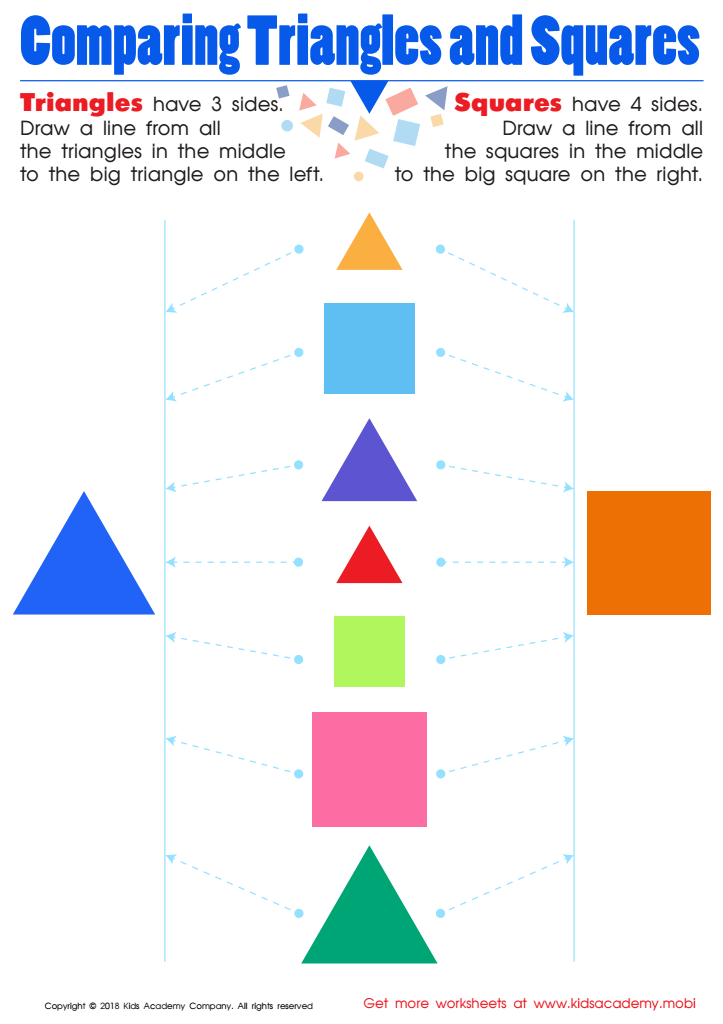
Comparing Triangles Squares Worksheet
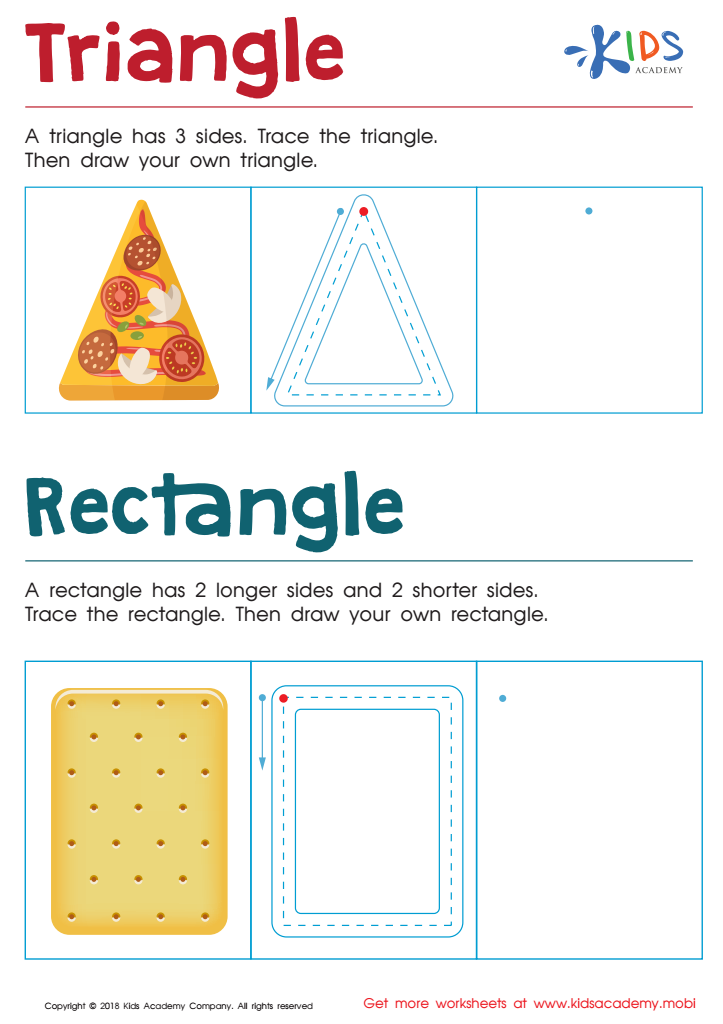
Triangle Rectangle Worksheet
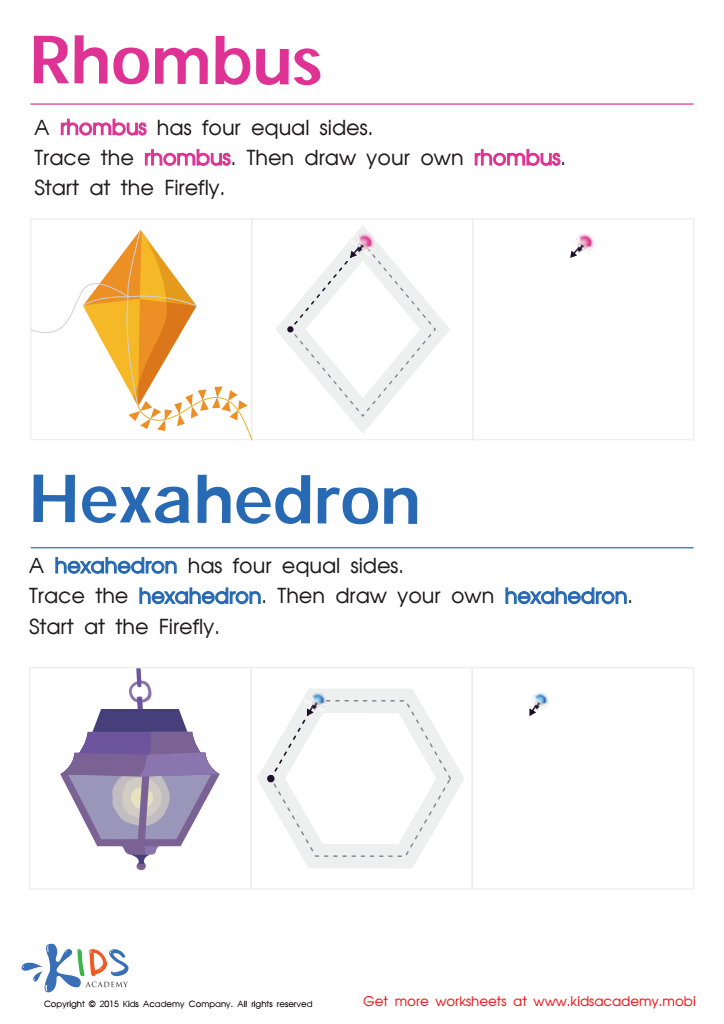
Draw a Rhombus And a Hexahedron Printable
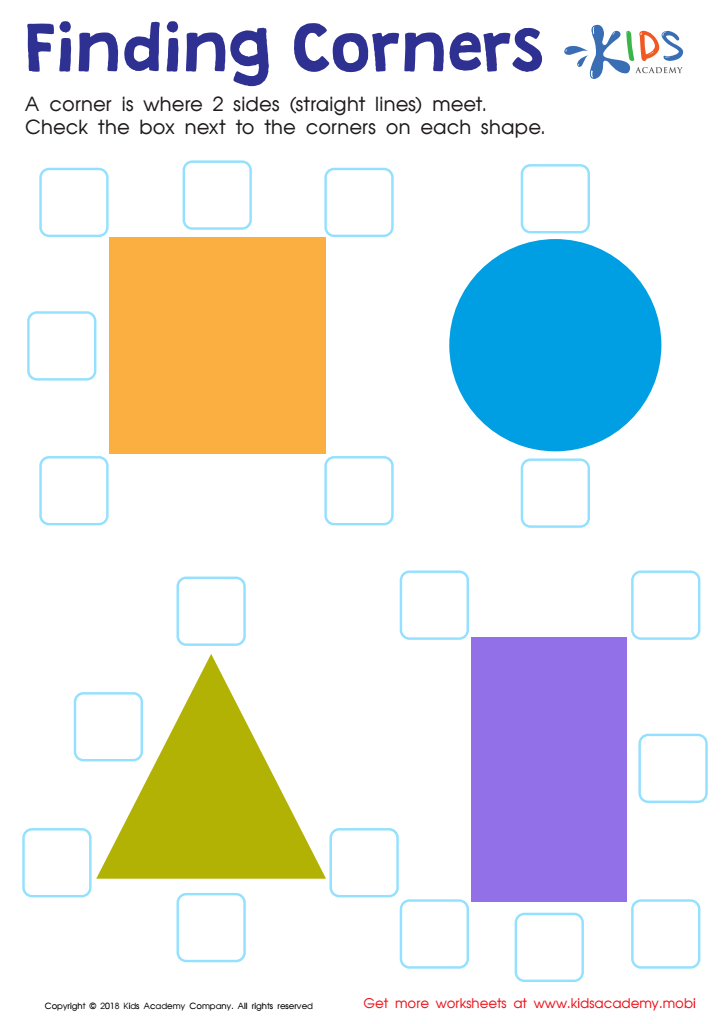
Finding Corners Worksheet








Shape identification in early childhood, particularly in the age range of 3-6, is crucial for cognitive development and foundational math skills. At this stage, children begin to recognize shapes and learn their properties, fostering spatial awareness and critical thinking. Understanding the characteristics of shapes, such as the number of sides, symmetry, and overall structure, helps children classify and organize their environment and experiences. This foundational skill sets the stage for more complex mathematical concepts they will encounter later in their education.
Furthermore, shape identification supports children's language development. As they learn to describe shapes, they expand their vocabulary and improve their communication skills. Parents and teachers play a vital role in this process by using everyday experiences to introduce shapes, encouraging exploration, and creating engaging learning environments.
Additionally, learning about shapes enhances children’s problem-solving abilities and creativity. Activities involving shapes can support fine motor skills through drawing, building, and crafting. More importantly, shape recognition is not isolated to just math but connects to art and science, promoting an integrated approach to learning. By caring about shape identification, parents and teachers equip children with essential skills leading to academic success and a love for learning.








