Spatial reasoning Normal Geometry Worksheets for Ages 3-6
3 filtered results
-
From - To
Unlock your child’s potential with our Spatial Reasoning Geometry Worksheets designed for ages 3-6. These carefully crafted, fun, and engaging activities help young learners develop critical spatial reasoning skills, essential for early math success. Our worksheets cover various concepts like shapes, patterns, and positions, making learning enjoyable and effective. With visually stimulating exercises and simple instructions, they are perfect for parents and teachers seeking to enhance children's understanding of geometry. Spark curiosity and build a solid foundation for future learning. Visit Kids Academy to download these free, high-quality worksheets that cater to young minds' unique developmental needs.
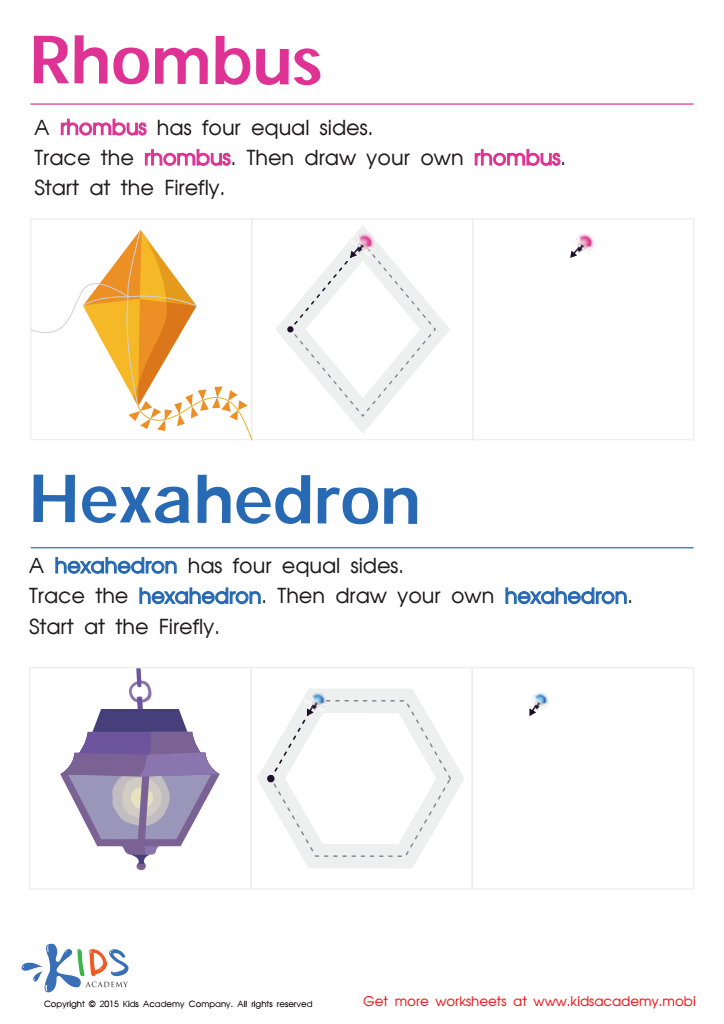
Draw a Rhombus And a Hexahedron Printable
 Assign to My Students











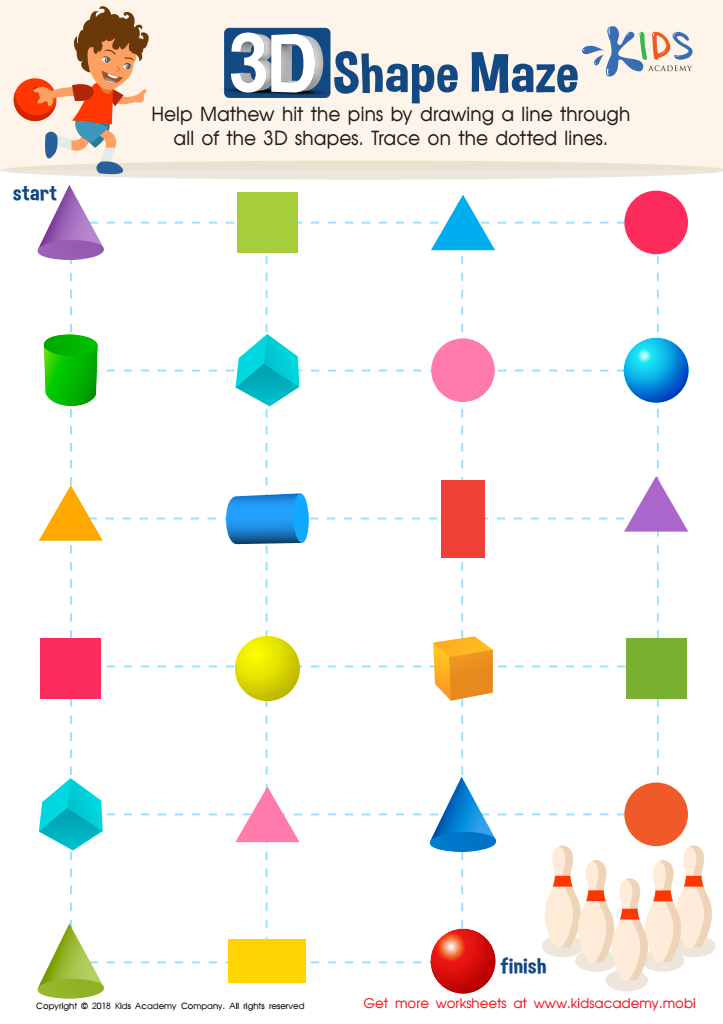
Shapes Maze Geometry Worksheet
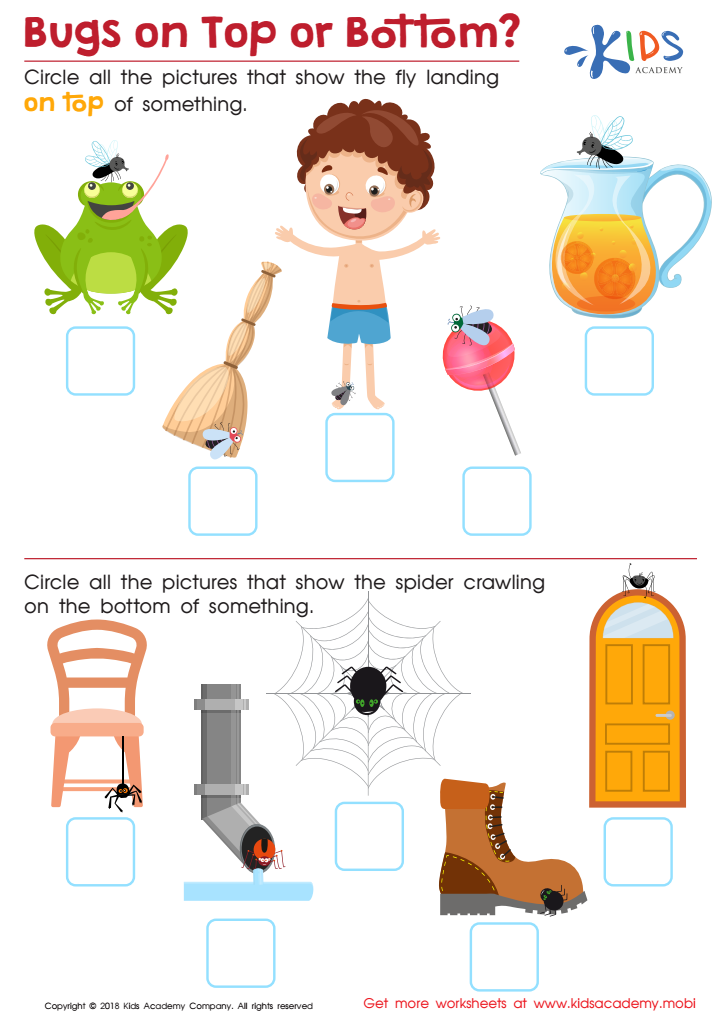
Bugs on Top or Bottom? Worksheet








Spatial reasoning is a critical cognitive skill that helps children understand and interact with the world around them. For children aged 3-6, developing spatial reasoning and normal geometry skills lays a foundation for future learning across numerous disciplines. Here are several reasons why parents and teachers should care about fostering these skills in early years:
Firstly, spatial reasoning is closely linked to success in STEM (Science, Technology, Engineering, Mathematics) subjects. Studies have shown that children with strong spatial skills are more likely to excel in math and science. By engaging in activities that promote spatial awareness—such as playing with blocks, solving puzzles, and exploring shapes—children are better prepared for academic challenges ahead.
Secondly, spatial reasoning aids in everyday functioning and problem-solving. Understanding spatial relationships helps children navigate their environment, follow directions, assemble objects, and even participate in sports. These skills contribute to a child's overall independence and confidence.
Moreover, spatial reasoning supports language and literacy development. Children use spatial vocabulary as they learn to describe and compare objects (e.g., "above," "next to," "between"). This enriches their descriptive language, storytelling abilities, and comprehension skills.
Encouraging spatial reasoning activities at an early age also stimulates creative thinking and imagination. Parents and teachers, therefore, play a crucial role in providing rich and varied opportunities for young children to explore, manipulate, and understand their world spatially. Investing in these skills early can yield long-lasting educational and developmental benefits.








