Improving number sense Normal Numbers Worksheets for Ages 3-6
3 filtered results
-
From - To
Enhance your child's early math skills with our "Improving Number Sense Normal Numbers Worksheets" designed specifically for ages 3-6. These engaging and interactive worksheets help young learners develop a solid understanding of numbers through a variety of fun activities. Kids will enjoy practicing counting, number recognition, and simple math concepts, all while fostering a love for learning. Aligned with early childhood education goals, our resources promote cognitive development and readiness for future mathematics challenges. Perfect for homeschooling or classroom use, these worksheets provide a foundation for essential number sense skills, setting your child on the path to math success!
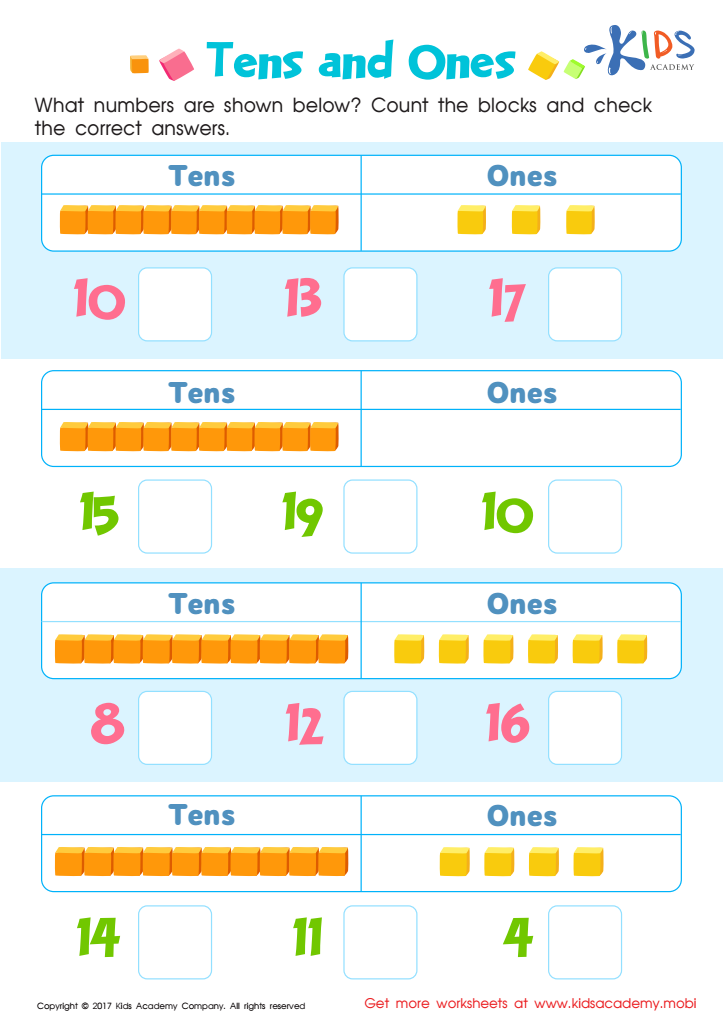
Tens and Ones Worksheet
 Assign to My Students
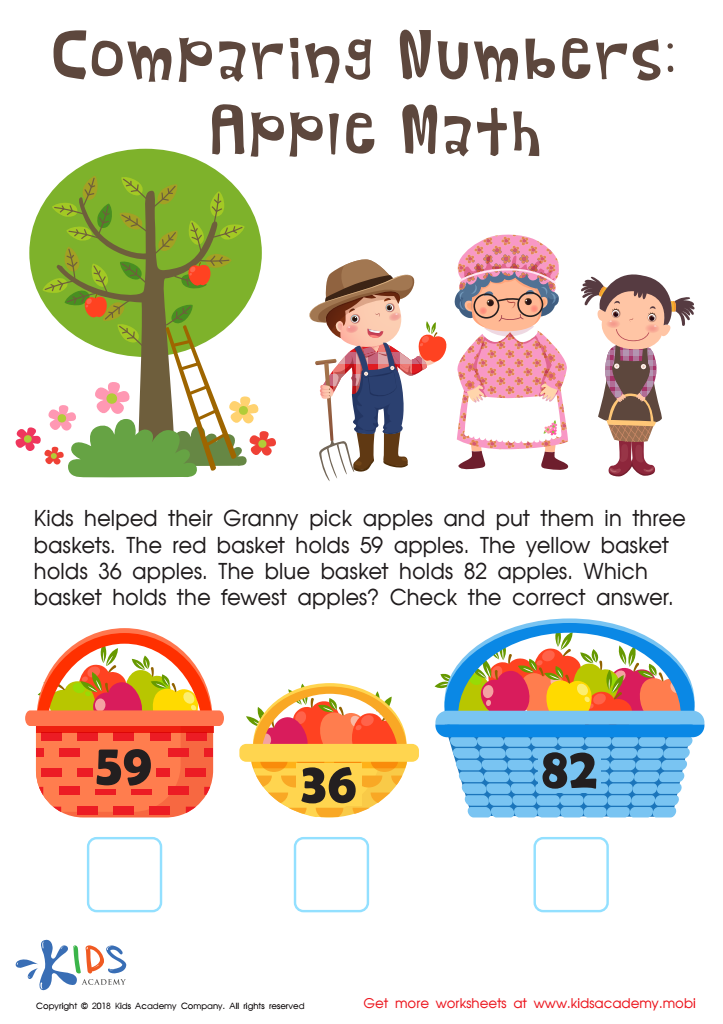
Apple Math Worksheet
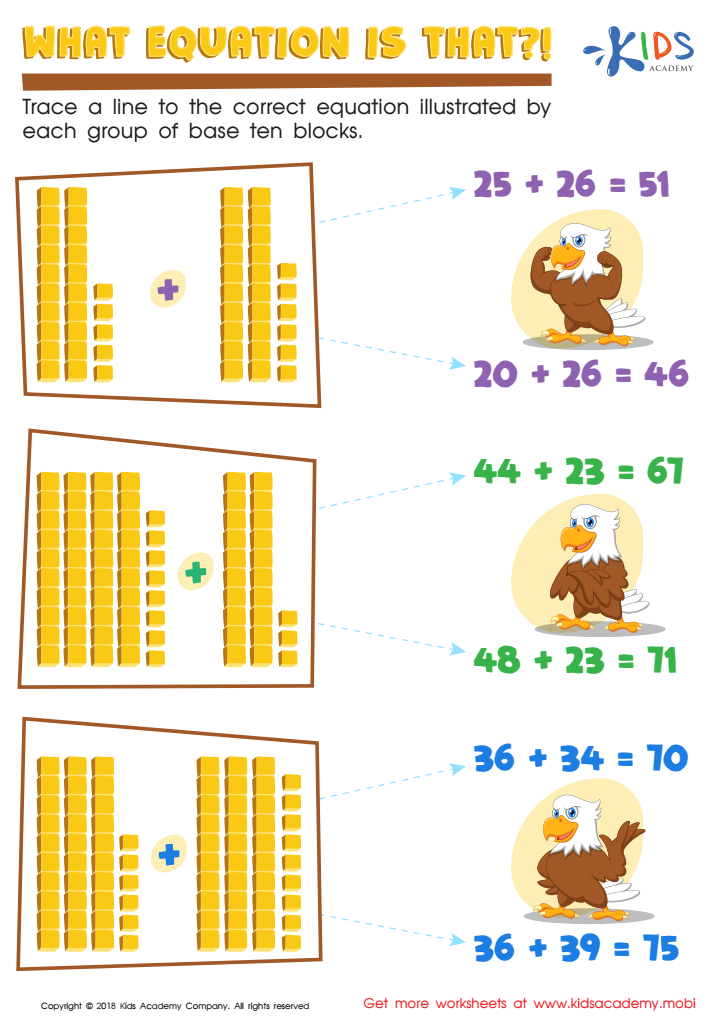
What Equation Is That? Worksheet








Improving number sense in young children aged 3-6 is crucial for several reasons. First, number sense serves as the foundation for all future math learning. Early understanding of numbers, their relationships, and basic operations contributes to later math skills, such as addition, subtraction, and problem-solving. Children who develop strong number sense tend to excel academically, improving their confidence and enthusiasm for learning.
Moreover, fostering number sense helps children make sense of the world around them. By recognizing numbers in daily activities—such as counting items during grocery shopping or recognizing numbers in their environment—children learn to see math as a part of everyday life rather than a detached subject.
From a developmental perspective, early years are essential for cognitive growth. Engaging in playful mathematical activities—such as counting games, sorting objects by size, or exploring patterns—enhances critical thinking and promotes social interactions.
Finally, teachers and parents play a significant role in nurturing this sense by providing a supportive environment that encourages exploration and curiosity. By prioritizing number sense, they equip children with vital skills that not only prepare them for academic success but also empower their lifelong relationship with mathematics, promoting better decision-making and problem-solving abilities in adulthood.








