Addition Practice Normal Math Worksheets for Ages 3-6 - Page 2
28 filtered results
-
From - To
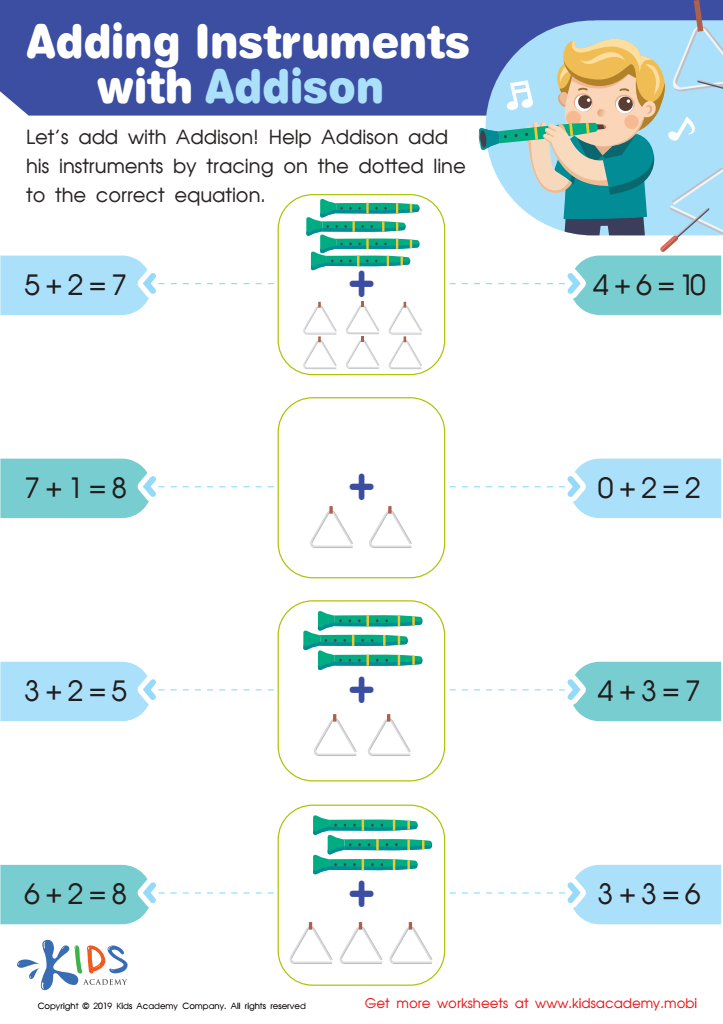
Adding Instruments with Addison Worksheet
 Assign to My Students
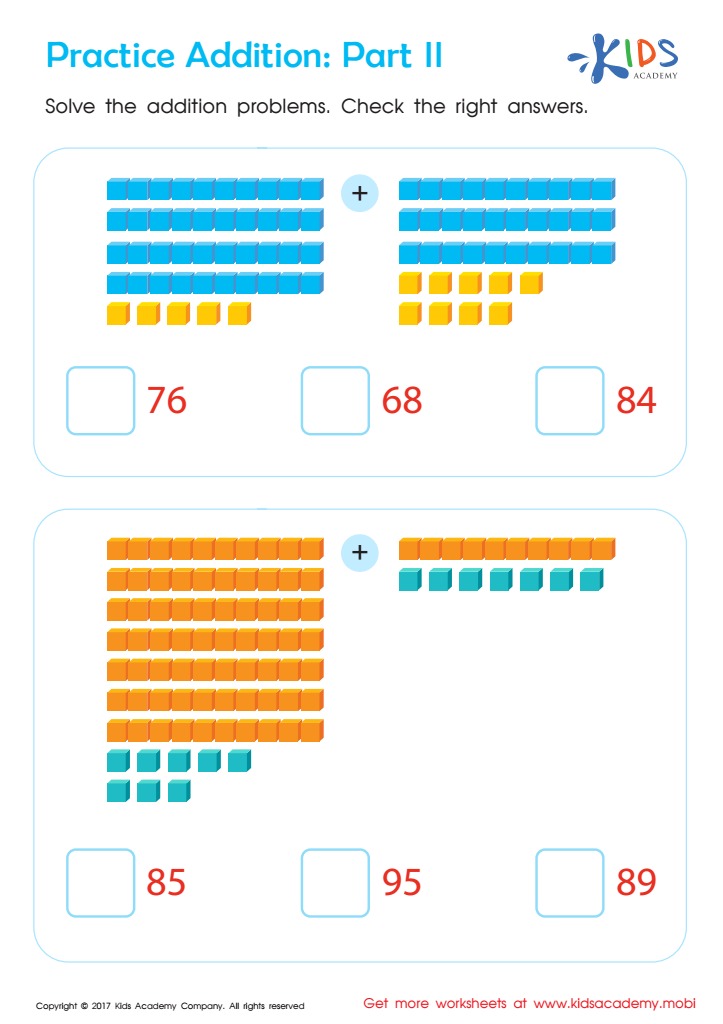
Practice Addition: Part 2 Worksheet
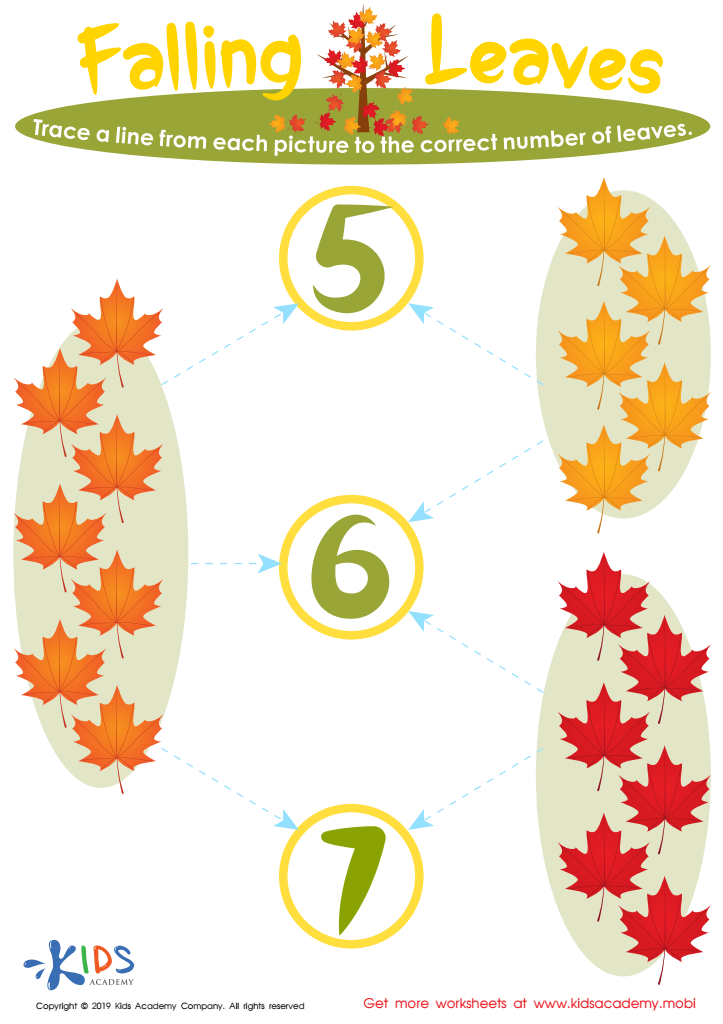
Falling Leaves Worksheet
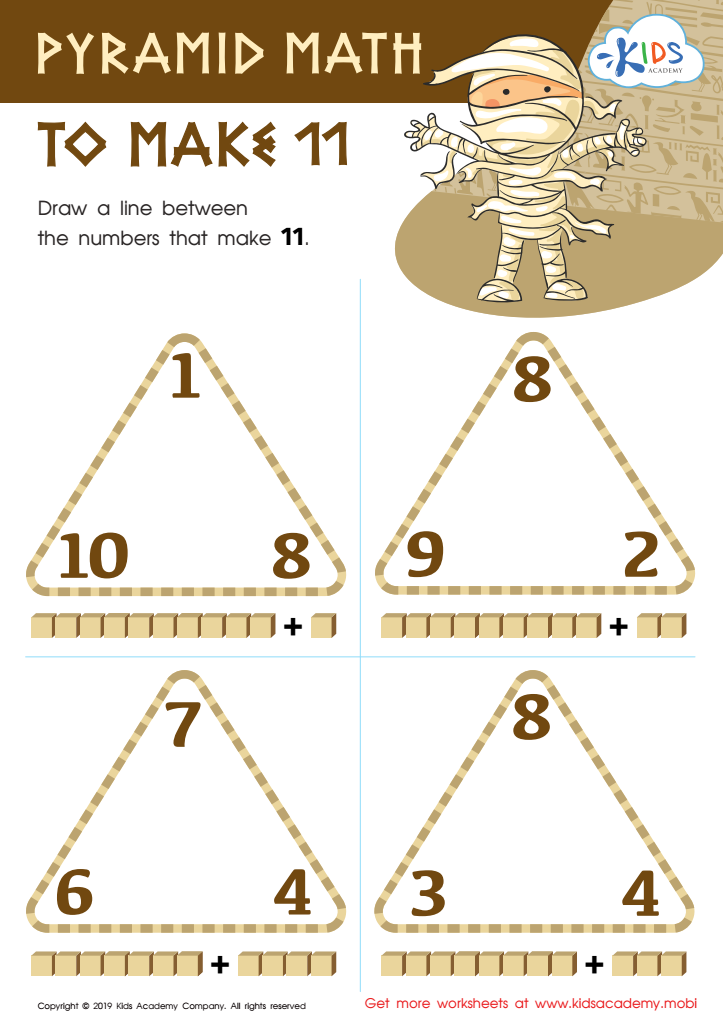
Pyramid Math to Make 11 Worksheet




.jpg)



Addition practice is crucial for young learners aged 3-6, as it lays the foundation for their mathematical understanding and overall cognitive development. During these formative years, children are highly receptive to learning new concepts, and engaging in simple addition helps them develop crucial problem-solving skills, numerical awareness, and critical thinking abilities.
When parents and teachers incorporate addition practice in a fun, interactive manner, they can foster a positive attitude toward learning math from an early age. This early exposure reduces math anxiety, empowers children with confidence in their abilities, and encourages a deeper interest in the subject.
Furthermore, mastering basic addition enhances children's social skills, as math often involves teamwork in group activities. These interactions build communication abilities and promote collaborative problem-solving, important for their future academic and social endeavors.
Additionally, regular addition practice can aid in strengthening fine motor skills through hands-on activities, such as counting objects or using fingers. Overall, investing time in addition skills not only prepares children for upcoming academic challenges but also nurtures well-rounded individuals with a love for learning. Parents and teachers can wield great influence by making math engaging and accessible, turning it into a delightful adventure for young minds.








