Attention to Detail Normal Math Worksheets for Ages 3-6
3 filtered results
-
From - To
Discover our "Attention to Detail Normal Math Worksheets for Ages 3-6," designed to enhance your child's critical thinking and observational skills through engaging math activities. Each worksheet offers age-appropriate exercises that promote attention to detail while reinforcing key mathematical concepts. Perfect for preschool to kindergarten, these fun and educational printables help young learners grasp the basics of counting, shapes, patterns, and more. Encourage a solid math foundation and a love for learning with our expertly crafted worksheets. Visit Kids Academy for a diverse collection tailored to support early education growth and development!
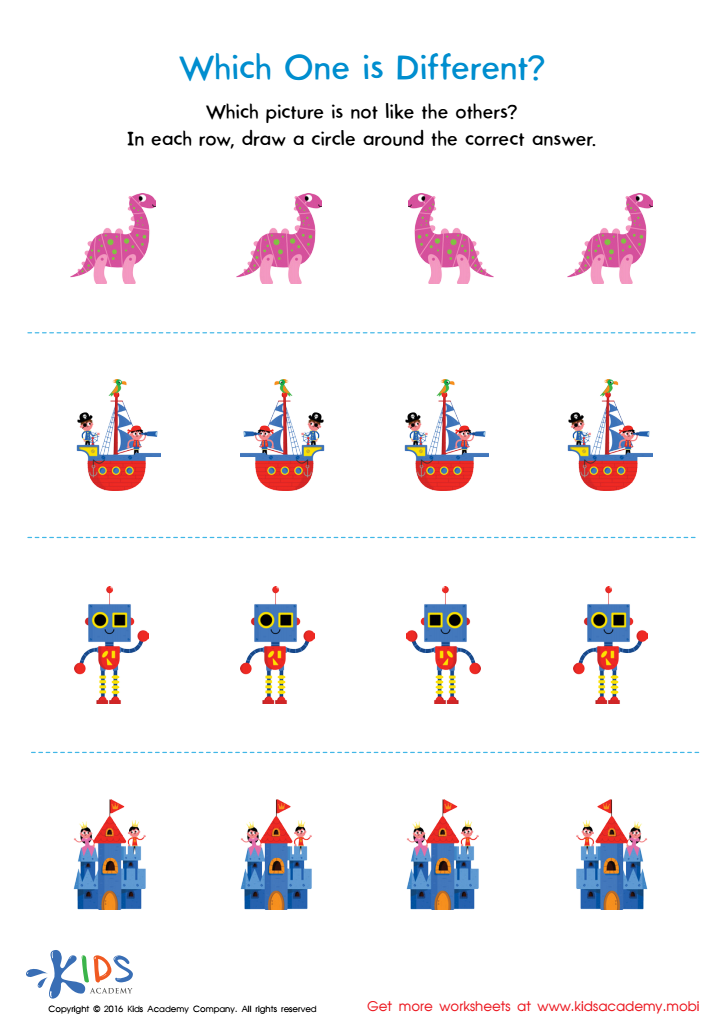
Which One Is Different Worksheet
 Assign to My Students
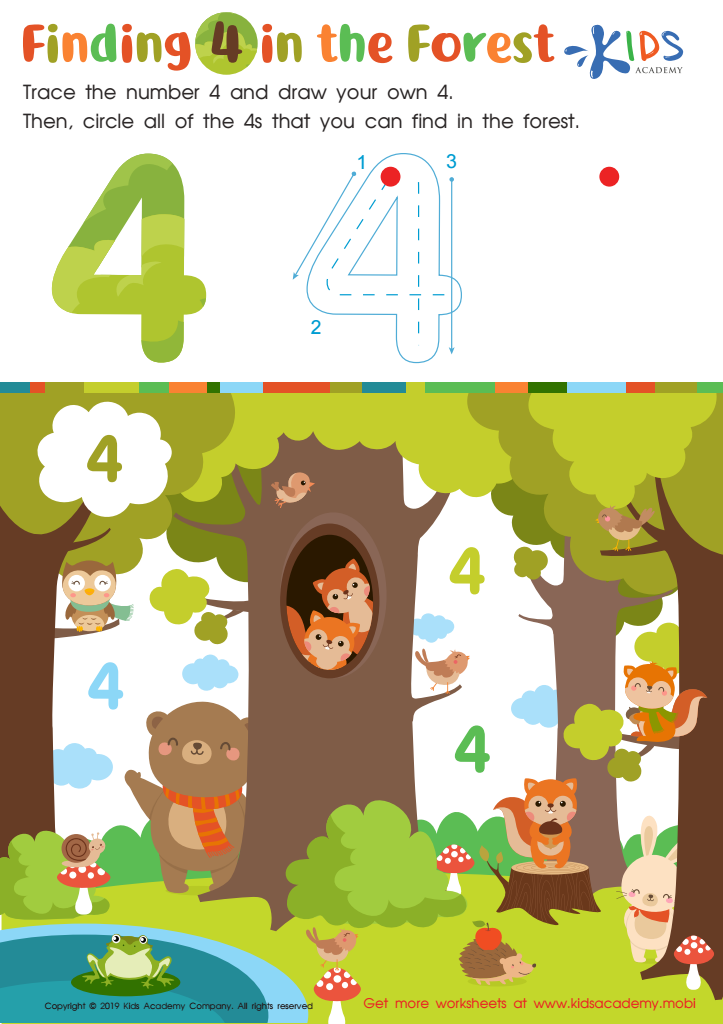
Finding 4 in the Forest Worksheet
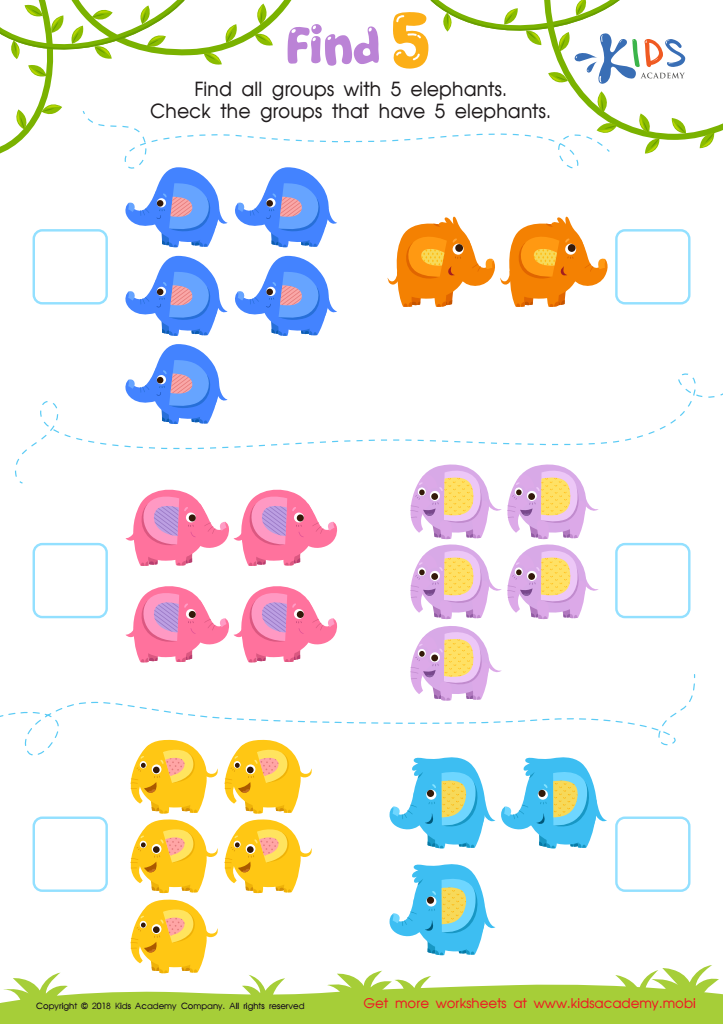
Find 5 Worksheet







Attention to detail in early math education for children ages 3-6 is incredibly important for a multitude of reasons. During these formative years, the foundational skills for more complex mathematical concepts are developed. When parents and teachers emphasize exactness and thoroughness in early math activities, they foster a child's cognitive development, enhancing skills such as counting, number recognition, and basic addition and subtraction.
A strong attention to detail aids in strengthening a child's problem-solving abilities. It teaches them to meticulously approach a problem, consider all aspects, and validate their solutions, ensuring accuracy. For instance, recognizing patterns and shapes requires precise observation—skills invaluable for future mathematical learning and everyday situations such as following directions or completing tasks efficiently.
Furthermore, nurturing a sense of precision in math helps build a child's confidence. Knowing they can solve problems correctly and reliably encourages a positive attitude toward school and learning in general. This confidence can ripple into other areas, promoting a growth mindset and perseverance.
Ultimately, parents and teachers who prioritize attention to detail in math for young children equip them with essential tools for academic success and life. It lays a secure foundation, not just for mathematics, but for attention to details in all areas, fostering diligent and curious learners.








