
Developing math skills Normal Math Worksheets for Ages 3-6
3 filtered results
Difficulty Level
Grade
Age
-
From - To
Subject
Activity
Standards
Welcome to our Developing Math Skills worksheets, designed specifically for children aged 3-6! Our collection of normal math worksheets encourages early learners to explore foundational math concepts through engaging activities. From counting and number recognition to basic addition and subtraction, these interactive sheets promote critical thinking and problem-solving skills in a fun, playful manner. Each worksheet is tailored to nurture your child’s understanding of essential math concepts, making learning an enjoyable experience. With vibrant illustrations and age-appropriate challenges, our resources are perfect for parents, teachers, and caregivers seeking to enhance their child's early math skills. Start your child's math journey today!
Favorites
With answer key
Interactive
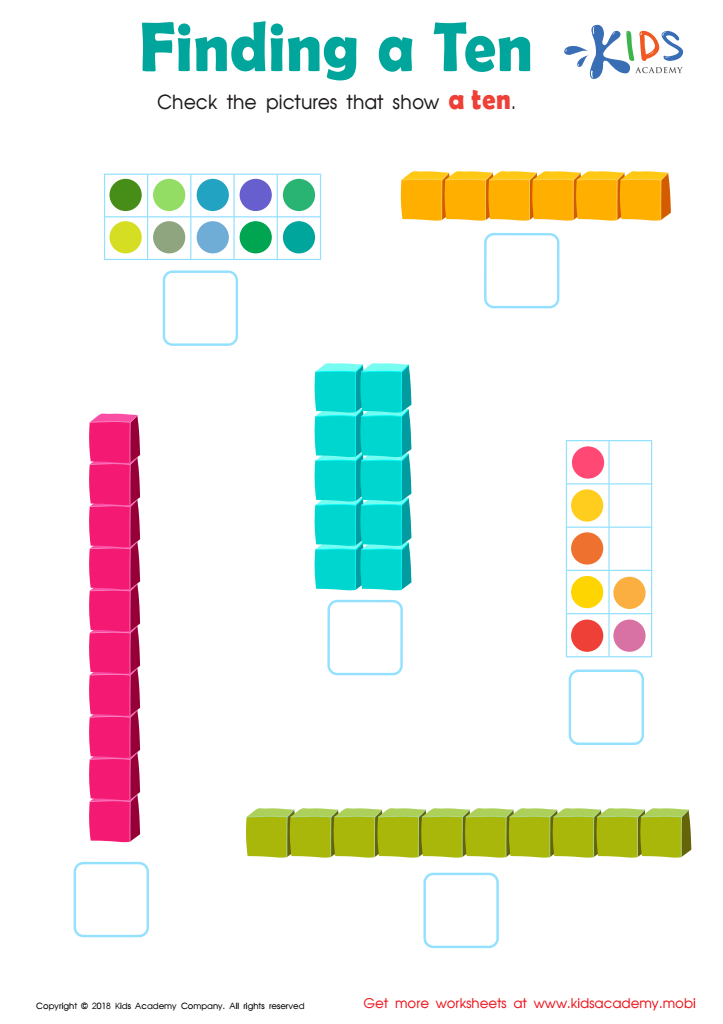
Finding a Ten Worksheet
Can your child count to ten? Distinguish groups of ten? This free printable worksheet uses shapes and colors to help first graders learn to count and understand what groups of numbers look like. It's fun and easy to comprehend, helping kids master the fundamentals of math.
 Assign to My Students
Finding a Ten Worksheet
Worksheet
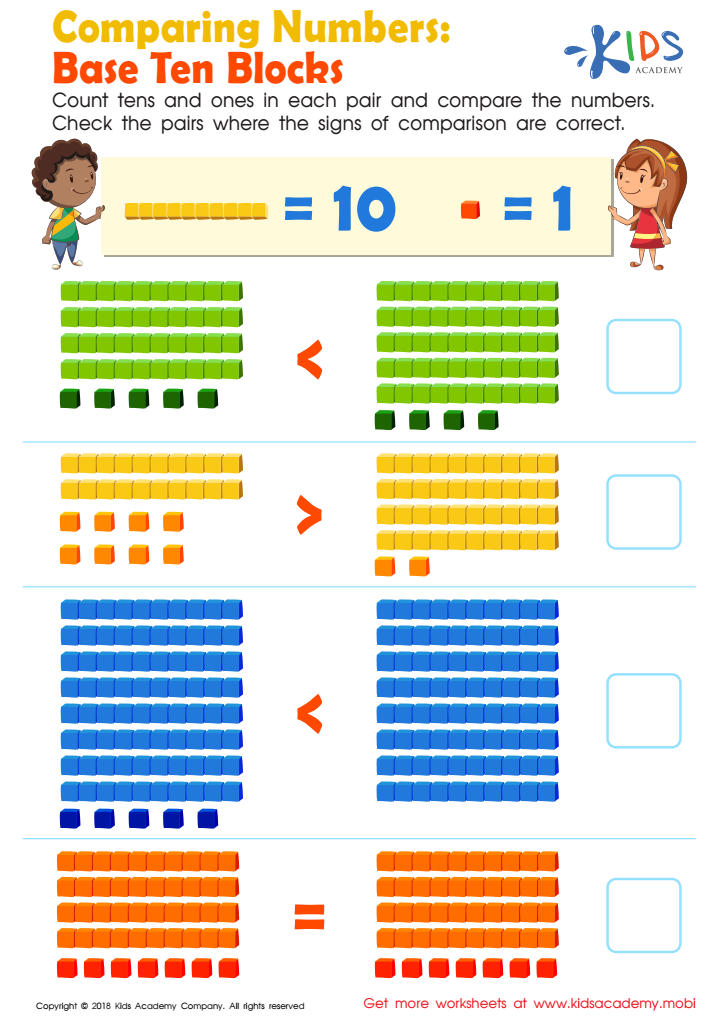
Comparing Numbers: Base Ten Blocks Worksheet
Make math fun for your child with a colorful worksheet. They'll need to compare signs by counting blocks on each side and signifying whether it's correct or not. This is one way to help your child beat the unhappiness that comes with math.
Comparing Numbers: Base Ten Blocks Worksheet
Worksheet
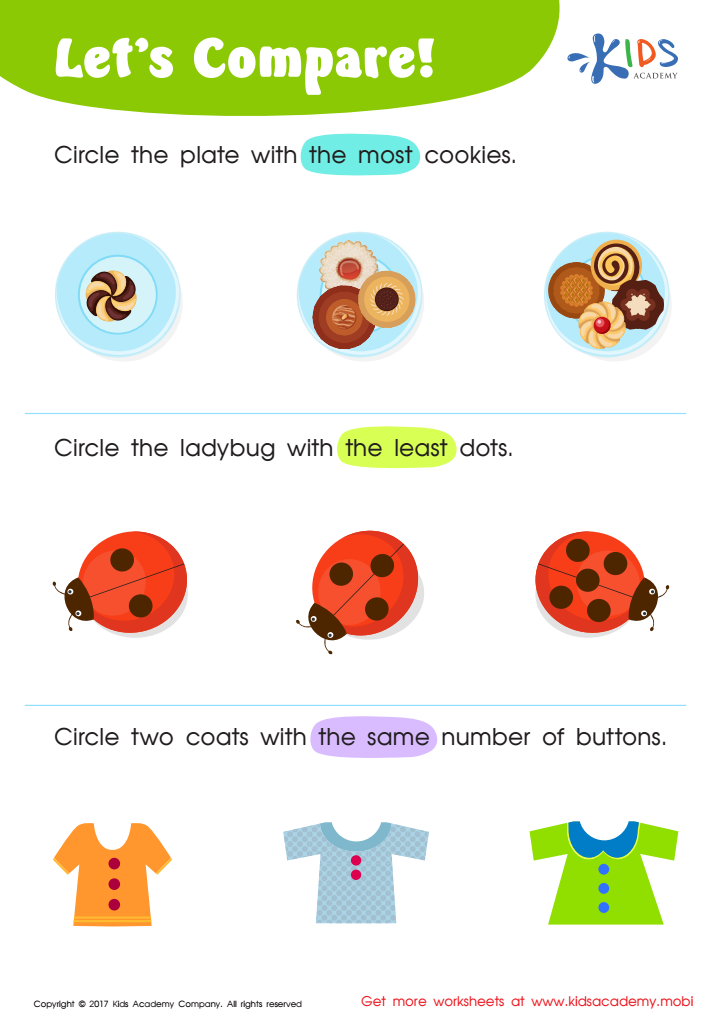
Matching: Classifying Toys by Size Worksheet
.
Have your young one's observation and counting skills ready for this worksheet; carefully look through the images and count the objects, then circle the plates with the least, most or equal number of patterns. Pay attention and have good counting abilities to make this task easy.
Matching: Classifying Toys by Size Worksheet
Worksheet
Join Kids Academy for Free
Who is primarily going to use this learning content?








Developing math skills in children aged 3-6 is crucial for their cognitive growth and future learning. At this age, children are naturally curious and eager to explore concepts such as numbers, patterns, and measurements. Fostering early math skills lays a strong foundation for critical thinking and problem-solving abilities in later years. When parents or teachers engage children in simple math activities—such as counting objects, recognizing shapes, or sorting by size—they promote mental agility and an understanding of basic mathematical principles.
Moreover, early exposure to math can enhance children's language skills through vocabulary related to numeracy, fostering communication and comprehension. The social aspect of math, such as taking turns during counting games or collaborating on puzzles, enriches their interpersonal skills. Mastering these early skills not only builds confidence but also encourages a positive attitude toward learning, which is essential for lifelong educational success. When children understand math concepts early on, they are better prepared for more complex mathematics in school, making them more likely to succeed academically. Ultimately, math is not just about numbers; it shapes logical reasoning and decision-making skills that are vital across diverse areas of life. Thus, investing in early math development is a vital role for both parents and teachers.








