Shape identification Normal Math Worksheets for Ages 3-6
6 filtered results
-
From - To
Our Shape Identification Math Worksheets for ages 3-6 offer engaging activities that help young learners recognize and name basic shapes like circles, squares, triangles, and rectangles. Each worksheet is carefully designed to enhance visual discrimination, spatial awareness, and fine motor skills through fun exercises and colorful illustrations. Children will build a strong foundation in geometry while enjoying hands-on activities like tracing, coloring, and matching shapes. Perfect for both classroom and at-home learning, these worksheets foster essential early math skills, setting the stage for future success. Get ready to explore the exciting world of shapes with your little mathematician!
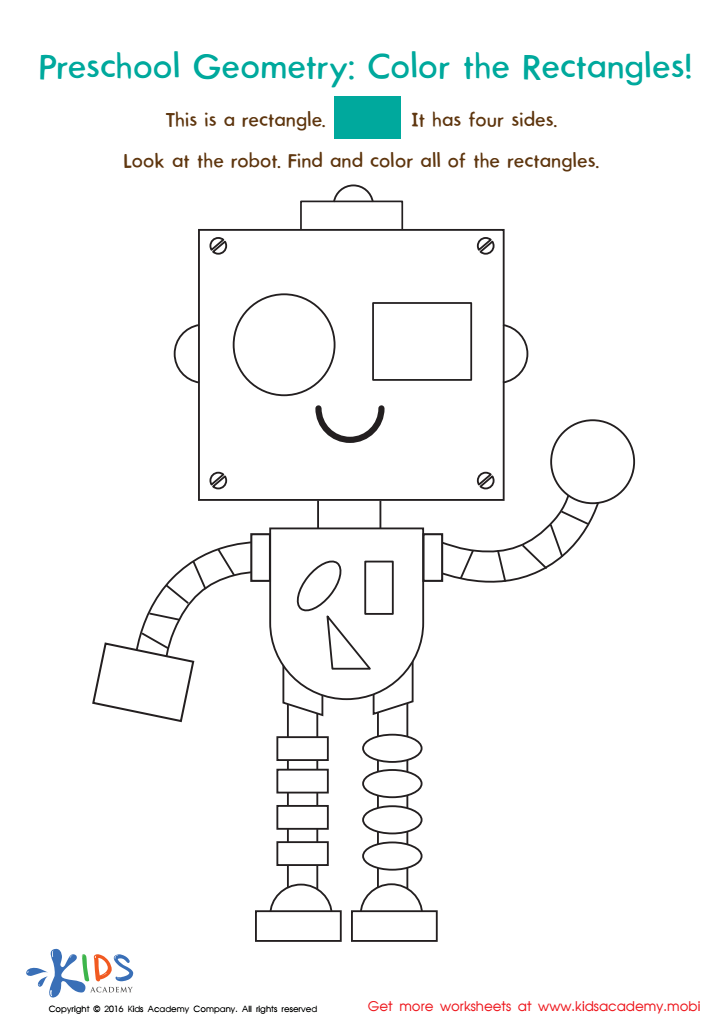
Geometry Worksheet
 Assign to My Students
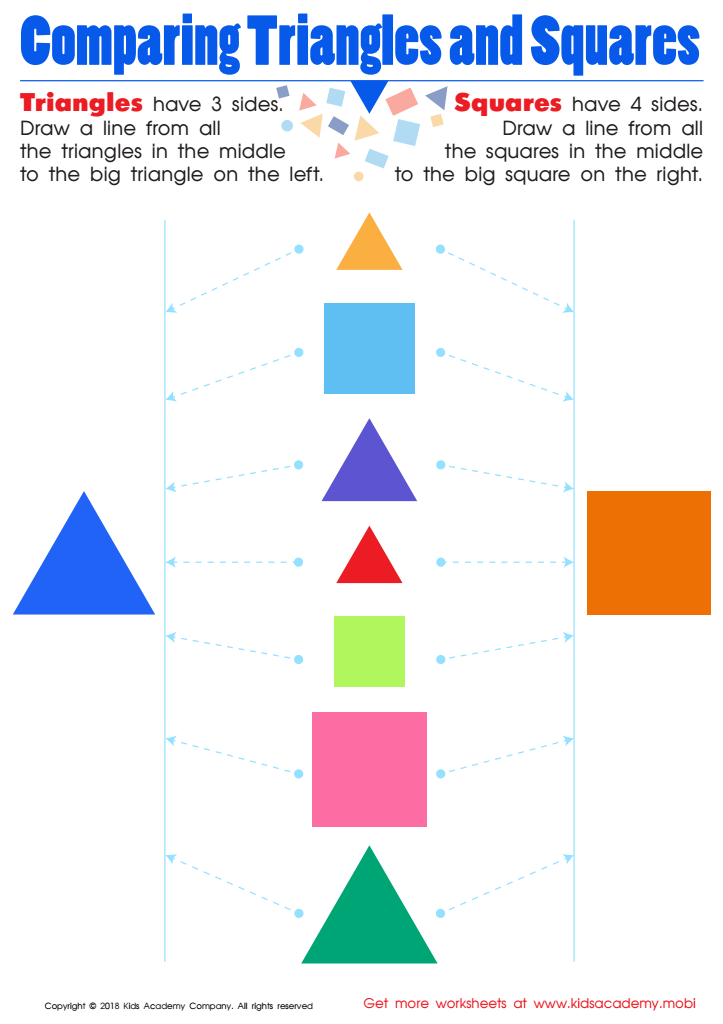
Comparing Triangles Squares Worksheet
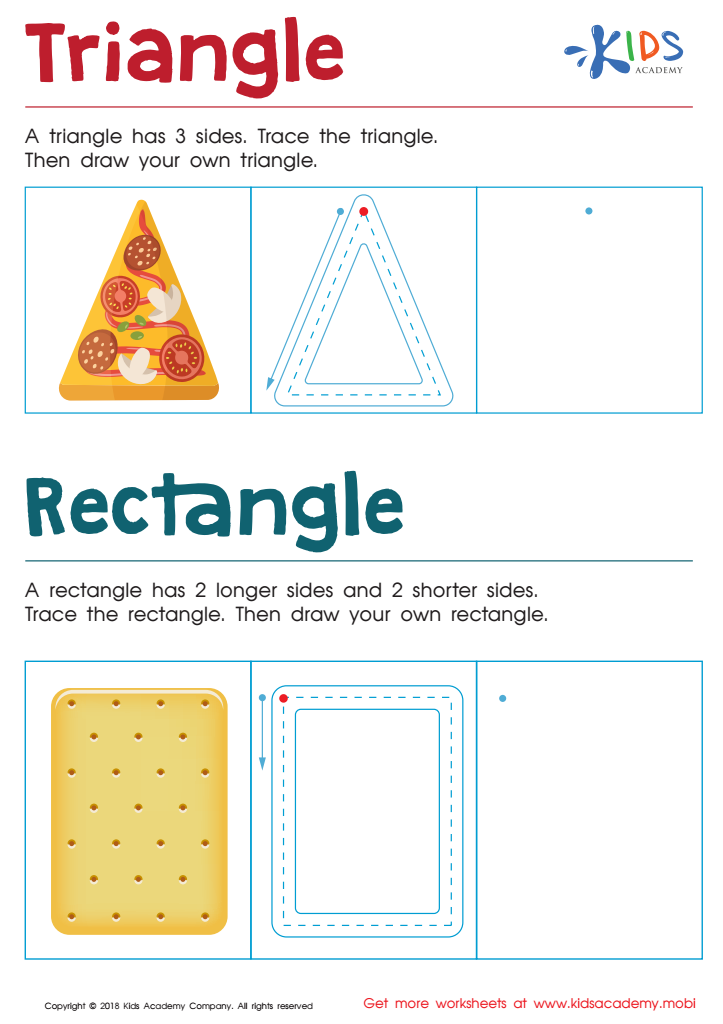
Triangle Rectangle Worksheet
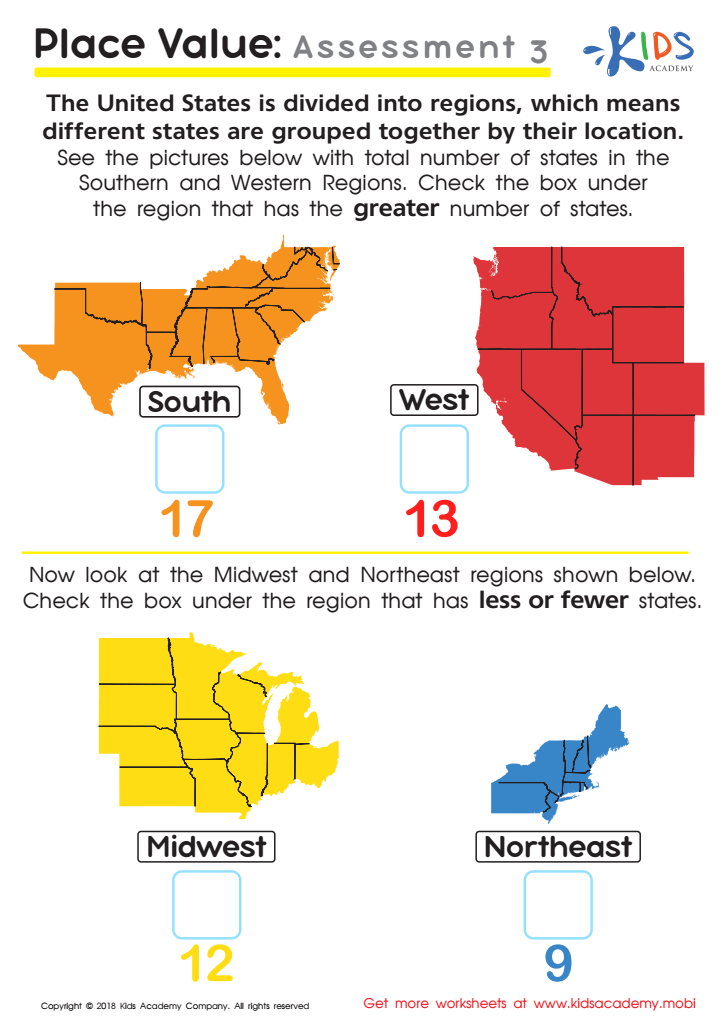
Place Value: Assessment 3 Worksheet
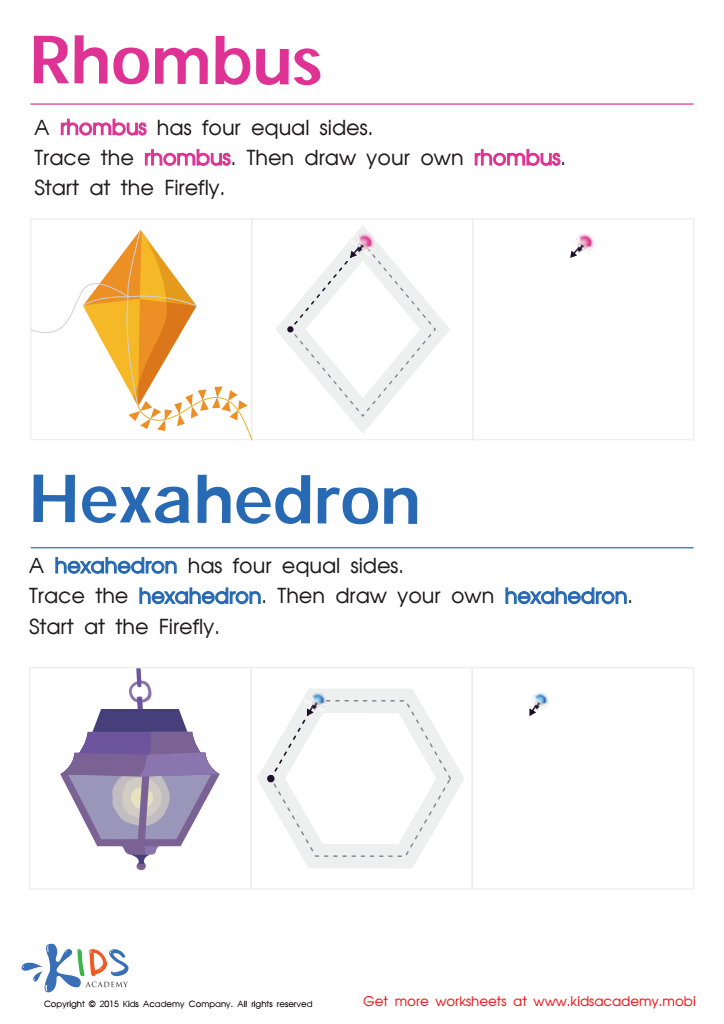
Draw a Rhombus And a Hexahedron Printable
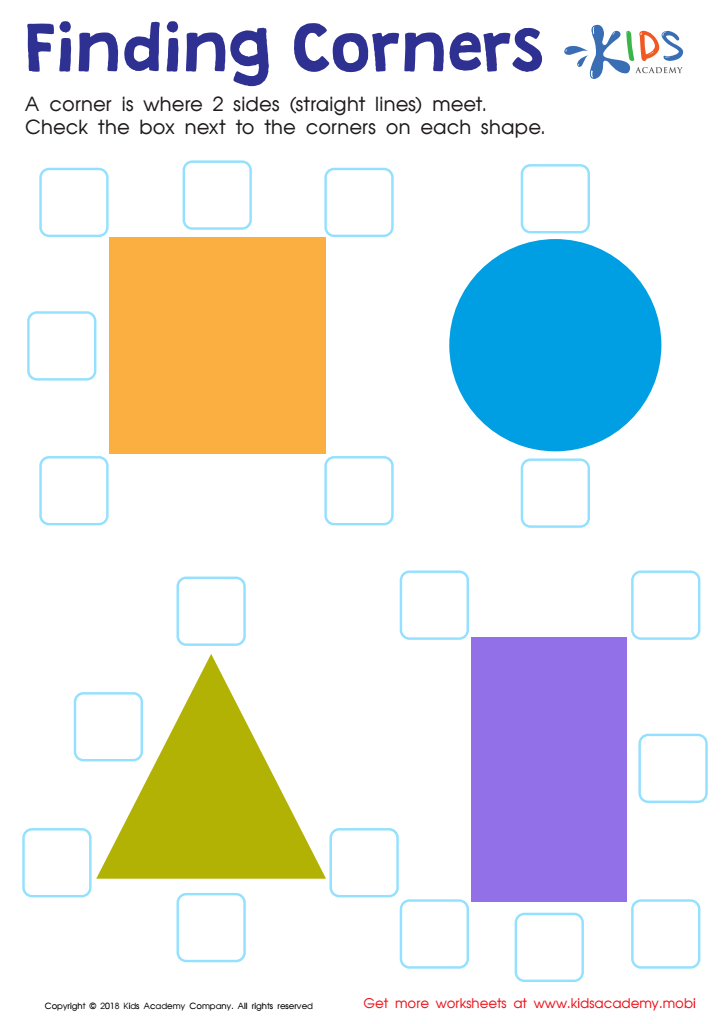
Finding Corners Worksheet








Shape identification is a crucial aspect of early childhood development, laying a strong foundation for various cognitive, motor, and academic skills. For ages 3-6, recognizing and naming shapes like circles, squares, and triangles enhances a child's visual-spatial awareness. This skill is foundational for later success in subjects like math and science.
From a cognitive standpoint, understanding shapes helps children learn categorization and problem-solving skills. When kids group or compare shapes, they practice sorting, which later translates to understanding numerical values and geometry concepts.
Shapes also play a vital role in developing fine motor skills. Activities such as tracing or cutting shapes improve hand-eye coordination and pre-writing skills, preparing children for handwriting and other classroom tasks.
In addition, shape identification enhances language and communication abilities. Children learn descriptive language and vocabulary, using terms like "round" or "corners," thereby boosting their linguistic proficiency.
Parents and teachers caring about shape identification ensure children meet key developmental milestones, providing a head start in their educational journey. By integrating shapes into fun, everyday activities, adults can foster an engaging, supportive learning environment, promoting curiosity and a lifelong love for learning.








