Shape Recognition Normal Math Worksheets for Ages 3-6 - Page 2
28 filtered results
-
From - To
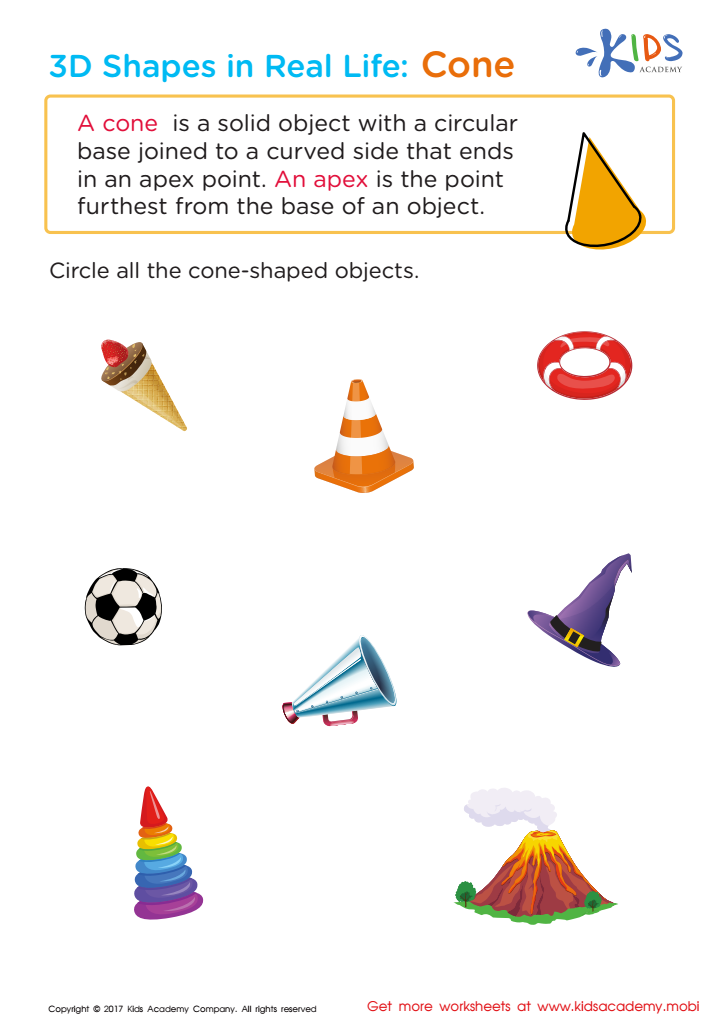
Shapes in Real Life: Cone Worksheet
 Assign to My Students
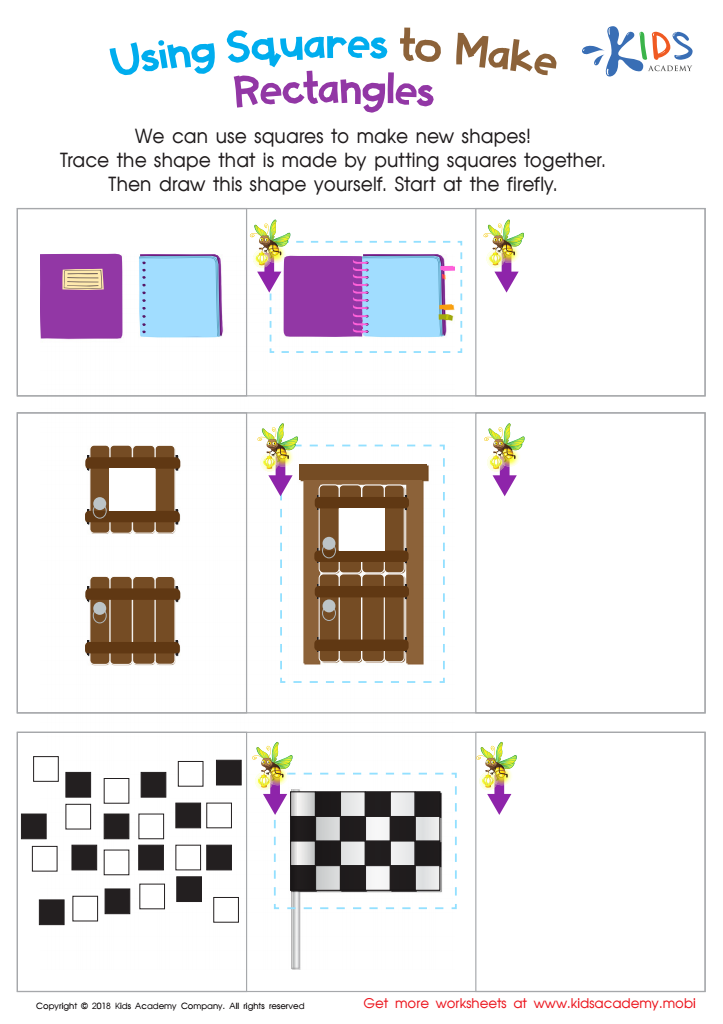
Using Squares to Make Rectangles Worksheet
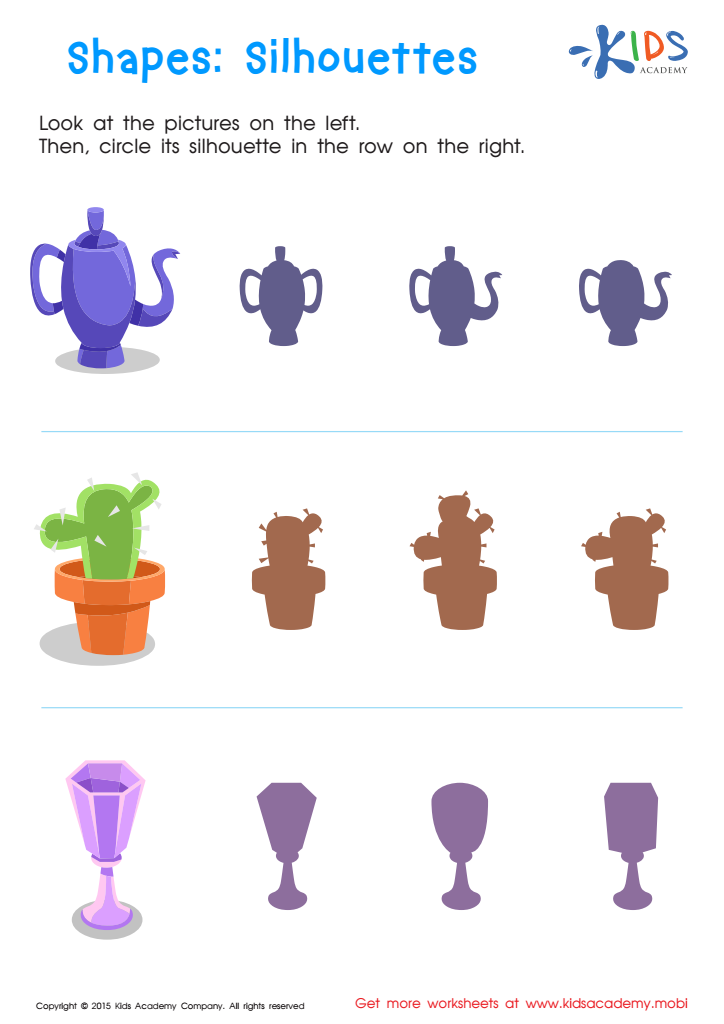
Silhouettes – Shapes Worksheet
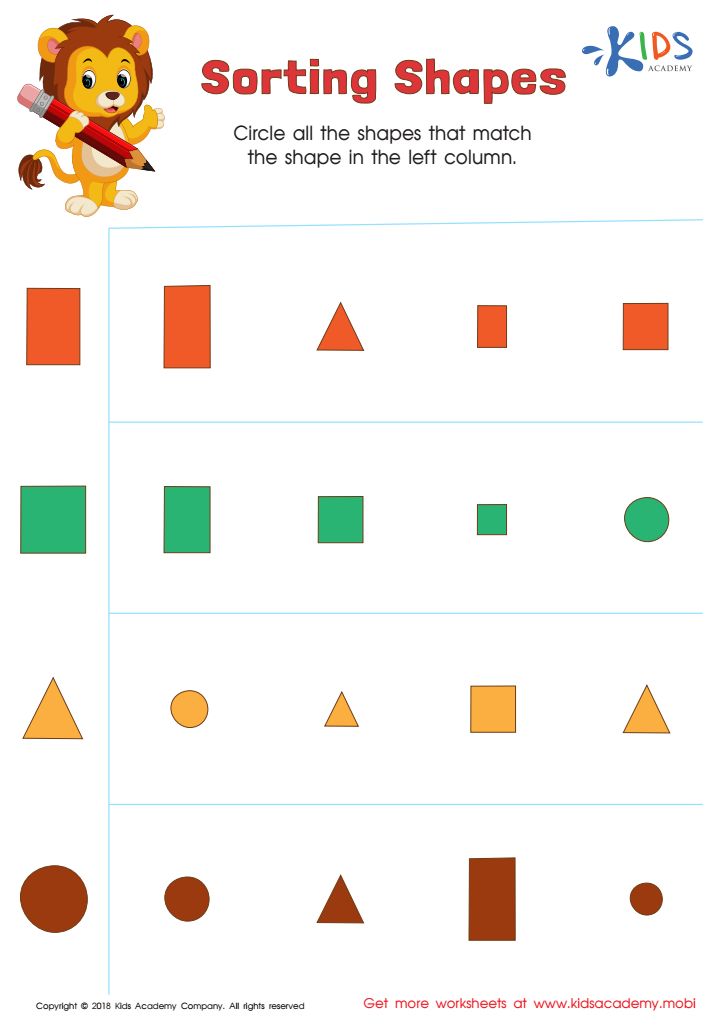
Sorting Shapes - Part 2 Worksheet






Shape recognition is a foundational mathematical skill that sets the stage for more advanced learning in later years. For children aged 3-6, understanding shapes is essentially learning to recognize patterns and classify objects based on their characteristics. Here’s why parents and teachers should care:
-
Cognitive Development: Shape recognition enhances a child's cognitive abilities. By identifying shapes, children practice patience, attention to detail, and the ability to differentiate between different objects.
-
Spatial Awareness: Recognizing shapes involves understanding the spatial properties of objects, which is critical in everyday problem-solving and advanced mathematical concepts like geometry.
-
Language and Communication: As children learn names and properties of shapes (e.g., sides, vertices), their vocabulary expands. This boosts their ability to communicate more effectively and describe the world around them.
-
Foundation for Mathematics: Mastering shapes is fundamental for grasping further math concepts such as counting, addition, subtraction, and even algebra. Shapes are often children's first encounter with classification and categorization.
-
Encouraging Curiosity: Introducing shapes in fun and engaging ways motivates children to explore math as an enjoyable subject. This early positive exposure can foster a lifelong interest in mathematics.
-
Everyday Life: Shapes are everywhere — from traffic signs to toys. Recognizing shapes helps kids navigate their environment safely and confidently.
Investing time in teaching shape recognition to young children provides them with a strong foundation for future learning across various disciplines.








