Spatial reasoning Normal Math Worksheets for Ages 3-6
3 filtered results
-
From - To
Discover our engaging Spatial Reasoning Normal Math Worksheets designed specifically for children aged 3-6! These printable worksheets promote critical thinking skills through fun, interactive activities. Young learners will explore concepts such as shapes, patterns, and spatial relationships, all while developing essential math abilities. Each worksheet perfectly balances educational content with playful designs to keep kids motivated and excited about learning. Suitable for both classroom settings and at-home practice, these real-world math exercises help to build confidence and encourage a love for learning. Start your child's journey into spatial reasoning today and watch their problem-solving skills soar!
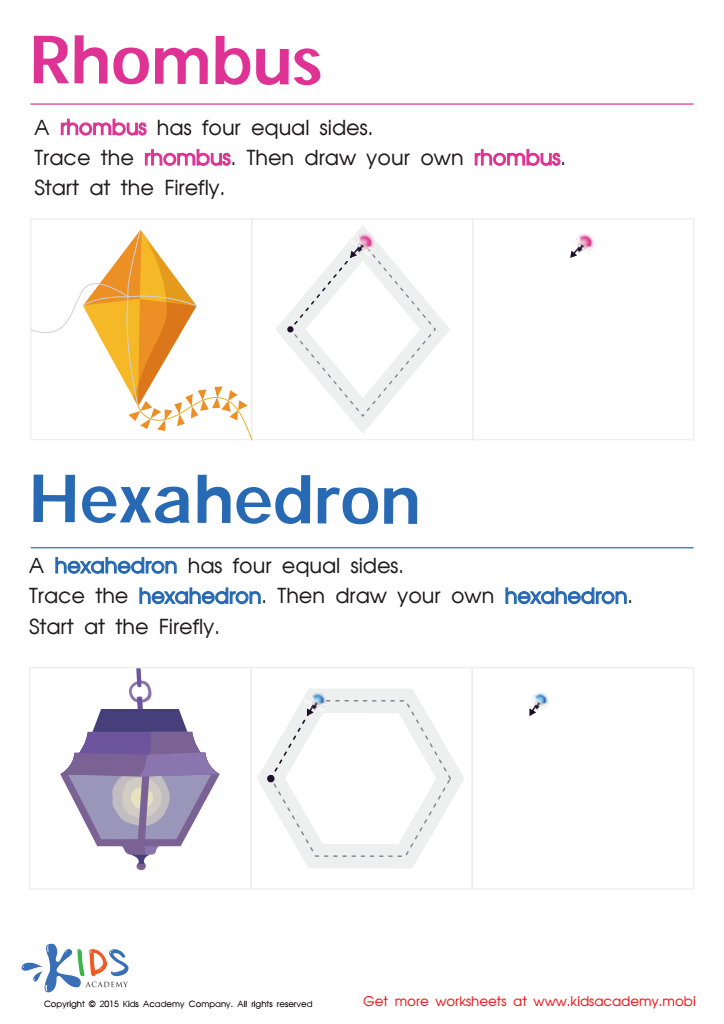
Draw a Rhombus And a Hexahedron Printable
 Assign to My Students
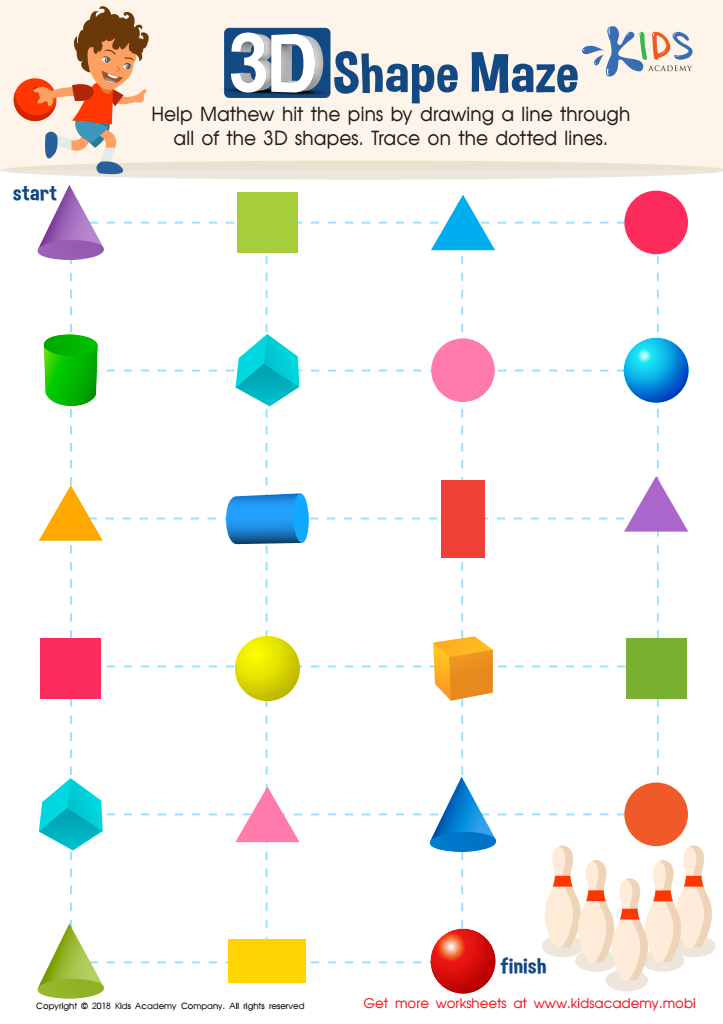
Shapes Maze Geometry Worksheet
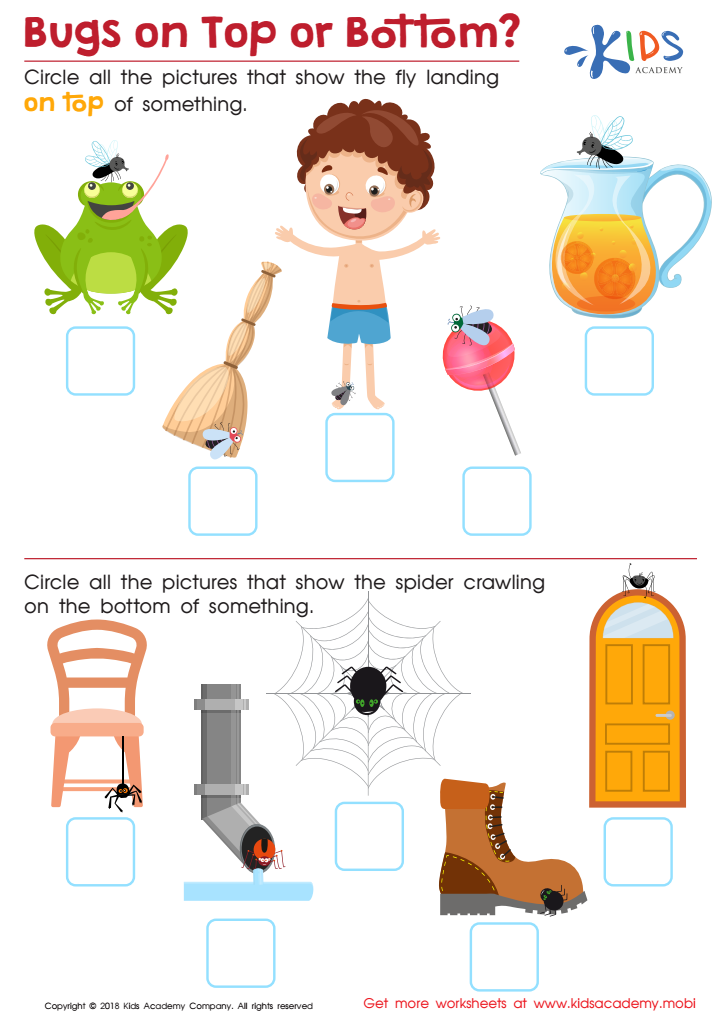
Bugs on Top or Bottom? Worksheet








Spatial reasoning is a critical aspect of early childhood development that involves the ability to understand and manipulate spatial relationships. For children ages 3-6, the development of spatial reasoning skills can lay a strong foundation for later mathematical understanding. Parents and teachers should prioritize these skills for several reasons.
First, spatial reasoning helps children visualize and navigate their environment, which enhances problem-solving abilities and creativity. Through activities like building blocks, puzzles, and drawing, children practice these skills in engaging ways.
Moreover, spatial reasoning is closely linked to success in traditional math concepts. Children with strong spatial skills often excel in understanding shapes, sizes, and patterns, which are foundational for geometry and measurement. Early exposure to spatial reasoning activities can increase overall mathematical confidence and achievement later in school.
Additionally, these skills foster critical thinking and reasoning, which are essential not only in math but across various subjects. Developing these abilities early on encourages curiosity and a love for learning, setting children up for future academic success. Ultimately, parents and teachers should invest time in activities that promote spatial reasoning, as they provide essential tools for children’s overall cognitive development and later educational endeavors.








