Understanding patterns Normal Math Worksheets for Ages 3-6
5 filtered results
-
From - To
Unlock your child's potential with our "Understanding Patterns" normal math worksheets, designed for ages 3-6! These engaging resources foster essential early math skills by introducing children to the concept of patterns through fun and interactive activities. From sequences and colors to shapes and sizes, our worksheets provide a hands-on approach to learning. Perfect for home or classroom use, these printable resources encourage critical thinking and enhance cognitive development while keeping young learners entertained. Give your child the confidence they need in math with these thoughtfully crafted worksheets that make learning about patterns both enjoyable and effective!
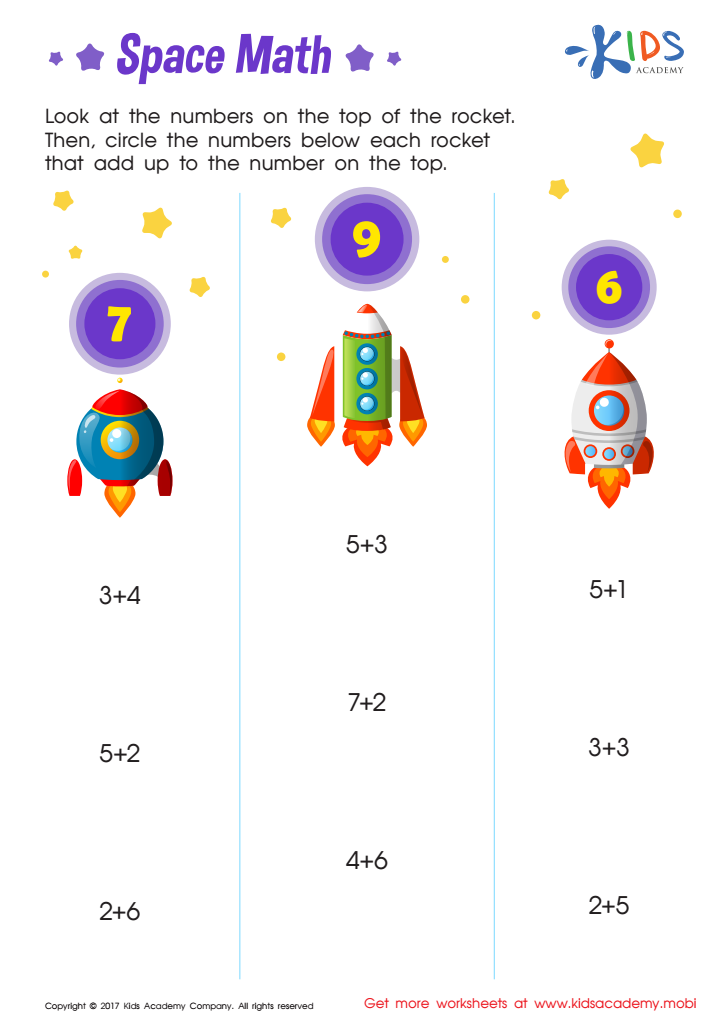
Addition: Space Math Worksheet
 Assign to My Students
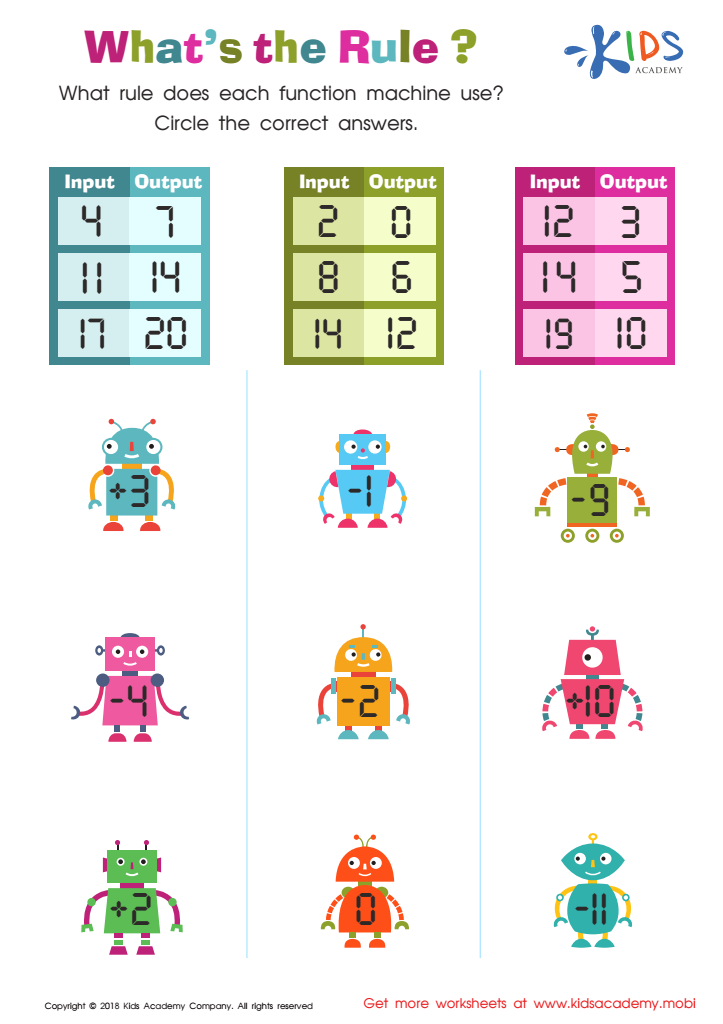
What's the Rule Worksheet
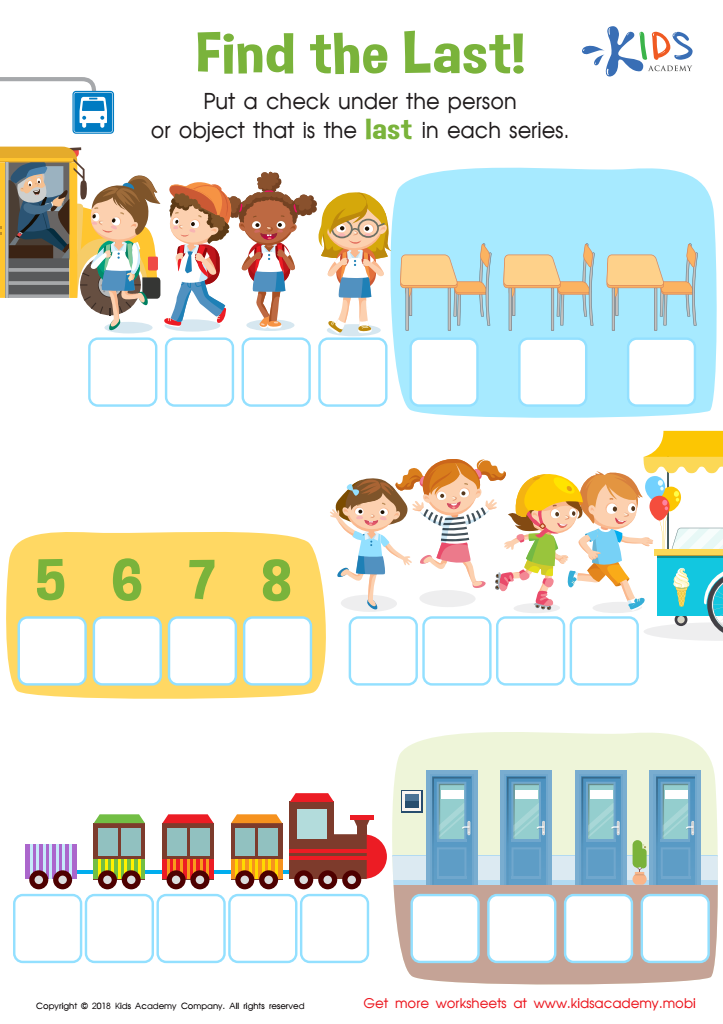
Find the Last! Worksheet
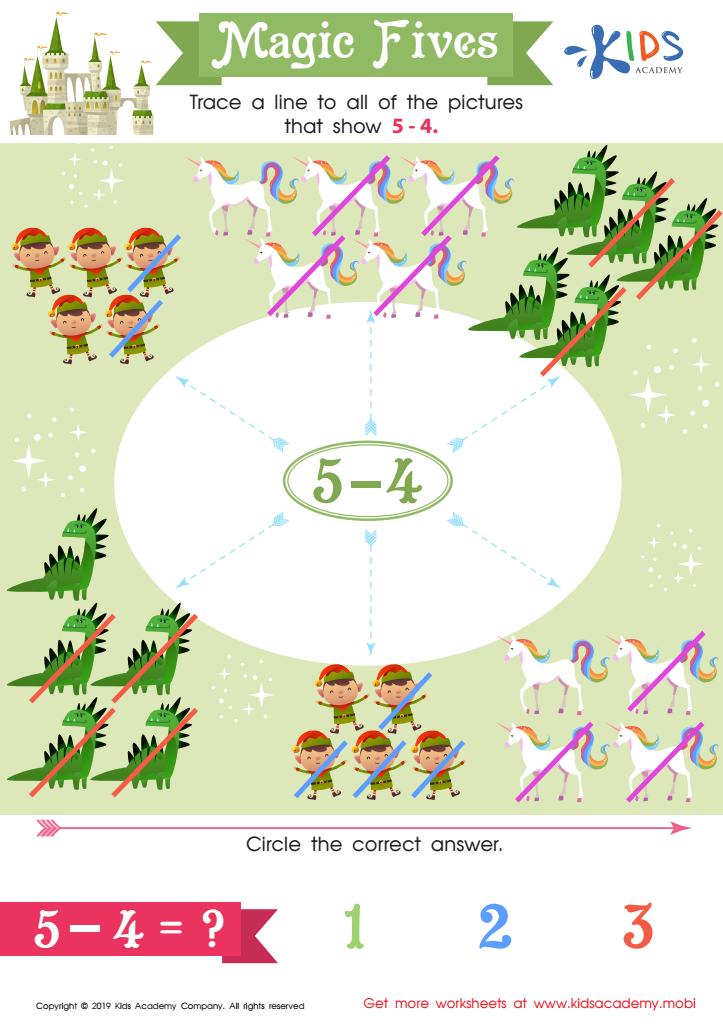
Magic Fives Worksheet
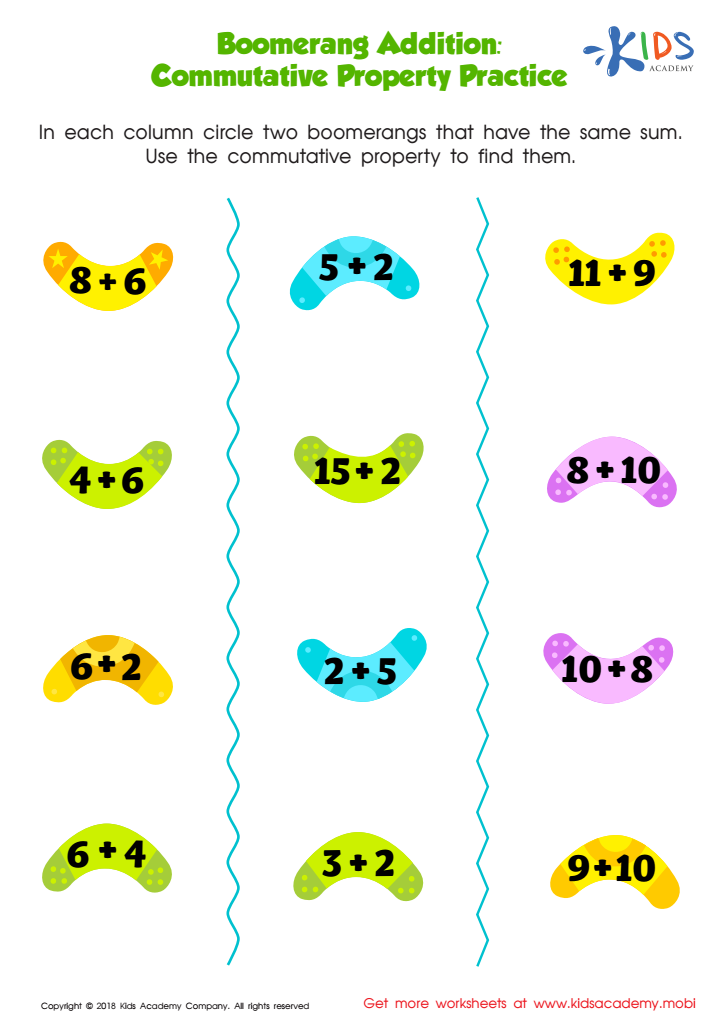
Boomerang Addition Worksheet








Understanding patterns is a foundational skill for young learners and plays a crucial role in their mathematical development. For children ages 3-6, engaging with patterns helps them to recognize sequences and relationships between objects, which are essential components of early mathematics. By identifying patterns, children learn to predict what comes next, enhancing their problem-solving abilities and logical thinking.
Parents and teachers should care about teaching patterns because this skill lays the groundwork for more complex mathematical concepts like addition and subtraction. Children who can recognize and create patterns tend to develop stronger analytical skills, which are transferable to other subjects and aspects of life. Additionally, recognizing patterns fosters creativity and enhances cognitive development; it encourages children to explore and make connections within their environment.
Moreover, pattern recognition is frequently used in everyday activities—from organizing toys to understanding rhythms in music. Therefore, by integrating pattern activities into their playtime or lessons, parents and teachers not only make learning enjoyable but also instill a lifelong appreciation for math. Encouraging children's engagement with patterns promotes their confidence as learners and sets them up for future success in mathematics and related fields.








