Visual discrimination Normal Matching Worksheets for Ages 3-6
3 filtered results
-
From - To
Enhance your child's visual discrimination skills with our engaging Normal Matching Worksheets tailored for ages 3-6! These thoughtfully designed worksheets promote early learning by helping children identify similarities and differences between objects, fostering critical cognitive development. Each activity challenges kids to match visuals in a fun and interactive way, encouraging concentration and attention to detail. Perfect for parents and educators, these worksheets can be utilized in classrooms or at home to reinforce essential learning through play. Download now and support your child's journey to becoming confident learners as they explore colors, shapes, and patterns in a captivating environment!
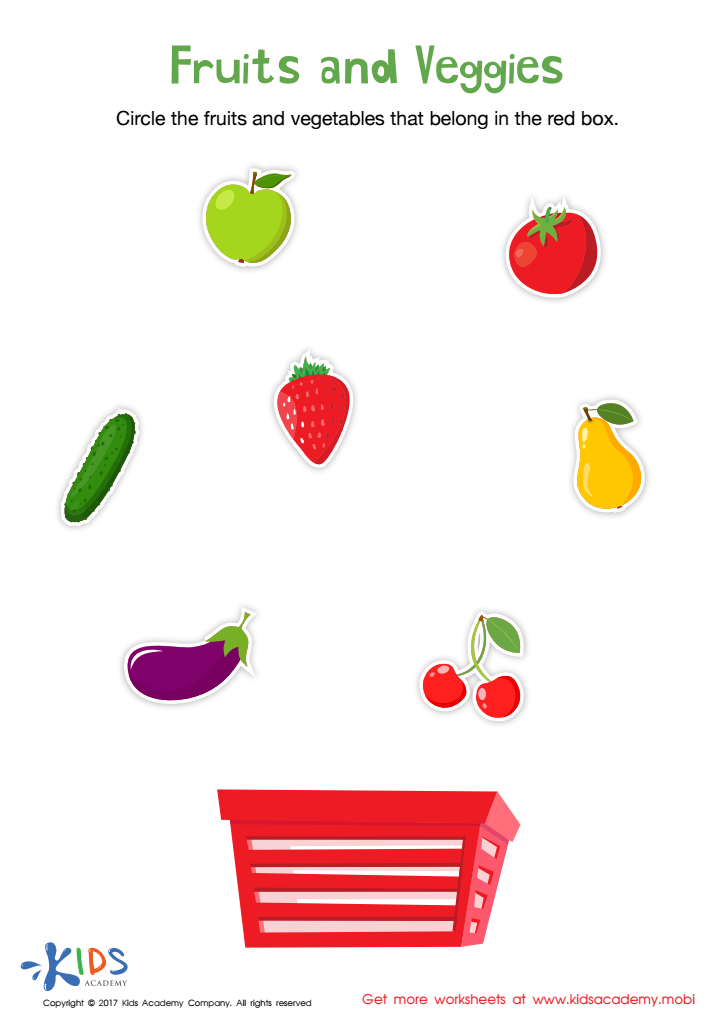
 Assign to My Students
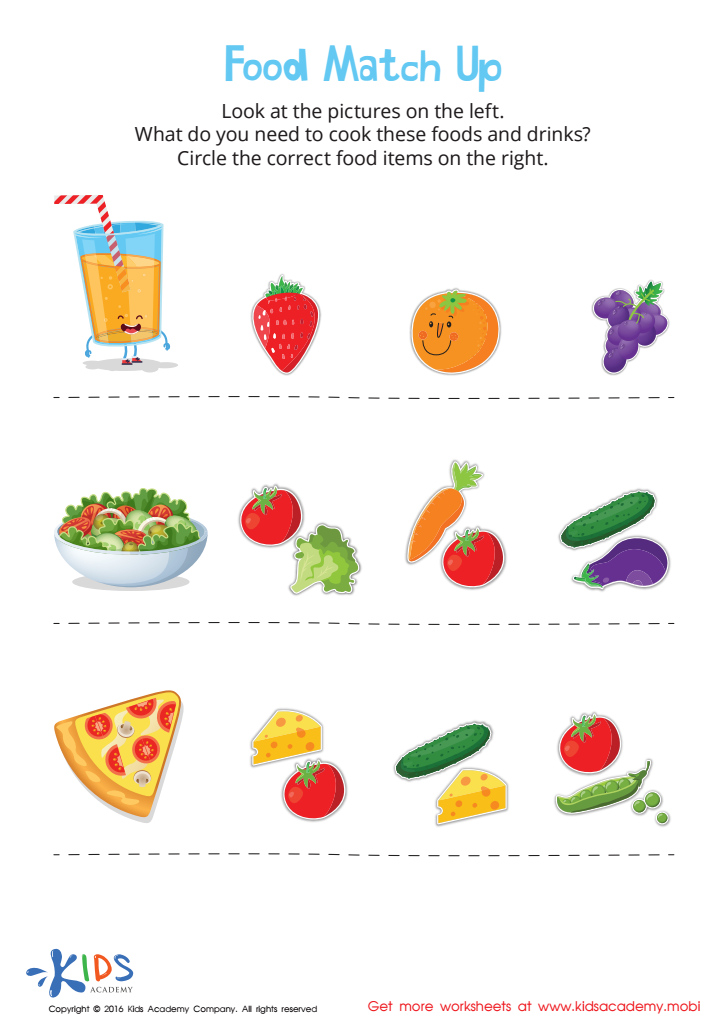
Food Match Up Worksheet
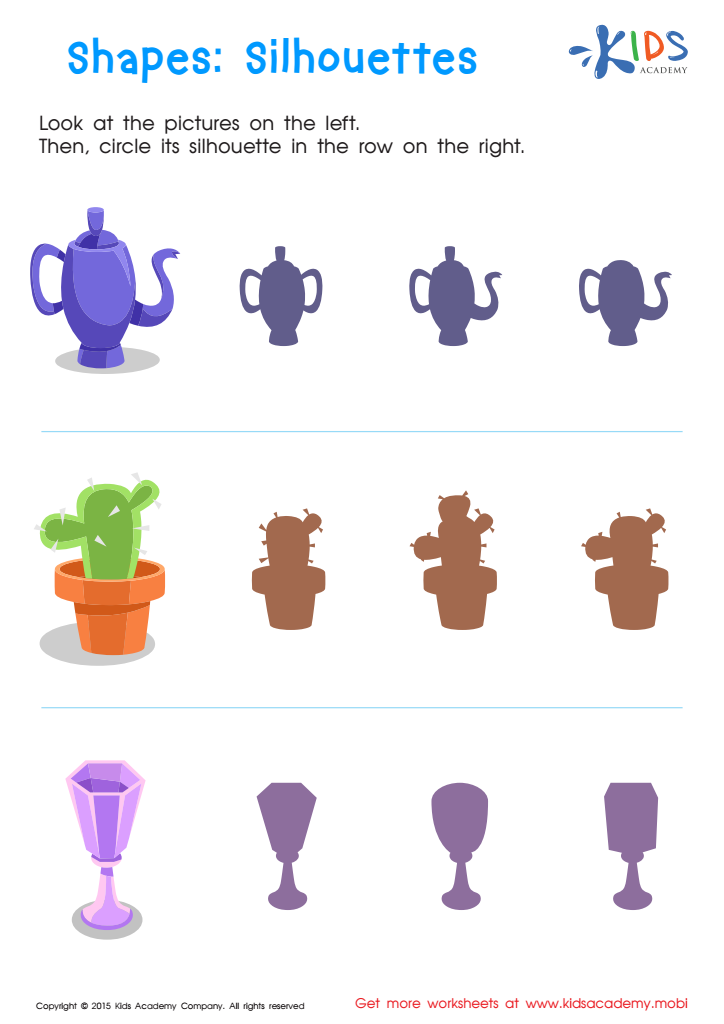
Silhouettes – Shapes Worksheet








Visual discrimination and normal matching are critical skills for children aged 3-6, serving as foundational building blocks for future learning. Developing these skills enables young learners to distinguish between different shapes, colors, and forms, which are essential for early literacy and numeracy.
Parents and teachers should prioritize visual discrimination because it directly impacts a child's ability to recognize letters, numbers, and words. When children can differentiate between similar symbols, they are better equipped for reading and writing. This skill also enhances their ability to compare and contrast objects in their environment, helping to boost critical thinking and problem-solving abilities.
Moreover, engaging in normal matching activities encourages children to make connections and categorize information, fostering cognitive development. Such activities can be integrated into everyday lessons or playtime, making learning enjoyable and practical. By supporting visual discrimination and matching skills, parents and educators empower children to build confidence and independence in their learning journeys.
Long-term, these abilities lead to improved academic performance, making it essential for parents and teachers to understand the importance of nurturing these skills during critical early years. By investing time in this area, caregivers help pave the way for a child’s future success in school and life.








