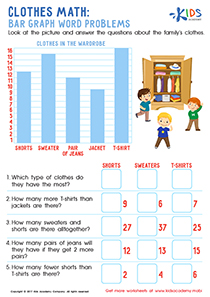
Reading comprehension Normal Two-step Word Problems Worksheets for Ages 3-6
3 filtered results
-
From - To
Discover our engaging "Reading Comprehension Normal Two-Step Word Problems Worksheets" designed specifically for children ages 3-6. These worksheets foster early math skills through fun and interactive scenarios that challenge young learners to solve two-step word problems. By combining reading comprehension with basic arithmetic, kids enhance their understanding of language and numbers in a playful way. Ideal for classroom use or at-home learning, these activities promote critical thinking, problem-solving, and numeracy skills. With colorful illustrations and age-appropriate content, our worksheets make learning enjoyable and effective for preschool and kindergarten-aged children. Dive in and watch your child develop essential foundational skills!
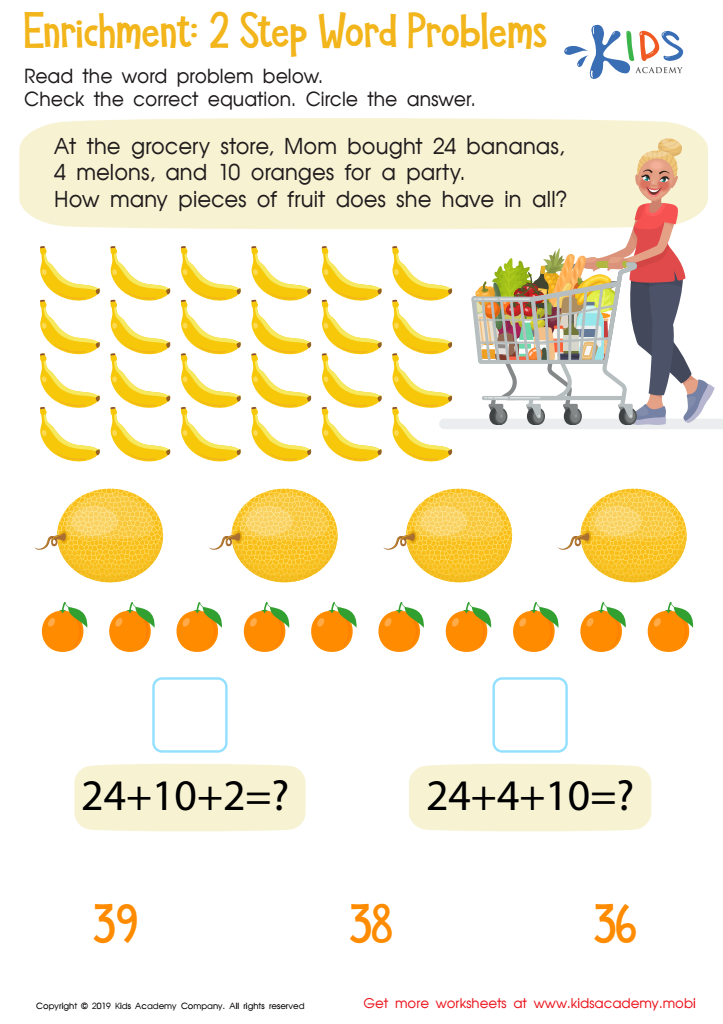
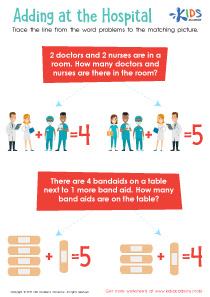
Enrichment -2 Step Word Problems Worksheet
 Assign to My Students
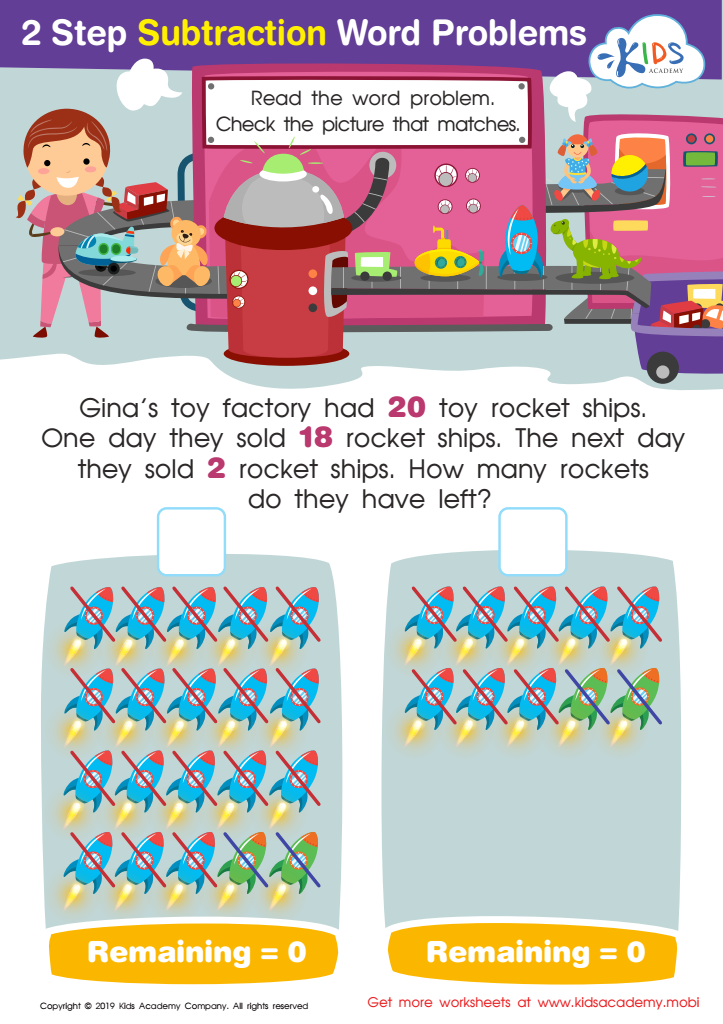
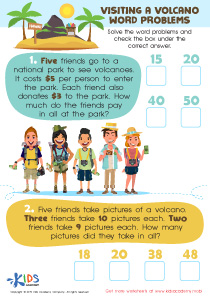
Step Subtraction Word Problems Worksheet
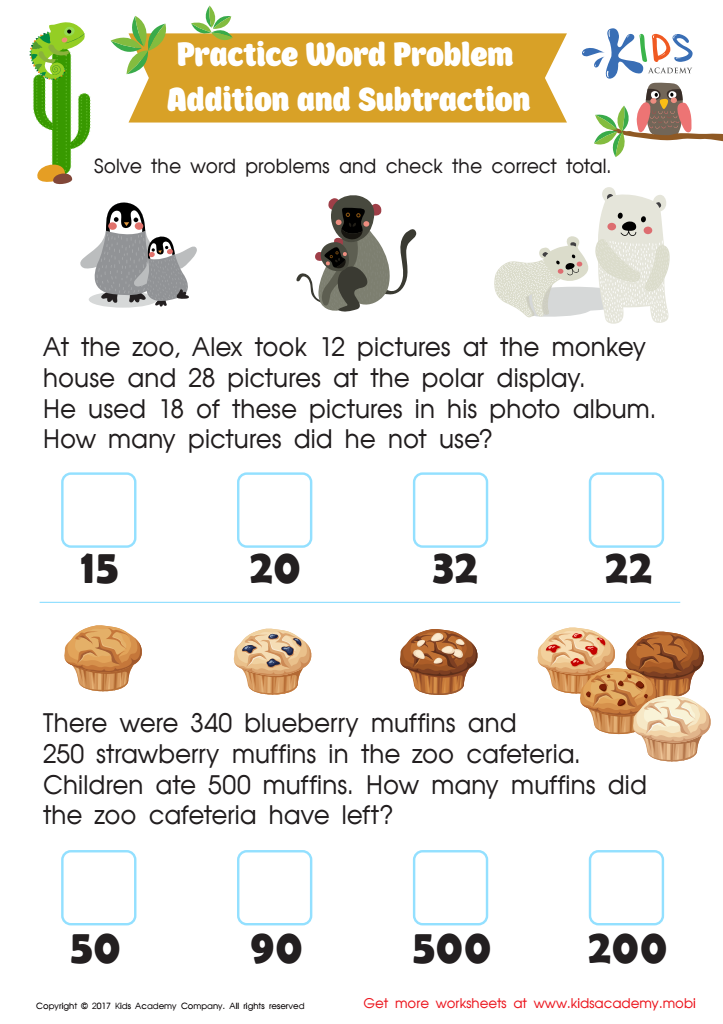
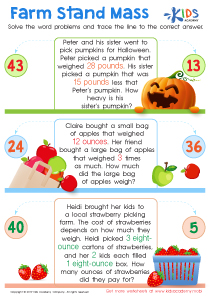
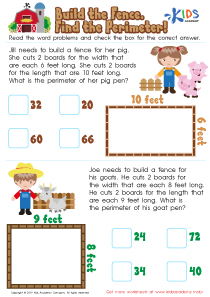
Addition and Subtraction: Word Problems Worksheet



Reading comprehension and problem-solving skills are crucial for young children's cognitive development, especially for those aged 3 to 6. Normal two-step word problems tie together reading skills and basic math concepts, promoting a deeper understanding of language and logic.
Parents and teachers should care about these skills for several reasons. First, engaging with two-step word problems encourages critical thinking. Children learn to interpret information, make connections, and apply their knowledge, which lays the groundwork for more complex problem-solving in later years.
Second, these problems enhance vocabulary and comprehension skills. As children read and decode scenarios, they encounter new words in context, improving their ability to understand and use language effectively.
Additionally, mastering such problems boosts confidence and a positive attitude toward learning. Success in solving these challenges fosters a love for reading and mathematics, encouraging lifelong curiosity.
Finally, cultivating these skills helps build essential foundations for future academic achievement. By supporting children in developing reading comprehension and problem-solving abilities, parents and teachers can create a pathway for success in all subjects, ultimately preparing them for the educational experiences ahead.