Critical Thinking Normal Word Problems Worksheets for Ages 3-6
3 filtered results
-
From - To
Enhance your child's critical thinking skills with our engaging word problems worksheets for ages 3-6. Carefully crafted to stimulate young minds, these worksheets are packed with fun scenarios that encourage analytical thinking and problem-solving. Each exercise is designed to help preschool and kindergarten children understand mathematical concepts while applying them in real-world situations. From simple addition and subtraction to complex puzzles, our worksheets are perfect for fostering a love for learning and sharpening critical thinking abilities. Download now to give your little learners a head start in math and cognitive development!
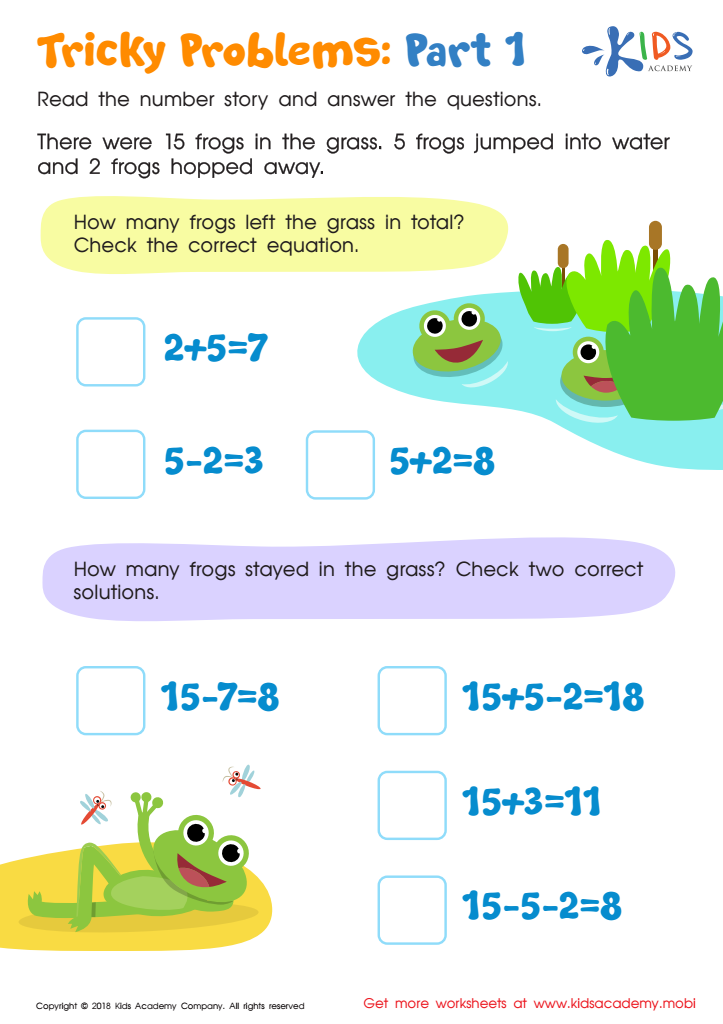
Tricky Problems Worksheet: Part 1
 Assign to My Students
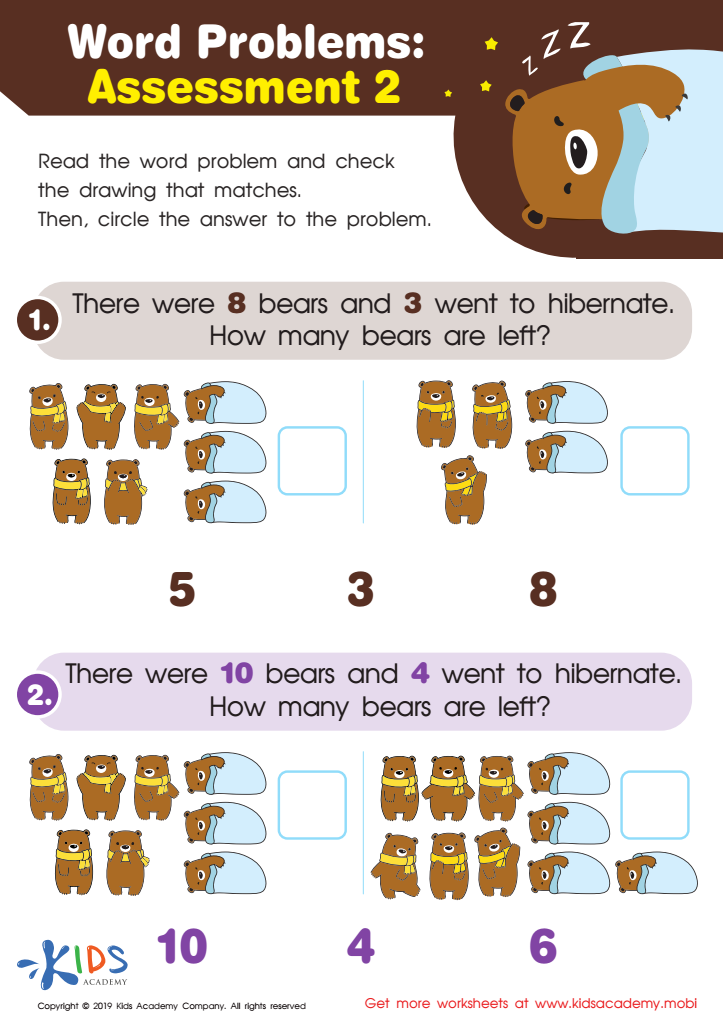
Word Problems: Assessment 2 Worksheet
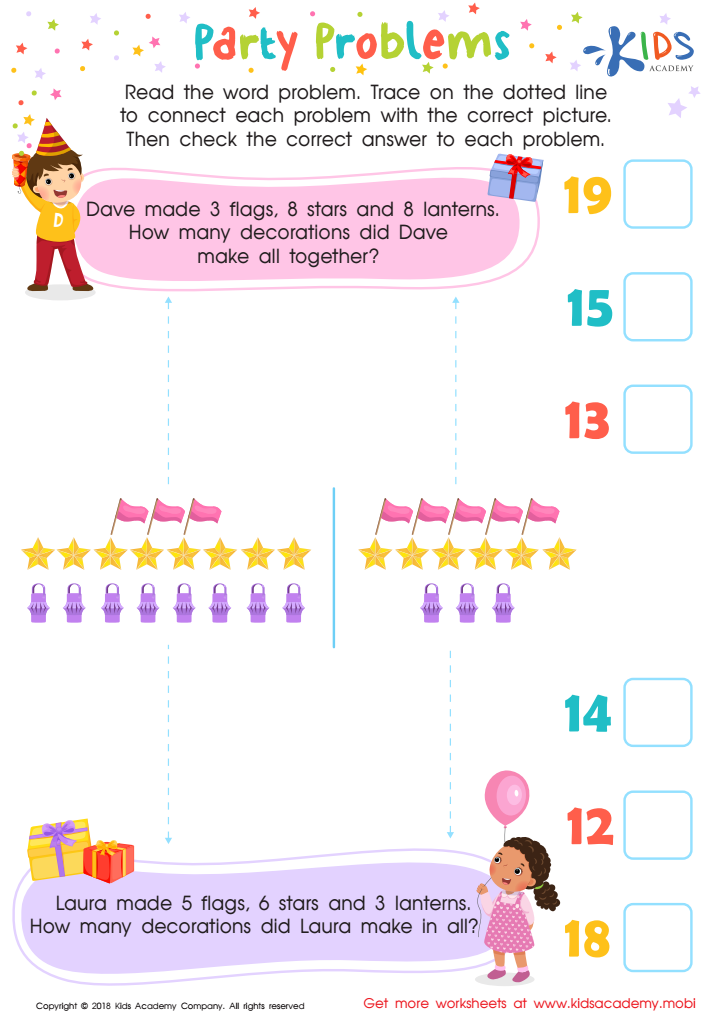
Party Problems Worksheet








Critical thinking normal word problems for ages 3-6 are essential for early cognitive development and foundational learning skills. During this formative period, children's brains are highly malleable, making it an ideal time to introduce them to challenging, problem-solving activities. These word problems can help kids improve their comprehension, logical reasoning, and mathematical skills. By analyzing the scenarios presented, children learn to dissect information, make connections, and draw conclusions based on the given data.
For parents, fostering critical thinking at an early age encourages children to become independent learners and thinkers. It prepares them to solve everyday challenges and nurtures curiosity and creativity. Teachers can use these problems to promote a growth mindset, emphasizing effort over innate ability. This positive reinforcement teaches children that persistence and practice are crucial to overcoming challenges.
Moreover, early exposure to word problems can enhance language development. As children navigate through the problems, their vocabulary expands and their ability to follow complex instructions improves. Both parents and teachers play a vital role in nurturing these early skills, setting a strong foundation for lifelong learning, academic success, and personal growth.
By integrating critical thinking exercises into daily routines, adults can ensure children are well-equipped to handle more complex problems as they progress in their education.








